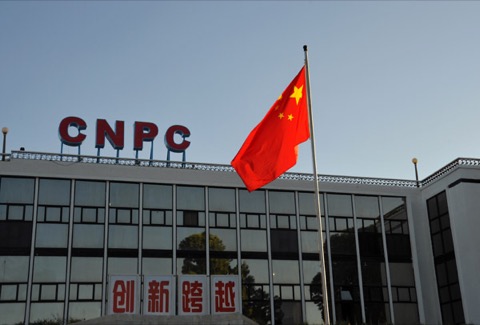
中国石油集团长城钻探工程有限公司于2008-07-18在北京市工商行政管理局登记成立。法定代表人王忠仁,公司经营范围包括承包与其实力、规模、业绩相适应的国外工程项目等。
Abstract Basalt fiber (BF) is a promising toughening material for oil well cement owing to its high mechanical strength and thermal stability; however, its smooth surface and poor dispersibility often result in weak interfacial bonding and limited toughening efficiency. To overcome these limitations, a mussel-inspired two-step surface modification strategy was developed. Dopamine hydrochloride (DA-HCl) was first introduced to enhance the surface hydrophilicity and reactivity of BF, followed by secondary modification using γ -glycidoxypropyltrimethoxysilane (KH560) and tetraethyl orthosilicate (TEOS) to further improve fiber dispersion and interfacial bonding with the cement matrix. Fourier transform infrared spectroscopy (FTIR) and energy dispersive spectroscopy (EDS) analyses confirmed the successful formation of the composite coating, while quantitative image analysis revealed a marked reduction in the dispersion coefficient from 191.59% to 19.47%. In addition, 3D optical surface profilometry was employed to quantitatively characterize the surface roughness evolution of the fibers, demonstrating a pronounced increase in nanoscale roughness after composite modification. Mechanical testing showed that cement reinforced with composite-modified BF exhibited increases of 14.9% in compressive strength and 20.3% in flexural strength compared with unmodified BF-reinforced cement. Single-fiber pull-out tests further indicated a 34.62% enhancement in interfacial bond strength. Moreover, microstructural observations after short-term high-temperature curing suggested that the composite-modified fibers maintained improved interfacial characteristics relative to unmodified fibers. Overall, the proposed modification strategy effectively enhances the interfacial adhesion of BF in cement-based systems and improves fiber dispersibility, providing a viable approach for enhancing the short-term mechanical performance of fiber-reinforced oil well cement.
Large Language Models (LLMs) are increasingly deployed in high-stakes domains, yet they remain prone to hallucinations. Existing mitigation methods face a fundamental trade-off: suppressing factuality hallucinations—where the output contradicts world knowledge—often worsens faithfulness hallucinations, where the output deviates from the given context, and vice versa. Our prior work SPACE (Wang et al., 2025) first addressed this by editing shared activation subspaces, but could not distinguish error-carrying pathways from useful ones within a subspace. In this paper, we show theoretically that this limitation stems from polysemantic neurons, and propose Lancet, a framework that shifts the intervention from subspaces to pathways. Lancet locates source neurons via contrastive gradient analysis, maps their error-propagation pathways by partitioning a cross-layer graph using Structural Entropy minimization, and applies graded suppression that decays with distance from the source. Experiments on four benchmarks across three models show that Lancet consistently improves over SPACE and all other baselines on both factuality and faithfulness.
Metallic combustion in oxygen-enriched environments remains one of the most unpredictable failure modes in aerospace propulsion and life-support systems, but design rules linking alloy chemistry to burning resistance are still missing. Exploiting the structurally simple, single-phase solid solution of CoCrFeNi high-entropy alloys (HEAs), we systematically investigated effects of Cr on flame retardancy with multiscale characterization and thermodynamic modeling. A sharp optimum at 30 at.
The low-frequency components in seismic data serve as critical constraints for constructing macro-scale velocity models of subsurface media. However, due to data acquisition limitations and noise contamination, seismic data often lack low-frequency information, resulting in compromised accuracy in subsequent imaging outcomes. To tackle this issue, a Swin-UNet–based extrapolation framework with Squeeze-and-Excitation modules is proposed, combining the Swin Transformer’s global representation capability with the local feature extraction strength of convolutional neural networks. The Squeeze-and-Excitation modules improve the channel information of skip connections through an attention mechanism, while the structural similarity index is integrated into the loss function to preserve the structural integrity of seismic data. Experiments on synthetic data show that the network effectively extrapolates low-frequency data while demonstrating noise resilience and generalization ability. Full waveform inversion using the reconstructed seismic data yields improved delineation of stratigraphic boundaries and complex geological features. Finally, field data experiments confirm the practical utility of the proposed method.
The Q235 steel is usually used to produce the side guide plate for coiler machine, but its wear resistance is poor. In order to improve its wear resistance, Ni-based composite coatings with high WC content were prepared on the surface of Q235 steel by laser cladding technology. The WC content in the coatings was designed to be 35, 40, 45, 50 and 55





