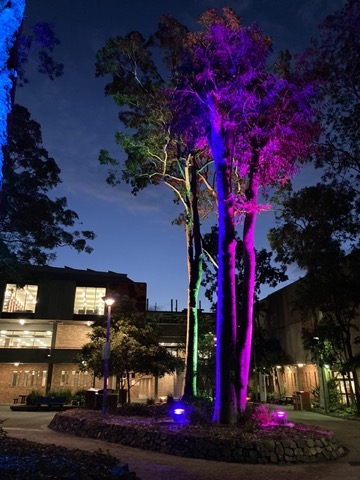
The University of Newcastle (UON), informally known as Newcastle University, is an Australian public university established in 1965. It has a primary campus in Callaghan, a suburb of Newcastle, New South Wales. The university also operates campuses in Ourimbah, Port Macquarie, Singapore, Newcastle CBD and Sydney CBD.Historically, the University of Newcastle Medical School has implemented the problem-based learning system for its undergraduate Bachelor of Medicine program – a system later mandated for use by the Australian Medical Council throughout Australia. It pioneered use of the Undergraduate Medicine and Health Sciences Admission Test (UMAT) in the early 1990s. UMAT has since been accepted widely by different medical schools across Australia as an additional selection criteria.The University of Newcastle is a member of Universities Australia and the Association to Advance Collegiate Schools of Business.

Low voltage (LV) distribution transformers face accelerating demand growth while replacement lead times and costs continue to rise, making improved utilisation of existing assets essential. Static and conservative protection devices (PDs) in distribution transformers are inflexible and limit the available headroom of the transformer. This paper presents a probabilistic framework for dynamically forecasting optimal thermal protection settings. The proposed approach directly predicts the day-ahead scale factor which maximises the dynamic thermal rating of the transformer from historical load, temperature, and metadata using clustered quantile regression models trained on 644 UK LV transformers. Probabilistic forecasting quantifies overheating risk directly through the prediction percentile, enabling risk-informed operational decisions. Results show a 10–12% additional capacity gain compared to static settings, with hotspot temperature risk matching the selected percentile, including under realistic temperature forecast errors. These results demonstrate a practical approach for distribution network operators to take advantage of PDs with adaptive settings to maximise capacity and manage risk on operational time scales.
Pressure-driven filtration through geotextiles involves the coupling between fluid seepage, particle migration/retention, and the progressive descent of a free surface under constant pressure. Existing approaches have limitations in representing these evolving boundary interfaces and filtration-induced clogging at high solid concentrations. To address this gap, an unresolved SPH-DEM coupled framework with movable pressure boundary and permeable geotextile boundary is developed for constant-pressure filtration in the geotextile system, resolving the movement of solid–fluid mixtures, phase-interaction forces, and progressive drainage. The DEM module is first established to simulate the contact, rearrangement, and accumulation behaviour of the solid phase. The SPH module is then developed for viscous slurry flow with a free surface. These components are integrated through bidirectional drag between the solid and fluid phases, as well as a blocking mechanism at the area of high solid concentration. This incorporates a movable pressure boundary that follows the descending slurry surface and a Darcy-type geotextile region that governs fluid drainage. The coupled model is finally validated by comparing it with laboratory grouting experiments using a geotextile filtration layer, demonstrating its capability to reproduce the simultaneous evolution of water drainage, solid retention, and filtration-induced permeability degradation. Overall, the study provides a new method for studying the filtration performance in geotextile systems with a free surface under constant pressure.
This paper analytically investigates the key properties of large-signal strength at the grid connection point of generation/storage technologies, focusing on their capability to maintain grid synchronism following severe disturbances. We define conditions where the technology can maintain 1) its terminal voltage magnitude, 2) synchronism, and 3) its power exchange with the grid within its power transfer limit. These conditions are represented by boundaries related to a proper voltage-behind-an-impedance (VBAI) response. Specifically, we first identify variables that represent the generation/storage technology’s dynamic behavior in relation to each key VBAI property. We employ contraction analysis to derive explicit boundary conditions for the perturbed variables, guaranteeing exponential convergence between trajectories. Simulation results for a synchronous generator validate the proposed method performance, confirming that remaining within the derived region ensures exponential convergence to the steady-state point following large disturbances, while results for a grid-following inverter provide insights into the importance of the phase-locked-loop control coefficient values. The derived conditions serve as a proxy for system operators in identifying stable operational regions for connecting new assets.
Grounded in a neurodiversity-affirming framework, this study explores how a digitally augmented wearable mask can support autistic children’s comfort and self-directed participation in social greetings. We introduce MaskMe, a wearable system designed to support comfortable and playful participation in greeting activities. We address two research questions: (RQ1) how such a wearable can support children’s comfort and engagement in greetings, and (RQ2) what design guidelines can be derived for future neurodiversity-affirming technologies. To answer these questions, we conducted a two-month field study consisting of four gameplay sessions with 15 child participants at a community support center, complemented by post-hoc interviews with practitioners and video analysis. Our findings indicate that MaskMe, when combined with cooperative play, can create opportunities for children to initiate and respond to greetings in ways that are comfortable and flexible. We further derive design implications for wearable technologies that support comfortable and flexible social interaction for autistic children.





