The rapid growth of unlabeled time series data, driven by the Internet of Things (IoT), poses significant challenges in uncovering underlying patterns. Traditional unsupervised clustering methods often fail to capture the complex nature of time series data. Recent deep learning-based clustering approaches, while effective, struggle with insufficient representation learning and the integration of clustering objectives. To address these issues, we propose a fuzzy cluster-aware contrastive clustering framework (FCACC) that jointly optimizes representation learning and clustering. Our approach introduces a novel three-view data augmentation strategy to enhance feature extraction by leveraging various characteristics of time series data. Additionally, we propose a cluster-aware hard negative sample generation mechanism that dynamically constructs high-quality negative samples using clustering structure information, thereby improving the model's discriminative ability. By leveraging fuzzy clustering, FCACC dynamically generates cluster structures to guide the contrastive learning process, resulting in more accurate clustering. Extensive experiments on 40 benchmark datasets show that FCACC outperforms the selected baseline methods (nine in total), providing an effective solution for unsupervised time series learning. The source code is publicly available at https://github.com/Du-Team/FCACC.
Multimodal recommendation systems aim to model users and items by jointly leveraging multimodal content and collaborative signals, yet their performance is fundamentally constrained by data sparsity. To address this, recent studies have introduced diffusion models to generate additional structural information and enrich user-item representations. However, most remain limited to local interactions between users and items, failing to capture global relationships. We propose a novel modality-aware hypergraph edge diffusion recommendation model (MHRec), which integrates the high-order relational modeling capability of hypergraphs with the generative power of diffusion models to dynamically refine graph structures and enhance multimodal representation learning. Specifically, MHRec constructs modality-aware hypergraphs that adaptively capture both local interactions and global relations, and employs a diffusion-based strategy to optimize these structures. Finally, a dual-channel representation learning module jointly models users and items across modalities for robust and comprehensive representations. Experiments on three public datasets—Beauty, Sports, and MicroLens—demonstrate that MHRec consistently outperforms existing baselines. Notably, MHRec improves Recall@10 by 6.05%, 3.82%, and 4.10% on these datasets, respectively, showing its strong capability to alleviate data sparsity and enhance recommendation performance.
Semantic segmentation techniques significantly aid in identifying and localizing lesion regions in medical images, thereby enhancing diagnostic accuracy and efficiency. However, conventional convolutional methods primarily model local features, making it challenging to effectively capture global contextual information. While existing solutions, such as transformers and Mamba, aim to tackle the challenge of global contextual information, they are often associated with significant computational complexity. To address these limitations, this paper proposes the Medical Semantic Segmentation Model based on Multiscale Fusion Perception (MSSM-MFP). First, a multiple class fusion module is proposed, which employs a combination of three convolutions with varying padding and dilation rates to sequentially perform down-sampling operations. This approach enables the capture of image features at multi-scales, thereby enhancing segmentation accuracy. Second, a multiscale attention gate mechanism is innovatively proposed to realize feature fusion and enhance the perception of different-scale information. Finally, the local feature enhancement module is proposed to enhance the ability to capture local features in medical images, to enhance the model's grasp of image complexities. Experimental results on the BUSI and Glas datasets show that the proposed model achieves better prediction than existing mainstream methods. The code is available at https://github.com/zpl181/MSSM-MFP.
Knowledge Tracing (KT) aims to align with learners’ evolving knowledge states by modeling sequential learning signals, thereby enabling educators to anticipate potential dropout risks. However, most existing KT approaches assume each question involves only one concept, known as Single Concept KT (SCKT). In real-world educational scenarios, a question often involve multiple concepts, while the absence of Multi Concept KT (MCKT) methods forces models to capture only isolated factors such as forgetting, guessing, or difficulty. Moreover, compressing inherently multi-concept learning signals into single-concept representations results in irreversible information loss, which we describe as falling into Hume’s Limits of Imagination Paradox, the inability of an agent to imagine what has never been experienced. This distortion leads to overfitting and restricts both accuracy and interpretability. To address these issues, we propose Sequential Learning signAl Modeling (SLAM) for MCKT. SLAM introduces relation-aware embeddings to represent multi-concept questions, employs a monotonic attention mechanism to model forgetting behaviors in sequential signals, and designs decoders to jointly capture concept mastery, guessing, slipping, and difficulty. Experiments on two large-scale datasets show that SLAM outperforms state of the art models by up to 4% in AUC, confirming its effectiveness and interpretability for MCKT.
The increasing amount of multivariate time series (MTS), coupled with scarce labeled samples, has driven the development of unsupervised anomaly detection. While contrastive learning has shown promise in learning discriminative representations, existing contrastive learning-based MTS anomaly detection methods still suffer from limited representation power and inadequate discrimination ability. In this paper, we propose a novel model, graph-based dual-contrastive representation learning for detecting anomalies in multivariate time series, called GDCMAD. GDCMAD first constructs two relational graphs for capturing inter-variable and temporal dependencies then integrates an improved Kolmogorov-Arnold network (KAN)-based attention mechanism into a reconstruction framework. Additionally, it incorporates an LSTM-based external contrastive learning module to further enhance the separation between normal and abnormal patterns. Experiments on six public datasets show that GDCMAD achieves better performance than nine state-of-the-art methods in detecting anomalies, confirming its effectiveness for MTS data. To access the source code of GDCMAD, please visit the repository located at https://github.com/Du-Team/GDCMAD.
Accurate electric load forecasting has numerous benefits, including cost reduction in power generation and valuable guidance for decision-makers in the power industry. Support Vector Regression (SVR) has gained attention for its strong mathematical foundation and high performance in electric load forecasting. However, SVR encounters challenges in computational cost, fitting large-scale datasets and seasonal pattern capturing. To overcome these limitations, this paper proposes SCBTIA, an intelligent load forecasting model that integrates data pre-processing, deep learning model, an improved meta-heuristic optimization algorithm and rolling seasonal mechanism into twin support vector regression (TWSVR). TWSVR improves upon SVR by delivering superior performance and reduced computational time, alleviating its limitations. Further, TWSVR is integrated with bi-directional gated recurrent unit (BiGRU) deep learning model using complementary ensemble empirical mode decomposition (CEEMD). This work also introduces an improved arithmetic optimization algorithm (IAOA) for dynamically selecting optimal hyper-parameter combinations in TWSVR. A seasonal mechanism that applying rolling-window method is also applied in the proposed model. Experiments encompass ablation studies, comparisons with SVR and TWSVR models, as well as single basic models and state-of-the-art models. These experiments utilize two real-world electric load datasets, highlighting SCBTIA's superior performance. Experiments illustrate that the proposed SCBTIA model has ability to address the challenges faced in electric load forecasting and provide an advanced solution that outperforms existing approaches.
Knowledge Tracing (KT) has garnered significant attention in the field of education, aiming to analyze learners' historical interaction records to dynamically track their current knowledge states and predict their future learning performance. Most existing KT models primarily rely on question IDs or concept IDs as the main features, neglecting question text content as a potential key feature. This limits the models' ability to learn semantic information from questions, ultimately affecting their predictive performance and accuracy. To address this issue, this paper proposes a novel model: the Knowledge Tracing Model Integrating Question Text Content and Cross-Level Contrastive Learning (QCKT). First, the model employs the BERT method to encode question text content, capturing its contextual semantic information and dependency relationships. Next, a textual attention mechanism module is introduced, enabling the model to dynamically adjust the importance of individual words to better focus on critical information in the questions. Finally, a cross-level contrastive learning module is designed to unify multi-level embedding features of question IDs and question text content within a shared embedding space, thereby optimizing the relationships between these features and enhancing the model's representation capability. Additionally, various data augmentation strategies are employed to increase data diversity, further improving the model's generalization and robustness. To evaluate the performance of the QCKT model, experiments were conducted on two publicly available datasets. The results demonstrate that, compared with existing KT models, QCKT achieves significant improvements in AUC scores, with increases of 2.21% and 0.85% on the respective datasets. This highlights its superior predictive capability, which indicates its considerable potential for accurately assessing students' learning states and providing personalized instructional recommendations.
Multimodal recommender systems utilize users’ interaction history and associated multimodal information to recommend items effectively. Although there have been significant advancements in current research, some approaches do not fully capture the complexity of user behavior when interacting with multimodal information. This complexity arises from two factors: the comprehensive influence of a large amount of image and text information related to the items, and the preference differences users exhibit for various item factors across different modal scenarios. Therefore, we propose a novel method named MRFFD (multimodal recommender based on feature fusion and decoupling). This method employs two separate attention networks to extract and integrate the key visual and textual features of items. We then decouple the multimodal features to identify different factors of the items. Finally, in both local scenarios (single-modal) and global scenarios (multimodal), we compute user preference scores for each factor to achieve precise recommendations. Experimental results on two open datasets have demonstrated the effectiveness and superiority of our proposed model. Specifically, MRFFD demonstrated substantial improvements in Precision@20, Recall@20, and NDCG@20 metrics, achieving increases of 4.29
Multimodal recommender systems based on graph convolutional networks have made significant progress by integrating multiple modal data for item recommendation. While most existing approaches learn user and item representations through modality-related interaction graphs, these approaches still encounter challenges inherent to graph convolutional networks: over-smoothing. To address this challenge, we propose a model named Grade, Generative Graph Contrastive Learning for Multimodal Recommendations. It combines generative models and contrastive learning and design four task losses. In particular, the generative graph contrastive task generates contrastive views inter-modal through variational graph reconstruction, effectively aligning modal features to improve user and item representations. In addition, the feature perturbation contrastive task generates multimodal noisy views with interference for intra-modal contrast through noise-based self-supervised learning, effectively enhancing the robustness of modality-specific representations. Finally, we incorporate the Variational Graph Autoencoders (VGAE) task and the Bayesian Personalized Ranking (BPR) task. The combination of these four task losses effectively mitigates the issues of over-smoothing. Extensive experiments conducted on three publicly available datasets confirm the superiority of our model. The related code is available on https://github.com/Ricardo-Ping/Grade.
With the advancement of information technology, Massive Open Online Course (MOOC) platforms offer students a diverse selection of courses but also introduce the challenge of “course overload”. Most existing course recommendation methods primarily model students’ interactions with courses implicitly, overlooking the rich multi-relationships between different entities and also failing to account for the impact of students’ evolving learning interests, particularly the influence of time on course selection behavior. To address these limitations, we propose a model based on Multi-Relationship and Time-aware Interest for personalized Course Recommendation(MRTI-CR), which effectively integrates heterogeneous relationships and dynamic interest evolution. Our approach extracts global features of users and courses by constructing a heterogeneous information network and leveraging a meta-path-guided graph convolutional network, such as prerequisite relationship meta-paths. Furthermore, to enhance the utilization of temporal information, we design a dynamic interest extraction module based on a time-aware Transformer. This module incorporates time-interval-aware positional encoding and optimizes multi-head attention using temporal weights, enabling the dynamic modeling of students’ learning interests. Experiments conducted on the MOOCCube public dataset demonstrate that MRTI-CR outperforms existing baseline models across multiple evaluation metrics in the course recommendation task.
Medical images segmentation is a pivotal procedure, playing a fundamental role in computer-assisted diagnosis and treatment. Despite the significant advancements in methods leveraging deep learning for this purpose, many networks still face challenges related to efficiency, often requiring substantial time and manual efforts. Neural architecture search (NAS) has gained considerable attention in the automated design of neural networks. This study introduces a new NAS method, Mixed-GGNAS, a Mixed Search-space NAS method based on Genetic algorithm combined with Gradient descent. Our approach creatively combines manually designed network blocks with DARTS blocks to construct a mixed search space. We then employ a method that integrates genetic algorithms and gradient descent to concurrently search for both block types and internal operations within the block. Within a U-shaped network framework, we propose a Multi-feature fusion strategy based on Vision Transformer (ViT) and search for hyperparameters of it. Additionally, we employ a Multi-scale mixed loss function to enhance the model's ability to learn features at various scales. Experimental results demonstrate that the proposed approach outperforms or is comparable to the state-of-the-art NAS methods and manually designed Networks. Ablation studies conducted on two datasets further validate the method's efficacy in enhancing model performance. The code is available at https://github.com/Hmxki/Mixed-GGNAS.
Existing MOOC review sentiment classification methods do not fully utilize the local context information associated with aspect, and they ignore the connection between local and global contexts, while resulting in modeled features that lack the information connection between aspect and contexts. In this paper, we propose a model that incorporates Local Context Focus (LCF) and Bi-Directional Gated Recurrent Unit (Bi-GRU). First, the BERT model is used to dynamically encode course reviews. Then, global semantic features are extracted using the Bi-GRU model to strengthen the connection between the preceding and following texts. Then, the LCF model based on multi-head self-attention is used to obtain local contextual features and splice them with global semantic features. Finally, the Softmax function is utilized to output the classification results. The experimental accuracies of the proposed model on the three MOOC course review datasets reach 97.96%, 96.76%, and 94.16%, respectively, which are improved by 0.70%, 0.42%, and 0.03% over the suboptimal baseline model. The proposed model significantly improves the effectiveness of MOOC course review sentiment classification, and provides a useful reference for the optimization and improvement of MOOC courses.
A probabilistic load forecast that is accurate and reliable is crucial to not only the efficient operation of power systems but also to the efficient use of energy resources. In order to estimate the uncertainties in forecasting models and nonstationary electric load data, this study proposes a probabilistic load forecasting model, namely BFEEMD-LSTM-TWSVRSOA. This model consists of a data filtering method named fast ensemble empirical model decomposition (FEEMD) method, a twin support vector regression (TWSVR) whose features are extracted by deep learning-based long short-term memory (LSTM) networks, and parameters optimized by seeker optimization algorithms (SOAs). We compared the probabilistic forecasting performance of the BFEEMD-LSTM-TWSVRSOA and its point forecasting version with different machine learning and deep learning algorithms on Global Energy Forecasting Competition 2014 (GEFCom2014). The most representative month data of each season, totally four monthly data, collected from the one-year data in GEFCom2014, forming four datasets. Several bootstrap methods are compared in order to determine the best prediction intervals (PIs) for the proposed model. Various forecasting step sizes are also taken into consideration in order to obtain the best satisfactory point forecasting results. Experimental results on these four datasets indicate that the wild bootstrap method and 24-h step size are the best bootstrap method and forecasting step size for the proposed model. The proposed model achieves averaged 46%, 11%, 36%, and 44% better than suboptimal model on these four datasets with respect to point forecasting, and achieves averaged 53%, 48%, 46%, and 51% better than suboptimal model on these four datasets with respect to probabilistic forecasting.
In the field of personalized learning path recommendation, although evolutionary computation is one of the commonly used recommendation algorithms, it often fails to comprehensively consider the following three key factors: the multidimensional information characteristics of the learners and learning resources (LRs) during global optimization, and the topological relationship between knowledge points and the dynamic changes in the learners' knowledge levels during the iterative process. How to ensure global optimization while taking into account the local dynamic changes is an urgent problem. To address this problem, a personalized learning path recommendation method (FHSFACO) based on a hierarchical successive fitness ant colony algorithm (HSFACO) is proposed. First, a global optimization fitness function (F) is constructed based on the multidimensional information characteristics of learners and LRs; then, HSFACO is proposed based on the hierarchical management of knowledge points and LRs, which utilizes the topology map of knowledge points to select the successive knowledge points and selects the successive LRs based on pheromones, and at the same time combines with the item response theory to dynamically adapt the knowledge level of the learner; Next, the fitness function F is integrated with the HSFACO algorithm to achieve the recommendation of personalized learning path. Finally, the FHSFACO method is compared with the recommendation methods based on the original ant colony algorithm (ACO), genetic algorithm (GA) and binary particle swarm optimization (BPSO) in terms of path fitness, optimization process and time efficiency. The experimental results show that the FHSFACO method has significant effectiveness in personalized learning path recommendation.
Deep learning has demonstrated exceptional efficacy in medical image segmentation. However, the pursuit of superior performance has often driven researchers to devise increasingly intricate models, leading to significant escalations in both model parameters and computational costs. Additionally, most existing models primarily focus on encoder-decoder feature fusion within the same layer, often neglecting the potential of multi-layer feature integration. To resolve these concerns, we propose a Lightweight Adaptive Multi-layer Feature Fusion Network for Medical Image Segmentation, named LAMFFNet. LAMFFNet includes three modules: Multi-scale Strip Convolution based on Channel Separation (MSCCS), Adaptive Weighted Multi-layer Feature Fusion (AWMFF), and Local-Global SElayer (LGSE). The MSCCS module employs a channel separation strategy to minimize the number of channels in each multi-scale convolution branch, thereby significantly reducing model parameters and computational demands. AWMFF facilitates weighted fusion of encoder outputs across the same layer and adjacent layers, optimizing the utilization of multi-layer encoder features and enhancing fusion efficacy. LGSE merges local and global features, addressing the deficiency in local feature extraction caused by global average pooling in the SElayer mechanism. The LGSE is an easy-to-integrate attention module that significantly improves model performance when combined with the aforementioned modules. Comprehensive experiments conducted on the public dataset CVC-ClinicDB、ISIC 2018 and self-built Eye_data dataset demonstrate that the proposed model achieves a remarkable balance between lightweight architecture and performance. Code is available at https://github.com/Hmxki/lamffnet.
In recent years, twin support vector regression has become a hot research topic because of its low computing time and excellent performance. It can be observed, however, that either the support vector regression or twin support vector regression have no more than two regression hyperplanes. Many research studies have ignored the potential of multiple hyperplanes regression algorithms. In this paper, a one-versus-all twin support vector regression (OVATWSVR) with multiple regression hyperplanes is proposed, in order to achieve excellent regression performance though multi-hyperplane structure. Suppose that the input data implicitly has p categories, OVATWSVR solves a smaller quadratic programming problem (QPP) and repeats this process p times, resulting in p regression hyperplanes. For the purpose of mining the implicit category information of each point to assist OVATWSVR in training hyperplanes, meanwhile considering the fuzzy characteristics of points (they lack classification labels) in different types of regression datasets, we further propose a fuzzy clustering algorithm, namely fuzzy weighted K-nearest neighbors fuzzy density peak clustering (FKNN-FDPC), to provide OVATWSVR with information regarding the category of each point. A fuzzy membership function, also guided by FKNN-FDPC, is added to OVATWSVR in order to enhance the capability of OVATWSVR to handle possible fuzzy properties in data, thus creating FOVATWSVR. F3OVATWSVR is a reasonable name for the entire multiple phases’ algorithm. Several UCI benchmark datasets, a real-world competition dataset and a state of health (SOH) estimation of lithium-ion batteries dataset are used to verify the superiority and effectiveness of F3OVATWSVR.
A growing number of applications generate streaming data, making data stream mining a popular research topic. Classification-based streaming algorithms require pre-training on labeled data. Manually labeling a large number of samples in the data stream is impractical and cost-prohibitive. Stream clustering algorithms rely on unsupervised learning. They have been widely studied for their ability to effectively analyze high-speed data streams without prior knowledge. Stream clustering plays a key role in data stream mining. Currently, most data stream clustering algorithms adopt the online-offline framework. In the online stage, micro-clusters are maintained, and in the offline stage, they are clustered using an algorithm similar to density-based spatial clustering of applications with noise (DBSCAN). When data streams have clusters with varying densities and ambiguous boundaries, traditional data stream clustering algorithms may be less effective. To overcome the above limitations, this article proposes a fully online stream clustering algorithm called fast boundary peeling stream clustering (FBPStream). First, FBPStream defines a decay-based kernel density estimation (KDE). It can discover clusters with varying densities and identify the evolving trend of streams well. Then, FBPStream implements an efficient boundary micro-cluster peeling technique to identify the potential core micro-clusters. Finally, FBPStream employs a parallel clustering strategy to effectively cluster core and boundary micro-clusters. The proposed algorithm is compared with ten popular algorithms on 15 data streams. Experimental results show that FBPStream is competitive with the other ten popular algorithms.
Multimodal recommendation systems have made significant progress by leveraging graph convolutional networks to integrate user behavior with item content, including images and text. However, these systems still encounter two major challenges: noise edges in interaction graphs and noise in multimodal features of items. Existing works tend to address only one type of noise problem to enhance recommendation performance. This article proposes a new Dual Denoising Multimodal Graph Recommendation (DDRec) model, designed to enhance multimodal recommendation systems by tackling both challenges simultaneously. Specifically, we design two denoising techniques: hard denoising and soft denoising. For noise edges in interaction graphs, the hard denoising method uses preference scores of user nodes and item nodes in different modality interaction graphs as edge weights and prunes edges below a certain threshold to eliminate noise. For noise in multimodal features, the soft denoising method leverages item and item semantic graph information to denoise modal features, thus obtaining modality features related to user preferences. Finally, we employ contrastive learning to compare user and item representations derived from the denoised modality interaction graphs against those from the original graph, ensuring the consistency of nodes across various views. Our comprehensive experiments across four public datasets validate the enhanced performance and effectiveness of the DDRec model.
Time-series clustering is a crucial unsupervised technique for analyzing data, commonly used in various fields, including medicine and stock analysis. However, in real-world scenarios, time-series data inevitably contain missing values, consequently reducing the efficiency of traditional clustering methods. In incomplete time series, existing clustering methods typically adopt a two-stage strategy, i.e., initially imputing missing values followed by clustering. However, this approach of separating imputation from clustering may lead to inconsistencies in the optimization objectives and increase the complexity of parameter tuning, potentially resulting in unsatisfactory clustering results. This article proposes an end-to-end deep fuzzy clustering (EEDFC) model for incomplete time series, which jointly optimizes imputation and clustering within a unified framework by integrating multiple losses. In the imputation part, an attention mechanism is integrated to tackle challenges associated with dependencies in extended sequences. In addition, an adversarial strategy is introduced to enhance the encoder's imputation and feature representation learning capability, thus reducing the error propagation from imputation to clustering. In the clustering part, EEDFC combines a feature weighting-based fuzzy clustering, which considers intracluster compactness and intercluster separateness. Furthermore, exponential distance is adopted, and feature and cluster weighting are also integrated into the Kullback-Leibler divergence loss to improve clustering performance. We conduct extensive experiments comparing our proposed model with eleven other methods across ten benchmark datasets. The experimental results demonstrate that our proposed model performs better than eleven comparative methods.
The grey wolf optimizer(GWO), a population-based meta-heuristic algorithm, mimics the predatory behavior of grey wolf packs. Continuously exploring and introducing improvement mechanisms is one of the keys to drive the development and application of GWO algorithms. To overcome the premature and stagnation of GWO, the paper proposes a multiple strategy grey wolf optimization algorithm (MSGWO). Firstly, an variable weights strategy is proposed to improve convergence rate by adjusting the weights dynamically. Secondly, this paper proposes a reverse learning strategy, which randomly reverses some individuals to improve the global search ability. Thirdly, the chain predation strategy is designed to allow the search agent to be guided by both the best individual and the previous individual. Finally, this paper proposes a rotation predation strategy, which regards the position of the current best individual as the pivot and rotate other members for enhacing the exploitation ability. To verify the performance of the proposed technique, MSGWO is compared with seven state-of-the-art meta-heuristics and four variant GWO algorithms on CEC2022 benchmark functions and three engineering optimization problems. The results demonstrate that MSGWO has better performance on most of benchmark functions and shows competitive in solving engineering design problems.
 Qingzhong Li (李庆忠)合作论文数School of Software, Shandong University26
 Yanhui Ding (丁艳辉)合作论文数School of Information Science and Engineering, Shandong Normal University15
 Ping Ling合作论文数13
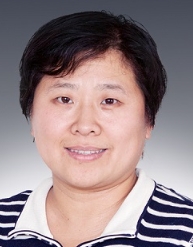 Zhongmin Yan (闫中敏)合作论文数Research Center of Software and Data Engineering, School of Software, Shandong University9Wei Wang (王维)合作论文数8
 Zhaohui Peng (彭朝晖)合作论文数School of Computer Science and Technology, Shandong University8
 Mingjing Du合作论文数8
 Guosheng Hao合作论文数6
 Qingyang Zhang合作论文数6qiang chu合作论文数5Yue HU (胡玥)合作论文数5Yali Liu合作论文数College of Computer Science and Technology, Jiangsu Normal University, Xuzhou, China5
 Shengxiang Yang合作论文数School of Computer Science and Informatics, De Montfort University;Centre for Computational Intelligence, De Montfort University5Xiangsheng Rong合作论文数5
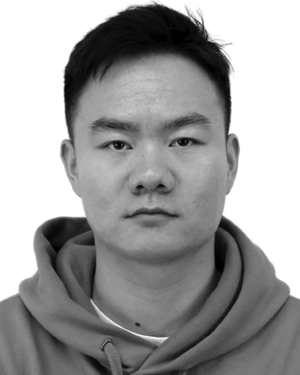 Jiarui Sun合作论文数4
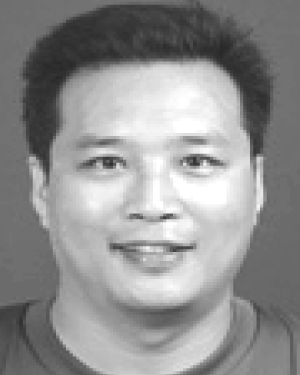 Yongxin Zhang合作论文数4HE Wen-bin (和文斌)合作论文数4Chen Huafeng (陈华凤)合作论文数4Qing Gu (顾晴)合作论文数4Miao Yang (杨淼)合作论文数4
 Xiangjun Zhao合作论文数4
 Gai-Ge Wang (王改革)合作论文数School of Computer Science and Technology, Jiangsu Normal University;School of Computer Science and Technology, Ocean University of China;Department of Electrical and Computer Engineering, University of Alberta;Department of Computer Science and Technology, Ocean University of China4Tongfei Gao合作论文数3Xiuxing Xu合作论文数3Xiangyu He合作论文数3Yang Haolin (杨昊霖)合作论文数3Zhang Guoxi (张国玺)合作论文数3Congcong Wu (吴丛丛)合作论文数3Hui-hui WANG (王惠惠)合作论文数3Gongjie Zhang (张功杰)合作论文数3Yin Liang (梁银)合作论文数3YaLi Liu (刘亚丽)合作论文数3
 Fuxia Xu (徐付霞)合作论文数School of Mathematical Sciences, Tiangong University3
 Shouyong Jiang (姜守勇)合作论文数School of Automation, Central South University3
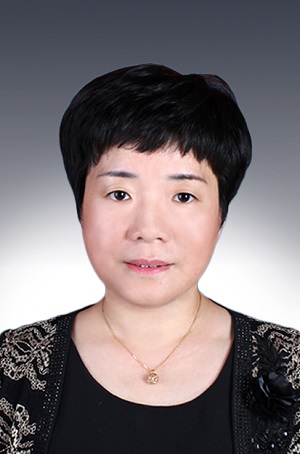 Hui Li (李晖)合作论文数Research Center of Software and Data Engineering, School of Software, Shandong University3
 Peng Pan (潘鹏)合作论文数School of Software, Shandong University3Zongmin Shang合作论文数3Wei-Chiang Hong合作论文数2Chen Sun合作论文数2Hui Song (宋慧)合作论文数2FAN Fei-ran (范斐然)合作论文数2Chen Wang (王琛)合作论文数2
 Zichen Zhang (张紫晨)合作论文数University of Alberta2
 Haiyang Wang (王海洋)合作论文数School of Computer Science and Technology, Shandong University2
 Xinjun Wang (王新军)合作论文数Research Center of Software and Data Engingefing, School of Software, Shandong University2Cao Luhui合作论文数2
 Yongqing Zheng (郑永清)合作论文数School of Software, Shandong University2




