In deep-sea mining operations, maintaining high-precision relative position between the mining vessel and the transport vessel is critical for safe ore slurry transfer and stable operation under complex marine disturbances. However, traditional distributed consensus control faces practical challenges in engineering implementation due to functional differences and varying operational objectives between the two vessels. A leader-follower dual-vessel cooperative control framework for deep-sea mining scenarios is proposed in this paper. By establishing a control hierarchy, the dual-vessel coordination problem is simplified into a unidirectional following task. As the mission-leading unit, the mining vessel tracks a predefined path using a reliable PID controller. The transport vessel acts as the follower, which takes the motion state of the mining vessel as the reference; the desired position, heading and speed commands are generated through leader-follower mapping to satisfy the requirements of cooperative navigation. To address environmental disturbances and model uncertainties, a finite-time disturbance observer (FTDO) is designed for real-time estimation. And a constrained integral sliding mode controller (CISMC) is proposed to realize the tracking control.. Simulation results show that the proposed leader-follower cooperative control framework can achieve finite-time uniformly asymptotic stability of the closed-loop system error, and dual-vessel cooperative tracking control under strong disturbance conditions is guaranteed.
The target of load forecasting in this paper is the output power of electric propulsion motor, which can provide reference for the real-time optimization of ship energy management. In electric propulsion ships, the characteristics of high proportion of propulsion load, high dynamic and strong environmental dependence pose challenges to accurate propulsion load prediction. In this paper, a short-term prediction model of hydrogen ship propulsion load based on Temporal Convolutional Network (TCN) and Bidirectional Long Short-Term Memory (BiLSTM) is proposed. Firstly, the temporal features of long historical distance in ship navigation are extracted by TCN. Then, the temporal features are used as the input of BiLSTM, while learning the forward and backward information of the temporal features ,and mine the potential time correlation of the propulsion load. Finally, the prediction result is mapped into the sample space through fully connected layer. In data processing, Variable Modal Decomposition (VMD) is used to separate the multicomponent and nonstationary component features from the original sequence. Then, the data dimension is reduced through Principal Component Analysis (PCA) to retain the effective information characteistics. In model training, K-means clustering is used to achieve automatic data classification to improve the prediction performance. Based on navigational and hydrometeorological dataset of a hydrogen ship, this paper conducts comparative simulation experiments on multiple prediction time scales for three ship conditions: normal, working and in/out-of-port conditions. Compared with other models, the experimental results show the performance superiority of the proposed method in various operational conditions.
To meet the critical need for autonomous underwater vehicle (AUV) collision avoidance during trajectory tracking in practical applications, this study proposes a reinforcement learning (RL)-based control strategy that integrates safety metrics into the reward function. Specifically, a control barrier function (CBF) is incorporated into the RL framework to ensure the AUV operates within predefined safety boundaries. By formulating a composite reward function that combines trajectory tracking objectives with collision avoidance metrics, the proposed method generates an RL-driven control policy that inherently satisfies safety requirements. Simulation results validate the effectiveness of the approach, demonstrating precise trajectory tracking while reliably avoiding obstacles. Simulation results demonstrate that the proposed method enables the AUV to avoid obstacles effectively while accurately tracking the desired trajectory. The control strategy exhibits superior performance in learning practical obstacle avoidance requirements.
In the field of autonomous underwater vehicles formation control, ensuring tracking precisely under input constraints brings a significant challenge, particularly for underactuated systems. This paper introduces a reinforcement learning-based distributed optimal formation tracking strategy that employs an actor-critic neural network framework. By incorporating bounded control in the kinematic step to limit the virtual control signal and applying a hyperbolic tangent function in the dynamic control step, input saturation is effectively managed within actuator constraints while ensuring accurate formation tracking. The control strategy leverages reinforcement learning to adaptively optimize tracking performance under varying conditions. Eventually, simulation results demonstrate the effectiveness of the proposed approach, highlighting improved system stability and reliable formation tracking in real-time scenarios.
Wave gliders, a widely used type of unmanned ocean robot, leverage wave and solar energy to achieve nearunlimited endurance, making them ideal tools for ocean monitoring and meteorological observations. However, existing more accurate wave glider modeling often requires computational fluid dynamics (CFD) calculations, especially considering the complexity of tandem hydrofoils. The computational cost is very high, making them unsuitable for real-time control applications. Therefore, this paper proposes a gray-box dynamic modeling approach that balances model accuracy and computational efficiency by integrating deep learning with traditional physical models. The gray-box model consists of a deep learning-based surrogate model and analytical dynamic equations, with the surrogate model replacing the CFD simulation process for the hydrofoils in the wave glider's dynamic model to improve the overall computational efficiency. After comparing the predictive performance of various deep learning models, this paper ultimately selects the Gated Recurrent Unit-Fully Convolutional Network (GRU-FCN) as the surrogate model. Validation of the proposed gray-box dynamic model under both regular and irregular wave conditions demonstrates excellent agreement with experimental data and CFD results. Furthermore, the gray-box dynamic model significantly improves computational efficiency, offering a reliable dynamic model reference for the real-time control of the wave glider.
A method to optimize the arrangement of an fiber Bragg grating (FBG) array is described to address the need to improve the accuracy of impact localization for aerospace vehicles. The sensitive area of the FBG, which is approximately elliptical, is analyzed using finite element simulation and experimental measurement. Based on this analysis, three optimized FBG sensing arrangements are proposed to improve the coverage of the FBG sensitive area at the center, located on the side and corner positions of an experimental test sample when subject to an impact. By employing the inverse problem analysis method in multiple repetitions of impact localization experiments, the accuracy of impact localization is improved from 74% with the traditional 4-corner arrangement to 84%, 88%, and 91% respectively for the three arrangements, demonstrating the effectiveness of the optimized FBG array arrangement method.
As offshore wind power moves into deeper waters, the required capacity of offshore wind farms continues to increase, and the demands for stability in the power system rise accordingly. This paper proposes a grid-forming control strategy for a fully DC transmission offshore wind series aggregation system. The strategy enables wind turbine units to establish and support voltage. The paper establishes a system of the offshore wind power DC series aggregation, and conducts detailed analyses of the wind turbine series aggregation grid-formation mode and the DC -DC topology of wind turbines. A PFM-PSM control strategy utilizing a DC/DC topology has been adopted, and an output voltage control strategy for the grid-forming series aggregation system is proposed. The model was also simulated using the RT-LAB real-time simulation system, and the simulation results verified the feasibility of the proposed strategies under various operating conditions.
With the rapid development of the aviation field, the importance of flight data has become increasingly prominent. It usually records the working status of key components and the control behavior of the crew, playing a significant role in aircraft maintenance, accident investigation, and flight quality assessment. The multi-dimensional flight parameter timing data possesses characteristics such as relevance, difference, and diversity; thus obtaining this type of data is challenging. Overcoming this obstacle by utilizing existing technology to expand flight parameter timing data is a major focus in current research. This paper summarizes the time series data enhancement techniques and the current research progress while also highlighting limitations in existing literature. Furthermore, it conducts experiments using real-time flight parameter data to analyze key issues related to time series data enhancement before finally describing future trends in enhancing flight parameter time series data.
This paper proposes an improved algorithm based on YOLOv5, named RepDrone-YOLOv5, to address the problem that the traditional detection algorithm has the problem of false detection and missed detection when detecting small targets due to the small target size, dense distribution and complex background of the UAV aerial imagery. First of all, in order to obtain and transmit a richer and more distinguished small target characteristics, adjust the sampling multiple and add a shallow features of the rich information in the model training process. At the same time, a RepVGG-based RepC3 feature extraction module is designed, by jointing local and global information to break the limitations of ordinary convolution extraction to obtain a greater experience. Further, an improved SPP module instead of the SPPF module to alleviate the effects of the loss of the pool layer on the loss of target information. Finally, an EIoU loss function optimizes the regression process of the prediction box and the detection box, and enhances the positioning ability of small targets. On the VisDrone2019 datasets, RepDroneYOLOv5 improves about 9 percentage points in mAP compared to the original YOLOv5 model, and the number of model parameters is reduced by about 80%.
The subject of the right of geographical indication includes the owner and the user of the right. However, after the infringement case of geographical indication trademark occurs, only the owner, namely the registered person, can file a lawsuit, and the user cannot obtain relief through judicial means. The rights protection power of registrants is weak, and the interests of users are in urgent need of protection. In order to protect the interests of market subjects and public interests of geographical indications, it is necessary to expand the scope of plaintiffs in geographical indications litigation to promote the development of geographical indications.
With the rapid development of global shipping, the technological change and market demand of Marine detection sensors have changed greatly. The harsh environment of the sea is easy to make shipping ships suffer extremely dangerous accidents such as leakage of chemical liquids such as petroleum. In order to enhance the detection of oil leakage in the Marine field, a detector is designed which can detect the relative thickness of each liquid layer in the oil-water mixture. The main feature is that the measuring electrode is arranged in a fixed position to form an array and integrated with the inductance conductivity sensor. The structure is simulated and optimized by finite element analysis, and the corresponding measurement circuit is designed. The experimental results show that the detector designed in this paper can realize the stratified detection of mixed liquid and the analysis and calculation of the oil content, and meet the requirements of the detection of oil-water mixed liquid in the ocean.
Aiming at the problems of uneven distribution of crowds in static crowd images, changes in head size, and diverse crowd densities, the accuracy of crowd counting decreases. This paper proposes an adaptive density-normalized crowd counting network YOLO-FPDM-DNM., the network improves the Darknet-53 structure, improves the feature extraction ability, introduces adaptive geometric propagation parameters in the Gaussian density module to solve the problem of head size change, and designs an adaptive density normalization module to solve the problem of excessive crowd density in some areas. The resulting network training is difficult and the accuracy rate is reduced. The experimental results show that compared with the DM-Count network structure with the best effect in the UCFQNRF dataset in recent years, the MAE is reduced by 2.9. MSE decreased by 4.7.
In Visual Communication Design (VCD), noise data is easy to appear, which reduces image quality and affects the effect of VCD. The non local mean image denoising algorithm is a good filtering denoising algorithm, but there are still issues of information interference and missing. To improve the performance of noise recognition and image denoising technology, this study proposes a non local mean image denoising algorithm based on machine learning technology. The whale optimization algorithm, as a machine learning technique, has good performance in seeking optimal solutions. Therefore, it is applied to optimize the filtering parameters of non local mean image denoising algorithms to improve the perforGAmance of non local mean image denoising algorithms. To address the shortcomings of the whale optimization algorithm, BP neural network is introduced for optimization. Finally, the experiment uses the improved particle swarm optimization algorithm to optimize the BPNN and applies it to the recognition and classification of noise data. Combining the above contents, the IBINLM image denoising algorithm is constructed experimentally. It is verified that the IPSO-BPNN model’s loss value is 0.12; The recognition accuracy of the model for noise pixels is 98.64%; F1 value reaches 96.32%; The fitting degree reaches 0.983. The PSNR of IBINLM algorithm is 35.86 dB; MSE is 0.29; AUC value reaches 0.903. The results show that the IPSO-BPNN model and IBINLM image denoising algorithm have better performance compared to other models, which can improve the quality of visual communication works, playing an essential role in image transmission and storage in visual communication design.
As an efficient heat transfer method, in-tube condensation heat transfer is widely used in various fields, including passive residual heat removal systems (PRHRS) of floating power plants under ocean conditions. The experimental investigation aimed to study the condensation heat transfer characteristics of steam in a 25 mm inner diameter horizontal tube with a heat transfer length of 1050 mm under rolling motion. The study used a mass flux of 30 kg/(m(2)center dot s) and investigated average vapor qualities, rolling amplitude, and rolling period ranging from 0.32 to 0.79, 0 degrees-20 degrees, and 10 s-20 s, respectively. The experimental results show that the condensation flow patterns under rolling conditions are more complex than those under non-rolling motion due to the influence of the rolling period and rolling amplitude. The instantaneous heat transfer coefficient (IHTC) changes periodically due to the rolling motion and has the same change period. The pulsation amplitude of the IHTC increases with increasing rolling amplitude but weakens as the vapor quality increases. The effect of the rolling period on the IHTC is much less than that of the rolling amplitude. At low vapor quality, the time-averaged heat transfer coefficient (THTC) under the rolling motion condition increases with the rolling amplitude and period, and the maximum enhancement of THTC is 44%. As the vapor quality increases, the THTC under rolling conditions is the same as that under non-rolling conditions. These findings provide important insights into the condensation heat transfer characteristics of vapor in a horizontal tube under rolling motion, which can help improve the design and operation of in-tube condensation heat transfer systems in various fields.
本科生创新能力的培养一直以来都备受关注.如何提高学生的创新热情,调动学生的创新积极性,使学生获得足够的创新能力和方法,是目前高等教育亟待解决的问题.课外科技创新活动是本科生培养创新能力的重要平台,但是由于本科生具有专业知识不足,科研道德尚未健全等特点,致使当前课外科技创新活动对培养本科生创新能力的效果有限.高校需要以规范课外科技活动开展方式为出发点,明确创新人才的培养方案和质量标准,健全相关课程培养体系,改革成果考核方式、科创活动普及方式,以求建设本科生电子信息创新能力培养的新模式.
The marine environment changes complexly, and the navigation of hovercraft is easily affected by waves and currents, etc. Due to the randomness and non-stationary nature of the ship motion, it is difficult to obtain the temporal and spatial characteristics of the ship movement with traditional ship motion prediction methods, resulting in low prediction accuracy. In this paper, a ConvLSTM-XGBoost variable weight combination model is proposed to extract the temporal and spatial characteristics of the ship motion, and the motion of the ship is predicted in one step. First, the genetic algorithm is used to optimize the nonlinear function offline, so as to obtain the optimal weights of the fitted values of the ConvLSTM and XGBoost models on the training set. Then, the k-nearest neighbour algorithm is used to find the corresponding weights of the predicted values of the two models and combine them into the final predicted value. Taking the roll and pitch in the real ship motion data as the the data set. Compared with the single model ConvLSTM and XGBoost, the roll and pitch predictions of the ConvLSTM-XGBoost variable weight combination model are significantly reduced on both RMSE and MAPE. The experimental results verified the effectiveness of the proposed algorithm.
Abstract As the number of running tasks increases dramatically on a cloud platform , the probability of task failure increases. Among the many reasons affecting task failure, the lack of information is straightforward and fatal. Suppose we can predict whether a task will generate missing information and take measures in advance. In that case, we can effectively reduce the probability of task failure and also avoid ineffective use of resources. This paper investigates the missing information of tasks and proposes a missing prediction algorithm based on an improved Mixture of Gaussian (GMM) algorithm. Specifically, we deeply analyze and process the cloud task information based on the latest cloud platform data released by Google Inc in 2019. Several clustering algorithms are used to make experimental comparisons to determine their suitability for prediction. Finally, we developed an optimized GMM algorithm to build the prediction model. The experiments show the model is fast and accurate and can significantly save system time and resource utilization.
压水堆核电厂发生严重事故后,核电站一回路大量放射性气溶胶会随着破口喷放进入安全壳气空间,受非能动安全壳冷却系统影响,热泳力和扩散泳力在颗粒沉积过程中将发挥重要作用.本文基于拉格朗日方法和CFD程序构建气溶胶沉积模型,并对模型进行验证.结果显示:本文所建立的气溶胶沉积模型CFD计算值与理论值符合良好,可为后续安全壳内非能动安全壳冷却系统作用下安全壳内气溶胶颗粒的运动沉积行为研究提供支持.
Aiming at the problems of insufficient detection accuracy of small targets and insufficient receptive field of feature points in the field of target detection, a YOLO target detection algorithm with hybrid atrous convolution pyramid is proposed. The algorithm firstly introduces atrous convolutions with different dilation rates into the feature pyramid network, and builds a hybrid receptive field module (HRFM), which enhances the ability to obtain global information by increasing the receptive field, and solves the problem of target occlusion; Secondly, design a pyramid network of atrous path aggregation, fusion of shallow feature information and high-level semantic information, improve the global detail information and representation ability of feature maps, and enhance the multi-scale adaptability of the model. Three progressive schemes are designed for testing on the VOC dataset. The experimental results show that the algorithm can effectively solve the problem of target occlusion and improve the detection accuracy of small targets.
The accuracy of the compressed sensing theory reconstruction algorithm is important for signal recovery. Sparsity Adaptive Matching Pursuit (SAMP) has a fixed step size in each iterative process of reconstruction, which has a significant impact on accuracy in actual use, often leading to overestimation and underestimation. In order to solve this problem, combined with the advantages of regular backtracking and variable step size, the article introduces the idea of retrospective in the atom selection stage. Then, the atoms are inspected using backtracking and re-screened. The algorithm uses regularization at the beginning to select atoms with higher energy and reduce the number of atoms in the candidate set at the threshold stage. During reconstruction, because the energy difference of the reconstructed signal decreases rapidly at the initial stage, and then the energy difference decreases slowly. This algorithm takes advantage of the large change rate of the hyperbolic function at the beginning and the slower change rate at the later stage. At first, a large step size is used. When the energy difference reaches a certain threshold, a small step size is used instead. After the actual simulation, the improved algorithm improves the reconstruction accuracy and the effect is better.
 Lijun Yu (于立君)合作论文数College of Automation, Harbin Engineering University81
 Hongzhang Jin (金宏章)合作论文数College of Humanities and Social Sciences, Harbin Engineering University8Chaoda Liu (刘朝达)合作论文数7
 Yun Lin (林云)合作论文数College of Information and Communication Engineering, Harbin Engineering University7Zhengan Wang合作论文数6Yukun Hu合作论文数6Li-feng TONG (童丽峰)合作论文数5
 Hongmei Wu (吴红梅)合作论文数College of Mathematical Sciences, Harbin Engineering University5Zhihong Wei合作论文数4Zhengkun Wang合作论文数4Fei Zhong (钟飞)合作论文数4Zequan Dong (董泽全)合作论文数4Qiang Wang合作论文数4
 Yuxin Zhao (赵玉新)合作论文数哈尔滨工程大学自动化学院4
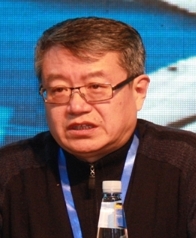 Kejun Wang (王科俊)合作论文数Harbin Engineering University;The Electronic Engineering, Harbin Institute of Information Technology4
 Deming Lin (林德明)合作论文数School of Public Administration and Policy, Dalian University of Technology4
 Lili Guo (郭黎利)合作论文数College of Information and Communication Engineering, Harbin Engineering University4
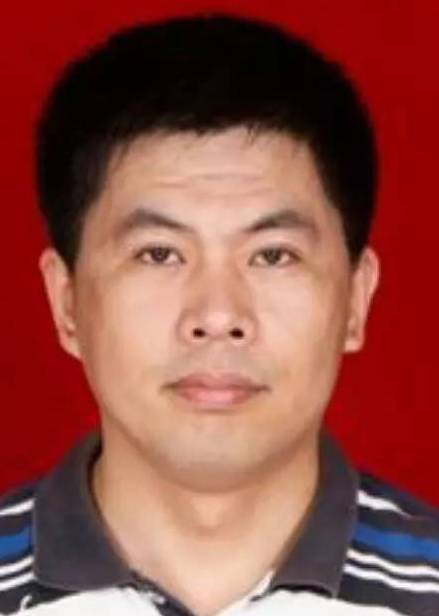 Hongwei Mo (莫宏伟)合作论文数College of Intelligent Systems Science and Engineering, Harbin Engineering University4Zhiqiang Wang合作论文数3chao che合作论文数3Shaoying LIU (刘少英)合作论文数3
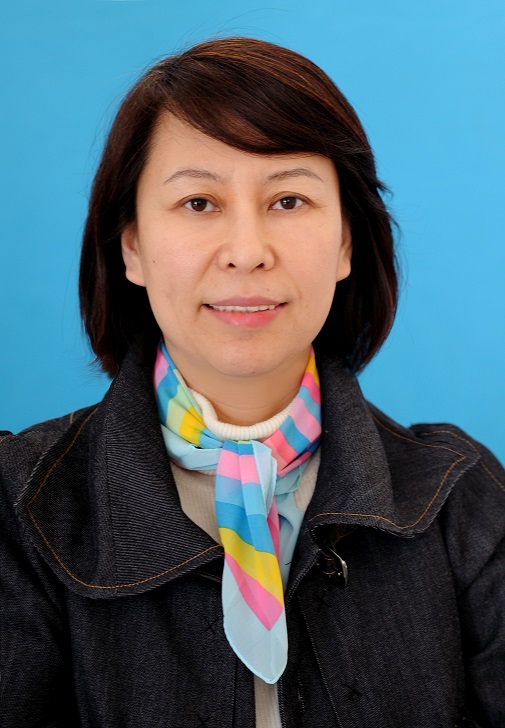 Xiaojun Bi (毕晓君)合作论文数School of Information Engineering, Minzu University of China3Kai Tian (田凯)合作论文数College of Computer Science And Technology, Harbin Engineering University3
 Xin Yuan (原新)合作论文数College of Intelligent Systems Science and Engineering, Harbin Engineering University3
 Yuchao Wang (王宇超)合作论文数College of Intelligent Systems Science and Engineering, Harbin Engineering University3
 Fengxu Guan (管凤旭)合作论文数College of Intelligent Systems Science and Engineering, Harbin Engineering University3
 Lifang Xu (徐立芳)合作论文数Engineering Training Center, Harbin Engineering University3
 Huixuan Fu (傅荟璇)合作论文数College of Intelligent Systems Science and Engineering, Harbin Engineering University3bo bo zhang合作论文数2Ce Shi合作论文数2Shuai Zhou合作论文数2Weijie Sun合作论文数2Ying Ding合作论文数2Jing GAO (高菁)合作论文数2TianYu GAO (高天禹)合作论文数2Ping Xue合作论文数2
 Rong Sun (孙蓉)合作论文数College of Intelligent Systems Science and Engineering, Harbin Engineering University2Shanshan Jin合作论文数2Qiang Pan (潘强)合作论文数2
 Jiang You (游江)合作论文数College of Intelligent Systems Science and Engineering, Harbin Engineering University;Yantai Research Institute, Harbin Engineering University2
 Zheng Dou (窦峥)合作论文数College of Information and Communication Engineering, Harbin Engineering University2
 Sheng Liu (刘胜)合作论文数College of Intelligent Systems Science and Engineering, Harbin Engineering University2
 Lihua Liang (梁利华)合作论文数College of Intelligent Systems Science and Engineering, Harbin Engineering University2
 Ping Huang (黄平)合作论文数College of Intelligent Systems Science and Engineering, Harbin Engineering University2
 Zhongli Ma (马忠丽)合作论文数哈尔滨工程大学自动化学院2
 Li Su (苏丽)合作论文数College of Intelligent Systems Science and Engineering, Harbin Engineering University2
 Xueying Wang合作论文数Liaoning University of Technology Liaoning Institute of Technology, Liaoning University of Technology2
 Fanming Liu (刘繁明)合作论文数College of Intelligent Systems Science and Engineering, Harbin Engineering University2




