This obituary of William Hodson ("Bill") Brock (1936-2025) outlines his life and career as one of the leading historians of science, especially chemistry, of his generation. It describes his difficult childhood, his work at the University of Leicester (where he spent his entire career), his research and writing, and his contributions to the history of science community, concluding with a summary of the remarkable number of tributes paid to him following his death.
Als ich vor zehn Jahren die Ausarbeitung der ersten Auflage dieser Schrift begann, liess ich mich von der Absicht und der Hoffnung leiten, durch deren Veröffentlichung zur Beseitigung der Unklarheiten und Zweifel, welche sich in den damals um die Beherrschung der Chemie streitenden Ansichten und Theorien so zahlreich nachweisen liessen, mein Scherflein beizutragen. Ich war der Meinung, dass die Verworrenheit der Polemik jener Zeit in der Hauptsache auf falschen Auffassungen der Bedeutung der Hypothesen und Theorien beruhe, denen die Einen einen gar zu grossen, die Anderen einen viel zu geringen Werth beizulegen geneigt waren. Die Hypothesen und die auf sie gegründeten Theorien als nothwendige Hülfsmittel auch der chemischen Forschung darzustellen, ihre Geltung aber auf das Maass einzuschränken, welches ihnen in der theoretischen Physik seit lange zugestanden wird, war der Hauptzweck meines Unternehmens.
This collection of essays brings together detailed and insightful contributions on how in-formation about medical substances was recorded, organised, and transmitted in different locales tied to the Atlantic World. As Pablo F. Gómez ’ s afterword emphasises, the contradic-tory and peculiar nature of the early modern pharmacopoeia makes this a fertile space for historical enquiry. In illuminating the complex interplay of political, social, and economic factors which shaped the world of healing goods, the volume provides new perspectives on material exchange and the entanglement of knowledge arising from colonial and commer-cial expansion in multiple milieus.
{VII} Ten years ago, when I began work on the first edition of this book, I was guided by the intention and hope of making a modest contribution by its publication towards eliminating the unclarity and doubt regarding the many viewpoints and theories that were then contending for domination in chemistry. I was of the opinion that the confusing polemics of that time had their major source in false conceptions of the significance of hypotheses and theories, to which some were inclined to attribute much too great, others far too little value. The principal goal of my undertaking was to portray hypotheses and the theories based on them as necessary aids to chemical research, but to limit their validity to the degree that has long been attributed to them in theoretical physics. I hoped thereby to pave the way for the further development of theoretical chemistry, and simultaneously to make its more recent results accessible to a wider circle. Two years later, when I sent the thrice-revised manuscript to the press, I believed I was indeed providing a service to scientists who were less familiar with chemistry; but my hope to bring a benefit to chemistry itself and to many of its representatives gave way to uneasy misgivings. My small book appeared to me to provide so little detail {VIII} and positive content that I no longer ventured to dedicate it to my honored mentor, as I had intended.
Es sind sechzig Jahre verflossen, seit Claude Louis Berthollet sein classisches Werk Versuch einer chemischen Statik der wissenschaftlichen Welt übergab. Er versuchte in demselben, die Mannigfaltigkeit der chemischen Erscheinungen auf bestimmte unveränderliche Grundeigenschaften der Materie zurückzuführen in derselben Art, wie die Astronomie die Himmelserscheinungen zurückgeführt hat auf ein einheitliches Princip, auf das der allgemeinen Gravitation.
Dass die bis jetzt unzerlegten chemischen Elemente absolut unzerlegbare Stoffe seien, ist gegenwärtig mindestens sehr unwahrscheinlich. Vielmehr scheint es, dass die Atome der Elemente nicht die letzten, sondern nur die näheren Bestandtheile der Molekeln sowohl der Elemente wie der Verbindungen bilden, die Molekeln oder Molecule als Massentheile erster, die Atome als solche zweiter Ordnung anzusehen sind, die ihrerseits wiederum aus Massentheilchen einer dritten höheren Ordnung bestehen werden.
{1} Sixty years have passed since Claude Louis Berthollet presented his classic Essai de statique chimique to the scientific world. In this work he attempted to trace the great diversity of chemical phenomena back to certain immutable fundamental properties of matter, in the same way that astronomy had traced the heavenly phenomena to the unitary principle of universal gravitation.
Previous articleNext article No AccessGeneralGlen E. Rodgers. Traveling with the Atom: A Scientific Guide to Europe and Beyond. 551 pp., app., indexes. Croydon: Royal Society of Chemistry, 2019. £29.99 (paper); ISBN 9781788015288. E-book available.Alan RockeAlan Rocke Search for more articles by this author PDFPDF PLUSFull Text Add to favoritesDownload CitationTrack CitationsPermissionsReprints Share onFacebookTwitterLinkedInRedditEmail SectionsMoreDetailsFiguresReferencesCited by Isis Volume 112, Number 1March 2021 Publication of the History of Science Society Article DOIhttps://doi.org/10.1086/713181 Views: 91Total views on this site Citations: 1Citations are reported from Crossref © 2021 by The History of Science Society. All rights reserved.PDF download Crossref reports the following articles citing this article: Isis Current Bibliography of the History of Science and Its Cultural Influences 2021, Isis 112, no.S1S1 (Dec 2021): 1–300.https://doi.org/10.1086/717575
As her second and third names suggest, Theresa Kopp Baumann (1856-1944) was the daughter and subsequently the wife of eminent German academic chemists. Her substantial unpublished autobiography, written ca. 1910 and presented here in English translation in an edited and considerably abridged form, provides unique insight from a privileged female perspective into the socio-cultural aspects of German academic science in its period of greatest international reputation and influence. In the two cases-in-point that are vividly recounted there - her life as daughter and then as wife - it also gives shape and colour to the many ways in which gendered domestic roles invisibly condition and assist scientific activity.
The 2020 annual meeting of the History of Science Society was planned as a joint event with the Society for History of Technology (SHOT), to be held from 8 to 11 October in New Orleans, a city known for its unmatched joie de vivre and a substantial cultural and economic presence that belies its precarious environmental and social realities. The high number of 675 abstract submissions and over 90 accepted sessions for HSS alone attested to the attraction that the joint endeavor in NOLA had for our community. With 32 joint sessions (25 organized sessions and 7 roundtables), the exciting program developed inMarch and April 2020manifested a shared enthusiasm frommembers of both societies to explore productive overlaps. The rapid spread of the COVID pandemic then forced us to venture into new ground. By June 2020 it was clear that an in-person meeting in NewOrleans was impossible. For us, the program co-chairs, this meant that we were to prepare two programs in one year. Working remotely on a program for a joint annual meeting with SHOT was only the first big and time-consuming challenge. Switching gears for going virtual required reenvisioning a new proposal, program, and implementation. The resulting HSS and SHOT 2020 Virtual Forum, which ran from 8 to 10 October, was not meant to replace the in-person meeting we had planned with SHOT in New Orleans. Our Society’s first virtual event aimed to reflect the agenda of a joint endeavor with SHOT; but, at the same time, it was a truly different, and much smaller, gathering developed in summer 2020 amidst unsettling political tensions, racial reckoning, and an accumulating health crisis. In response to these circumstances, the Virtual Forum was designed to speak to the current moment, discuss themes of broad interest, and address urgent matters that affect our members and society at large. The regular in-person joint annual meeting with SHOT was postponed—it is now to take place in New Orleans in late November 2021—and everyone accepted to the 2020 meeting has received instructions about their options to present in the coming year. Planning the Virtual Forum was done by way of a new ad hoc committee. Headed by us, as program co-chairs, and Karen-Beth Scholthof, chair of the Committee on Meetings and Programs, the Virtual Forum Committee brought together representatives of the Executive Committee, the Council, the Committee on Education and Engagement, the Committee on Technology and Communication, and the Graduate and Early Career Caucus. Our special thanks go to Luis Campos, Jean-François Gauvin, Gwen Kay, Sarah Naramore, Sarah Pickman, Kathleen Shephard, Karen Rader, and Sara Qidwai for their invaluable advice and energetic support. The Virtual Forum Committee’s composition was crucial to making the meeting a success. We experimented with a lot of things: a new schedule with shorter sessions and longer breaks between each of them; a virtual platform; a new selection strategy that asked organizers of some of the sessions initially chosen for the 2020 program to refine their proposals for a virtual format; a focus on roundtables that addressed themes of broad interest; a new format to honor the Sarton Medal winner by way of an hour-long conversation; the “Authors’ Pitch” for book presentations produced by authors themselves; and, finally, new sessions organized by HSS constituencies that brought together many different voices throughout HSS and put the future of the Society at center stage. To capture some of the spirit of in-person meetings, we included Happy Hours in the
This chapter seeks to understand the context and sequelae of Justus Liebig’s model for university research and teaching. This model was arguably the most important single element in the international rise of graduate education and research, not just in chemistry, but more broadly, over the course of the 19th century, in all academic fields. This chapter avoids hagiography by employing an eclectic approach that places emphasis on contingencies of time, place, and discipline, and briefly examines the results of the story not just in Germany, but also in France, Britain, and the United States.
Without dwelling on issues of priority regarding the discovery of the periodic system of the elements, this study offers a connected narrative regarding Lothar Meyer’s investigative pathway from the spring and summer of 1856 until the end of 1869, in his gradually deepening understanding of periodic relationships among the elements. Dmitrii Mendeleev’s route to periodicity has been the subject of extensive investigation and debate; by contrast, there is nothing in the literature that takes a similarly detailed look at Lothar Meyer’s personal pathway to the periodic system. This study strives toward a deeper understanding of the history of the discovery of the archetypical symbol of chemistry as a whole, the periodic table; it concludes by offering a wider object lesson.
This essay describes the complexities, challenges, and pleasures of translating from German into English a charming fantasy about the world of molecules, published in 1882 by the chemist and historian Hermann Kopp (1817-1892).
 Gisela Boeck合作论文数7Hermann Kopp合作论文数3Aj Ihde合作论文数2Christine Keiner合作论文数1Anya Zilberstein合作论文数1Pedro M. P. Raposo合作论文数1Laura Stark合作论文数1sharon mulvey合作论文数1Kathryn Davis合作论文数1John Carson合作论文数Department of History, College of Literature, Science, and the Arts, University of Michigan-Ann Arbor1
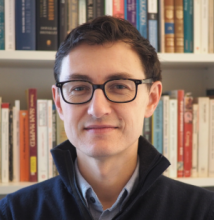 Etienne Benson合作论文数History and Sociology of Science, School of Arts & Sciences, University of Pennsylvania1
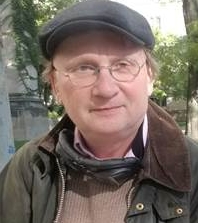 Adrian Johns合作论文数Department of History, University of Chicago1Rankin Alisha合作论文数1
 Katharine Park合作论文数Department of the History of Science, Harvard University1
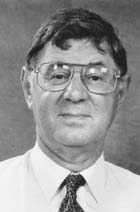 G. Jeffery Leigh合作论文数Department of Environmental Science, University of Sussex1
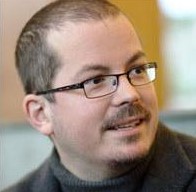 Dániel Margócsy合作论文数Department of History and Philosophy of Science, University of Cambridge1
 Susan Jones合作论文数Department of Ecology, Evolution, and Behavior, College of Biological Sciences, University of Minnesota1Keller Vera合作论文数Clark Honors College, University of Oregon1William B. Jensen合作论文数1
 Janet Browne合作论文数Department of the History of Science, Harvard University1Tara H. Abraham合作论文数Max Planck Institute for the History of Science, Wilhelm1Jean-François Gauvin合作论文数1Luciano Boschiero合作论文数1
 George W. Downs合作论文数Political Science Department, New York University1
 Nidhal Guessoum合作论文数American University of Sharjah Sharjah United Arab Emirates1Christine Von Oertzen合作论文数1David C. Lindberg合作论文数1Conevery Bolton Valencius合作论文数1
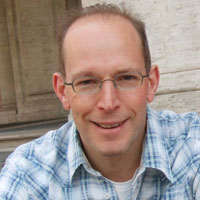 Nick Hopwood合作论文数Department of History and Philosophy of Science, University of Cambridge1
 Jeremy Vetter合作论文数Department of History, Social Sciences 215, University of Arizona1Soraya De Chadarevian合作论文数1
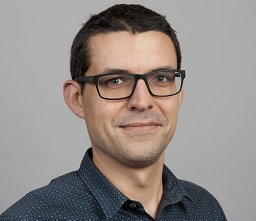 Raf De Bont合作论文数Research Unit for Cultural History since 1750, KU Leuven1
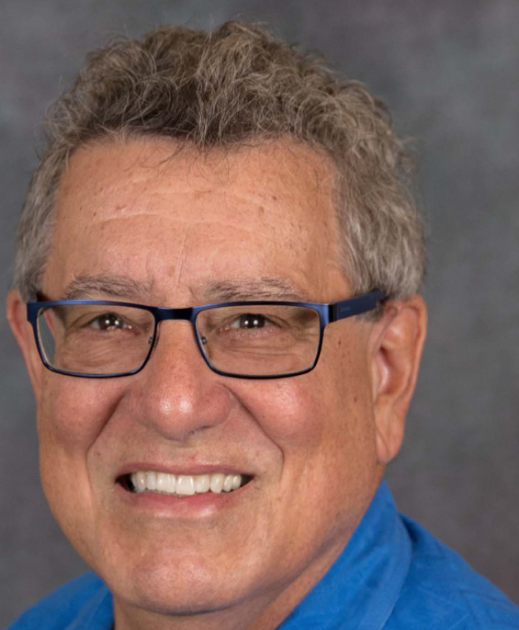 David M. Rocke合作论文数Department of Public Health Sciences, School of Medicine, University of California, Davis;Department of Biomedical Engineering, University of California, Davis;Medical Center, University of California, Davis1
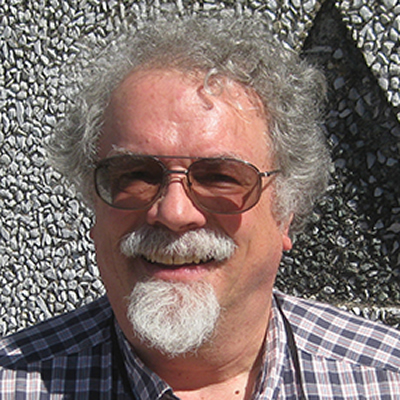 Michael H. Shank (麦可·香克)合作论文数Department of the History of Science, Tsinghua University1Sharrona Pearl合作论文数Department of the History of Science, Harvard University1Paola Bertucci合作论文数Dipartimento di Filosofia, Università di Bologna1
 Sara J. Schechner合作论文数Department of the History of Science, Harvard University1Mott T. Greene合作论文数1Marwa Elshakry合作论文数1




