Tight relationships exist in the local universe between the central stellar properties of galaxies and the mass of their supermassive black hole. These suggest galaxies and black holes co-evolve, with the main regulation mechanism being energetic feedback from accretion onto the black hole during its quasar phase. A crucial question is how the relationship between black holes and galaxies evolves with time; a key epoch to probe this relationship is at the peaks of star formation and black hole growth 8-12 billion years ago (redshifts 1-3). Here we report a dynamical measurement of the mass of the black hole in a luminous quasar at a redshift of 2, with a look back time of 11 billion years, by spatially resolving the broad line region. We detect a 40 micro-arcsecond (0.31 pc) spatial offset between the red and blue photocenters of the H$\alpha$ line that traces the velocity gradient of a rotating broad line region. The flux and differential phase spectra are well reproduced by a thick, moderately inclined disk of gas clouds within the sphere of influence of a central black hole with a mass of 3.2x10$^{8}$ solar masses. Molecular gas data reveal a dynamical mass for the host galaxy of 6x10$^{11}$ solar masses, which indicates an under-massive black hole accreting at a super-Eddington rate. This suggests a host galaxy that grew faster than the supermassive black hole, indicating a delay between galaxy and black hole formation for some systems.
The detection of low-mass planets orbiting the nearest stars is a central stake of exoplanetary science, as they can be directly characterized much more easily than their distant counterparts. Here, we present the results of our long-term astrometric observations of the nearest binary M-dwarf Gliese 65 AB (GJ65), located at a distance of only 2.67 pc. We monitored the relative astrometry of the two components from 2016 to 2023 with the VLTI/GRAVITY interferometric instrument. We derived highly accurate orbital parameters for the stellar system, along with the dynamical masses of the two red dwarfs. The GRAVITY measurements exhibit a mean accuracy per epoch of 50-60 microarcseconds in 1.5h of observing time using the 1.8m Auxiliary Telescopes. The residuals of the two-body orbital fit enable us to search for the presence of companions orbiting one of the two stars (S-type orbit) through the reflex motion they imprint on the differential A-B astrometry. We detected a Neptune-mass candidate companion with an orbital period of p = 156 +/- 1 d and a mass of m = 36 +/- 7 Mearth. The best-fit orbit is within the dynamical stability region of the stellar pair. It has a low eccentricity, e = 0.1 - 0.3, and the planetary orbit plane has a moderate-to-high inclination of i > 30{\deg} with respect to the stellar pair, with further observations required to confirm these values. These observations demonstrate the capability of interferometric astrometry to reach microarcsecond accuracy in the narrow-angle regime for planet detection by reflex motion from the ground. This capability offers new perspectives and potential synergies with Gaia in the pursuit of low-mass exoplanets in the solar neighborhood.
Aims.The goal of this work is to characterize the polarization effects of the beam path of the Very Large Telescope Interferometer (VLTI) and the GRAVITY beam combiner instrument. This is useful for two reasons: to calibrate polarimetric observations with GRAVITY for instrumental effects and to understand the systematic error introduced to the astrometry due to birefringence when observing targets with a significant intrinsic polarization.Methods.By combining a model of the VLTI light path and its mirrors and dedicated experimental data, we constructed a full polarization model of the VLTI Unit Telescopes (UTs) and the GRAVITY instrument. We first characterized all telescopes together to construct a universal UT calibration model for polarized targets with the VLTI. We then expanded the model to include the differential birefringence between the UTs. With this, we were able to constrain the systematic errors and the contrast loss for highly polarized targets.Results.Along with this paper, we have published a standalone Python package that can be used to calibrate the instrumental effects on polarimetric observations. This enables the community to use GRAVITY with the UTs to observe targets in a polarimetric observing mode. We demonstrate the calibration model with the Galactic Center star IRS 16C. For this source, we were able to constrain the polarization degree to within 0.4% and the polarization angle to within 5° while being consistent with the literature values. Furthermore, we show that there is no significant contrast loss, even if the science and fringe-tracker targets have significantly different polarization, and we determine that the phase error in such an observation is smaller than 1°, corresponding to an astrometric error of 10 µas.Conclusions.With this work, we enable the use by the community of the polarimetric mode with GRAVITY/UTs and outline the steps necessary to observe and calibrate polarized targets with GRAVITY. We demonstrate that it is possible to measure the intrinsic polarization of astrophysical sources with high precision and that polarization effects do not limit astrometric observations of polarized targets.
The dark compact object at the centre of the Milky Way is well established to be a supermassive black hole with mass M-center dot similar to 4.3 x 10(6) M-circle dot, but the nature of its environment is still under debate. In this work, we used astrometric and spectroscopic measurements of the motion of the star S2, one of the closest stars to the massive black hole, to determine an upper limit on an extended mass composed of a massive vector field around Sagittarius A*. For a vector with effective mass 10(-19) (less than or similar to) m(s less than or similar to) 10(-18) eV, our Markov chain Monte Carlo analysis shows no evidence for such a cloud, placing an upper bound M-cloud (less than or similar to) 0.1 % M-center dot at 3 sigma confidence level. We show that dynamical friction exerted by the medium on S2 motion plays no role in the analysis performed in this and previous works, and can be neglected thus.
Studying the orbital motion of stars around Sagittarius A* in the Galactic center provides a unique opportunity to probe the gravitational potential near the supermassive black hole at the heart of our Galaxy. Interferometric data obtained with the GRAVITY instrument at the Very Large Telescope Interferometer (VLTI) since 2016 has allowed us to achieve unprecedented precision in tracking the orbits of these stars. GRAVITY data have been key to detecting the in-plane, prograde Schwarzschild precession of the orbit of the star S2 that is predicted by general relativity. By combining astrometric and spectroscopic data from multiple stars, including S2, S29, S38, and S55 - for which we have data around their time of pericenter passage with GRAVITY - we can now strengthen the significance of this detection to an approximately 10 sigma confidence level. The prograde precession of S2's orbit provides valuable insights into the potential presence of an extended mass distribution surrounding Sagittarius A*, which could consist of a dynamically relaxed stellar cusp comprising old stars and stellar remnants, along with a possible dark matter spike. Our analysis, based on two plausible density profiles - a power-law and a Plummer profile - constrains the enclosed mass within the orbit of S2 to be consistent with zero, establishing an upper limit of approximately 1200 M-circle dot with a 1 sigma confidence level. This significantly improves our constraints on the mass distribution in the Galactic center. Our upper limit is very close to the expected value from numerical simulations for a stellar cusp in the Galactic center, leaving little room for a significant enhancement of dark matter density near Sagittarius A*.
We present new astrometric and polarimetric observations of flares from Sgr A* obtained with GRAVITY, the near-infrared interferometer at ESO’s Very Large Telescope Interferometer (VLTI), bringing the total sample of well-covered astrometric flares to four and polarimetric flares to six. Of all flares, two are well covered in both domains. All astrometric flares show clockwise motion in the plane of the sky with a period of around an hour, and the polarization vector rotates by one full loop in the same time. Given the apparent similarities of the flares, we present a common fit, taking into account the absence of strong Doppler boosting peaks in the light curves and the EHT-measured geometry. Our results are consistent with and significantly strengthen our model from 2018. First, we find that the combination of polarization period and measured flare radius of around nine gravitational radii (9Rg ≈ 1.5RISCO, innermost stable circular orbit) is consistent with Keplerian orbital motion of hot spots in the innermost accretion zone. The mass inside the flares’ radius is consistent with the 4.297 × 10⁶ M⊙ measured from stellar orbits at several thousand Rg. This finding and the diameter of the millimeter shadow of Sgr A* thus support a single black hole model. Second, the magnetic field configuration is predominantly poloidal (vertical), and the flares’ orbital plane has a moderate inclination with respect to the plane of the sky, as shown by the non-detection of Doppler-boosting and the fact that we observe one polarization loop per astrometric loop. Finally, both the position angle on the sky and the required magnetic field strength suggest that the accretion flow is fueled and controlled by the winds of the massive young stars of the clockwise stellar disk 1–5″ from Sgr A*, in agreement with recent simulations.
The motion of S2, one of the stars closest to the Galactic Centre, has been measured accurately and used to study the compact object at the centre of the Milky Way. It is commonly accepted that this object is a supermassive black hole, but the nature of its environment is open to discussion. Here, we investigate the possibility that dark matter in the form of an ultralight scalar field ‘cloud’ clusters around Sgr A*. We use the available data for S2 to perform a Markov Chain Monte Carlo analysis and find the best-fit estimates for a scalar cloud structure. Our results show no substantial evidence for such structures. When the cloud size is on the order of the size of the orbit of S2, we are able to constrain its mass to be smaller than 0.1 % of the central mass, setting a strong bound on the presence of new fields in the galactic centre.
In the Milky Way the central massive black hole, SgrA*, coexists with a compact nuclear star cluster that contains a sub-parsec concentration of fast-moving young stars called S-stars. Their location and age are not easily explained by current star formation models, and in several scenarios the presence of an intermediate-mass black hole (IMBH) has been invoked. We use GRAVITY astrometric and SINFONI, KECK, and GNIRS spectroscopic data of S2 to investigate whether a second massive object could be present deep in the Galactic Centre (GC) in the form of an IMBH binary companion to SgrA*. To solve the three-body problem, we used a post-Newtonian framework and consider two types of settings: (i) a hierarchical set-up where the star S2 orbits the SgrA* - IMBH binary and (ii) a non-hierarchical set-up where the IMBH trajectory lies outside the S2 orbit. In both cases we explore the full 20-dimensional parameter space by employing a Bayesian dynamic nested sampling method. For the hierarchical case we find: IMBH masses > 2000 Msun on orbits with smaller semi-major axes than S2 are largely excluded. For the non-hierarchical case the parameter space contains several pockets of valid IMBH solutions. However, a closer analysis of their impact on the resident stars reveals that IMBHs on semi-major axes larger than S2 tend to disrupt the S-star cluster in less than a million years. This makes the existence of an IMBH among the S-stars highly unlikely. The current S2 data do not formally require the presence of an IMBH. If an IMBH hides in the GC, it has to be either a low-mass IMBH inside the S2 orbit that moves on a short and significantly inclined trajectory or an IMBH with a semi-major axis >1". We provide the parameter maps of valid IMBH solutions in the GC and discuss the general structure of our results. (abridged)
Stars orbiting the compact radio source Sgr A* in the Galactic Center serve as precision probes of the gravitational field around the closest massive black hole. In addition to adaptive optics-assisted astrometry (with NACO/VLT) and spectroscopy (with SINFONI/VLT, NIRC2/Keck and GNIRS/Gemini) over three decades, we have obtained 30–100 μas astrometry since 2017 with the four-telescope interferometric beam combiner GRAVITY/VLTI, capable of reaching a sensitivity of mK = 20 when combining data from one night. We present the simultaneous detection of several stars within the diffraction limit of a single telescope, illustrating the power of interferometry in the field. The new data for the stars S2, S29, S38, and S55 yield significant accelerations between March and July 2021, as these stars pass the pericenters of their orbits between 2018 and 2023. This allows for a high-precision determination of the gravitational potential around Sgr A*. Our data are in excellent agreement with general relativity orbits around a single central point mass, M• = 4.30 × 10⁶ M⊙, with a precision of about ±0.25%. We improve the significance of our detection of the Schwarzschild precession in the S2 orbit to 7σ. Assuming plausible density profiles, the extended mass component inside the S2 apocenter (≈0.23″ or 2.4 × 10⁴ RS) must be ≲3000 M⊙ (1σ), or ≲0.1% of M•. Adding the enclosed mass determinations from 13 stars orbiting Sgr A* at larger radii, the innermost radius at which the excess mass beyond Sgr A* is tentatively seen is r ≈ 2.5″ ≥ 10× the apocenter of S2. This is in full harmony with the stellar mass distribution (including stellar-mass black holes) obtained from the spatially resolved luminosity function.
GRAVITY+ is the upgrade of GRAVITY and the Very Large Telescope Interferometer (VLTI) with wide-separation fringe tracking, new adaptive optics, and laser guide stars on all four 8~m Unit Telescopes (UTs), for ever fainter, all-sky, high contrast, milliarcsecond interferometry. Here we present the design and first results of the first phase of GRAVITY+, called GRAVITY Wide. GRAVITY Wide combines the dual-beam capabilities of the VLTI and the GRAVITY instrument to increase the maximum separation between the science target and the reference star from 2 arcseconds with the 8 m UTs up to several 10 arcseconds, limited only by the Earth's turbulent atmosphere. This increases the sky-coverage of GRAVITY by two orders of magnitude, opening up milliarcsecond resolution observations of faint objects, and in particular the extragalactic sky. The first observations in 2019 - 2022 include first infrared interferometry of two redshift $z\sim2$ quasars, interferometric imaging on the binary system HD 105913A, and repeated observations of multiple star systems in the Orion Trapezium Cluster. We find the coherence loss between the science object and fringe-tracking reference star well described by the turbulence of the Earth's atmosphere. We confirm that the larger apertures of the UTs result in higher visibilities for a given separation due to larger overlap of the projected pupils on sky and give predictions for visibility loss as a function of separation to be used for future planning.
A high spectral resolution investigation of diffuse interstellar bands (DIBs) in the near-infrared ($YJ$ band) is conducted to test new methods, to confirm and improve existing parameters, and to search for new DIBs. Methods: The CRyogenic high-resolution InfraRed Echelle Spectrograph (CRIRES) on the European Southern Observatory's Very Large Telescope was employed to obtain spectra of four reddened background supergiant stars (HD 183143, HD 165784, HD 92207, HD 111613) and an unreddened comparison star (HD 87737) at the highest resolution of $R \approx 100000$ currently achievable at near-infrared wavelengths. The correction for telluric absorption was performed by a modelling approach. Non-local thermodynamic equilibrium spectral modelling of available optical and the new near-infrared spectra facilitated a comprehensive characterisation of the atmospheric properties of the background stars. A more precise and accurate determination of the reddening law along the sight lines could be achieved than feasible before by comparison of the observed and model spectral energy distributions. For DIBs that overlap with stellar lines the DIB profile shapes could be recovered. Results: Seventeen known near-infrared DIBs were confirmed, and 12 previously unknown and generally weaker DIBs were identified in the $YJ$ band. Three DIBs that show uniform profiles along all sight lines were identified, possibly connected to transitions from a common lower state of the same carrier. The divergent extinction curve towards the frequently discussed DIB standard star HD 183143 could be reproduced for the first time, requiring extra absorption by $\sim$3.5 mag due to polycyclic aromatic hydrocarbons (PAHs) to match the ultraviolet extinction bump. This extra absorption probably stems from a circumstellar bubble lying in front of the star which is intersected tangentially by the line of sight.
Stellar orbits at the Galactic Center provide a very clean probe of the gravitational potential of the supermassive black hole. They can be studied with unique precision, beyond the confusion limit of a single telescope, with the near-infrared interferometer GRAVITY. Imaging is essential to search the field for faint, unknown stars on short orbits which potentially could constrain the black hole spin. Furthermore, it provides the starting point for astrometric fitting to derive highly accurate stellar positions. Here, we present GR, a new imaging tool specifically designed for Galactic Center observations with GRAVITY. The algorithm is based on a Bayesian interpretation of the imaging problem, formulated in the framework of information field theory and building upon existing works in radio-interferometric imaging. Its application to GRAVITY observations from 2021 yields the deepest images to date of the Galactic Center on scales of a few milliarcseconds. The images reveal the complicated source structure within the central 100 mas around Sgr A*, where we detected the stars S29 and S55 and confirm S62 on its trajectory, slowly approaching Sgr A*. Furthermore, we were able to detect S38, S42, S60, and S63 in a series of exposures for which we offset the fiber from Sgr A*. We provide an update on the orbits of all aforementioned stars. In addition to these known sources, the images also reveal a faint star moving to the west at a high angular velocity. We cannot find any coincidence with any known source and, thus, we refer to the new star as S300. From the flux ratio with S29, we estimate its K-band magnitude as mK (S300) ' 19.0−19.3. Images obtained with CLEAN confirm the detection. To assess the sensitivity of our images, we note that fiber damping reduces the apparent magnitude of S300 and the effect increases throughout the year as the star moves away from the field center. Furthermore, we performed a series of source injection tests. Under favorable circumstances, sources well below a magnitude of 20 can be recovered, while 19.7 is considered the more universal limit for a good data set.
GRAVITY+ is the upgrade for GRAVITY and the Very Large Telescope Interferometer (VLTI) with wide-separation fringe tracking, new adaptive optics, and laser guide stars on all four 8 m Unit Telescopes (UTs) to enable ever-fainter, all-sky, high-contrast, milliarcsecond interferometry. Here we present the design and first results of the first phase of GRAVITY+, known as GRAVITY Wide. GRAVITY Wide combines the dual-beam capabilities of the VLTI and the GRAVITY instrument to increase the maximum separation between the science target and the reference star from 2 arcseconds with the 8 m UTs up to several 10 arcseconds, limited only by the Earth’s turbulent atmosphere. This increases the sky-coverage of GRAVITY by two orders of magnitude, opening up milliarcsecond resolution observations of faint objects and, in particular, the extragalactic sky. The first observations in 2019–2022 include the first infrared interferometry of two redshift z ~ 2 quasars, interferometric imaging of the binary system HD 105913A, and repeat observations of multiple star systems in the Orion Trapezium Cluster. We find the coherence loss between the science object and fringe-tracking reference star well described by the turbulence of the Earth’s atmosphere. We confirm that the larger apertures of the UTs result in higher visibilities for a given separation due to the broader overlap of the projected pupils on the sky and provide predictions for visibility loss as a function of separation to be used for future planning.
The GRAVITY instrument on the ESO VLTI pioneers the field of high-precision near-infrared interferometry by providing astrometry at the 10−100 μas level. Measurements at this high precision crucially depend on the control of systematic effects. We investigate how aberrations introduced by small optical imperfections along the path from the telescope to the detector affect the astrometry. We develop an analytical model that describes the effect of these aberrations on the measurement of complex visibilities. Our formalism accounts for pupil-plane and focal-plane aberrations, as well as for the interplay between static and turbulent aberrations, and it successfully reproduces calibration measurements of a binary star. The Galactic Center observations with GRAVITY in 2017 and 2018, when both Sgr A* and the star S2 were targeted in a single fiber pointing, are affected by these aberrations at a level lower than 0.5 mas. Removal of these effects brings the measurement in harmony with the dual-beam observations of 2019 and 2020, which are not affected by these aberrations. This also resolves the small systematic discrepancies between the derived distance R0 to the Galactic Center that were reported previously.
Context. GCIRS 7, the brightest star in the Galactic central parsec, formed 6 ± 2 Myr ago together with dozens of massive stars in a disk orbiting the central black-hole. It has been argued that GCIRS 7 is a pulsating body, on the basis of photometric variability. Aims. Our goal is to confirm photospheric pulsations based on interferometric size measurements to better understand how the mass loss from these massive stars enriches the local interstellar medium. Methods. We present the first medium-resolution (R = 500), K-band spectro-interferometric observations of GCIRS 7, using the GRAVITY instrument with the four auxiliary telescopes of the ESO VLTI. We looked for variations using two epochs, namely 2017 and 2019. Results. We find GCIRS 7 to be moderately resolved with a uniform-disk photospheric diameter of θUD* = 1.55 ± 0.03 mas (RUD* = 1368 ± 26 R⊙) in the K-band continuum. The narrow-band uniform-disk diameter increases above 2.3 μm, with a clear correlation with the CO band heads in the spectrum. This correlation is aptly modeled by a hot (TL = 2368 ± 37 K), geometrically thin molecular shell with a diameter of θL = 1.74 ± 0.03 mas, as measured in 2017. The shell diameter increased (θL = 1.89 ± 0.03 mas), while its temperature decreased (TL = 2140 ± 42 K) in 2019. In contrast, the photospheric diameter θUD* and the extinction up to the photosphere of GCIRS 7 (AKS = 3.18 ± 0.16) have the same value within uncertainties at the two epochs. Conclusions. In the context of previous interferometric and photo-spectrometric measurements, the GRAVITY data allow for an interpretation in terms of photospheric pulsations. The photospheric diameter measured in 2017 and 2019 is significantly larger than previously reported using the PIONIER instrument (θ* = 1.076 ± 0.093 mas in 2013 in the H band). The parameters of the photosphere and molecular shell of GCIRS 7 are comparable to those of other red supergiants that have previously been studied using interferometry. The extinction we measured here is lower than previous estimates in the direction of GCIRS 7 but typical for the central parsec region.
We report the time-resolved spectral analysis of a bright near-infrared and moderate X-ray flare of Sgr A⋆. We obtained light curves in theM,K, andHbands in the mid- and near-infrared and in the 2 − 8 keV and 2 − 70 keV bands in the X-ray. The observed spectral slope in the near-infrared band isνLν ∝ ν0.5 ± 0.2; the spectral slope observed in the X-ray band isνLν ∝ ν−0.7 ± 0.5. Using a fast numerical implementation of a synchrotron sphere with a constant radius, magnetic field, and electron density (i.e., a one-zone model), we tested various synchrotron and synchrotron self-Compton scenarios. The observed near-infrared brightness and X-ray faintness, together with the observed spectral slopes, pose challenges for all models explored. We rule out a scenario in which the near-infrared emission is synchrotron emission and the X-ray emission is synchrotron self-Compton. Two realizations of the one-zone model can explain the observed flare and its temporal correlation: one-zone model in which the near-infrared and X-ray luminosity are produced by synchrotron self-Compton and a model in which the luminosity stems from a cooled synchrotron spectrum. Both models can describe the mean spectral energy distribution (SED) and temporal evolution similarly well. In order to describe the mean SED, both models require specific values of the maximum Lorentz factorγmax, which differ by roughly two orders of magnitude. The synchrotron self-Compton model suggests that electrons are accelerated toγmax ∼ 500, while cooled synchrotron model requires acceleration up toγmax ∼ 5 × 10⁴. The synchrotron self-Compton scenario requires electron densities of 1010cm−3that are much larger than typical ambient densities in the accretion flow. Furthermore, it requires a variation of the particle density that is inconsistent with the average mass-flow rate inferred from polarization measurements and can therefore only be realized in an extraordinary accretion event. In contrast, assuming a source size of 1 RS, the cooled synchrotron scenario can be realized with densities and magnetic fields comparable with the ambient accretion flow. For both models, the temporal evolution is regulated through the maximum acceleration factorγmax, implying that sustained particle acceleration is required to explain at least a part of the temporal evolution of the flare.
The stars orbiting the compact radio source Sgr A* in the Galactic Centre are precision probes of the gravitational field around the closest massive black hole (candidate). In addition to adaptive optics assisted astrometry (with NACO@VLT) and spectroscopy (with SINFONI@VLT, NIRC2@Keck and GNIRS@Gemini) over almost three decades, since 2016/2017 we have obtained 50-100 μas astrometry with the four-telescope interferometric beam combiner instrument GRAVITY@VLT. In this paper we combine the astrometry and spectroscopy of four stars currently going through their pericentre passages, for a high precision determination of the gravitational potential around Sgr A*. The data are in excellent agreement with general relativity orbits around a single central point mass, M• = 4.30 × 10⁶ M with a precision of about ±0.25%. From posterior fitting and MCMC Bayesian analysis with different weighting schemes and bootstrapping we improve the significance of our detection of the Schwarzschild precession in the S2 orbit to 7σ, fSP = 1.00 ± 0.14. An extended mass inside S2’s apocentre (≈ 0.23′′ or 2.4 × 10RS) must be . 3000M (1σ), or < 0.1% of M•. Adding the enclosed mass determinations from 13 stars orbiting Sgr A* at larger radii, the innermost radius at which the enclosed mass tentatively starts to exceed the mass of Sgr A* is at ≈ 2.5′′ ≥ 10 times the apocentre of S2. The excess is at a level of 0.3% of M•, or ≈ 104 M ). These limits and detections are in excellent agreement with the stellar mass distribution (including stellar mass black holes) obtained from the spatially resolved stellar luminosity function.
Context. The direct imaging of rocky exoplanets is one of the major science goals of upcoming large telescopes. The contrast requirement for imaging such planets is challenging. However, the mid-IR (infrared) regime provides the optimum contrast to directly detect the thermal signatures of exoplanets in our solar neighbourhood. Aims. We aim to exploit novel fast-chopping techniques newly developed for astronomy with the aid of adaptive optics to look for thermal signatures of exoplanets around bright stars in the solar neighbourhood. Methods. We used the upgraded Very Large Telescope Imager and Spectrometer for the mid-InfraRed (VISIR) instrument with high-contrast imaging capability optimised for observations at 10 μm to look for exoplanets around five nearby (d < 4 pc) stars. The instrument provides an improved signal-to-noise ratio (S/N) by a factor of ~4 in the N-band compared to standard VISIR for a given S/N and time. Results. In this work, we achieve a detection sensitivity of sub-mJy, which is sufficient to detect a few Jupiter mass planets in nearby systems. Although no detections are made, we achieve most sensitive limits within <2″ for all the observed targets compared to previous campaigns. For ϵ Indi A and ϵ Eri, we achieve detection limits very close to the giant planets discovered by RV, with the limits on ϵ Indi A being the most sensitive to date. Our non-detection therefore supports an older age for ϵ Indi A. The results presented here are promising for high-contrast imaging and exoplanet detections in the mid-IR regime.
 Otmar Stahl合作论文数50
 Reinhard Genzel合作论文数University of California, Berkeley;Max Planck Institute for Extraterrestrial Physics36Frank Eisenhauer合作论文数35Henri Bonnet合作论文数35T. Paumard合作论文数34C. Straubmeier合作论文数34Matthew Horrobin合作论文数34B. Wolf合作论文数34Wolfgang Brandner合作论文数Max-Planck-Institut fur Astronomie34
 Guy Perrin合作论文数CNRS33V. Lapeyrère合作论文数33L. Jocou合作论文数33J. Woillez合作论文数33
 Pierre Kervella合作论文数33
 Gillessen Sommer Silke合作论文数Ente Ospedaliero Cantonale33
 Jean-Baptiste Le Bouquin合作论文数LAOG33
 Xavier Haubois合作论文数33Oliver Pfuhl合作论文数33
 P. J. V. Garcia合作论文数Centro de Astrofí sica, Universidade do Porto33Roberto Abuter合作论文数European Southern Observatory33F. Vincent合作论文数32Y. Clénet合作论文数32Eric Gendron合作论文数32E. Wieprecht合作论文数32
 Linda Tacconi合作论文数Max Planck Institute for Extraterrestrial Physics32
 Tim de Zeeuw合作论文数Sterrewacht Leiden32L. Jochum合作论文数31
 Felix Widmann合作论文数31S. Scheithauer合作论文数31T. Ott合作论文数31Eckhard Sturm合作论文数31
 Natascha M. Förster Schreiber合作论文数Max-Planck-Institut Fur Extraterrestrische Physik31
 Jean-Philippe Berger合作论文数Institut de Planétologie et d'Astrophysique, Université Grenoble Alpes31
 Stefan Hippler合作论文数Max-Planck-Institut fur Astronomie31E. Wiezorrek合作论文数30
 Thomas Szeifert合作论文数European Southern Observatory30Karine Perraut合作论文数Laboratoire d'Astrophysique de Grenoble30P. Léna合作论文数28J. Shangguan合作论文数28F. Gao合作论文数28
 Andreas Eckart合作论文数I. Physikalisches Institut, Universitat zu Koln28
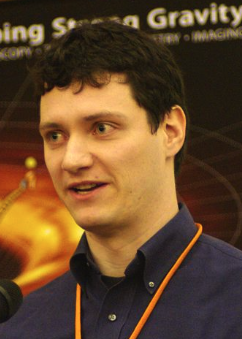 Jason Dexter合作论文数University of Colorado, Boulder28
 Odele Straub合作论文数University of Goteborg, Univ. Goteborg28
 Sebastiano von Fellenberg合作论文数27
 Antonio Amorim合作论文数27D. Lutz合作论文数27
 Richard Davies合作论文数Max Planck Institute for Extraterrestrial Physics26
 Sebastian Rabien合作论文数Max-Planck Institut für Extraterrestrische Physik24T. Shimizu合作论文数23




