Standardised digital representations such as the Asset Administration Shell are key to achieving interoperability and consistent data exchange in Industry 4.0. However, linking heterogeneous sources, from Open Platform Communications Unified Architecture hierarchies to unstructured documents, remains challenging. This paper presents an artificial intelligence-based framework that combines semantic embeddings, paraphrase verification, and code generation with a multi-modal ranking ensemble to assign relevant data to Asset Administration Shell variables. Unlike static retrieval methods, it also supports dynamically computed values derived from process data. The framework is validated on a modular industrial demonstrator with robotic handling, computer numerical control machining, and conveyor systems. It achieves 100% precision and up to 99% recall in Top-3 retrieval, demonstrating reliable, computation-enabled semantic integration in realistic Industry 4.0 environments.
Robots are increasingly used in diverse application areas, where autonomous navigation plays a central role. As these systems become more widespread, improving their energy efficiency is critical to extending operational time and reducing environmental impact. The Robot Operating System (ROS) is a widely adopted middleware for robotics, offering a rich set of configurable packages. However, this flexibility can result in suboptimal software configurations in dynamic environments, negatively affecting both performance and energy consumption. This paper investigates the impact of ROS 2 package re-configurations on the energy efficiency of mobile robot navigation. We conduct a controlled experiment in two warehouse-like scenarios (small and large) with varying obstacle layouts and Costmap 2D configurations (essential to the Nav2 stack). Through repeated trials, we measure energy usage, power profile, CPU load, memory consumption, and navigation performance. Results show that configurations must be carefully chosen for the specific robotic environment, and we were able to identify critical settings that lead to good and poor performance and energy consumption.
The Asset Administration Shell (AAS) is an emerging technology for the implementation of digital twins in the field of manufacturing. Software is becoming increasingly important, not only in general but specifically in relation to manufacturing, especially with regard to digital manufacturing and a shift towards the usage of artificial intelligence. This increases the need not only to model software, but also to integrate services directly into the AAS. The existing literature contains individual solutions to implement such software-heavy AAS. However, there is no systematic analysis of software architectures that integrate software services directly into the AAS. This paper aims to fill this research gap and differentiate architectures based on software quality criteria as well as typical manufacturing use cases. This work may be considered as an interpretation guideline for software-heavy AAS, both in academia and for practitioners.
Software defined vehicles mark a shift to software-driven mobility, posing complex engineering and organizational challenges. To stay competitive, automotive industry players must adapt the architecture, development process, and organization to effectively manage complexity, updates, regulatory compliance, and rapid technological evolution.
The growing adoption of federated data spaces, such as in the GAIA-X and the International Data Spaces (IDS) initiative, promises secure and sovereign data sharing across organizational boundaries in Industry 4.0. In manufacturing ecosystems, this enables use cases, such as cross-factory process optimization, predictive maintenance, and supplier integration. Frameworks and standards, such as the Asset Administration Shell (AAS), Eclipse Dataspace Connector (EDC), ID-Link and Open Platform Communications Unified Architecture (OPC UA) provide a strong foundation to realize this ecosystem. However, a major open challenge is the practical description and enforcement of context-dependent data usage policies using these base technologies - especially by domain experts without software engineering backgrounds. Therefore, this article proposes a method for leveraging domain-specific languages (DSLs) to enable declarative, human-readable, and machine-executable policy definitions for sovereign data sharing via data space connectors. The DSL empowers domain experts to specify fine-grained data governance requirements - such as restricting access to data from specific production batches or enforcing automatic deletion after a defined retention period - without writing imperative code.
Modern-day software has become increasingly complex and ubiquitous in many domains. In many cases, the scarcity of software engineering experts means that domain experts must engage in software development tasks. (DSLs) can help bridge this gap by enabling domain experts to express solutions in familiar domain terms. Engineering such (DSLs) is complex. This complexity arises from the variety of artifacts involved—such as grammars, well-formedness rules, and code generators—and from the need to integrate these artifacts across languages. In software language engineering, language workbenches for textual, external modeling languages with translational semantics seem to be a popular, which includes inhabitants such as Xtext, Neverlang, MontiCore, and Spoofax. Yet, reusing existing languages in these environments is often piecemeal and driven by the constraints of specific realization technologies (e.g., Xtend, FreeMarker). This typically requires software language engineers to create DSLs for domain experts, rather than enabling domain experts to reuse and adapt languages themselves. As a result, enabling the systematic reuse of software languages remains a fundamental challenge in software engineering. To reduce the gap between problem domain expertise and software language engineering solution expertise, we have conceived a top-down software language reuse method that enables domain experts to reuse existing languages through formally specified language components that encapsulate the realizations of syntax and semantics of (a fragment of) a language packed ready for systematic reuse. To ease its understanding of our method and its adoption to other technological spaces, we describe our methods and the composition process independent of specific technologies. The presented method of language reuse aims to advance software language engineering for textual, external, translational (DSLs) and may serve as the basis for further investigation of formalizing language reuse.
The demand for digital twins and suitable modeling techniques in the automotive industry is increasing rapidly. Yet, there is no common understanding of digital twins in automotive, nor are there modeling techniques established to create automotive digital twins. Recent studies on digital twins focus on the analysis of the literature on digital twins for automotive or in general and, thus, neglect the industrial perspective of automotive practitioners. To mitigate this gap between scientific literature and the industrial perspective, we conducted a questionnaire survey among experts in the German automotive industry to identify (i) the desired purposes for and capabilities of digital twins, (ii) the modeling techniques related to engineering and operating digital twins across the phases of automotive development, and (iii) the role informal models play during automotive development. To this end, we contacted 189 members of the Software-Defined Car research project and received 96 responses. The results show that digital twins are considered most useful in the usage and support phase of automotive development, representing vehicles as-operated. Moreover, simulation models, source code, and business process models are currently considered the most important models to be integrated into a digital twin alongside the associated, established tools. Furthermore, informal models are frequently created digitally, e.g., using PowerPoint™, mainly employed for communication and documentation during the conception and development phase.
Digital Twins (DTs) are a key technology for smart ecosystems to provide accurate digital representation of their constituents, e.g., smart buildings, farms, transportation, and citizens, as well as synchronization between the digital and the real subject, and the exploration of what-if scenarios and tradeoff reasoning. To cope with emerging complex socio-technical ecosystems, we need to bring DTs together, which is a challenging endeavor. After giving a historical overview of system adaptation, we review the many enabling technologies that can help with DT integration. Using a smart city as an illuminating example to highlight scenarios that require integration of DTs, we discuss a model-based conceptual framework that identifies DT integration strategies and elaborate on nine key integration challenges that still need to be addressed. We call on the DT community to investigate these challenges.
Digital twins promise a better understanding and use of complex systems. To this end, they represent these systems at their runtime and may interact with them to control their processes. Software engineering is a wicked challenge in which stakeholders from many domains collaborate to produce software artifacts together. In the presence of skilled software engineer shortage, our vision is to leverage DTs as means for better representing, understanding, and optimizing software engineering processes to (i) enable software experts making the best use of their time and (ii) support domain experts in producing high-quality software. This paper outlines why this would be beneficial, what such a digital twin could look like, and what is missing for realizing and deploying software engineering digital twins.
Several software architectures for digital twins have been proposed, specifying their structure and key components, such as the ISO 23247 standard for manufacturing. However, systematic methodologies for developing digital twins in the manufacturing domain remain lacking. Existing research does not adequately address methodological aspects, such as composing essential digital twin components, defining their interfaces, and systematically analyzing relevant data. This gap presents a challenge for the structured development of digital twins. In this work, we introduce a systematic approach to identify key requirements for manufacturing digital twins and propose a model-driven method for their creation. Our approach enables the generation of executable digital twins based on a formalized specification. We demonstrate its applicability through multiple industrial manufacturing demonstrators, highlighting its suitability in practice. The proposed method is adaptable regarding the purpose of the digital twins to be developed and supports a largely automated process.
Context: A growing number of researchers are investigating how Mining Software Repositories (MSR) approaches can support software architecture activities, such as architecture recovery, tactics identification, architectural smell detection, and others. However, as of today, it is difficult to have a clear view of existing research on MSR for software architecture. Objectives: The objective of this study is to identify, classify, and summarize the state-of-the-art MSR approaches applied to software architecture (MSR4SA). Methods: This study is designed according to the systematic mapping study research method. Specifically, out of 2442 potentially relevant studies, we systematically identify 151 primary studies where MSR approaches are applied to perform software architecture activities. Then, we rigorously extract relevant data from each primary study and synthesize the obtained results to produce a clear map of reasons for adopting MSR approaches to support architecting activities, used data sources, applied MSR techniques, and captured architectural information. Results: The major reasons to adopt MSR4SA techniques are about addressing industrial concerns like achieving quality attributes and minimizing practitioners' efforts. Most MSR4SA studies support architectural analysis, while architectural synthesis and evaluation are not commonly supported in MSR4SA studies. The most frequently mined data sources are source code repositories and issue trackers, which are also commonly mined together. Most of the MSR4SA studies apply more than one mining technique, where the most common MSR techniques are: (source code analysis, model analysis, statistical analysis), (machine learning, NLP). Architectural quality issues and components are the mostly mined type of information. Conclusion: Our results give a solid foundation for researchers and practitioners towards future research and applications of MSR approaches for software architecture.
In system development, integration is crucial—especially in domains like robotics, where the complexity of the applications makes it a particularly challenging task. The rapid growth in the sector can lead to the obsolescence of existing tools and procedures. Although other technologies have emerged in scientific research, they face limited acceptance within the robotics community due to high entry barriers and a lack of evaluative studies, with real use cases, demonstrating their effectiveness. In this effort, we have used RosTooling , a model-driven tool to facilitate the integration of robot systems, as a target and have conducted several evaluative studies, both quantitative and qualitative. The conclusions of these studies allow us to identify the types of systems and lifecycle stages where these tools are most effective. Additionally, we have conducted expert interviews to provide insights into how to foster their acceptance and improve usability.
Engineering digital twins is a software and systems engineering challenge for which no systematic approach exists. The Asset Administration Shell is becoming a popular foundation for digital twins in Industry 4.0 and it comes in different types that support the engineering of different kinds and parts of digital twins. We investigate how it supports realizing common requirements for digital twins. To this end, we investigate how each of the three Asset Administration Shell types can contribute to the systematic engineering of specific components of digital twins. Therefore, we analyzed popular definitions and conceptual models of digital twins and extracted requirements that at least two of them share. We compare the resulting requirements with Asset Administration Shells of different types and conclude with open challenges in the implementation of digital twins with this technology. This supports practitioners and researchers in identifying the most suitable type of Asset Administration Shell for their specific digital twin engineering needs and identifies gaps worthy of future research toward a systematic engineering of digital twins.
Digital twins are a critical backbone technology for modern manufacturing and Industrie 4.0 (I4.0). The Asset Administration Shell (AAS) is becoming a popular foundation for modeling digital twins. Asset Administration Shells come in three successive levels of enhancement, also referred to as AAS (communication) types, though there is no common definition for these types. We conducted a systematic mapping study to find out how they are defined in the literature. As the analysis for type 2 AAS and type 3 AAS remains without direct results, we devised a novel classification schema from our findings via portfolio analysis. This schema can provide a foundation for the precise classification of AAS to guide researchers and practitioners in modeling digital twins.
Although the Asset Administration Shell (AAS) standard provides a structured and machine-readable representation of industrial assets, their semantic comparability remains a major challenge, particularly when different vocabularies and modeling practices are used. Engineering would benefit from retrieving existing AAS models that are similar to the target in order to reuse submodels, parameters, and metadata. In practice, however, heterogeneous vocabularies and divergent modeling conventions hinder automated, content-level comparison across AAS. This paper proposes a hybrid graph matching approach to enable semantics-aware comparison of Digital Twin representations. The method combines rule-based pre-filtering using SPARQL with embedding-based similarity calculation leveraging RDF2vec to capture both structural and semantic relationships between AAS models. This contribution provides a foundation for enhanced discovery, reuse, and automated configuration in Digital Twin networks.
Automatisierung und Digitalisierung sind für die Erhaltung der Wettbewerbsfähigkeit in der heutigen Produktionsindustrie von hoher Bedeutung. Speicherprogrammierbare Steuerungen (SPS) fungieren als Schnittstelle zwischen der digitalen und der physischen Welt. Die SPS-Programmierung unterscheidet sich allerdings von modernen Programmiersprachen, da sie eng mit Hardware interagiert und hohe Anforderungen an Qualität und Sicherheit setzt. In dieser Studie sollen Large Language Models zur automatisierten Code-Erstellung evaluiert und verglichen werden. Besonders für Structured Text (ST) zeigen Ergebnisse, dass ChatGPT-4 zuverlässig syntaktisch korrekten SPS-Code generiert.
Task planning and scheduling are crucial for construction or fabrication (CF) processes. Automating them is necessary for more efficient plans in terms of time and resources. However, most construction planning processes are still performed manually despite the existence of various AI methods. Symbolic AI automated task planning (ATP) techniques offer a variety of features to tackle task planning problems, but their application to CF has not been researched yet. This study identifies the current state of research and gaps in the literature regarding these AI techniques while providing directions for future research. We conduct a systematic review that evaluates existing literature on ATP in terms of environmental characteristics, modeling languages, ATP techniques, and results. We searched the ACM, IEEE, Scopus, WOS, and SpringerLink databases for articles published in the last 20 years (2002–2022) that discuss symbolic AI methods used in task planning within the CF fields. Our findings indicate that research on automated planning is currently limited regarding the characteristics of CF environments. Only a few articles have utilized symbolic languages, AI planners, and ATP techniques. No article has evaluated their planning system in an on-site CF process. As a result, many symbolic languages, planners, and ATP techniques remain unexplored.
 Bernhard Rumpe合作论文数Department of Computer Science 3, RWTH Aachen University;Department for Software Engineering, RWTH Aachen University99
 Jerome Pfeiffer合作论文数Institute for Control Engineering of Machine Tools and Manufacturing Units (ISW), University of Stuttgart, Stuttgart, Germany31
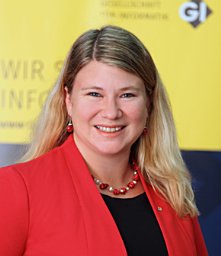 Judith Michael合作论文数23
 Arvid Butting合作论文数Rhein Westfal TH Aachen, Software Engn, Aachen, Germany22
 Jan Oliver Ringert合作论文数Software Engineering, RWTH Aachen University17
 Manuela Dalibor合作论文数Rhein Westfal TH Aachen, Software Engn, Aachen, Germany15
 Manuel Wimmer合作论文数Department of Business Informatics, Software Engineering, Johannes Kepler University Linz15
 Oliver Kautz合作论文数Rhein Westfal TH Aachen, Software Engn, Aachen, Germany13
 Nico Jansen合作论文数RWTH Aachen University, Germany12
 David Schmalzing合作论文数RWTH Aachen University, Germany12
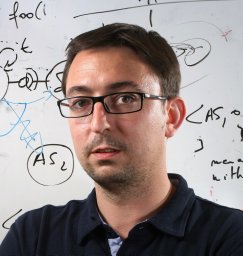 Benoît Combemale合作论文数IRISA, University of Rennes 111
 Katrin Holldobler合作论文数11Carsten Ellwein合作论文数ISW Univ Stuttgart8
 Timo Greifenberg合作论文数8
 Alexander Roth合作论文数Spezifikation und Entwicklung universitarer Lern- und Arbeitsumgebungen8
 Christoph Schulze合作论文数7
 Daniel Lehner合作论文数Johannes Kepler University7
 Pedram Mir Seyed Nazari合作论文数7
 Ivano Malavolta合作论文数Vrije Universiteit Amsterdam7Robert Heim合作论文数Rhein Westfal TH Aachen, Software Engn, Aachen, Germany6
 Malte Heithoff合作论文数6
 Jörg Christian Kirchhof合作论文数RWTH Aachen University, Aachen, Germany6
 Rodi Jolak合作论文数Chalmers Gothenburg Univ, Gothenburg, Sweden6
 Oliver Riedel合作论文数Institute of Clinical Psychology and Psychotherapy, Technical University of Dresden6
 Michel R. V. Chaudron合作论文数Software Engineering Group, Department of Mathematics and Computer Science, Eindhoven University of Technology6
 Markus Look合作论文数RWTH Aachen University6
 Federico Ciccozzi合作论文数Mälardalen University6
 Antonio Navarro Perez合作论文数5
 Kai Adam合作论文数Software Engn, Rhein Westfal TH Aachen5
 Olivier Barais合作论文数IRISA, Université de Rennes5
 Francis Bordeleau合作论文数École de Technologie Supérieure5
 Loek Cleophas合作论文数Department of Mathematics and Computer Science, Technische Universiteit Eindhoven5Robert Eikermann合作论文数4Stefan Kriebel合作论文数4Steffen Hillemacher合作论文数Rhein Westfal TH Aachen, Software Engn, Aachen, Germany4
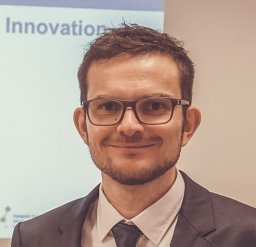 István Koren合作论文数Advanced Community Information Systems Group, RWTH Aachen University4
 Klaus Mueller合作论文数Department of Computer Science, Stony Brook University;12bit AI;Akai Kaeru4
 Michel Albonico合作论文数4Robin Stroebel合作论文数3Joel Greenyer合作论文数3Armin Lechler合作论文数3
 Philipp Grimmeisen合作论文数Institute of Industrial Automation and Software Engineering, University of Stuttgart3
 Jürgen Fleischer合作论文数wbk Institute of Production Science, Karlsruhe Institute of Technology3Imke Drave合作论文数3
 Michael von Wenckstern合作论文数Software Engn, Rhein Westfal TH Aachen3
 Matthias Markthaler合作论文数Software Engineering; RWTH Aachen University; Aachen Germany3
 Simon Varga合作论文数Rhein Westfal TH Aachen, Software Engn, Aachen, Germany3Louis Wachtmeister合作论文数Dept Software Engn, Rhein Westfal TH Aachen3
 Nadia Hammoudeh Garcia合作论文数3




