Cognitive scientists have become increasingly interested in understanding how natural minds represent and reason about possible ways the world could be. However, there is currently little agreement on how to understand this remarkable capacity for modal thought. We argue that the capacity for modal thought is built from a set of relatively simple component parts, centrally involving an ability to consider possible extensions of a part of the actual world. Natural minds can productively combine this ability with a range of other capacities, eventually allowing for the observed suite of increasingly more sophisticated ways of modal reasoning. We demonstrate how our (de)compositional account is supported by both the trajectory of children’s developing capacity for reasoning about possible ways the world could be and by what we know about how such modal thought is expressed within and across natural languages. Our approach makes new predictions about which kinds of capacities are required by which kinds of experimental tasks and, as a result, contributes to settling currently open theoretical questions about the development of modal thought and the acquisition of modal vocabulary in children. Our work also provides a more systematic way of understanding possible variation in modal thought and talk, and, more generally, paves the way towards a unified theory that will ultimately allow researchers across disciplines to relate their findings to each other within a framework of shared assumptions.
Abstract The chapter looks at an aspect of David Lewis’s work on language that has been important for the foundation and history of formal semantics as a discipline practiced by both linguists and philosophers of language: a referential semantics over possible worlds that is connected to linguistically plausible syntactic structures. Lewis’s original contributions are placed within their historical context: Church’s typed lambda calculus, Carnapian intensions, the categorial grammars of Ajdukiewicz, and Chomsky’s theories of the relation between syntax and semantics. Relying on Lewis’s letters, the chapter identifies the works of Stenius, Davidson, and Katz as triggering Lewis’s interest in formal theories of natural language semantics and clarifies the relation between his and Montague’s contributions to the foundation of the discipline.
Attitude ascriptions and speech reports were at the center of attention when philosophers and logicians began to see natural languages as formal systems. My chapter looks at the history of formal semantics, not for its own sake, but for lessons about how to approach attitude ascriptions and speech reports today. I think we may have taken a few wrong forks in the road. To solve the problem of logical equivalents, we should have listened to Rudolf Carnap, who made it clear that the fact that the truth of an attitude ascription or speech report may depend on the intensional structure of the embedded clause in no way forces the conclusion that propositions can’t be mere intensions. For de re ascriptions, we should have listened to David Kaplan, who replaced names in the scope of attitude verbs with descriptions, rather than associating the individuals those names stand for with modes of presentation. What held us back in both cases was Fregean compositionality. Shedding that legacy, I present prototypes for analyses of attitude verbs and verbs of speech within an intensional semantics where propositions are mere sets of possible worlds and de re ascriptions require no special technologies created just for them.
The chapter looks at indicative conditionals embedded under quantifiers, with a special emphasis on ‘one-case’ conditionals as in No query was answered if it came from a doubtful address. It agrees with earlier assessments that a complete conditional (with antecedent and consequent) is embedded under a quantifier in those constructions, but then proceeds to create a dilemma by showing that we can’t always find the right interpretation for that conditional. Contrary to earlier assessments, Stalnaker’s conditional won’t always do. The chapter concludes that the embedded conditional in the sentence above is a material implication, but the if-clause also plays a pragmatic role in restricting the domain of the embedding quantifier. That an appeal to pragmatics should be necessary at all goes with Edgington’s verdict that ‘we do not have a satisfactory general account of sentences with conditional constituents’.
The paper argues that a core part of what is traditionally referred to as ‘information structure’ can be deconstructed into genuine morphosyntactic features that are visible to syntactic operations, contribute to discourse-related expressive meanings, and just happen to be spelled out prosodically in Standard American and British English. We motivate two features, [FoC] and [G], and we track the fate of those features at and beyond the syntax-semantics and the syntax-phonology interfaces. [FoC] and [G] are responsible for two distinct obligatory strategies for establishing discourse coherence. A [G]-marked constituent signals a match with a discourse referent, whereas a [FoC]-marked constituent invokes alternatives and thereby signals a contrast. In Standard American and British English [FoC] aims for highest prosodic prominence in the intonational phrase, whereas [G] lacks phrase-level prosodic properties. There is no grammatical marking of newness: The apparent prosodic effects of newness are the result of default prosody.
The quantificational system in Japanese makes use of so-called indeterminate pronouns, which take on existential, universal, interrogative, negative polarity, or free choice interpretations depending on what operator they associate with. Similar systems are found crosslinguistically, which raises the question as to what makes such system look so different from more familiar determiner quantification systems. This paper takes a first step toward answering this question by presenting an analysis of the German indeterminate pronoun or determiner irgendein from a Japanese point of view.
This extended collection of papers is the result of putting recent ideas on quantification to work on a wide variety of languages. A central perspective of many of the papers follows the recognition of two broad types of quantificational strategies, one associated with nominal structures and determiners, the other with adverbial and other non-nominal expression (`D-quantifiers' and `A-quantifiers'). The papers demonstrate both the unity and the variety of natural language quantificational forms and meanings. Many of the papers also shed new light on questions of language typology and syntactic and morphological variation. The languages discussed include English, Dutch, Italian, American Sign Language, Hindi, and a number of languages of Australia, Greenland, and the Americas. These comparative studies provide initial data for a typology of quantificational structures in natural languages, with important implications for the study of universal grammar. The book consists of research papers aimed at linguists, philosophers, and psychologists interested in semantics and linguistic form. An introduction presents a sketch of the background of this research and some of the central issues discussed, with pointers toward the included papers.
We express our puzzlement over the role of the German comparative form “eher” in metalinguistic and modal comparisons. We can’t do this alone. We have data, we have observations, we have speculations, but we need you to tell us what to do with them. We want to sit down with you and work on this together. The German word “eher” can express temporal comparisons roughly meaning “earlier than” or “before”:1 (1) Die The Schildkröte tortoise war was eher earlier am at-the Ziel goal als than Achilles. Achilles ‘The tortoise reached the goal before Achilles.’ As happens all the time, “eher” has acquired uses beyond the temporal domain. One striking use seems to fall under what Morzycki (2011) classified as ‘metalinguistic’ comparisons: (2) Mein My Auto car ist is eher more flott cool als than schnell. fast ‘My car is more on the cool side than on the fast side.’ ⇤We have been puzzling over the role of “eher” in metalinguistic and modal comparisons for quite a while. We thank Chris Kennedy, Pete Klecha and Marcin Morzycki for conversations where we shared our bafflement with them. Elena Herburger and Aynat Rubinstein have independently embarked on a research project on “eher” (Herburger and Rubinstein 2014). This is not the time to compare our preliminary conclusions in any detail but we will draw on their WCCFL handout in a few places. 1Etymologically, “eher” appears to be the comparative to an old Germanic word meaning “early”, cf. Gothic “air”, related to the Greek “TMri” ‘early, in the morning’ (see http://www.dwds.de/?qu=eher). The Southern German and Austrian adverb “eh” (‘anyway’) may be a backformation. © 2014 Kai von Fintel and Angelika Kratzer. In: Luka Crnič and Uli Sauerland (eds.), The Art and Craft of Semantics: A Festschrift for Irene Heim, vol. 1, MITWPL 70, pp. 175–179 (3) Mein My Auto car war was eher more langsam slow als than schnell. fast ‘My car was more on the slow side than on the fast side.’ (4) Mein My Auto car war was eher more langsam. slow ‘My car was more on the slow side.’ (5) Mein My Auto car war was eher more langsam slow als than dein your Motorrad. motorbike ‘My car’s performance was a clearer case of slowness than your motorbike’s performance.’ According to Morzycki, ‘metalinguistic’ comparatives differ from ‘ordinary’ comparatives in relying on scales of imprecision or ‘pragmatic slack’ in the sense of Lasersohn (1999). There is a clear difference between ordinary comparatives and comparatives with “eher”: (6) and (7) do not mean the same. (6) Ella Ella ist is grösser taller als than Ginger. Ginger (7) Ella Ella ist is eher more gross tall als than Ginger. Ginger ‘Ella is a clearer case of tallness than Ginger.’ (7) doesn’t sound right if the two girls are both giants or dwarves (hence clear examples or counterexamples of tallness), or if one is a dwarf and the other is a giant, even if Ella is indeed taller than Ginger. For (7) to be acceptable, both Ella and Ginger have to be borderline cases of tallness. That’s a necessary, but not a sufficient condition. (7) is also unacceptable if Ella and Ginger are both borderline cases of tallness, but they are very close in height. Under those circumstances, (8) is unacceptable, too: (8) Im In Vergleich comparison zu to Ginger Ginger ist is Ella Ella eher more gross. tall. ‘In comparison to Ginger, Ella is more on the tall side.’ If Ella and Ginger are very close in height, no reasonable way of making the predicate “tall” precise would place Ella in its positive and Ginger in its negative extension. Doing so would, in fact, violate the Similarity Constraint of Fara (2000), which Kennedy (2011) formulates as follows: The Similarity Constraint. When x and y differ to only a very small degree in the property that a vague predicate g is used to express, we are unable or unwilling to judge the proposition that x is g true and that y is g false. No such problem arises with the ordinary comparative in (6), which can be used even if the height difference is minuscule. Kennedy (2011) suggests that this feature of ordinary comparatives throws 176 Kai von Fintel and Angelika Kratzer
Stowell, Tim. 1989. Subjects, specifiers, and X-bar Theory. Alternative conceptions of phrase structure, ed. by Mark Baltin and Anthony Kroch, 232-262. Chicago: University of Chicago Press. Szabolcsi, Atma. 1986. Comparative superlatives. MITWPL 8, 245-265. Torreg·o, Esther. 1986. On empty categories in nominals. Ms. University of Massachusetts, Boston. Valois, Daniel. 1991. The internal syntax of DP. Ph. D: dissertation, UCLA. v·ergnaud, Jean-Roger & Maria-Luisa Zubizarreta. 1992. The definite detenniner and the inalienable constructions in French and English. Ll 23:4, 595-652. Zubizarreta, "Maria-Luisa. 1987. Levels of representation in the syntax and in the lexicon. Dordrccht: Foris. On the Mismatch between Variable Binding and ·Sl
The chapter derives a typology of possible modal expressions from three parameters: modal base, ordering source, and modal force. Modal bases represent the factual premises the truth of a modal statement might depend on: pieces of evidence or inherent properties of individuals or situations. Ordering sources represent non-factual, typically normative, premises. Modal force relates to the difference between possibility modals, necessity modals, and degree modals without duals. Depending on the language and syntactic category, modals also participate in comparative constructions. Modal bases and ordering sources are modeled as premise set intensions, functions from worlds to premise sets. Jointly, modal bases and ordering sources are responsible for a modal's flavor: circumstantial, epistemic, deontic, teleological, bouletic, and so on. Ordering sources induce orderings on the sets of worlds determined by modal bases. Those orderings can then function as launch pads for comparative and quantitative modal notions related to capability, feasibility, probability, and desirability. Separating factual and non-factual premises also helps with practical reasoning, and delivers a unified account of indicative and subjunctive conditionals. Counterfactuals, deontic conditionals, probability conditionals, and indicative conditionals with interpretations ranging from material to logical implication can now be uniformly interpreted as cases of restricted modality.
This article argues that natural languages have two binding strategies that create two types of bound variable pronouns. Pronouns of the first type, which include local fake indexicals, reflexives, relative pronouns, and PRO, may be born with a “defective” feature set. They can acquire the features they are missing (if any) from verbal functional heads carrying standard λ-operators that bind them. Pronouns of the second type, which include long-distance fake indexicals, are born fully specified and receive their interpretations via context-shifting λ-operators (Cable 2005). Both binding strategies are freely available and not subject to syntactic constraints. Local anaphora emerges under the assumption that feature transmission and morphophonological spell-out are limited to small windows of operation, possibly the phases of Chomsky 2001. If pronouns can be born underspecified, we need an account of what the possible initial features of a pronoun can be and how it acquires the features it may be missing. The article develops such an account by deriving a space of possible paradigms for referential and bound variable pronouns from the semantics of pronominal features. The result is a theory of pronouns that predicts the typology and individual characteristics of both referential and bound variable pronouns.
of an expression. All of this is a simplification, of course, that abstracts away from many complications. Here is one: Nobody would claim that a semantic analysis of the words must and canshould try to capture whatever is common to the meanings of the two respective occurrences of these words in (1): (1) ,You must and you can store must in a can. ,,,,,,, ,,,, The original version of this chapter appeared in 1977 inLinguistics and Philosophy1,
April 01 2009 Expressives and Identity Conditions Christopher Potts, Christopher Potts Search for other works by this author on: This Site Google Scholar Ash Asudeh, Ash Asudeh Search for other works by this author on: This Site Google Scholar Seth Cable, Seth Cable Search for other works by this author on: This Site Google Scholar Yurie Hara, Yurie Hara Search for other works by this author on: This Site Google Scholar Eric McCready, Eric McCready Search for other works by this author on: This Site Google Scholar Luis Alonso-Ovalle, Luis Alonso-Ovalle Search for other works by this author on: This Site Google Scholar Rajesh Bhatt, Rajesh Bhatt Search for other works by this author on: This Site Google Scholar Christopher Davis, Christopher Davis Search for other works by this author on: This Site Google Scholar Angelika Kratzer, Angelika Kratzer Search for other works by this author on: This Site Google Scholar Tom Roeper, Tom Roeper Search for other works by this author on: This Site Google Scholar Martin Walkow Martin Walkow Search for other works by this author on: This Site Google Scholar Author and Article Information Christopher Potts Ash Asudeh Seth Cable Yurie Hara Eric McCready Luis Alonso-Ovalle Rajesh Bhatt Christopher Davis Angelika Kratzer Tom Roeper Martin Walkow Online Issn: 1530-9150 Print Issn: 0024-3892 © 2009 Massachusetts Institute of Technology2009 Linguistic Inquiry (2009) 40 (2): 356–366. https://doi.org/10.1162/ling.2009.40.2.356 Cite Icon Cite Permissions Share Icon Share MailTo Twitter LinkedIn Views Icon Views Article contents Figures & tables Video Audio Supplementary Data Peer Review Search Site Citation Christopher Potts, Ash Asudeh, Seth Cable, Yurie Hara, Eric McCready, Luis Alonso-Ovalle, Rajesh Bhatt, Christopher Davis, Angelika Kratzer, Tom Roeper, Martin Walkow; Expressives and Identity Conditions. Linguistic Inquiry 2009; 40 (2): 356–366. doi: https://doi.org/10.1162/ling.2009.40.2.356 Download citation file: Ris (Zotero) Reference Manager EasyBib Bookends Mendeley Papers EndNote RefWorks BibTex toolbar search Search Dropdown Menu toolbar search search input Search input auto suggest filter your search All ContentAll JournalsLinguistic Inquiry Search Advanced Search This content is only available as a PDF. © 2009 Massachusetts Institute of Technology2009 Article PDF first page preview Close Modal You do not currently have access to this content.
This paper pursues some of the consequences of the idea that there are (at least) two sources for distributive/cumulative interpretations in English. One source is lexical pluralization: All predicative stems are born as plurals, as Manfred Krifka and Fred Landman have argued. Lexical pluralization should be available in any language and should not depend on the particular make-up of its DPs. I suggest that the other source of cumulative/distributive interpretations in English is directly provided by plural DPs. DPs with plural agreement features can ‘release’ those features to pluralize adjacent verbal projections. If there is a lexical source for distributive/cumulative interpretations, there should be instances of such interpretations with singular DPs. But there should also be cases of distributive/cumulative interpretations that require the presence of DPs with plural agreement morphology. What is the role of events in all of this? Events have played a major role in the semantics of plurality since the pioneering work of Barry Schein and Peter Lasersohn. Yet to the present day, there is no consensus about the need of event-based accounts of plurality. Non-eventbased analyses of plural phenomena continue to be proposed. The phenomena discussed in this paper all present small or not so small conceptual problems for event-less analyses, but can be given elegant accounts within frameworks that incorporate some version of a Davidsonian event semantics. The hope is, then, that an event semantics for plurals might at least be a good bet about reality.
 Irene Heim合作论文数9
 Elisabeth Selkirk合作论文数Department of Linguistics, College of Humanities & Fine Arts, University of Massachusetts Amherst4
 Christopher Potts合作论文数Department of Linguistics, Stanford University3
 Lyn Frazier合作论文数Department of Linguistics, College of Humanities & Fine Arts, University of Massachusetts Amherst2
 Roberta Pires de Oliveira合作论文数2Andrea Gualmini合作论文数2Elisabeth Villalta合作论文数1Kenneth Hale合作论文数1Samuel J. Keyser合作论文数1Ina Emmel合作论文数1Godehard Link合作论文数1
 Richard K. Larson合作论文数Department of Linguistics, College of Arts and Sciences, Stony Brook University1martin walkow合作论文数1Carmen Dobrovie-Sorin合作论文数1Herbert H. Clark合作论文数1ken hale合作论文数1Edwin Williams合作论文数1Eberhard Pause合作论文数1Ruxandra Drăgan合作论文数1bart geurts合作论文数1Ray Jackendoff合作论文数1Kathy Conklin合作论文数1
 Christopher Davis合作论文数University of the Ryukyus1Christopher Kennedy合作论文数1
 Jill de Villiers合作论文数Philosophy Department, Smith College1
 Mihaela Tanase-Dogaru合作论文数Univ Bucharest1jason d haugen合作论文数1
 Marcin Morzycki合作论文数Department of Linguistics, Faculty of Arts, The University of British Columbia1
 Richard S. Kayne合作论文数Department of Linguistics, College of Arts & Science, New York University1
 Junko Shimoyama合作论文数Department of Linguistics, Faculty of Arts, McGill University1
 Luis Alonso-Ovalle合作论文数Department of Linguistics, Faculty of Arts, McGill University1Rolf Noyer合作论文数Department of Linguistics, School of Arts & Sciences, University of Pennsylvania1Seth Cable合作论文数1
 Jonathan David Bobaljik合作论文数Department of Linguistics, Faculty of Arts and Sciences, Harvard University1
 Rene Mulder合作论文数1
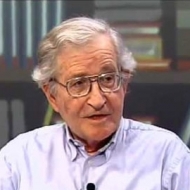 Noam Chomsky (诺姆·乔姆斯基)合作论文数Department of Linguistics and Philosophy, School of Humanities, Arts and Social Sciences, Massachusetts Institute of Technology1
 Luigi Rizzi合作论文数Departement de Linguistique, Faculte des Lettres, University of Geneva;University of Siena1
 Phillips Jonathan合作论文数Department of Psychology, Yale University;Department of Philosophy, Yale University;Yale University, Yale University1
 George Lakoff合作论文数Department of Linguistics, University of California, Berkeley1
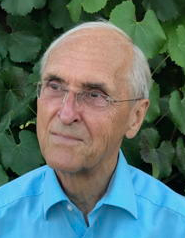 Paul Kiparsky合作论文数Department of Linguistics, School of Humanities and Sciences, Stanford University1
 Danny Fox合作论文数Massachusetts Institute of Technology1
 Jean-Pierre Koenig合作论文数Department of Linguistics, College of Arts and Sciences, University at Buffalo1
 Uli Sauerland合作论文数Semantics & Pragmatics Group, Leibniz-Centre General Linguistics1
 David Adger合作论文数University of York1Arnim Von Stechow合作论文数1
 Jason Merchant合作论文数University of Chicago1
 Nicola Munaro合作论文数University of Venice1
 Samuel Jay Keyser合作论文数massachusetts institute of technology1
 Manfred Krifka合作论文数Humboldt Universität zu Berlin1




