’To effect urgent change, we require different capacities for feeling as well as different feelings. Affective prefiguration means giving experience in the present of what else might be emotionally and relationally possible’ (Light 2023). If we, as designers and analysts, can stage the encountering of affect, might we open new opportunities for support and challenge, as well as reveal new worlds for moving towards and futures with different relationality? There is anticipatory value in encounters set up to explore how we might be otherwise, where designing for alternative affective states gives a motivational taste of human potential, even as we broach the discomforting conditions ahead. Taking a sociodigital stance on the intersection of technological, economic and environmental challenges that face all life, this paper offers five studies and a rationale for why affective prefiguration is already with us, but, in naming it, can become a more powerful tool of transformation.
Given the current ecological crisis, the HCI and design community is showing a growing interest in the adoption of more-than-human perspectives, challenging human-centric approaches. While this has sparked numerous research initiatives, many of them are still a far cry from providing practical solutions or transforming the industry. This also presents a hurdle for teaching more-than-human perspectives to design students, as they may feel powerless to practice those teachings in real-life industrial settings. To bring forth concrete examples of how more-than-human design practice can matter, we believe that it is now time to move beyond theorising about and advocating for the adoption of such perspectives and start a more-than-human design practice that transforms the industry. This workshop therefore aims to bring together educators, researchers, and designers to discuss and co-develop strategies for transitioning more-than-human perspectives from niche/speculation to mainstream/practice in HCI and design. The workshop also aims to develop ways to empower students to work with these perspectives to bring about this transformation of the industry.
This paper describes the Zoop model, an organisational framework fostering regenerative relationships between humans and nonhumans. With escalating ecological crises, traditional anthropocentric decision-making requires a shift towards equitable, multispecies collaboration. The Zoop model translates more-than-human theories into practical organisational strategies for sustainable futures. Using the Het Nieuwe Instituut (HNI) as a case study, this paper examines how the Zoop model fosters regenerative actions within a European cultural institution. The model constructs participatory futures, embedding multispecies interests directly into organisational processes to address gaps in current sustainability efforts. By bridging organisational theory, environmental sustainability, and futures studies, the Zoop model advocates for reparative, just systems that prioritise ecological health and multispecies well-being. This paper highlights the model's potential to promote a philosophical shift, recognising the intrinsic value of all living beings in decision-making processes.
In this paper, we report on a three-year endeavour that fostered 18 collaborations between academic and non-academic organizations to co-create responses to social (in)justice issues in digital societies. The projects and range of individuals and organisations connected to this programme offer a snapshot of the state of social justice thinking within the UK digital economy research sector. Our analysis shows how the programme’s constellations of actions enacted different modes of resistance attempting to reshape people’s relationship to power dynamics, addressing institutions and exposing systems, and developing and restoring values for social justice. We explore how these efforts invite nuanced understanding of what constitutes resistance in knowledge co-production endeavours and how they helped surface tensions at the intersection of agencies and the distribution of responsibilities. Drawing from our insights and experience, we discuss implications for HCI concerned with the creation of the conditions for social justice in our digital societies.
This forum showcases emerging approaches, new ideas, and promising pathways that draw attention to the diverse, interdisciplinary, and impactful work of global scholars to advance dialogue in the field on how we can best contribute to climate action. --- Robert Soden, Vishal Sharma, Matthew Louis Mauriello, and Nicola J. Bidwell, Editors
In this article, we report on a 3-year endeavor that fostered 18 collaborations between academic and nonacademic organizations to co-create responses to social (in)justice issues in digital societies. The projects and range of individuals and organizations connected to this program offer a snapshot of the state of social justice thinking within the UK digital economy research sector. Our analysis shows how the program's constellations of actions enacted different modes of resistance attempting to reshape people's relationship to power dynamics, addressing institutions and exposing systems, and developing and restoring values for social justice. We explore how these efforts invite nuanced understanding of what constitutes resistance in knowledge co-production endeavors and how they helped surface tensions at the intersection of agencies and the distribution of responsibilities. Drawing from our insights and experience, we discuss implications for HCI concerned with the creation of the conditions for social justice in our digital societies.
There is an urgent need to engage with deep leverage points in sustainability transformations—fundamental myths, paradigms, and systems of meaning making—to open new collective horizons for action. Art and creative practice are uniquely suited to help facilitate change in these deeper transformational leverage points. However, understandings of how creative practices contribute to sustainability transformations are lacking in practice and fragmented across theory and research. This lack of understanding shapes how creative practices are evaluated and therefore funded and supported, limiting their potential for transformative impact. This paper presents the 9 Dimensions tool, created to support reflective and evaluative dialogues about links between creative practice and sustainability transformations. It was developed in a transdisciplinary process between the potential users of this tool: researchers, creative practitioners, policy makers, and funders. It also brings disciplinary perspectives on societal change from evaluation theory, sociology, anthropology, psychology, and more in connection with each other and with sustainability transformations, opening new possibilities for research. The framework consists of three categories of change, and nine dimensions: changing meanings (embodying, learning, and imagining); changing connections (caring, organizing, and inspiring); and changing power (co-creating, empowering, and subverting). We describe how the 9 Dimensions tool was developed, and describe each dimension and the structure of the tool. We report on an application of the 9 Dimensions tool to 20 creative practice projects across the European project Creative Practices for Transformational Futures (CreaTures). We discuss user reflections on the potential and challenges of the tool, and discuss insights gained from the analysis of the 20 projects. Finally, we discuss how the 9 Dimensions can effectively act as a transdisciplinary research agenda bringing creative practice further in contact with transformation research.
This paper follows the development of a participatory platform as part of an arts exhibition involving 53 arts collectives, predominantly from the Global South. While the platform was global in scope and designed with worldwide participation from intended users, this participation was impacted in significant ways by the local European laws that the exhibition makers had to abide by. We describe how the socio-legal elements constrained participation and the development of the platform’s features. We reflect on the impact of different actors, the power imbalances involved in the design project and the disappointing outcome - a platform with no obvious users. In doing so, we visit key moments in its production and explore the context for what it can teach us about managing the broader impacts of globalised legal norms on cultural producers and radical arts practice. We use actor-networks to show the play of colonialism and capitalism.
Witnessing the speed of growth and reach in demand for service design (SD) confronts us to ask what neoliberal forces are behind this acceleration? Are services, systems and structures really improving at this velocity, and what are we eroding and ignoring in turn? Pausing to ask about the direction and effect of change is critical to recognising SD’s implication in the status quo. This paper presents a methodology of noticing precedents that are quotidian and dystopian to show how dominant logics of SD are commodifying social practices of relating and organising. By slowing down to attend, listen and reflect, our approaches reveal existing rituals, values, nuances and commitments that teach us what an apolitical SD fails to see. We contribute a methodology for amplifying the political in SD, arguing for an ethical path of resistance and reorientation to support ethical, transformative, self-determined practices of design, education and research.
Abstract The Treaty of Finsbury Park (Treaty) is a Live Action Role Play (LARP) established by arts organisation Furtherfield as part of its ambitions for more-than-human co-living in a London park. It notionally brings together the life forms of the park to agree a future governance structure that is fairer and better able to withstand climate change. CreaTures, the research project which sponsored Treaty, has ambitions to transform the narratives by which humans dwell together, researching the influence of playful encounters to make change. In this chapter, we use Treaty as a case study, and CreaTures as a wider context, to ask what change might be possible in urban contexts if we look beyond buildings and individuals. We ask what happens when creative practitioners translate imagination into intimate actions to consider multispecies interdependence. From these reflections, we draw some tentative conclusions as to what lessons we might learn for the more-than-human smart city.
What happens when we try to enact theory in our practices of collaboration? The CreaTures project spent three years exploring the challenges of conceptualising and enacting entanglement in using creative practice to try and change worldviews towards understandings of interdependence. Acknowledging the backdrop to our work as pressing ecological breakdown, we sought to practice the cultural change we hoped to inspire. We discuss what we learnt about the socio-technical aspects of cooperation in managing entangled engagement as a methodological, as well as ontological, position. We centre this on a case study of how digital technology became a factor in both helpful and surprising ways during the project in response to the constraints of the Covid-19 pandemic. The paper concludes with reflections on how taking the spatial metaphor of entanglement, rather than scale, has helped us understand agency in our work. In discussing this transdisciplinary project as part of CSCW scholarship, we hope to open a space for questioning dominant techno-economic values and show how alternative philosophy can be enacted in practice in supporting transformation to a different design ethos.
 Andy Dearden合作论文数Sheffield Hallam University, Sheffield, UK20
 Yoko Akama合作论文数RMIT University15
 Rachel Clarke合作论文数Newcastle University13
 Sara Heitlinger合作论文数Queen Mary, University of London12
 Airi Lampinen合作论文数Department of Computer and Systems Sciences, Stockholm University;Faculty of Social Sciences, University of Helsinki8
 Susan M. Dray合作论文数Dray & Associates, Inc.8
 Jaz Hee-Jeong Choi合作论文数Queensland University of Technology8
 Ian Wakeman合作论文数Informatics, Chichester Building University of Sussex7
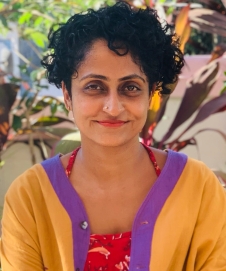 Nithya Sambasivan合作论文数Stealth Startup7
 John Vines合作论文数Institute of Language, Cognition and Computation, School of Informatics, The University of Edinburgh;Institute for Design Informatics, Edinburgh College of Art, The University of Edinburgh7
 Andrea Botero合作论文数Aalto University6
 Carl DiSalvo合作论文数School of Literature, Media, and Communication, Ivan Allen College of Liberal Arts, Georgia Institute of Technology6
 Matthew Kam合作论文数Human-Computer Interaction Institute, School of Computer Science, Carnegie Mellon University6
 Jeffrey Bardzell合作论文数School of Information and Library Science, University of North Carolina at Chapel Hill;Worcester Polytechnic Institute6Clodagh Miskelly合作论文数Independent Researcher6Ruth Catlow合作论文数Furtherfield5
 Markéta Dolejsová合作论文数Aalto University5
 Marcus Foth合作论文数School of Design, Faculty of Creative Industries, Education and Social Justice, Queensland University of Technology5
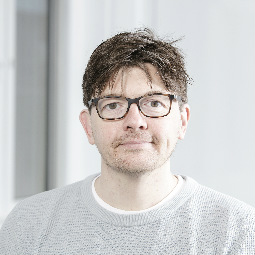 Mark Blythe合作论文数Northumbria School of Design, Northumbria University5
 Danielle Wilde合作论文数Independent Pracititioner, RMIT University5
 David Carlin合作论文数5
 Michael Muller合作论文数5
 Maurizio Teli合作论文数University of Trento5Lara Houston合作论文数Lancaster University5
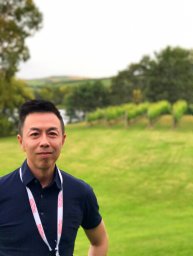 Tuck Wah Leong合作论文数University of Technology, Sydney5
 Lois Weaver合作论文数University of London5Per-Anders Hillgren合作论文数Malmö University5
 Chiara Rossitto合作论文数Department of Computer and Systems Sciences, Stockholm University5
 Gabriela Avram合作论文数Interaction Design Centre, Department of Computer Science and Information Systems, University of Limerick5
 Gary Marsden合作论文数Department of Computer Science, University of Cape Town5Gini Simpson合作论文数4
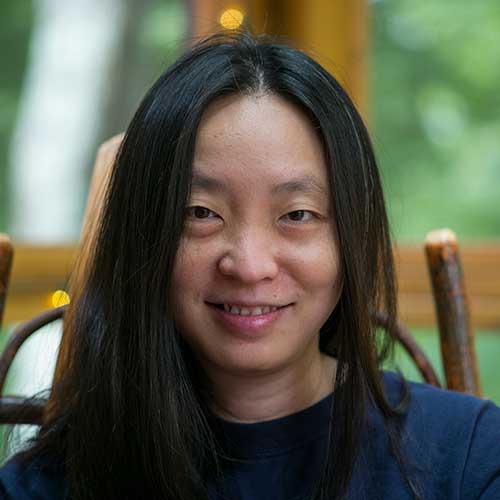 Shaowen Bardzell合作论文数School of Interactive Computing, College of Computing, Georgia Institute of Technology4J. C. Thomas合作论文数IBM T. J. Watson Research Center4
 Peter Wright合作论文数Open Lab, School of Computing, Newcastle University4
 Niall Winters合作论文数Department of Education, University of Oxford4
 Dan Chalmers合作论文数has left Imperial College4
 Anton Fedosov合作论文数metaio GmbH, Munich, Bayern, Germany4
 Tuuli Mattelmaki合作论文数4
 Alan Dix合作论文数School of Computer Science, The University of Birmingham4
 Laura Forlano合作论文数Illinois Institute of Technology4Jon Robinson合作论文数Faculty of Architecture;Building and Planning;University of Melbourne;Faculty of Architecture, University of Melbourne4Lizzie Coles-Kemp合作论文数4
 Patrick George T. Healey合作论文数School of Electronic Engineering and Computer Science, Queen Mary University of London;The Alan Turing Institute4Kristina Lindström合作论文数Department of Applied Chemistry and Microbiology, University of Helsinki4
 Christopher Frauenberger合作论文数Center for Human-Computer Interaction, Department of Artificial Intelligence and Human Interfaces, University of Salzburg4
 Soile Veijola合作论文数4Jo Briggs合作论文数3Cassie Thornton合作论文数3Katie Hill合作论文数3




