Since at least the 1979 Iranian Revolution, the concept of “political Islam” or “Islamism” has drawn the attention of political analysts in Western countries.1 Since the 9/11 attacks, however, much policy attention has focused on combating a specific tactic—the use of violence through terrorism— rather than on countering the ideology of Islamism.
New Perspectives QuarterlyVolume 36, Issue 2 p. 16-18 Original Article Our Asylum Policies Are Not Fit For Purpose AYAAN HIRSI ALI, AYAAN HIRSI ALI Research fellow at the Hoover Institution and founder of the AHA Foundation.Search for more papers by this author AYAAN HIRSI ALI, AYAAN HIRSI ALI Research fellow at the Hoover Institution and founder of the AHA Foundation.Search for more papers by this author First published: 26 April 2019 https://doi.org/10.1111/npqu.12205AboutPDF ToolsRequest permissionExport citationAdd to favoritesTrack citation ShareShare Give accessShare full text accessShare full-text accessPlease review our Terms and Conditions of Use and check box below to share full-text version of article.I have read and accept the Wiley Online Library Terms and Conditions of UseShareable LinkUse the link below to share a full-text version of this article with your friends and colleagues. Learn more.Copy URL Share a linkShare onFacebookTwitterLinkedInRedditWechat No abstract is available for this article. Volume36, Issue2May 2019Pages 16-18 RelatedInformation
Why the United States Should Back Islam's Reformation We have a problem—not a problem from hell, but one that claims to come from heaven. That problem is sometimes called radical, or fundamentalist, Islam, and the self-styled Islamic State is just its latest iteration. But no one really understands it. In the summer of 2014, Major General Michael Nagata, the commander of U.S. special operations forces in the Middle East, admitted as much when talking about the Islamic State, or isis. “We do not understand the movement,” he said. “And until we do, we are not going to defeat it.” Although Nagata's words are striking for their candor, there is nothing new about the state of affairs they describe. For years, U.S. policymakers have failed to grasp the nature of the threat posed by militant Islam and have almost entirely failed to mount an effective counteroffensive against it on the battlefield that matters most: the battlefield of ideas
New Perspectives QuarterlyVolume 32, Issue 2 p. 45-47 Article How to Respond to Islamist Kalashnikovs in the Heart of Paris AYAAN HIRSI ALI, AYAAN HIRSI ALI Author of Infidel and the forthcoming Heretic: The Case for a Muslim Reformation.Search for more papers by this author AYAAN HIRSI ALI, AYAAN HIRSI ALI Author of Infidel and the forthcoming Heretic: The Case for a Muslim Reformation.Search for more papers by this author First published: 27 April 2015 https://doi.org/10.1111/npqu.11514Citations: 1AboutPDF ToolsRequest permissionExport citationAdd to favoritesTrack citation ShareShare Give accessShare full text accessShare full-text accessPlease review our Terms and Conditions of Use and check box below to share full-text version of article.I have read and accept the Wiley Online Library Terms and Conditions of UseShareable LinkUse the link below to share a full-text version of this article with your friends and colleagues. Learn more.Copy URL Share a linkShare onFacebookTwitterLinkedInRedditWechat No abstract is available for this article.Citing Literature Volume32, Issue2April 2015Pages 45-47 RelatedInformation
New Perspectives QuarterlyVolume 30, Issue 2 p. 37-39 Raised on Hatred AYAAN HIRSI ALI, AYAAN HIRSI ALI Fellow at the Belfer Center's Future of Diplomacy Project at the Harvard Kennedy School, and author of the books Infidel and Nomad: From Islam to America: A Personal Journey Through the Clash of Civilizations.Search for more papers by this author AYAAN HIRSI ALI, AYAAN HIRSI ALI Fellow at the Belfer Center's Future of Diplomacy Project at the Harvard Kennedy School, and author of the books Infidel and Nomad: From Islam to America: A Personal Journey Through the Clash of Civilizations.Search for more papers by this author First published: 19 April 2013 https://doi.org/10.1111/npqu.11373Citations: 2AboutPDF ToolsRequest permissionExport citationAdd to favoritesTrack citation ShareShare Give accessShare full text accessShare full-text accessPlease review our Terms and Conditions of Use and check box below to share full-text version of article.I have read and accept the Wiley Online Library Terms and Conditions of UseShareable LinkUse the link below to share a full-text version of this article with your friends and colleagues. Learn more.Copy URL Share a linkShare onFacebookTwitterLinked InRedditWechat No abstract is available for this article.Citing Literature Volume30, Issue2Spring 2013Pages 37-39 RelatedInformation
New Perspectives QuarterlyVolume 28, Issue 4 p. 31-32 America's Afghan Withdrawal: An America that Roars and Retreats AYAAN HIRSI ALI, AYAAN HIRSI ALI Author of Infidel and Nomad, is a fellow at the American Enterprise Institute.Search for more papers by this author AYAAN HIRSI ALI, AYAAN HIRSI ALI Author of Infidel and Nomad, is a fellow at the American Enterprise Institute.Search for more papers by this author First published: 16 November 2011 https://doi.org/10.1111/j.1540-5842.2011.01284.xAboutPDF ToolsRequest permissionExport citationAdd to favoritesTrack citation ShareShare Give accessShare full text accessShare full-text accessPlease review our Terms and Conditions of Use and check box below to share full-text version of article.I have read and accept the Wiley Online Library Terms and Conditions of UseShareable LinkUse the link below to share a full-text version of this article with your friends and colleagues. Learn more.Copy URL Share a linkShare onFacebookTwitterLinkedInRedditWechat No abstract is available for this article. Volume28, Issue4Fall 2011Pages 31-32 RelatedInformation
Just as the Arab Spring blossomed, the al‐Qaeda‐led era of terrorism came to an end with the killing of Osama Bin Laden in his Pakistani lair by American special forces. We asked two of the most contentious experts on all things Islamic—Ayaan Hirsi Ali and Tariq Ramadan—to assess the meaning of these historic moments on the future. Amr Moussa, the leading candidate for Egypt's presidency, and Ehud Barak, Israel's defense minister, also offer their views. Two top former intelligence agents from MI6 and the CIA look at the next turn of events—the Saudi counter‐revolution.
The Great Arab Revolt of 2011 has moved swiftly from the peaceful overthrow of autocrats in the nation‐states of Tunisia and Egypt to brutal repression in the tribal societies of Libya, Syria, Bahrain and Yemen.Meanwhile, the wired youth bulge of the Middle East that brought change is dissipating into an impotent diaspora while the organized interests of the old regimes and the once‐suppressed Islamists charge ahead to power. This section examines the revolt, the reaction and the power struggles in its aftermath.
New Perspectives QuarterlyVolume 27, Issue 4 p. 38-40 The New York Mosque Is a Symptom of Civilizational Clash AYAAN HIRSI ALI, AYAAN HIRSI ALI Former member of the Dutch parliament, is the author of a new book, Nomad: From Islam to America—A Personal Journey Through the Clash of Civilizations, published by Free Press.Search for more papers by this author AYAAN HIRSI ALI, AYAAN HIRSI ALI Former member of the Dutch parliament, is the author of a new book, Nomad: From Islam to America—A Personal Journey Through the Clash of Civilizations, published by Free Press.Search for more papers by this author First published: 28 October 2010 https://doi.org/10.1111/j.1540-5842.2010.01203.xAboutPDF ToolsRequest permissionExport citationAdd to favoritesTrack citation ShareShare Give accessShare full text accessShare full-text accessPlease review our Terms and Conditions of Use and check box below to share full-text version of article.I have read and accept the Wiley Online Library Terms and Conditions of UseShareable LinkUse the link below to share a full-text version of this article with your friends and colleagues. Learn more.Copy URL Share a linkShare onFacebookTwitterLinkedInRedditWechat No abstract is available for this article. Volume27, Issue4Fall 2010Pages 38-40 RelatedInformation
To the shock of the world, the mild‐mannered Swiss have acted the most radically of any European country out of fear of Muslim immigrants by banning minarets. Was this a blow against tolerance, or for it? Is Islam a European religion, or is Europe a Christian club? Meanwhile, as Turkey becomes more confident in its regional power and Muslim identity it is shaking up some old friends.In this section, two of Europe's most prominent Muslim voices, the foreign minister of Sweden and a top Turkish official try to sort it out.
America is more a creed than a nation. Our promise has always been that all individuals, despite race, religion or gender, have the equal chance to make it. The election of Barack Hussein Obama as president of the United States is thus a “soft power” coup for America's global image, which had lost its luster during the Bush years. Obama is the anti‐Bush who will lead by the power of example instead of the example of power. Yet, there are real limits. Can the power of example stop the North Korean or Iranian nuclear programs? Can it stop jihadists bent on establishing a new Caliphate across South Asia? Can it limit China's ambitions as the new power in Asia? In this section commentators from across the world offer their views.
President Barack Obama pledged in his first TV interview—with the Arab satellite channel Al Arabiya—that America under his watch would “listen with respect and not dictate” to the world. Secretary of State Hillary Clinton has further announced that this country will no longer just throw around its military might but will pursue a “smart power” approach by tempering the use of hard weaponry with the “soft power” of persuasion and cultural attraction. Or, as Madame Secretary's husband Bill has put it, America will now lead through the power of example instead of the example of power.The first exceedingly complex test of Obama's smart power strategy will be how to end George W. Bush's misguided “war on terror” in Afghanistan and Pakistan, keeping al‐Qaida at bay without being swallowed by the quagmire of tribal politics. An array of experts from New Delhi to Paris offers their views in this section.
President Barack Obama has extended the hand of engagement to the Muslim and Arab world, while warning Israel against new settlements in occupied Palestine and hedging his bets with remote drone strikes against Al‐Qaida and the Taliban in Pakistan. The new CIA director, a military historian and the Somali‐born feminist Ayaan Hirsi Ali assess his strategy.
New Perspectives QuarterlyVolume 25, Issue 1 p. 72-73 The Third Wave's Third Way: Networks vs. Elementary Particles - Summer 2006 ALVIN TOFFLER, ALVIN TOFFLERSearch for more papers by this authorRICHARD SENNETT, RICHARD SENNETTSearch for more papers by this authorRICHARD RODRIGUEZ, RICHARD RODRIGUEZSearch for more papers by this authorPASCAL BRUCKNER, PASCAL BRUCKNERSearch for more papers by this authorAYAAN HIRSI ALI, AYAAN HIRSI ALISearch for more papers by this authorLEON DE WINTER, LEON DE WINTERSearch for more papers by this authorHANS MAGNUS ENZENSBERGER, HANS MAGNUS ENZENSBERGERSearch for more papers by this authorMUNAWAR ANEES, MUNAWAR ANEESSearch for more papers by this authorSHIRIN EBADI, SHIRIN EBADISearch for more papers by this authorSAYYID IYAD JAMALEDDINE, SAYYID IYAD JAMALEDDINESearch for more papers by this authorDANIEL ELLSBERG, DANIEL ELLSBERGSearch for more papers by this authorPAN YUE, PAN YUESearch for more papers by this authorJAY ZWALLY, JAY ZWALLYSearch for more papers by this authorMATHIAS DÖPFNER, MATHIAS DÖPFNERSearch for more papers by this authorEDWARD O. WILSON, EDWARD O. WILSONSearch for more papers by this authorALAN MacDIARMID, ALAN MacDIARMIDSearch for more papers by this author ALVIN TOFFLER, ALVIN TOFFLERSearch for more papers by this authorRICHARD SENNETT, RICHARD SENNETTSearch for more papers by this authorRICHARD RODRIGUEZ, RICHARD RODRIGUEZSearch for more papers by this authorPASCAL BRUCKNER, PASCAL BRUCKNERSearch for more papers by this authorAYAAN HIRSI ALI, AYAAN HIRSI ALISearch for more papers by this authorLEON DE WINTER, LEON DE WINTERSearch for more papers by this authorHANS MAGNUS ENZENSBERGER, HANS MAGNUS ENZENSBERGERSearch for more papers by this authorMUNAWAR ANEES, MUNAWAR ANEESSearch for more papers by this authorSHIRIN EBADI, SHIRIN EBADISearch for more papers by this authorSAYYID IYAD JAMALEDDINE, SAYYID IYAD JAMALEDDINESearch for more papers by this authorDANIEL ELLSBERG, DANIEL ELLSBERGSearch for more papers by this authorPAN YUE, PAN YUESearch for more papers by this authorJAY ZWALLY, JAY ZWALLYSearch for more papers by this authorMATHIAS DÖPFNER, MATHIAS DÖPFNERSearch for more papers by this authorEDWARD O. WILSON, EDWARD O. WILSONSearch for more papers by this authorALAN MacDIARMID, ALAN MacDIARMIDSearch for more papers by this author First published: 15 January 2008 https://doi.org/10.1111/j.1540-5842.2008.00949.xCitations: 1AboutPDF ToolsRequest permissionExport citationAdd to favoritesTrack citation ShareShare Give accessShare full text accessShare full-text accessPlease review our Terms and Conditions of Use and check box below to share full-text version of article.I have read and accept the Wiley Online Library Terms and Conditions of UseShareable LinkUse the link below to share a full-text version of this article with your friends and colleagues. Learn more.Copy URL Share a linkShare onFacebookTwitterLinkedInRedditWechat No abstract is available for this article.Citing Literature Volume25, Issue1Winter 2008Pages 72-73 RelatedInformation
The drama between the secularist legacy of Ataturk and the popular surge of Islamist‐rooted politics continues in Turkey, centered on the debate over the headscarf. Is it a sign of religious reaction, or a sign of non‐Western modernization that will ensure higher education for Muslim women? We represent here all sides of the debate.Elsewhere in the Muslim world are the reformers and critics listening to each other, or impeding progress with a blame game? Europe's most controversial figures in this debate—Ayaan Hirsi Ali and Tariq Ramadan—engage here.
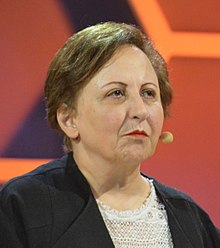 Shirin Ebadi合作论文数Defenders of Human Rights Center3
 HANS BLIX合作论文数2REZA ASLAN合作论文数2
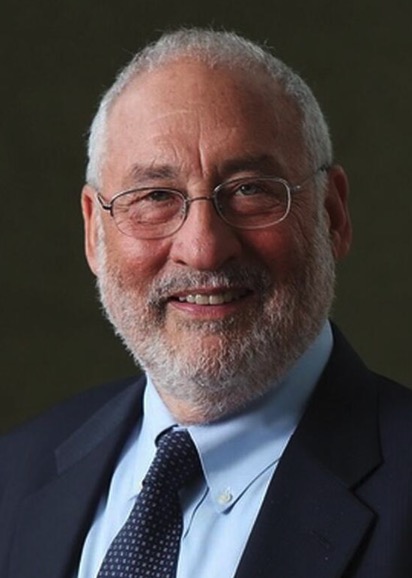 Joseph E. Stiglitz合作论文数Department of Economics, Columbia Business School, Columbia University;School of International and Public Affairs, Columbia University;Graduate School of Arts and Sciences, Columbia University2Salman Rushdie合作论文数2Recep Tayyip Erdogan合作论文数2
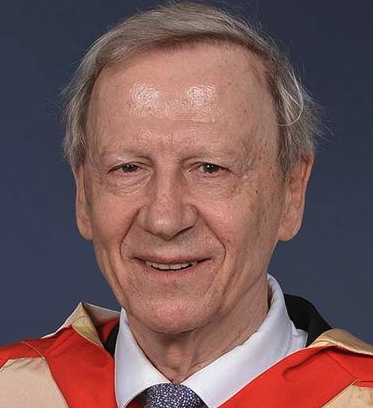 Tony Giddens合作论文数Department of Sociology, London School of Economics and Political Science2
 Tariq Ramadan合作论文数St Antony’s College, Oxford University2BENAZIR BHUTTO合作论文数1Samuel Huntington合作论文数1CHRIS PATTEN合作论文数1CARLOS FUENTES合作论文数1uitgeverij augustus合作论文数1ZHENG BIJIAN合作论文数1
 Yue Pan合作论文数Wuhan National Laboratory for Optoelectronics, Huazhong University of Science and Technology1
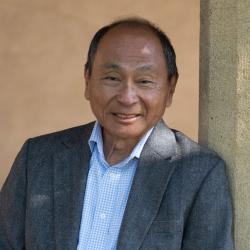 Francis Fukuyama合作论文数Freeman Spogli Institute for International Studies, Stanford University;Center on Democracy, Development and the Rule of Law, Stanford University;Aarhus University1
 Muhammad Sahimi合作论文数Vierbi School of Engineering, University of Southern California1
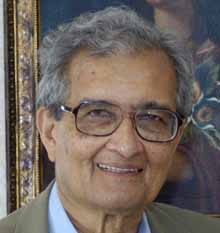 Amartya Sen合作论文数Department of Economics, Faculty of Arts and Sciences, Harvard University1
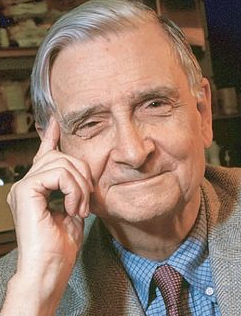 Edward O. Wilson合作论文数Pellegrino University1
 Henry Kissinger合作论文数1Alain De Botton合作论文数1Yusuf Muftuoglu合作论文数1Jay Zwally合作论文数1Graham Fuller合作论文数1Gore Vidal合作论文数1Sayyid Iyad Jamaleddine合作论文数1Joschka Fischer合作论文数1Daniel Ellsberg合作论文数1
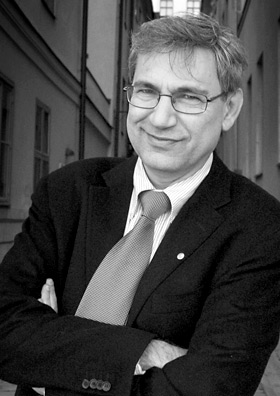 Orhan Pamuk合作论文数Indien und Kolumbien1Akbar Ahmed合作论文数1Kanan Makiya合作论文数1Munawar Anees合作论文数1Martin Van Creveld合作论文数Dept Hist, Hebrew Univ Jerusalem1George Olah合作论文数1Pervez Musharraf合作论文数1Pascal Bruckner合作论文数1Goli Taraghi合作论文数1Tatiana Tolstaya合作论文数1Wole Soyinka合作论文数1Goran Rosenberg合作论文数1Guy Ryder合作论文数1Mathias Dopfner合作论文数1Mohamad Mahathir合作论文数1Jacques Attali合作论文数1Ian Bremmer合作论文数1
 Al Gore合作论文数Generation Investment Management LLP1Paul Wolfowitz合作论文数1Alvin Toffler合作论文数1
 Shimon Peres (西蒙·佩雷斯)合作论文数1




