Although metal additive manufacturing (MAM) is often considered as an environmentally friendly technology due to its layered material deposition approach, this idea remains questionable. In fact, limiting environmental assessment to the deposition stage ignores the environmental impacts of other life-cycle phases, such as raw material extraction or post-processing. In addition, current studies focus mainly on material and energy consumption, neglecting other aspects such as the use of consumables and safety constraints. Furthermore, the mechanical optimization of parts through suitable process parameters selection disregards environmental impacts that could be generated. First, a short state-of-the-art review covers the environmental and mechanical assessments with the corresponding methods and tools already used in the literature. Then, a discussion is provided on the studies that have already addressed the complete life cycle assessment and the mechanical characterization of parts. Finally, this work proposes a methodology to integrate these two approaches into a single tool, where the evaluation will be carried out in parallel. A study case is presented. This represents a preliminary step toward the development of this tool in future work.
In the context of Industry 4.0, Manufacturing Execution Systems (MES) are fundamental components, operating as a bridge between enterprise-level planning and real-time shop floor operations, thereby enabling smart manufacturing. Although MES are widely acknowledged for improving efficiency and enabling data-driven decisions, their effective deployment often faces multiple barriers that are both complex and interconnected. While previous studies highlight individual challenges, a holistic and categorized perspective on these obstacles is missing. This study aims to address this gap by providing a consolidated and structured framework of MES implementation challenges, enriching the existing body of knowledge through a detailed literature review. Drawing on a systematic literature review, this research identifies and categorizes these challenges into five distinct domains: technical, organizational, human/skills-related, contextual/external, and financial. This research contributes to a better understanding of MES implementation dynamics and offers a structured framework for identifying obstacles in both academic and industrial contexts. Future work will involve qualitative interviews with practitioners to bridge the gap between theory and real-world MES deployment strategies.
Map construction is the initial step of mobile robots for their localization, navigation, and path planning in unknown environments. Considering the human-robot collaboration (HRC) scenarios in modern manufacturing, where the human workers’ capabilities are closely integrated with the efficiency and precision of robots in the same workspace, a map integrating geometric and semantic information is considered as the technical foundation for intelligent interactions between human workers and robots, such as motion planning, reasoning, and context-aware decision-making. Although different map construction methods have been proposed for mobile robots’ perception in the working environment, it is still a challenging task when applied to such human-robot collaborative manufacturing scenarios to achieve the afore-mentioned intelligent interactions between human workers and robots due to the poor integration of semantic information in the constructed map. On the one hand, due to the lack of ability for differentiating the dynamic objects, the mobile robot might sometimes wrongly use the dynamic objects as the spatial references to calculate the pose transformation between the two successive frames, which negatively affects the accuracy of the robot's localization and pose estimation. On the other hand, the map that integrates both the geometric and semantic information can hardly be constructed in real-time, which cannot provide an effective support for the real-time reasoning and decision making during the human-robot collaboration process.This study proposes a novel map construction approach containing semantic information generation, geometric information generation, and semantic & geometric information fusion modules, which enables the integration of the semantic and geometric information in the constructed map. First, the semantic information generation module analyzes the captured images of the dynamic working environment, eliminates the features of dynamic objects, and generates the semantic information of the static objects. Meanwhile, the geometric information generation module is adopted to generate the accurate geometric information of the robot's motion plane by using the environment data. Finally, a map integrating semantic and geometric information in real-time can be constructed by the semantic & geometric fusion module. The experimental results demonstrate the effectiveness of the proposed semantic map construction approach.
Modern complex product design is becoming a knowledge-intensive teamwork activity since participants from different disciplines have been involved. Therefore, it is essential to obtain multi-discipline knowledge effectively to enhance the design process. However, considering multimodal, multi-temporal, and multi-spatial characteristics of the design process, it is still challenging to take advantage of crowd intelligence knowledge. Although crowd intelligence knowledge has been studied and applied in many fields, there is still a lack of a systematic analysis of its characteristics, applications, and future directions. This paper presents a state-of-the-art review of the recent advancement in knowledge-based engineering (KBE) approaches for complex product design. First, this paper discussed the characteristics of KBE approaches and concluded with a systematical definition of product design based on crowd intelligence knowledge. Second, the limitations of existing KBE approaches are pointed out by analyzing current single-discipline and multi-discipline KBE approaches. Third, two knowledge acquisition methods: knowledge query and knowledge push are presented, which are considered potential solutions for crowd intelligence design. Finally, the efficiency, accuracy, and real-time performance of the two methods are discussed, conclusions are drawn, and future research directions of KBE approaches are pointed out.
Mechatronic systems, combining mechanical, electrical and software technologies, require the collaboration of different engineering disciplines. In this complex interdisciplinary space, the importance of Model-Based Systems Engineering (MBSE) and Product Lifecycle Management (PLM) comes to the fore. MBSE and PLM represent different approaches that are inherently interrelated, within the broad field of product design and development. The integration of these two approaches is crucial for ensuring seamless information exchange and collaboration throughout the entire product lifecycle; it involves connecting different tools, methodologies and data formats. Several challenges hinder the seamless integration of these approaches. These challenges include mismatched data representations, semantic inconsistencies, varying granularity of information and different levels of abstraction. Overcoming these challenges requires a systematic approach where traceability plays a key role in establishing and maintaining connections between data, ensuring consistency of information throughout the product lifecycle. By highlighting the importance of traceability on a vending machine use-case, this paper contributes to the evolving discourse on effective methodologies for harmonizing different engineering practices in the development of mechatronic systems.
The consideration of environmental impacts is more and more present in companies’ policies and strategies. To answer this request, many methods of sustainability assessment have been developed, such as life cycle assessment or circularity assessment to evaluate the environmental impacts and on human health of assessed products or services. These sustainability assessments use sustainability indicators to assess the environmental impacts and on human health. In the literature many sustainability indicators are described; choosing the most adequate one can be a difficult task for the designers who want to assess the environmental impacts and on human health of their designs. Enterprise information systems provide most of the necessary data to the realization of sustainability assessments and enable the implementation of these assessments in the industry. This paper firstly covers a state-of-the-art review on sustainability indicators and how the data issued from the enterprise information systems is useful in practicing sustainability assessments. Then, this paper presents preliminary research work regarding a proposed framework for the data integration of enterprise information systems to help carry out sustainability assessments.
The advent of multidisciplinary product development may require a corresponding evolution or adaptation of product development practices within companies. To support this, researchers have developed various groupings of concepts and techniques, such as “toolboxes” or “maps”, which can be assimilated to static databases. Consequently, this article presents a first step towards a community-driven database for the dynamic representation of links between approaches, processes, methods and tools in research documents. Following a comparative analysis of different representations, a preliminary design of a dynamic database is presented using Unified Modeling Language models to define its architecture. A use case diagram paired with screenshots of the dynamic database presents the core functionalities, which include real-time data filtering, visualisation, navigation and modification.
The topic of the digital twin (DTw) has been widely scrutinized lately. This article summarizes the main definitions of the DTw, highlights the differences between the known and used terms to assess and qualify its maturity levels, presents the existing gaps in the railway sector regarding the challenges for DTw implementation and uses in comparison with other industries. The main contribution of this paper is to present a holistic overview of the railway sector during the operation and maintenance phases, classifying the various use cases regarding the DTw of an existing railway infrastructure. For a selected use case, we will explain the necessary parameters to identify and characterize before architecture specification and development for the digital twin of an existing railway infrastructure.
With the wide application of Electric Vehicles (EV) and intelligent technology, the recycling of EV batteries presents significant challenges to cope with the dynamic disassembly tasks and operations. Similarly, human-robot collaborative (HRC) disassembly has emerged as an effective solution to accomplish the disassembly task allocation and improve efficiency. This paper proposed an improved HRC disassembly method integrating Q-learning-based Particle Swarm Optimization (PSO) to optimize the disassembly task sequence for multi-agent disassembly strategies. Furthermore, the Q-learning model is integrated to guide the variable neighborhood search (VNS) algorithm enabling efficient neighborhood structure selection to enhance local search capabilities and optimize multi-agent disassembly sorting tasks. By considering the disassembly experiment of MercedesBenz EQS NCM 811 battery as a case study, the proposed method is deeply analyzed and compared with traditional methods under the same objective function. The results demonstrate the proposed algorithm reduces the fitness value and improves the optimization of disassembly tasks. The experimental results show that the proposed algorithm effectively improves the efficiency of HRC disassembly compared to other algorithms, offering a more efficient solution for the recycling of retired EV batteries.
Wire arc additive manufacturing (WAAM) is an advanced technology that combines the principle of welding and additive manufacturing: metal is heated and melted by an electric arc then deposited layer by layer, which renders possible the building of large metal parts. As just-needed material is used, this technology has the potential to reduce material waste, and thus can be perceived as sustainable. However, WAAM presents environmental challenges, due to the feedstock preparation steps starting from raw material extraction, casting, forming to wire drawing. There are also safety precautions required to mitigate dangers due to emissions of harmful fumes and particles of this process (suction stations, ventilation, insulation, etc). An in-depth study would help to identify the environmental impact factors and thus provide more robust data about this process footprint on environment. The parameters of the WAAM process significantly influence mechanical properties of the manufactured parts, which are often engineered to have high-performance mechanical proprieties (particularly in industries such as aeronautics and automotive). When assessing the environmental impact of WAAM, it is essential to consider how process parameters affect both performances: mechanical and durability through the extension of lifetime of manufactured part. This technology seems to be a promising process with advantages of flexibility and obtaining parts with acceptable mechanical properties. Ongoing research is needed to clarify true added-value to reduce the environmental impact of this technology as well as its effect on the mechanical properties of manufactured parts. The present paper, first examines how previous studies have highlighted the environmental impacts of WAAM processes and evaluated their mechanical properties. It then presents a case study that incorporates a broader range of impact factors compared to those typically considered in the literature, demonstrating the importance of such approach in effecting the results of life cycle assessment (LCA). In fact results obtained at the end of this paper, show huge differences compared to those found in literature.
Modern product design has become a collaborative activity of crowd intelligence, which inevitably brings an unprecedented increase in design conflicts. The accurate identification of key design conflicts can significantly reduce costs and speed up the design process; on the contrary, it will not only cause a lot of iterations but also become a major hidden problem for product quality. In order to accurately identify the key design conflicts, designers must identify the causes and consequences of the conflicts. With the support of causal discovery, the paper aims to identify the causes and consequences of design conflicts through the perception of the design conflict formation process and achieve the accurate identification of the key design conflicts. First, a deep survey relating to current studies on product development and conflict identification is conducted. Second, the proposed causal discoverybased design conflict detection approach is presented. Finally, the authors draw a conclusion and point out the direction for future research.
Owing to the high-costing and complexity of traditional mechanical performance testing for laser-powder bed fusion (L-PBF) forming parts, it is imperative to propose a novel performance prediction method for printing parts based on data and knowledge reasoning. In this paper, a multi-layer graph attention-based knowledge reasoning is proposed to consider the influencing parameters of the L-PBF process to predict the mechanical properties of L-PBF printing parts. The proposed prediction approach can be considered an effective solution to address the challenges associated with the performance prediction of L-PBF printing parts. Furthermore, the proposed prediction approach has been demonstrated through a practical case study on the performance prediction of the L-PBF process. This case is thoroughly analyzed using graph attention and fully connected neural networks, incorporating both simulation and experimental data to validate the prediction results of L-PBF printing performance under complex process parameters. The common results of L-PBF part performance have been predicted to provide many detailed perspectives and future possible trends. Finally, a detailed conclusion has been given.
Small- and medium-sized enterprises (SMEs) play a vital role in the global economy, driving innovation and economic growth, despite constraints on their financial and operational resources. In the competitive landscape of modern markets, continuous product design improvement has become essential for SMEs to meet dynamic user requirements, enhance satisfaction, and maintain competitiveness. Online reviews have emerged as valuable sources of user feedback, offering real-time, large-scale insights into user preferences. However, existing methods for leveraging online reviews in product design improvement have significant limitations, including insufficient attention paid to the hierarchical structure of different attributes when extracting product improvement attributes and a lack of quantitative attribute prioritization strategies. These shortcomings often result in suboptimal improvement and inefficient resource allocation, particularly for SMEs with limited resources. To address these challenges, this study proposed a novel online review-assisted method for product design improvement tailored to the needs of SMEs. The proposed method incorporates a hierarchical latent Dirichlet allocation model to extract and organize product attributes hierarchically, thereby enabling a comprehensive understanding of user requirements. Furthermore, a marginal utility-based approach is employed to prioritize product improvement attributes quantitatively, ensuring that the most impactful attributes are addressed efficiently. The effectiveness of the proposed method was demonstrated through a case study on the design improvement of a robotic vacuum cleaner developed using a typical SME in robotic cleaning solutions.
To reduce the environmental impacts and resource utilization of End-of-Life (EOL) product recycling, it is imperative to achieve the high efficiency of EOL product recycling and reutilization, including disassembly. However, the disassembly of EOL products is being faced with huge challenges due to the uncertainties of EOL product recycling and dynamic disassembly requirements. Therefore, this paper proposes a digital twin (DT)assisted multi-agent human-robot collaboration (HRC) disassembly system with multi-scenario data simulations to achieve multi-agent disassembly operations and process optimization. In addition, the dynamic disassembly structure based on dynamic Time Petri Net (TPN) model represents the real-time disassembly information and associated disassembly relationships, which incorporates the digital twin technology to simulate the application environment of HRC disassembly operations. By integrating the multi-agent Dueling-Double deep Q-learning network (MADDQN) algorithm to determine the optimal disassembly sequence and associated task strategy in the DT-assisted HRC disassembly platform. Similarly, it is essential to evaluate the performance of the proposed algorithm for multi-task disassembly planning based on HRC disassembly operations. By conducting an in-depth analysis of the NEV-P50 battery pack from the Weilai ES8 as a case study, the practical implementation of the MADDQN algorithm is demonstrated to optimize the dynamic disassembly sequence and uncertain task allocation with DT data, which provides an effective and flexible approach to the complex disassembly tasks in multiscenario HRC disassembly processes.
With the disclosure of proactive design for sustainability, a new opportunity is offered to foster the transition toward Industry 5.0. To incorporate this heuristic concept, decision-makers should be able to foresee the environmental impacts associated with every life cycle stage of their product under development and anticipate sustainable measures during the preliminary design phase. In today's context, life cycle assessment (LCA) is widely recognized as an in-depth approach to environmental impact assessment. Since this approach is highly dependent on precise product-related data, ensuring reliable data input is crucial to obtaining optimized LCA results. A product lifecycle management (PLM) system can provide exploitable product-related data and offers interoperable interfaces. Therefore, integrating the PLM system with the LCA should be the fundamental step of our study. This paper provides a literature review on the panorama of key achievements linking PLM with LCA. The research opportunities and challenges identified during our research review, including the application of AI in PLM, are discussed. At the end of the paper, detailed directions for future work are outlined.
Integrating circular design principles directly into the early stages of the product development process presents significant challenges, primarily due to the scarcity of accessible information and the need for proactive engagement with designers and their Computer-Aided Design (CAD) tools. To bridge this expectation, this paper presents a framework—PROTHEUS—that leverages a cognitive chatbot to support circular design strategies within a closed-loop system. Drawing on artificial intelligence technologies, including Large Language Models (LLMs), PROTHEUS aims to ecologically support designers in making informed and actionable choices. This research begins with an overview of existing integrations of chatbots into CAD systems, methodologies and tools that advocate sustainable design and associated sustainability metrics. We then define the architecture of the proposed chatbot model, with its operational mechanisms, information requirements and main objectives. Finally, we use a case study to demonstrate the application of the chatbot and validate the effectiveness of the PROTHEUS model in improving circular design practices.
The European Wine Sector is renamed and valued all around the world for its centuries-old tradition of producing high-quality wines along with spreading culture and knowledge around this unique product. France is a historical wine-producing country, and together with Italy and Spain, one of the first to have emerged in the worldwide markets thanks to the diversity, the fine growing and manufacturing methods behind the production, and the deep passion that every bottle encloses. The Wine Industry, detectable in the Agri-Food Sector, is so crucial and of paramount importance for the European economy, representing a primary surplus in the trade balance of the mentioned countries. However, in an ever-evolving worldwide market, even solid pillars like the Wine Industry must face major challenges: the rising of customers’ health, environmental concerns, sustainability, and traceability for the products and the process. To succeed in this major challenge, not only the wine but all of the Agri-Food Sector is increasingly embracing technological innovations, moving towards a genuine modern smart industry. The purpose of this research work is, therefore, to study and analyze the use of two innovative technologies to support the Digital Transformation of the Agri-Food Sector: Product Lifecycle Management (PLM) and Digital Product Passport (DPP).
The environmental impacts generated by manufacturing processes have become a concern, as underlined by regulation controls. Studies tend to focus on optimization of the processes through process parameter refinement to try to reduce energy consumption and raw material consumption. However, a thorough assessment of the building of a component linked to its use should be performed to help decision making. The focus of this paper is to define a methodology that helps the choice of the process parameters since the first design steps, by assessing this choice on the mechanical properties and thus the global environmental impact of the manufactured component. To do so, a case study is applied to a given additive manufacturing technology combining metal injection molding and fused filament fabrication. This combination is part of the additive manufacturing processes involving material extrusion.
During engineering design, stakeholders often impose conflicting constraints based on their individual perspectives, leading to constraint conflicts. While negotiation is widely used to resolve such conflicts - allowing stakeholders to support or reject potential solutions such as removing or relaxing constraints - limited research has addressed how to assist stakeholders in generating feasible resolution options. This paper proposes a knowledge-based approach to bridge the gap between constraint conflict detection and negotiation, enhancing the overall efficiency of collaborative engineering design. First, we define the roles of stakeholders within the constraint conflict resolution process. Recognising the diversity in their educational and professional backgrounds, we develop a unified data model to support effective knowledge exchange. Next, we introduce a novel method for constraint conflict detection, which reframes the task as consistency checking within a system of design parameters and their associated constraints. Based on the consistency results, we propose a solution generation method that systematically produces feasible resolutions by suggesting constraint removal or relaxation. The proposed approach is validated through a case study involving the collaborative design of an automated driller for a robotic drilling system, demonstrating its potential to facilitate informed and efficient conflict resolution in collaborative design environments.
 Julien Le Duigou合作论文数IRCCyN65
 Matthieu Bricogne合作论文数Centre Pierre Guillaumat, UTC (Université de Technologie de Compiègne),60
 Alexandre Durupt合作论文数UTT (Université de Technologie de Troyes),37
 Lionel Roucoules合作论文数University of Technology of Troyes37
 Chen Zheng (郑晨)合作论文数School of Mechanical Engineering, Northwestern Polytechnical University36
 Guillaume Ducellier合作论文数26
 Matta Nada合作论文数GSID-Tech-CICO, UTT22
 Nadege Troussier合作论文数Centre Pierre Guillaumat, Universite de Technologie de Compiegne22
 Jinhua Xiao (肖锦华)合作论文数Dipartimento Diingegneria Gestionale, Politecnico di Milano18
 Flore Vallet合作论文数Lab Genie Ind, Univ Paris Saclay16
 Raoudha Gaha合作论文数Lab Mech Sousse, Univ Sousse16
 Christophe Danjou合作论文数15Magali Bosch-Mauchand合作论文数14
 Philippe Boutinaud合作论文数14
 Nabil Anwer合作论文数Ecole Normale Superieure de Cachan, Ecole Normale Superieure de Cachan14
 Shurong Tong (同淑荣)合作论文数School of Management, Northwestern Polytechnical University13
 Jing Li (李靖)合作论文数School of Mechanical Engineering, Northwestern Polytechnical University13
 Keqin Wang (王克勤)合作论文数School of Management, Northwestern Polytechnical University13
 Xiu-Tian Yan合作论文数Design Manufacture & Engineering Management,
University of Strathclyde13
Xiu-Tian Yan合作论文数Design Manufacture & Engineering Management,
University of Strathclyde13 Sebastien Remy合作论文数Charles Delaunay Institute, Troyes University of Technology13
 Joanna Daaboul合作论文数Ecole Centrale Nantes-IRCCyN13
 Farouk Belkadi合作论文数Mechanical Systems Engineering Department, Université de Technologie de Compiègne12
 Sébastien Charles合作论文数Universite de Versailles Saint Quentin en Yvelines11
 Cong Cuong PHAM合作论文数11
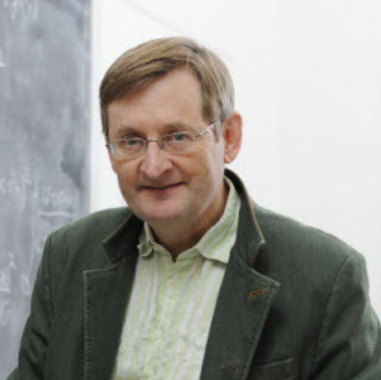 Louis Paul Rivest合作论文数Department of mathematics and statistics, Faculté des sciences et de génie, Université Laval11
 Peter Hehenberger合作论文数Institut für Rechnergestützte Methoden im Maschinenbau, Johannes Kepler Universität Linz11Yicha Zhang合作论文数10
 Xiansheng Qin (秦现生)合作论文数School of Mechanical Engineering, Northwestern Polytechnical University10
 Frédéric Demoly合作论文数SeT laboratory, Belfort-Montbéliard University of Technology10
 Marianne Allanic合作论文数10
 Borhen Louhichi合作论文数Laboratoire de Génie Mécanique;Département de Génie Mécanique;Laboratoire de Génie Mécanique|Département de Génie Mécanique10
 Samuel Gomes合作论文数CNRS, Univ Bourgogne Franche Comte9
 Zhanxi Wang (王战玺)合作论文数School of Mechanical Engineering, Northwest University of Technology9
 Dimitris Kiritsis合作论文数Ecole Polytech Fed Lausanne9
 Marc Joliot合作论文数CEA;Neuroscience Departement, Bordeaux University8
 Pascal Lafon合作论文数GSM-LASMIS, Université de technologie de Troyes8Diana Penciuc合作论文数8Emmanuel Guyot合作论文数7Catherine Perpignan合作论文数Roberval Lab, Univ Technlogoie Compiegne7
 Wenhua Zhu (朱文华)合作论文数School of Basic Medical Sciences, Xi'an Jiaotong University Health Science Center7
 Xinwei Zhang (张新卫)合作论文数School of Management, Northwest Polytechnic University7
 Mourad Messaadia合作论文数Laboratoire d'Analyse et d'Architecture des Systèmes, du CNRS7
 Harvey Rowson合作论文数6
 Piers Barrios合作论文数6
 Philippe Girard合作论文数UMR 5218, Univ Bordeaux6
 Dominique Millet合作论文数6
 Vincent Robin合作论文数6
 Jing Bai (白晶)合作论文数School of Mechanical Engineering, Northwestern Polytechnical University6




