The historical past of a given nation is interpreted in divergent ways by different social groups within a society. This study investigated group variations in position-taking toward major Brazilian historical events. A total of 420 Brazilians answered an online questionnaire in which they evaluated their emotions concerning ten events in Brazilian history: Arrival of the Royal Family, Independence of Brazil, Abolition of Slavery, Proclamation of the Republic, Brazilian Military Regime, Free Vote Movement, 1988 Federal Constitution, Real Plan, Covid-19 Pandemic, and 2022 Presidential Election. The responses were analyzed in RStudio using Latent Profile Analysis, a method aimed at identifying subgroups within a sample based on patterns of answers. Six distinct response profiles were identified: Nationalists, Youth Nationalists, Democrats, Oligarchs, Historical Constants, and Republicans. The findings suggest that the positioning of these subgroups can be interpreted as organized around broader orientations toward collective projects and expectations about the future. From this perspective, the construction of historical memory appears to be connected to imagined societal ideals. These results highlight the potential relevance of considering representations of the collective future when examining memory processes.
This article examines how dominant experimental and cognitivist traditions in psychology have narrated the history of the discipline through a restricted conception of scientific progress: the controlled study of the individual mind abstracted from culture and history. Against this narrative, the article reconstructs an alternative genealogy linking psychology and anthropology, with particular attention to F. C. Bartlett’s work on remembering, conventionalization, and social life. It argues that Bartlett’s method of repeated reproduction offers not merely an experimental technique but a way of studying memory as a historically and culturally mediated activity. The argument is illustrated through an analysis of previous research examining how Spanish participants recalled narratives of the Northern Irish conflict by drawing on cultural resources associated with the Basque conflict. The article contributes to debates between anthropology and psychology by showing how memory, mind, culture, and history can be understood as mutually constitutive dimensions.
Historical analogies (HAs) are cultural tools for making sense of a current situation by drawing comparisons to a past event. Their use in communication and understanding can be observed since ancient times and in societies around the world, especially in times of crisis. The present paper explores the role they played in people’s everyday thinking during the COVID-19 pandemic, including what HAs were used, how they changed over time, who used them, and to what effect. To do this it draws on a longitudinal project in Germany that included a national representative survey (N = 1080) and follow-up interviews (N = 38) done at three data collection points. The interviews were coded for HAs, the results of which are presented in three steps: first, an overview of the HAs used and their change over time is given; second, characteristics of the most frequent users are outlined; and third, a case study of the most frequent user is presented. The article highlights the everyday use of HAs by people through time, their social distribution between majorities and active minorities, their link to conspiracy mentality and their personal psychological functions.
While conspiracy theories (CTs) are often treated as consequences of cognitive deficits, this article approaches them as cultural tools through which individuals and groups make sense of uncertainty, threat, and their place in society. Drawing on a collective memory approach, we trace how CTs emerge from and contribute to historically embedded meaning-making processes and outline three interrelated connections between CTs and collective memory: 1) they are often forged during crises as narrative responses to disruption that become part of collective memory; 2) they draw on long-standing intergroup histories of distrust shaped by conflict, marginalization, and institutional betrayal; and 3) they repurpose enduring cultural symbols and narrative templates that lend coherence to new claims.
The COVID-19 pandemic created unprecedented conditions for examining how vaccination willingness evolves during prolonged health crises. This longitudinal mixed-methods study examines temporal dynamics in COVID-19 vaccination willingness across three phases of Germany’s vaccination campaign (N = 1063 survey respondents; n = 40 interview participants). Using mixed-effects models and thematic analysis, we tested whether institutional trust and personal risk perception predict vaccination willingness and how their relative importance changes over time. Results reveal that trust in scientific institutions emerges as the strongest predictor, outperforming political trust and becoming more influential over time, while risk perceptions become less predictive with time. Qualitative analysis identified a multitude of different argumentative themes for and against COVID-19 vaccination (as well as conditional acceptance), with 30% of participants expressing both. The themes complement the quantitative analysis by demonstrating a shift from analytical, risk-focused decision-making to heuristic, trust-based processing as vaccination campaigns progress, with important implications for adaptive public health communication strategies.
Looping effects were introduced by philosopher Ian Hacking to refer to the two-way interactive relationship between scientific classifications and the people classified. This article extends the concept beyond classification to consider how psychological theories shape and transform their phenomena through looping effects, rather than merely mirroring them. These effects have been conceptualized as destabilizing, problematic, and anomalous. In contrast, we argue that looping effects should be brought within our theorizing and harnessed. To this end, we introduce a two-by-two typology of looping effects, differentiating between weakening versus strengthening effects and intended versus unintended effects. Looping can lead some theories to be resisted and thus weakened (e.g., persuasion, nudging) and other theories to be adopted and thus strengthened (e.g., mnemonic or metacognitive strategies). While most theories begin with unintended looping effects, they often develop towards intentional looping effects (e.g., aimed at weakening cognitive biases or strengthening heuristics). We argue that looping effects are a significant yet under-studied source of variance in human behavior. Psychological theories do not merely refer to causal mechanisms; theories can also be causes of human behavior. We make practical suggestions for incorporating looping effects into psychological theory, thereby enhancing its robustness and societal relevance.
Psychologists have typically narrated their discipline’s history so as to glorify an experimental method, which analyzes the mind independently of cultural and historical factors. In line with Jahoda’s sociocultural sensitivity to psychology, this article critically interrogates the plausibility for this vision of psychology as cut off from wider social processes, and offers an alternative based on a re-appropriation of concepts and methods from psychology’s past that highlight cultural processes. This approach is illustrated with a study of how people remember history narratives on the basis of cultural resources taken over from social groups they belong to, and which thus embed them within a stream of history. Both psychologists’ narratives of their discipline and people’s everyday memory of history are shown to be motivated toward the justification of particular visions of social reality.
Memorials are key sites for the study of collective memory, shaping how societies remember, grieve, and engage with the past. This article reviews current psychological research on memorials from three interrelated perspectives: space, design, and visitor experience. First, it examines how memorials transform contested spaces across their life cycle-from spontaneous emergence to official establishment, re-signification, and removal. Second, it traces the historical shift from vertical, heroic monuments to minimalist, participatory counter-memorials that foster reflection and plural remembrance. Third, it explores methodological approaches-including ethnography, digital analysis, and mobile methods-that reveal how visitors actively interpret memorials through personal and sensory engagement. Together, these perspectives underscore the dynamic, affective, and political nature of memorials and highlight their relevance for understanding the social construction of memory. Memorials are not merely representations of the past, but material, symbolic, and experiential sites through which historical meaning is continuously produced and contested.
This study examines public perceptions and responses to hydrogen and fuel cell technologies across the EU27, focusing on patterns of awareness, acceptance, and perceived risks and benefits. Through a rapid, but systematic, literature review of the 2023 Gallup International Awareness of Hydrogen Technologies Survey , we explore how demographic, regional, and attitudinal factors shape public opinion. Findings indicate that while awareness of hydrogen is widespread, familiarity is limited and uneven across countries and groups. Support for hydrogen is strongest when linked to environmental sustainability and energy independence, but it remains contingent on trust in institutions, clarity about hydrogen production types, and reassurance around safety and cost. Differences by age, gender, and national policy context highlight the need for tailored communication and engagement strategies. These insights provide actionable guidance for policymakers and stakeholders working to align public engagement with the EU’s hydrogen and climate ambitions.
Memorials extend beyond their physical constructs, embodying political narratives and influencing collective memory. This study examines how traditional memorials and counter-memorials shape geopolitical storytelling and public sentiment. Through text analysis of over 158,000 online reviews, we compare emotional responses elicited by these memorial types. Our findings reveal distinct differences in reactions, with traditional memorials evoking pride and heroism, while counter-memorials prompt reflection on loss and historical trauma. These results contribute to understanding how memorials influence political perceptions and collective memory, offering insights into the psychological mechanisms behind geopolitical engagement with historical events.
While the idea of a flat earth may seem absurd in the twenty-first century, there is today a large and growing number of people who believe it. Who are these people and what animates their belief? In answering these questions, this article aims to articulate a cultural psychological approach to conspiracy theories. This is advanced through an in-depth narrative analysis of three individuals' life stories concerning before, during, and after the transition to the new belief. Thus, rather than starting from the typical look at what socio-demographic factors predict conspiracy beliefs, we start from a nuanced look at flat earth believers' own life worlds. We show how different individual motives (epistemological, social and existential) and knowledge systems (scientific, religious, societal) come together in individuals’ adoption and reconstruction of conspiracy theories so that they resonate with believers’ personal lives. Most importantly, flat earth theory offers people a comprehensive vision that places human beings at the center of the universe and provides arguments for how life is meaningful. However, we show that this is reached through different pathways in accordance with people's unique life histories and challenges.
Since the late 18th century, an organismic perspective has been contrasted with a mechanistic perspective. In the former, the whole dominates the parts, while in the latter, the parts dominate the whole. An organismic perspective further sees wholes as self-directed processes of progressive formation ( Bildung) rather than as static configurations or forms ( Gestalten). In sum, the organismic perspective focuses on living, developing, and interconnected wholes, in contrast to mechanical causality. This article explores the roots of the organismic perspective in Johann Wolfgang von Goethe’s scientific work (esp., his morphology), follows its influence through the 19th century, and highlights intersections within 20th-century psychology, particularly Heinz Werner’s organismic–developmental theory. Some key commonalities are a focus on the primacy of the whole, processes over products, the genetic method, (dis)continuities and transitions in development, the primordial unity of the senses, and the making of developmental comparisons. The organismic approach can be used today to revitalize our understanding of the dynamic constitution of culture and mind.
Memorials are cultural artifacts constructed to mediate memory for a shared past. But as such, they require people’s active engagement with them, which can generate divergent experiences and interpretations. The present study compares how different memorial forms both enable and constrain people’s relating to the sites and what they are meant to represent. The comparison hinges on the difference between traditional memorials (imposing, vertical, and focused on heroes) and counter-memorials (engaging, horizontal, and focused on victims). The Valley of the Fallen is in central focus as a prime example of a traditional memory, which is currently in the process of being re-signified. Our study compares participants’ experience of this site with the Memorial to the Murdered Jews of Europe and the National 9/11 Memorial (both celebrated counter-memorials), using an innovative method combining interviews and a subjective camera that captures participants’ ongoing experience from the first-person perspective. Results show a manifold of ways in which people appropriate and make sense of memorials through different associations and personal memories while moving through them.
To analyse the different appropriations of the ‘Reconquest’ narrative schema in Spanish collective memory, this paper proposes a study following Bartlett’s method of repeated reproduction. Students from different backgrounds, within and outside of Spain, were presented historical narratives from less familiar perspectives than the traditional nationalist perspective. One week and again several months later they were asked to reproduce it. Over time their reconstructions tend to be progressively conventionalised, fitting it to the form of the traditional national historical narrative familiar to them. However, students simultaneously reflect on the term ‘Reconquest’ and its narrative schema. They turn around upon this schema, negotiate critical narrative elements or personalise the narrative they had read. These findings encourage further research into the complexity of schematic reconstructions and, ultimately, the reconstruction of schemas through reflection from other points of view.
 Ignacio Bresco de Luna合作论文数Universidad Autónoma de Madrid39
 Sarah H. Awad合作论文数Department of Communication and Psychology, Aalborg University18
 Eric Allen Jensen合作论文数13
 Lisa Herbig合作论文数Institute for Psychological Research at the SFU Berlin e.V.12
 Axel Pfleger合作论文数Qualia Analytics9Meike Watzlawik合作论文数9
 Seamus Anthony Power合作论文数Department of Psychology, Faculty of Social Sciences, University of Copenhagen8Lars Lorenz合作论文数8
 Alex Gillespie合作论文数Department of Psychological and Behavioural Science, London School of Economics and Political Science8
 Julian Oldmeadow合作论文数swinburne university of technology8
 Jensen Eric合作论文数Dept Sociol, Univ Warwick7
 Vlad Glaveanu合作论文数Business School, Dublin City University;Centre for Possibility Studies, Dublin City University;Centre for the Science of Learning and Technology, University of Bergen6
 Irini Kadianaki合作论文数6
 Nandita Chaudhary合作论文数6
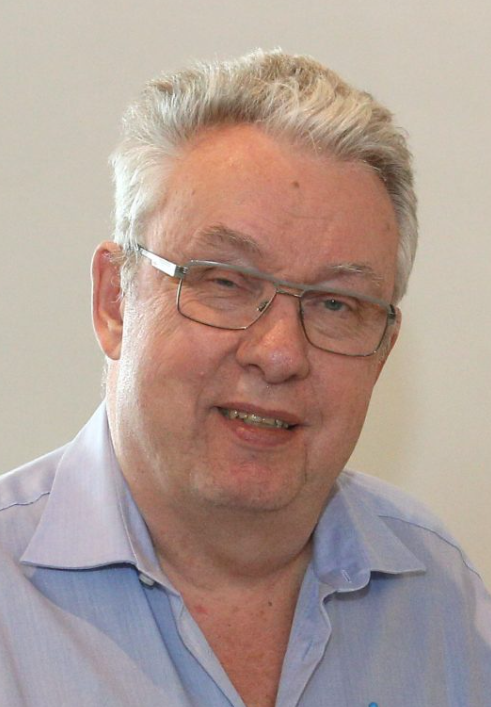 Jaan Valsiner合作论文数Department of Psychology, Clark University;Frances L. Hiatt School of Psychology, Clark University5
 Pernille Hviid合作论文数Department of Psychology, University of Copenhagen5lisa whittaker合作论文数4
 Mariann Martsin合作论文数Department of Education, University of Bath4
 Maria Lyra合作论文数Universidade Federal de Pernambuco4
 Tania Zittoun合作论文数University of Cambridge4
 Carolin Demuth合作论文数Product Development pH and Conductivity, Mettler Toledo GmbH4
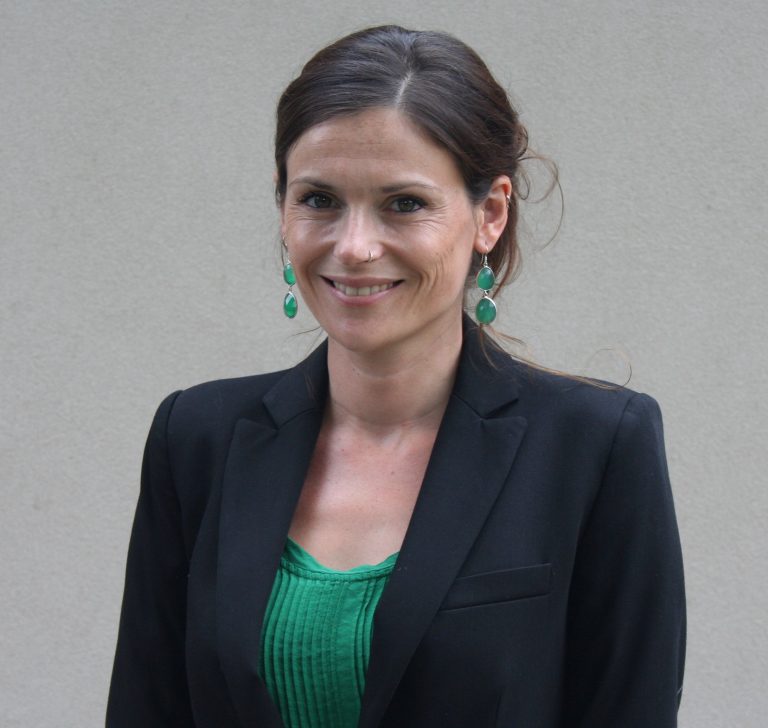 Emma Louise Aveling合作论文数Harvard T.H. Chan School of Public Health, Harvard University3
 Bo Allesøe Christensen合作论文数3Dg Redalje合作论文数2Aaron Michael Jensen合作论文数2Anna Therese Overvad合作论文数2
 Alicia Barreiro合作论文数Latina Amer Fac Social Sci, Buenos Aires, Argentina2
 Muhammed Abdulai合作论文数Sch Governance Law & Soc, Tallinn Univ2Jakob Emiliussen合作论文数2
 Constance de Saint-Laurent合作论文数Sch Psychol, Univ Coll Dublin2
 Triin Roosalu合作论文数School of Governance, Law and Society, Tallinn University2
 Sandra Jovchelovitch合作论文数Department of Psychological and Behavioural Science, London School of Economics and Political Science2Gary L. Fahnenstiel合作论文数2Michael J Mccormick合作论文数2
 Hunter J. Carrick合作论文数School of Forest Resources, Pennsylvania State University2Eric A. Jensen合作论文数1Se Lohrenz合作论文数1Daniela Martin合作论文数1
 Anders Klostergaard Petersen合作论文数1Lali van Zuydam合作论文数1
 Tatiana Valerio合作论文数1
 Gordon Sammut合作论文数1Sarah Noles合作论文数1
 Aaron M Jensen合作论文数1
 Hana Hawlina合作论文数1
 Thomas Morton合作论文数Department of Psychology, Faculty of Social Sciences, University of Copenhagen1Mami Kanzaki合作论文数1




