Transformational change is possible, but design and implementation must seek to avoid lock-in.
Financial advisers recommend a diverse portfolio to respond to market fluctuations across sectors. Similarly, nature has evolved a diverse portfolio of species to maintain ecosystem function amid environmental fluctuations. In urban planning, public health, transport and communications, food production, and other domains, however, this feature often seems ignored. As we enter an era of unprecedented turbulence at the planetary level, we argue that ample responses to this new reality — that is, response diversity — can no longer be taken for granted and must be actively designed and managed. We describe here what response diversity is, how it is expressed and how it can be enhanced and lost. A varied repertoire of responses helps manage fluctuations, as in markets. This Perspective argues that society needs to strengthen the diversity of options for responding to disruptions, exploring how this response diversity is expressed, how it can be built and lost, and what we can do to promote it.
Transformation toward a sustainable future requires an earth stewardship approach to shift society from its current goal of increasing material wealth to a vision of sustaining built, natural, human, and social capital-equitably distributed across society, within and among nations. Widespread concern about earth's current trajectory and support for actions that would foster more sustainable pathways suggests potential social tipping points in public demand for an earth stewardship vision. Here, we draw on empirical studies and theory to show that movement toward a stewardship vision can be facilitated by changes in either policy incentives or social norms. Our novel contribution is to point out that both norms and incentives must change and can do so interactively. This can be facilitated through leverage points and complementarities across policy areas, based on values, system design, and agency. Potential catalysts include novel democratic institutions and engagement of non-governmental actors, such as businesses, civic leaders, and social movements as agents for redistribution of power. Because no single intervention will transform the world, a key challenge is to align actions to be synergistic, persistent, and scalable.
The COVID-19 pandemic has exposed an interconnected and tightly coupled globalized world in rapid change. This article sets the scientific stage for understanding and responding to such change for global sustainability and resilient societies. We provide a systemic overview of the current situation where people and nature are dynamically intertwined and embedded in the biosphere, placing shocks and extreme events as part of this dynamic; humanity has become the major force in shaping the future of the Earth system as a whole; and the scale and pace of the human dimension have caused climate change, rapid loss of biodiversity, growing inequalities, and loss of resilience to deal with uncertainty and surprise. Taken together, human actions are challenging the biosphere foundation for a prosperous development of civilizations. The Anthropocene reality-of rising system-wide turbulence-calls for transformative change towards sustainable futures. Emerging technologies, social innovations, broader shifts in cultural repertoires, as well as a diverse portfolio of active stewardship of human actions in support of a resilient biosphere are highlighted as essential parts of such transformations.
The increasing frequency of extreme events, exogenous and endogenous, poses challenges for our societies. The current pandemic is a case in point; but "once-in-a-century" weather events are also becoming more common, leading to erosion, wildfire and even volcanic events that change ecosystems and disturbance regimes, threaten the sustainability of our life-support systems, and challenge the robustness and resilience of societies. Dealing with extremes will require new approaches and large-scale collective action. Preemptive measures can increase general resilience, a first line of protection, while more specific reactive responses are developed. Preemptive measures also can minimize the negative effects of events that cannot be avoided. In this paper, we first explore approaches to prevention, mitigation and adaptation, drawing inspiration from how evolutionary challenges have made biological systems robust and resilient, and from the general theory of complex adaptive systems. We argue further that proactive steps that go beyond will be necessary to reduce unacceptable consequences.
Global environmental change challenges humanity because of its broad scale, long-lasting, and potentially irreversible consequences. Key to an effective response is to use an appropriate scientific lens to peer through the mist of uncertainty that threatens timely and appropriate decisions surrounding these complex issues. Identifying such corridors of clarity could help understanding critical phenomena or causal pathways sufficiently well to justify taking policy action. To this end, we suggest four principles: Follow the strongest and most direct path between policy decisions on outcomes, focus on finding sufficient evidence for policy purpose, prioritize no-regrets policies by avoiding options with controversial, uncertain, or immeasurable benefits, aim for getting the big picture roughly right rather than focusing on details.
The oncoming stream of biophysical and social changes facing the rangelands calls for an innovative mix of modifying existing uses and pursuing new ones to help transition into a social-ecological system more in tune with its new environment. In the face of rising uncertainty, trying to find some particular, optimal combination of management and policy to suit some assumed future environment can't work. A transformational change is needed. This does not mean getting to one new, particular kind of system. It has to be an ongoing process of exploring, learning and keeping options open, along the lines of the developing field of guided self-organisation.
We consider two aspects of the human enterprise that profoundly affect the global environment: population and consumption. We show that fertility and consumption behavior harbor a class of externalities that have not been much noted in the literature. Both are driven in part by attitudes and preferences that are not egoistic but socially embedded; that is, each household’s decisions are influenced by the decisions made by others. In a famous paper, Garrett Hardin [G. Hardin, Science 162, 1243–1248 (1968)] drew attention to overpopulation and concluded that the solution lay in people “abandoning the freedom to breed.” That human attitudes and practices are socially embedded suggests that it is possible for people to reduce their fertility rates and consumption demands without experiencing a loss in wellbeing. We focus on fertility in sub-Saharan Africa and consumption in the rich world and argue that bottom-up social mechanisms rather than top-down government interventions are better placed to bring about those ecologically desirable changes.
Approaches to understanding resilience from psychology and sociology emphasise individuals' agency but obscure systemic factors. Approaches to understanding resilience stemming from ecology emphasise system dynamics such as feedbacks but obscure individuals. Approaches from both psychology and ecology examine the actions or attractors available in the present, but neglect how actions taken now can affect the configuration of the social-ecological system in the future. Here, we propose an extension to resilience theory, which we label 'pathway diversity', that links existing individual, systems and temporal theories of resilience. In our theory of pathway diversity, resilience is greater if more actions are currently available and can be maintained or enhanced into the future. Using a toy model of an agricultural social-ecological system, we show how pathway diversity could deliver a context-sensitive method of assessing resilience and guiding planning. Using a toy state-and-transition model of a poverty trap, we show how pathway diversity is generally consistent with existing definitions of resilience and can illuminate long-standing questions about normative and descriptive resilience. Our results show that pathway diversity advances both theoretical understanding and practical tools for building resilience.
There are many calls to use the COVID 19 crisis as an opportunity for transforming to a future trajectory that is more equitable and environmentally sustainable. What is lacking is a cohesive framework for bringing these calls together. We propose that such transitions could be informed by lessons from three decades of scholarship on abrupt and surprising change in systems of humans and nature. Overtime, many social-ecological systems exhibit cycles of change consisting of sequential patterns of growth, development, crisis, and reorganization. A critical phase in the cycle is the brief period after crisis when novelty and innovation can change the future trajectory. Without being prepared for this window of opportunity, deep, systemic change may be unachievable. We propose a three-step process to identify the major drivers of the global system that need to be changed: (1) identifying what society values; (2) identifying the determinants of these valued variables; and (3) identifying the underlying drivers of the determinants and how they need to be changed. A tentative list of five such drivers are identified and discussed: (i) the economic system, (ii) homogenization, (iii) human population growth, size, and densities, (iv) consumption patterns, human ethics, and behavior, and (v) governance. They are linked to seven questions relating to how we might proceed in addressing the drivers. If response to the crisis merely reinforces the existing system, its incompatibility with the natural world and its propensity to increase inequity and conflict will likely increase fragility and lead to another version of the present calamity. If it is a deliberately transformed system that emerges its future will depend on the reorganization process, and the way the system is guided into the future. What is needed is a deliberate, fundamental cultivation of emergence to enable transformation toward better futures in order to avoid an inevitable deepening of a system that ultimately is worse for all.
An invitation for more research on transnational corporations and the biosphereTo the Editor -We welcome the interest in our work on transnational corporations (TNCs) and biosphere stewardship.TNCs have rarely been linked to ecosystem dynamics, and even less so considered suitable partners for knowledge co-production in sustainability research.How TNCs shape the intertwined nature of people and planet therefore represents a timely and critical topic and the Correspondence articles by Schneider et al. and Etzion offer some important forwardlooking research questions.The Correspondence by Schneider et al. focuses on important tensions in corporate sustainability, several of which are addressed in the literature cited in our Perspective.The authors emphasize the past record of specific types of TNCs in generating unsustainability and driving undesirable social outcomes and inequality to, in effect, oppose the proposition that TNCs could become active agents of systemic change towards sustainability.
Climate change is reshaping the comparative advantage of regions and hence driving migration flows, principally toward urban areas. Migration has multiple benefits and costs in both origin and destination regions. Coordinated policies that recognize how and why people move can reduce future costs and facilitate adaptation to climate change both within borders and internationally.
Australia’s rangeland communities, industries, and environment are under increasing pressures from anthropogenic activities and global changes more broadly. We conducted a horizon scan to identify and prioritise key challenges facing Australian rangelands and their communities, and outline possible avenues to address these challenges, with a particular focus on research priorities. We surveyed participants of the Australian Rangeland Society 20th Biennial Conference, held in Canberra in September 2019, before the conference and in interactive workshops during the conference, in order to identify key challenges, potential solutions, and research priorities. The feedback was broadly grouped into six themes associated with supporting local communities, managing natural capital, climate variability and change, traditional knowledge, governance, and research and development. Each theme had several sub-themes and potential solutions to ensure positive, long-term outcomes for the rangelands. The survey responses made it clear that supporting ‘resilient and sustainable rangelands that provide cultural, societal, environmental and economic outcomes simultaneously’ is of great value to stakeholders. The synthesis of survey responses combined with expert knowledge highlighted that sustaining local communities in the long term will require that the inherent social, cultural and natural capital of rangelands are managed sustainably, particularly in light of current and projected variability in climate. Establishment of guidelines and approaches to address these challenges will benefit from: (i) an increased recognition of the value and contributions of traditional knowledge and practices; (ii) development of better governance that is guided by and benefits local stakeholders; and (iii) more funding to conduct and implement strong research and development activities, with research focused on addressing critical knowledge gaps as identified by the local stakeholders. This requires strong governance with legislation and policies that work for the rangelands. We provide a framework that indicates the key knowledge gaps and how innovations may be implemented and scaled out, up and deep to achieve the resilience of Australia’s rangelands. The same principles could be adapted to address challenges in rangelands on other continents, with similar beneficial outcomes.
Sustainability within planetary boundaries requires concerted action by individuals, governments, civil society and private actors. For the private sector, there is concern that the power exercised by transnational corporations generates, and is even central to, global environmental change. Here, we ask under which conditions transnational corporations could either hinder or promote a global shift towards sustainability. We show that a handful of transnational corporations have become a major force shaping the global intertwined system of people and planet. Transnational corporations in agriculture, forestry, seafood, cement, minerals and fossil energy cause environmental impacts and possess the ability to influence critical functions of the biosphere. We review evidence of current practices and identify six observed features of change towards 'corporate biosphere stewardship', with significant potential for upscaling. Actions by transnational corporations, if combined with effective public policies and improved governmental regulations, could substantially accelerate sustainability efforts.
Floods, fires, famines, epidemics and disasters of all kinds are on the increase, and as their frequency rises so does the call for greater resilience. But what does that mean? The word is used differently in psychology, ecology, economics and engineering and runs the risk of becoming meaningless jargon. This would be most unfortunate because, if we are to successfully navigate very real and dangerous global trends, it is resilience that needs to be understood and fostered. Finding Resilience is international in scope and unravels how ecosystems, societies and people cope with disturbance and adversity. An authoritative but plain English account which is based on the experiences of researchers, the fascinating stories from around the world reveal what resilience is, how it works in different kinds of systems, how it is expressed, and how it can be gained and lost.
 Carl Folke合作论文数Beijer Institute of Ecological Economics, Royal Swedish Academy of Sciences;Stockholm Resilience Centre, Stockholm University43
 Simon Levin合作论文数Center for Policy Research on Energy and the Environment, Princeton University;Department of Ecology & Evolutionary Biology, Princeton University30
 Stephen R. Carpenter合作论文数Center for Limnology, College of Letters and Science, University of Wisconsin-Madison30
 Gretchen C. Daily合作论文数Center for Conservation Biology, Stanford University;Department of Biology, Stanford University;Woods Institute for the Environment, Stanford University21
 Paul R. Ehrlich合作论文数Center for Conservation Biology, Stanford University;Department of Biology, Stanford University21
 M (Marten) Scheffer合作论文数Department of Aquatic Ecology and Water Quality Management, Wageningen University & Research21
 Nils Kautsky合作论文数Department of Ecology, Environment and Plant Sciences, Stockholm University21
 Karl-Göran Mäler合作论文数Beijer Institute of Ecological Economics19
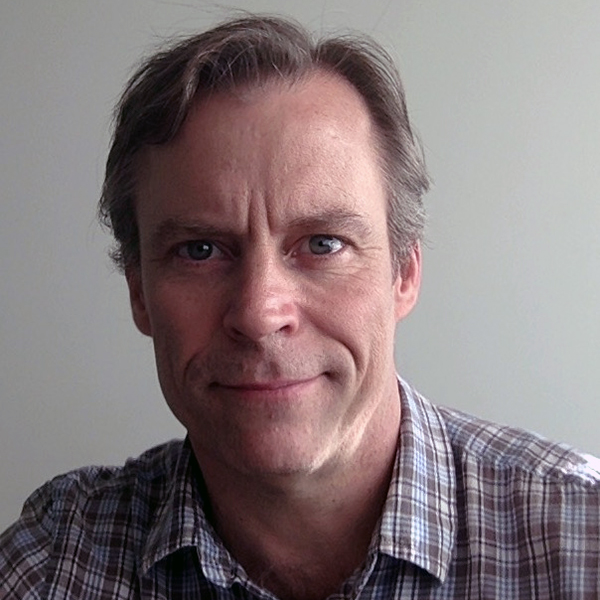 Marty Anderies (John Anderies)合作论文数School of Human Evolution and Social Change, College of Liberal Arts and Sciences, Arizona State University;Global Institute of Sustainability and Innovation, School of Sustainability, College of Global Futures, Arizona State University19
 Ann Kinzig合作论文数School of Life Sciences, Arizona State University;Center for Biosocial Complex Systems, Arizona State University;Water Institute, Arizona State University16
 Partha Dasgupta合作论文数Faculty of Economics, University of Cambridge16
 Anne-Sophie Crépin合作论文数The Beijer Institute of Ecological, The Royal Swedish Academy of Sciences15
 Kenneth J. Arrow (肯尼斯·约瑟夫·阿罗)合作论文数Stanford University14
 Scott Barrett合作论文数Lenfest-Earth Institute, School of International and Public Affairs, Columbia University13
 F Stuart Chapin, III (Terry)合作论文数Institute of Arctic Biology, University of Alaska Fairbanks;Department of Biology and Wildlife, University of Alaska Fairbanks;Institute of Sustainable Places, Cardiff University13
 David Salt合作论文数australian national university12
 Thomas Elmqvist合作论文数Stockholm Resilience Centre, Stockholm University12
 Lance H. Gunderson (Lance Gunderson)合作论文数The Department of Environmental Sciences, College of Arts and Sciences, Emory University12
 Steve Polasky合作论文数Department of Applied Economics, University of Minnesota;Department of Ecology, Evolution, and Behavior, University of Minnesota11
 Nick Abel合作论文数CSIRO Sustainable Ecosystems11
 Jane Lubchenco合作论文数Department of Integrative Biology, College of Science, Oregon State University9
 Aart De Zeeuw合作论文数9
 Neil Adger合作论文数Global Systems Institute, University of Exeter9Steve Schneider合作论文数8
 Garry Peterson合作论文数Stockholm Resilience Centre, Stockholm University8
 Reinette Biggs合作论文数Center for Limnology, University of Wisconsin, Madison, WI 53706, USA8Paul Ryan合作论文数7
 Terry Hughes合作论文数ARC Centre of Excellence for Coral Reef Studies, James Cook University7
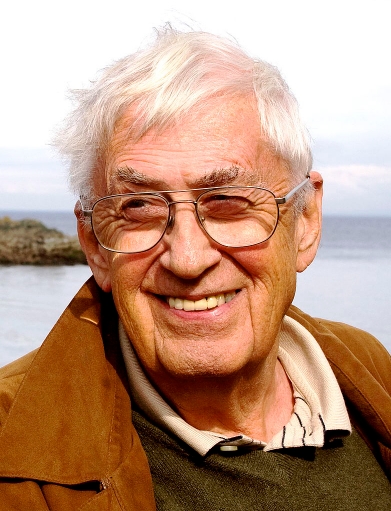 C. S. Holling合作论文数University of Florida7
 James Wilen合作论文数Department of Agricultural and Resource Economics, University of California, Davis7
 Jason Shogren合作论文数Department of Economics, College of Business, University of Wyoming7
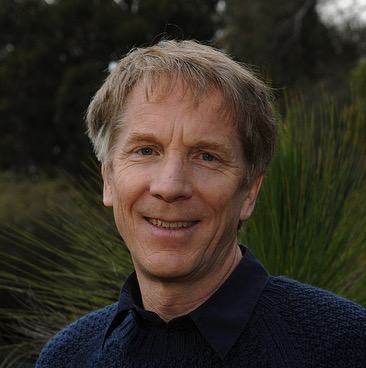 David Mark Stafford Smith (Mark Stafford Smith)合作论文数Commonwealth Scientific and Industrial Research Organisation7
 Per Olsson合作论文数Stockholm Resilience Centre;Stockholm University;Stockholm Resilience Centre, Stockholm University7David Starrett合作论文数7
 Henrik Osterblom合作论文数Stockholm Resilience Ctr, Stockholm Univ7
 Elke U. Weber合作论文数Behavioral Science for Policy Lab, Department of Psychology, Princeton University6
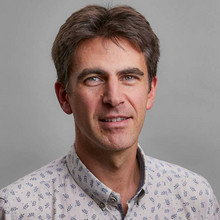 Joern Fischer合作论文数Social-Ecological Systems Institute, Leuphana Universitat Luneburg6
 Elena Bennett合作论文数Department of Natural Resource Sciences, Faculty of Agricultural and Environmental Sciences, McGill University6Nicky Grigg合作论文数CSIRO Marine Research6
 Ernst-Detlef Schulze合作论文数Max Planck Institute for Biogeochemistry6
 Jon Norberg合作论文数Department of Ecology, Environment and Plant Sciences, Stockholm University6
 Geoffrey Heal合作论文数Economics Division, Columbia Business School, Columbia University6
 Graham Farquhar合作论文数Division of Plant Sciences, Research School of Biology, College of Science and Medicine, Australian National University6
 Victor Galaz合作论文数Department of Political Science, Gothenburg University6
 Karine Nyborg合作论文数Department of Economics, Faculty of Social Sciences, University of Oslo6AnnMari Jansson合作论文数5Sara Aniyar合作论文数5Domenico Siniscalco合作论文数5
 Osvaldo Sala合作论文数School of Sustainability, Arizona State University;School of Life Sciences, Arizona State University;Global Drylands Center, Arizona State University5




