This article explores the way a family fashioned a memorial to a son ‘taken by the war’. It focuses on the Robert’s collection in Melbourne, Australia’s largest bound collection of war time ephemera, and the making of what was called ‘Frank’s Memory Book’. It argues that families asserted ownership over their dead, crafting different modes of memorialization to authorized modes of remembrance, considers the way communities of mourners were brought together and highlights tensions between private loss and public memory. The making of ephemera is examined at length as is the part material culture plays in libraries and archives.
often believing that their colony or dominion was attaining political and economic growth under the umbrella of the almighty British Empire and Commonwealth. Such thinking was particularly easy for white settlers in the dominions, like their predecessors who had believed in the possibilities of imperial federation as consonant with national formation. In seeing the significance of empire marketing as exceeding the advertising itself, rather working ‘to support and sustain empire more broadly’, as ‘an unacknowledged element in the wider construction of imperial power’ (7), Barnes is to be commended. There remains, though, the inevitable limitation of working with largely one genre of primary source, especially when that is advertising materials without the full ability to research their reception. Imperial culture and power were constituted by so many imbricated elements: constitutional ties, political and military relationships, migration and families, travel and education, feminist and other activist networks, Anglophone culture in its kaleidoscopic forms – to name a few. Empire marketing worked within a broader set of relations, a thread in a much larger tapestry, and thus its singular contribution to imperial power may be hard to properly assess.
This article will explore the origins and afterlife of the Explorers' Memorial in Fremantle, Western Australia. Raised to commemorate the "murder" of white pioneers in the 1860s, the monument issued an explicit denial of Indigenous sovereignty and exonerated white violence on the frontier. In an instance of dialogical memorialization, an additional plaque was placed on the monument. It outlines the history of provocation that led to the explorers' deaths, acknowledges the right of Aboriginal people to defend their lands and commemorates those who died during the invasion of their country. The article will draw on community memory as well as white archival accounts. It will reveal the spaces counter-memorialization might offer for alternative readings of the past and explore the monument's transition from a symbol of racism and division to a platform for what is generally known in Australia as truth-telling and reconciliation.
Memorials to white explorers and pioneers long stood (virtually) unchallenged in the heart of Australia’s towns and cities. By occupying civic space, they served to legitimise narratives of conquest and dispossession, colonising minds in the same ways ‘settlers’ seized vast tracts of territory. The focus of this article is a memorial raised to the memory of three white explorers, ‘murdered’ (it was claimed) by ‘treacherous natives’ on the north west frontier. It examines the ways that historians and the wider community took issue with this relic of the colonial past in one of the first encounters in Australia’s statue wars. The article explores the concept of ‘dialogical memorialisation’ examining the way that the meanings of racist memorials might be subverted and contested and argues that far from ‘erasing’ history attacks on such monuments constitute a reckoning with ‘difficult heritage’ and a painful and unresolved past. It addresses the question of whose voice in empowered in these debates, acknowledges the need for white, archival based history to respect and learn from Indigenous forms of knowledge and concludes that monuments expressing the racism of past generations can become platforms for truth telling and reconciliation.
Memorials to white explorers and pioneers long stood (virtually) unchallenged in the heart of Australia’s towns and cities. By occupying civic space, they served to legitimise narratives of conquest and dispossession, colonising minds in the same ways ‘settlers’ seized vast tracts of territory. The focus of this article is a memorial raised to the memory of three white explorers, ‘murdered’ (it was claimed) by ‘treacherous natives’ on the north west frontier. It examines the ways that historians and the wider community took issue with this relic of the colonial past in one of the first encounters in Australia’s statue wars. The article explores the concept of ‘dialogical memorialisation’ examining the way that the meanings of racist memorials might be subverted and contested and argues that far from ‘erasing’ history attacks on such monuments constitute a reckoning with ‘difficult heritage’ and a painful and unresolved past. It addresses the question of whose voice in empowered in these debates, acknowledges the need for white, archival based history to respect and learn from Indigenous forms of knowledge and concludes that monuments expressing the racism of past generations can become platforms for truth telling and reconciliation.
Memorials to white explorers and pioneers long stood (virtually) unchallenged in the heart of Australia’s towns and cities. By occupying civic space, they served to legitimise narratives of conquest and dispossession, colonising minds in the same ways ‘settlers’ seized vast tracts of territory. The focus of this article is a memorial raised to the memory of three white explorers, ‘murdered’ (it was claimed) by ‘treacherous natives’ on the north west frontier. It examines the ways that historians and the wider community took issue with this relic of the colonial past in one of the first encounters in Australia’s statue wars. The article explores the concept of ‘dialogical memorialisation’ examining the way that the meanings of racist memorials might be subverted and contested and argues that far from ‘erasing’ history attacks on such monuments constitute a reckoning with ‘difficult heritage’ and a painful and unresolved past. It addresses the question of whose voice in empowered in these debates, acknowledges the need for white, archival based history to respect and learn from Indigenous forms of knowledge and concludes that monuments expressing the racism of past generations can become platforms for truth telling and reconciliation.
This article explores the digitisation of repatriation files, Australia’s largest single World War I archive. It charts this collection’s difficult transition from virtual obscurity to acclaim, considers the way these files extend understandings of war, and places this process within the shifting politics of the Anzac Centenary. The public disclosure of such intimate and sensitive material raised serious ethical questions, and this article scopes the moral choices faced by archivists and historians. It concludes that the dissemination of these records is a necessary historical corrective, subverting simplistic and romanticised Anzac narratives.
"Exhibiting War: The Great War, Museums, and Memory in Britain, Canada and Australia." Australian Historical Studies, 50(1), pp. 140–141
It was called the ‘Great’ War. According to thirteen-year-old William Weldrick this was ‘because some of the great nations are in it’ – ‘chiefly “The British Lion” and “German Eagle”.’ Writing in his school exercise book in late 1914, William acknowledged the terror that the war would bring, but remained confident that ‘the bravery and perseverance’ of Britain’s soldiers and sailors would triumph. Elsewhere, he worried about conditions in the ‘cold bleaky [sic] trenches’ and thirsted for the Kaiser’s blood. Over a hundred years on, we don’t know how much these writings reflected William’s own fears and hopes – or if, as the neat and careful handwriting suggests, they were to gain favour with his teachers. But the exercise book highlights some of the challenges curators face in exploring children’s experiences of World War I. The life trajectory of William’s generation is the driving dynamic of the State Library of New South Wales’s new exhibition Quick March! The Children of World War One. Opened in March 2019 at the State Library of New South Wales to mark the centenary of the Treaty of Versailles, it is the first exhibition by a major cultural institution in Australia to focus on children’s experiences of World War I. Senior curator Elise Edmonds, well known for her expertise on the Library’s collection of World War I material, has drawn on a range of objects to showcase the breadth of the Library’s collection. Clear cabinets and elegant wooden frames decorate the walls of the small rectangular exhibition space. Published books and periodicals are positioned alongside music scripts, cigarette cards, badges, a flag, a knitted sock, medals, board and card games, drawings, photographs, postcards, hand-written letters and a fancy dress (on loan from the Museum of Applied Arts and Sciences). The materials are arranged thematically in four separate sections – ‘Dear old dad’, ‘Keep the home fires burning’, ‘Quick march!’ and ‘Peace... and war’ – but the text panels and accompanying exhibition booklet weave together a broadly chronological narrative. Personal stories are interspersed throughout the exhibition. In the first section, visitors are introduced to several children who grew up in New South Wales during the war, including Rollo Fry, Billie Garling and the four Bell children. By 1918, all of these children had lost loved ones on the Front. Visitors
Review(s) of: What do we want?: The story of protest in Australia, by Clive Hamilton, National Library of Australia Publishing, Canberra, 2016, ix + 209 pages, ISBN 978 0 64227 891 3.
Kenneth Stanley Inglis died of pancreatic cancer on 1 December 2017. He continued to write until a few days before his death, imparting careful instructions to Jay Winter and Seamus Spark, on their...
 rebecca wheatley合作论文数15
 Melanie Oppenheimer合作论文数14raelene frances合作论文数13
 Keir Reeves合作论文数13Alexandra Mccosker合作论文数12Damien Williams合作论文数12
 Frank Bongiorno合作论文数Australian Natl Univ4laura james合作论文数3andrew reeves合作论文数2Penny Russell合作论文数2Barbara Caine合作论文数Sydney University2Humphrey McQueen合作论文数1Michael McKernan合作论文数1Bob James合作论文数1
 Vicki Peel合作论文数1Stuart Svensen合作论文数1Annette Becker合作论文数1John McQuilton合作论文数1leah riches合作论文数1Emily Gallagher合作论文数1rae frances合作论文数1gerald friesen合作论文数1Gareth Knapman合作论文数Centre for Heritage and Museum Studies, Research School of Humanities and Arts, College of Arts and Social Sciences, The Australian National University1
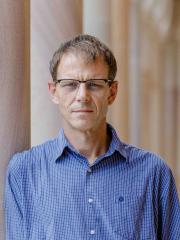 Martin Crotty合作论文数School of Historical and Philosophical Inquiry, Faculty of Humanities and Social Sciences, The University of Queensland1
 Carl Bridge合作论文数Department of History, Faculty of Arts & Humanities, King’s College London1
 Blackburn Kevin Peter合作论文数National Institute of Education, Nanyang Technological University1
 Erik Eklund合作论文数1
 Peter Stanley合作论文数1
 Andrew Hoskins合作论文数1Peter Baskerville合作论文数Academy of the Arts and Humanities, University of Alberta1Simon Sleight合作论文数1Graham Seal合作论文数Centre for Advanced Studies in Australia1Tim Soutphommasane合作论文数1
 Grace Karskens合作论文数School of History;University of New South Wales;School of History, University of New South Wales1Eric W. Sager合作论文数1Julie Kimber合作论文数1
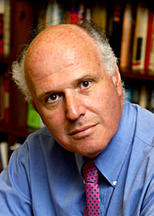 Jay Murray Winter合作论文数Department of History, Yale University1Erik Olssen合作论文数1




