Immersive multimodal Virtual Reality (VR) simulations can effectively bring futuristic technologies to life, providing users with a meaningful insight into how the product will operate and feel, as well as support training for technologies that are still in development. This study investigates the effectiveness of VR experiences in shifting users’ thinking from abstract to concrete, using flying cars as an illustrative example. The preliminary data suggest that multimodal VR facilitates a transition from abstract to more concrete thinking, albeit potentially with adverse effects on individual risk perception. Areas of future research include largersample studies that will enable diversity in initial attitudes towards given technology, as well as diversity in personality characteristics.
Persuasive wearables (PWs) are a promising technology to help bridge the gap between current healthcare resources and the growing proportion of older adults (OAs). However, the factors associated with successful PW by OAs are not fully known. This study aimed to evaluate the effectiveness of an older-adult focused PW acceptance model, the Smart Wearables Acceptance Model (SWAM) and compare it to another general acceptance model, the Unified Theory of Acceptance and Use of Technology (UTAUT). The results of this study indicate that SWAM is an appropriate acceptance model, although it is more predictive for younger adults, and it does not outperform UTAUT when predicting intent to use PWs. Ultimately, more work should be done to elucidate OA acceptance of PWs, especially as these technologies become more advanced and prolific.
Authentication in VR/AR requires rapid, spoof-resistant methods using device-native inputs. Traditional text/PIN entry is cumbersome in-headset, and single biometrics are vulnerable to replay attacks and spoofing. We present a multi-modal authentication system combining hand gestures with spoken phrases, exploiting speech-motion temporal features within a 2-2.5 second window. Our solution shows low EER with minimal training data while maintaining practical deployment feasibility for VR environments, along with methods such as randomized phrases to prevent replay attacks. Performance improves over time with more samples. These results indicate the effectiveness of multimodal voice and motion authentication.
This paper presents Resonant, a work-in-progress Web-based Extended Reality platform designed to capture and share cardiac signals through haptics using virtual reality headsets and mobile phones. The system integrates headset-based ballistocardiography, mobile remote photoplethysmography, and commercial heart rate monitors for validation and comparison. This system enables heart rate monitoring without the need for an external heart rate device, as well as provides haptic feedback. Resonant is motivated by the goal of enabling physiological signal sharing without requiring specialized sensing devices to support novel XR experiences that can enable better social connections. This paper describes the system design, sensing approaches, and a workflow for synchronizing heartbeat-driven haptic feedback with narrative media. The intended psychophysiological effects remain to be evaluated in future studies.
This study examines how visual accessibility through cabinet design influences task performance, cognitive load, physical activity level, motivation, and user experience in a virtual kitchen among older adults with and without mild cognitive impairment (MCI). Seventeen older adults (7 with MCI, 10 without) completed a repeated-measures item retrieval task under two conditions, closed cabinets and open shelving, using a counterbalanced within-subjects design. Measures included task duration, physical activity level (ENMO), cognitive load (NASA-TLX and gaze entropy), intrinsic motivation (IMI), and post-task interviews. Open shelving significantly reduced task duration (beta = -291.20, p < .001) and physical activity level (beta = -0.00615, p = .008). Gaze entropy increased (beta = 1.29, p = .001), with a significant Setting x MCI interaction (p = .009) and moderation by MoCA score (p < .001). NASA-TLX and intrinsic motivation did not differ significantly between conditions. Qualitative findings indicated reduced reliance on memory-based search and highlighted themes related to independence, aesthetics, safety, and adoption. Overall, visual accessibility improved efficiency and reduced movement demands while altering visual-search organization, with divergence between subjective and objective indicators of cognitive load. These findings support visually accessible design strategies to enhance functional performance and inform cognitively supportive built environments for aging populations.
Virtual reality (VR) can limit users' awareness of their physical surroundings, raising concerns for wellbeing, safety, and cognitive load. Grounded in the mindfulness dimension of the Positive Computing framework, this paper investigates how real-world situation awareness (SA) cues can be integrated into home-based VR environments to support awareness while preserving immersion. Two studies examined different SA cue designs: Study 1 compared Push Temporary, Push Persistent, and Pull Temporary cue delivery mechanisms and their effects on workload, situation awareness, presence, and emotional responses; Study 2 compared Textual and Embedded Pictorial cue representations across Active and Passive VR tasks. Results show that cue design meaningfully shapes user experience: Push Persistent cues were associated with more positive emotional responses, while Embedded Pictorial cues improved perceived situation awareness compared to Textual cues. However, SA cues were also frequently perceived as distracting, indicating a trade-off between maintaining immersion and supporting awareness of the real world. Overall, findings highlight that both delivery mechanism and information architecture influence cognitive and emotional outcomes, offering design guidance for more mindful and less intrusive SA support in VR.
Motion-based biometric authentication offers a promising passwordless alternative for virtual and augmented reality, leveraging unique behavioral signatures that are difficult to mimic. These systems face significant vulnerabilities from replay attacks, where adversaries capture and resubmit previously recorded motion data to impersonate users. Sending the exact same authentication data twice can be easily mitigated by storing all previous authentication attempts. We identify two points of concern: a) replay attacks with slightly modified motion data (e.g., using Gaussian noise) remain behaviorally similar for authentication but nevertheless bypass naive replay attack countermeasures, and b) storing all previous authentication attempts indefinitely requires significant storage and increases latency. We address this gap through locality-sensitive hashing of extracted motion features, which maps behaviorally similar inputs to similar hash values, enabling detection of noisy replays that evade traditional hashing. Furthermore, these hash values are significantly smaller than the original motion data, making it feasible to store all previous authentication attempts. We also propose a physics-based replay detection algorithm that flags physically implausible motion, such as forces exceeding human biomechanical limits. In order to further secure authentication models against replay attacks, we also propose data augmentation as another defense where authentication models are trained to reject synthetically noisy samples, enabling models to explicitly identify and reject suspicious motions while allowing legitimate users. Our work also discusses spoofing countermeasures through on-device tokenization and one-time gestures (which create randomization stopping replays) along with network and device level protections. Our techniques together form a layered defense framework for securing motion-based biometrics against replay attacks and variants.
Older adults tend to be slower to adopt various technologies, despite noting the benefits that technology can bring to their lives. One such technology, fully autonomous vehicles (AVs), are projected to have significant impact on older adults’ quality of life and ability to age in place. Based on previous literature, we hypothesized that previous driving experience, self-efficacy, trust, and technology acceptance would be significant predictors of an individual’s intent to use AVs and that this relationship would be stronger for older adults than younger ones. This study included both young (18–30 years old) and older (60+ years old) adults. A linear regression model was tested on both age groups. As hypothesized, the model was significant for both samples; furthermore, model fit was higher for the older group. As such, this research adds to the current body of literature that states that older adults have unique concerns and considerations when adopting these technologies.
Although virtual reality (VR) was originally conceived of as a multi-sensory experience, most developers of the technology have focused on its visual aspects to the detriment of other senses such as hearing. This paper presents design patterns to make virtual reality fully accessible to non-visual users, including totally blind users, especially with non-verbal social interactions. Non-visual VR has been present in the blindness audio game community since the early 2000s, but the conventions from those interfaces have never been described to a sighted audience, outside of a few limited sonification interface papers. This paper presents non-visual design patterns created by five of the top English-speaking audio game developers through a three round Delphi method, encompassing 29 non-verbal social interactions grouped into 12 categories in VR, including movement, emotes, and self-expression. This paper will be useful to developers of VR experiences who wish to represent non-verbal social information to their users through non-visual conventions. These methods have only been rigorously tested through the commercial market, and not through scientific approaches. These design patterns can serve as the foundation for future investigation in exploring non-visual non-verbal social interactions in VR.
Affording users the opportunity to customize automated vehicle (AV) behavior may meaningfully improve trust and acceptance. We examined this in a driving simulator study with 49 students and 18 community members (N = 67), randomly assigned to customization or non-customization conditions. Customization participants selected from a range of behavior options and experienced one of three driving styles. Results showed that the effect of customization on trust depended on the driving style. Specifically, those who customized and received the conservative style reported significantly higher trust than those who passively received it. Exploratory analyses using the Unified Theory of Acceptance and Use of Technology (UTAUT) revealed that AV interest explained 8% additional variance in behavioral intentions beyond UTAUT attitude variables. These findings support prior work emphasizing trust in AV adoption and extend it by positioning trust as a potential distal predictor of behavioral intentions, acting through performance and effort expectancy.
This study examines the accessibility of digital map tools in relation to the Web Accessibility Guidelines (WCAG) 2.1, highlighting critical issues for disabled users. Despite the widespread use of digital maps across various professions and daily activities, their accessibility remains insufficient. The research involved a partial Accessibility Conformance Report (ACR) comparison of the top 14 digital map tools, focusing on 15 WCAG criteria particularly relevant to geographic maps. The study expanded definitions for three criteria - 1.1.1 Non-Text Content, 1.4.11 Non-text Contrast, and 2.1.1 Keyboard Accessibility - to better apply them to map contexts. Findings revealed significant accessibility shortcomings, with only one tool (Audiom) achieving full compliance and others lacking adequate text alternatives, proper contrast, and keyboard operability. The discussion emphasizes the urgency for map developers to enhance accessibility, especially in light of upcoming legal requirements like the ADA Title II regulations. Making maps accessible not only aids users with disabilities but also offers business benefits by expanding the user base and fostering innovation. The study provides a systematic evaluation framework and clear guidelines to encourage greater digital map accessibility within an academic context.
Dog guides offer an effective mobility solution for blind or visually impaired (BVI) individuals, but conventional dog guides have limitations including the need for care, potential distractions, societal prejudice, high costs, and limited availability. To address these challenges, we seek to develop a robot dog guide capable of performing the tasks of a conventional dog guide, enhanced with additional features. In this work, we focus on design research to identify functional and aesthetic design concepts to implement into a quadrupedal robot. The aesthetic design remains relevant even for BVI users due to their sensitivity toward societal perceptions and the need for smooth integration into society. We collected data through interviews and surveys to answer specific design questions pertaining to the appearance, texture, features, and method of controlling and communicating with the robot. Our study identified essential and preferred features for a future robot dog guide, which are supported by relevant statistics aligning with each suggestion. These findings will inform the future development of user-centered designs to effectively meet the needs of BVI individuals.
Technology adoption models, such as UTAUT 2, focus on various technologies but might be too broad to effectively predict futuristic, highly innovative technology adoption. In this paper, we investigate potential futuristic technology adoption determinants and argue that perceived risk and time horizon (futurism) might play an important role. This study is a replication and extension of our previous study on the risk perception of futuristic vehicles, investigating the effects of different modes and autonomy levels of vehicles on risk perception. The study utilizes 3x3 mixed MANOVA design. The data was collected through an anonymous survey on students from a technical university. The results suggest that the futurism component of technology seems to lower perceived risk and that futuristic technology adoption may call for more tailored models that capture risk perception, familiarity, and expected exposure.
Robotic guide dogs hold significant potential to enhance the autonomy and mobility of blind or visually impaired (BVI) individuals by offering universal assistance over unstructured terrains at affordable costs. However, the design of robotic guide dogs remains underexplored, particularly in systematic aspects such as gait controllers, navigation behaviors, interaction methods, and verbal explanations. Our study addresses this gap by conducting user studies with 18 BVI participants, comprising 15 cane users and three guide dog users. Participants interacted with a quadrupedal robot and provided both quantitative and qualitative feedback. Our study revealed several design implications, such as a preference for a learning-based controller and a rigid handle, gradual turns with asymmetric speeds, semantic communication methods, and explainability. The study also highlighted the importance of customization to support users with diverse backgrounds and preferences, along with practical concerns such as battery life, maintenance, and weather issues. These findings offer valuable insights and design implications for future research and development of robotic guide dogs.
When considering novel, futuristic vehicle designs, it is important to consider the technology's “adoption potential”. Literature suggests that perceived risk is one of the key determinants of trust, which in turn affects adoption potential. Our research investigates how risky the general public perceives different design configurations for futuristic urban mobility vehicles, comparing highly futuristic flying cars to more traditional cars, while factoring in the issue of whether the vehicle is operated manually or autonomously. The initial results indicate that there is a combined effect of the level of autonomy and the driving mode of the vehicle on the way people perceive its riskiness. Further, the “exposure” component of perceived risk could be an important driver of people's judgments for future technologies. More research is required to establish the main drivers of futuristic, multimodal vehicles’ risk perception.
This paper presents the results of a one-year study on mastery of assistive technology (AT). This study sought to develop a conceptual framework for talking about mastery of AT and to create an instrument for measuring individual mastery. A Delphi Study was conducted with individuals with disabilities considered to be "power users" of AT, practitioners, and researchers. Participants were asked to: identify factors that are predictors and indicators of AT mastery, determine how to measure these factors and determine criteria for each factor for the stages of AT mastery (e.g. novice, context-dependent, transitional, and power user). The resulting measure is called the Continuum of AT Mastery (CATM).
INTRODUCTION:Skin cancer (SC) is common in fair skin (FS) at a 1:5 lifetime incidence for nonmelanoma skin cancer. In order to assist clinicians' decisions, a risk intervention technology was developed, which combines a dual-mode machine learning of visual and sonified (pixel to sound) data. The addition of an audio technology enhances malignant features of lesions, increases sensitivity and was previously validated under a prospective clinical setting in FS. In dark skin (DS), although rare by a 10-30 factor, skin cancer is diagnosed at more advanced stages resulting in a delayed diagnosis and affecting life quality and expectancy. It is known as well that SC diagnostic accuracy by machine learning in DS is decreased as compared to FS. The present study tests the use of sonification aided by artificial intelligence algorithms to compare diagnostics of different skin tones. METHODOLOGY:Biopsy-validated smartphone images were diagnosed in a retrospective study by a dual audio-visual convoluted neural network. A total of 60 Fitzpatrick I-III were compared to 72 Fitzpatrick IV-VI. A dichotomous diagnostic output, either malignant or benign, was assessed for sensitivity, specificity and area under the curves (AUCs) for the receiver operating characteristic (ROC) curve. RESULTS:ROC curve analytics indicated an AUC of 0.858 (95% CI: 0.795-0.921) and 0.856 (95% CI: 0.759-0.953) for fair and DS (p = NS). Sensitivity of Fitzpatrick I-III skin and Fitzpatrick IV-VI were 84.4% (71.8-96.9) and 79.6% (63.4-93.8), respectively (p = NS). Specificity of Fitzpatrick I-III skin and Fitzpatrick IV-VI were 84.2% (72.6-95.8) and 85.3% (73.4-97.2), respectively (p = NS). The positive predictive and negative predictive values as well as accuracy (0.817 vs. 0.847) were all within the same range (p = NS). CONCLUSIONS:The results demonstrate that the dual-modality classifier identifies skin cancer of FS and DS similarly well. Sonification of malignant signs of a skin lesion demonstrates promising results, even with smartphone images, which should be considered as a tool to achieve more effective and accessible healthcare.
 Thomas M. Gable合作论文数Georgia Institute of Technology31
 Myounghoon Jeon合作论文数Michigan Technological University20
 Michael A. Nees合作论文数Sonification Lab;School of Psychology;Georgia Institute of Technology;School of Psychology, Georgia Institute of Technology17
 Brianna Tomlinson合作论文数Georgia Institute of Technology14Keenan R. May合作论文数Georgia Institute of Technology13Jeffrey Lindsay合作论文数13
 Brittany Holthausen合作论文数Georgia Institute of Technology12
 Carrie Bruce合作论文数School of Interactive Computing, College of Computing, Georgia Institute of Technology;Institute for People and Technology, College of Computing, Georgia Institute of Technology11Jonathan H. Schuett合作论文数Georgia Institute of Technology11
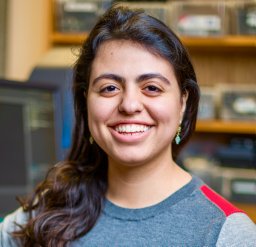 Nadia Fereydooni合作论文数School of Interactive Computing, Georgia Institute of Technology9Riley J. Winton合作论文数9Brittany E. Noah合作论文数8Gregory Kramer合作论文数8
 Rachel Stuck合作论文数7Jared M. Batterman合作论文数Georgia Institute of Technology7
 Benjamin Davison合作论文数Georgia Institute of Technology7Lisa M. Mauney合作论文数7raymond m stanley合作论文数6
 Zoe M. Becerra合作论文数Georgia Institute of Technology6
 Andreas Riener合作论文数Technische Hochschule Ingolstadt6
 R. Winters合作论文数Brain Music Lab School of Music, Georgia Institute of Technology6
 Sidney Scott-Sharoni合作论文数Georgia Inst Technol5
 Emily Moore合作论文数Troost Institute for Leadership Education in Engineering, Faculty of Applied Science and Engineering, University of Toronto5
 Palladino Dianne K合作论文数Department of Psychology, Carnegie Mellon University5CM Bruce合作论文数4BJ Tomlinson合作论文数4irene mbarikirika合作论文数4
 Stanley J. Cantrell合作论文数Georgia Institute of Technology4
 Masoud Gheisari合作论文数Rinker School of Construction Management, Univ of Florida4
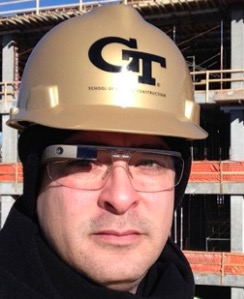 Javier Irizarry合作论文数School of Building Construction, College of Design, Georgia Institute of Technology4Justin Godfrey合作论文数4
 Philipp Wintersberger合作论文数Digital Media Department, University of Applied Sciences Upper Austria;Institute of Visual Computing and Human-Centered Technolog, Technische Universität Wien4D. M. Lane合作论文数Departments of Psychology and Statistics
Rice University4carol ngondi合作论文数3peter okeyo合作论文数3Jeff Wilson合作论文数Georgia Institute of Technology3
Philipp Wintersberger合作论文数Digital Media Department, University of Applied Sciences Upper Austria;Institute of Visual Computing and Human-Centered Technolog, Technische Universität Wien4D. M. Lane合作论文数Departments of Psychology and Statistics
Rice University4carol ngondi合作论文数3peter okeyo合作论文数3Jeff Wilson合作论文数Georgia Institute of Technology3 Ignacio Alvarez合作论文数3
 Frank Dellaert合作论文数GVU Center, College of Computing, Georgia Institute of Technology;School of Interactive Computing, College of Computing, Georgia Institute of Technology;Verdant Robotics3
 James M. Coughlan合作论文数Smith-Kettlewell Eye Research Institute3
 Andrew L. Kun合作论文数University of New Hampshire3
 J. Taery Kim合作论文数Georgia Institute of Technology3Ramitha D. Chitloor合作论文数3Ryan Tintner合作论文数3Yee Chieh (Denise) Chew合作论文数3
 Jeff Lindsay合作论文数School of Psychology;Georgia Institute of Technology;School of Psychology, Georgia Institute of Technology3
 Parameswaran Raman合作论文数Amazon AWS AI3Amanda Nance合作论文数3Tony Stockman合作论文数Queen Mary University of London3Addie Ehrenstein合作论文数3