Three forms of trust are contrasted: personal level trust (PLT), aggregated personal trust (APLT) and system-level trust (SLT). PLT and APLT are generally developed through face-to-face and other forms of direct relationships among participants in environmental governance. PLT and APLT, while unquestionably helpful and important in addressing environmental issues and policies, have proved insufficient to generate agreement and action in the face of today’s complex multi-scaled problems. These problems often affect larger populations, many numbers of which have no direct relationships with other stakeholders. Consequently, efforts at environmental governance in these cases often lack the support of appropriate levels of trust. It is shown that SLT cannot be built from either PLT or APLT; it requires delving into characteristics of the negotiating groups, themselves. Such groups are likely to find some success if: (1) they share a sense of place; (2) they acknowledge the importance of complexity in their work, and (3) they are focused on a shared problem or nest of problems. The concept of system-level trust is tested by application to collective actions in protecting common pool resources within multi-scaled systems incorporating polycentric governance.
As environmental management progresses into the Anthropocene, the traditional idea that ecological restoration should return damaged ecological systems to their prior state has become more controversial. Some systems—"novel ecosystems"—are so altered that hopes to return them to their prior state is impossible. Some restorationists have suggested more flexible approaches to managing these systems, but this has been controversial among traditionalists who focus on protecting species in their historical habitat. This controversy is best faced by engaging in adaptive management and by including all voices in a deliberative process of articulating social values to guide flexible management goals.
Issues of interest, identity and values intertwine in environmental conflicts, creating challenges that cannot generally be overcome using rationalities grounded in generalised argumentation and abstraction. To address the growing need to engage interests and identities along with plural values in the conservation of biodiversity and ecological systems, we introduce the concept of ‘appropriateness of actions’ and ground it in a relational understanding of environmental ethics. A determination of appropriateness for actions comes from combining outputs from value elicitation with those of interest and identity negotiation in ways that are salient to specific people and their relationships to specific places. Drawing on the Blue Mountain Forest Partnership in the Pacific Northwest, we propose factors of success for supporting appropriate actions: 1) understanding context and identifying key stakeholders; 2) surfacing a diversity of interests and building system-level trust; 3) building empathy for different identities grounded in specific places; 4) eliciting diverse values and seeking to understand their links to worldviews and knowledge systems and; 5) seeking out appropriate actions.
While environmental ethics has flourished and contributed to the discussion of environmental policy, other areas of philosophy (epistemology, for example), have been less in evidence in these discussions. In this paper, we explore a role for these neglected areas: they are best viewed as meta-level discussions of the conceptual and linguistic problems that arise as scientists develop models at the edges of scientific fields relevant to our understanding of environmental problems and possible solutions. The relevant fields, which might differ depending on the specific environmental problem being addressed, can be thought of as a collection of “philosophies of ____” where the blank stands for one of the relevant disciplines, such as biology, ecology, or economics. We eschew the typical arguments regarding which models are correct in favor of a pragmatic/pluralistic approach to understanding scientific models. This pragmatic approach softens interdisciplinary conflicts as Rudolf Carnap’s Principle of Tolerance (linguistic conventionalism) urges an experimental approach to developing linguistic frameworks for differing situations. This approach is illustrated by an examination of the models proposed by ecologists and economists.
There has been a recent spate of publications on how we should evaluate change to ecological systems, some of which have introduced the concept of 'relational values'. Environmental ethicists have, with a few exceptions, not engaged with this debate. We survey the literature on relational values, noting that most advocates of the concept introduce relational values as an additional type of value, in addition to 'instrumental' and 'intrinsic' values. In this paper, we explore the idea that all environmental values are ultimately relational. We explore how such an approach can be articulated, and discuss the implications of this concept for the future of environmental ethics and value studies. One key implication is to suggest a stronger role for empirical ethnography.
La suposición de que una ética ambiental adecuada debe ser no-antropocéntrica es errónea. Hay dos formas de antropocentrismo: débil y fuerte, y el primero es suficiente para mantener una ética ambien¬tal. Sin embargo, la ética ambiental sí difiere de los sistemas éticos británicos y norteamericanos en la medida en que, para ser adecuada, debe ser no-individualista. La ética ambiental contiene dos niveles de decisión: el primero refiere a las decisiones usuales que afectan la equidad individual, el segundo no tiene esta perspectiva individual. Este segundo nivel, llamado decisiones de asignación, no es reducible al primero y gobierna el uso de recursos a través del tiempo. El antropocentrismo débil provee una base para criticar las necesidades individuales de consumo y puede ser la base para juzgar entre estos niveles. Así, permite un fundamento adecuado para la ética ambiental sin necesidad de recurrir a los cuestionables compromisos ontológicos que adoptan los no-antropocentristas al atribuir valor intrínseco a la naturaleza.
As environmental management progresses into the Anthropocene, the traditional idea that ecological restoration should return damaged ecological systems to their prior state has become more controversial. Some systems—“novel ecosystems”—are so altered that hopes to return them to their prior state is impossible. Some restorationists have suggested more flexible approaches to managing these systems, but this has been controversial among traditionalists who focus on protecting species in their historical habitat. This controversy is best faced by engaging in adaptive management and by including all voices in a deliberative process of articulating social values to guide flexible management goals.
The interactions, negotiations and decision-making involved in environmental sustainability in the mining industry are intricate and multi-faceted. Negotiations between communities, companies, governments and countless other stakeholders occur predominantly during the permitting stage where potential impacts are estimated, management plans are established, site remediation is planned, and the sharing of benefits is discussed. Game theory is a structured tool that can investigate the interactions between two or more players to understand their actions under given conditions. There are many applications of game theory in economics, environmental economics, business, policy, and sciences; however, there are limited examples of applications in the mining industry. With a multi-criteria approach, this research develops five games to explore game theory for the mining industry. The games are developed to investigate scenarios that maximize both overall sustainability and environmental sustainability. A discussion is provided on the challenges of incorporating multi-criteria as well as the general issues with modelling environmental management problems with game theory for the mining industry. Finally, this paper concludes by providing future direction for further research and mineral policy.
Research Article| April 01 2016 The Power of Three: Leopold and Muller on Scales and Horizons Bryan G. Norton Bryan G. Norton Search for other works by this author on: This Site Google The Pluralist (2016) 11 (1): 93–100. https://doi.org/10.5406/pluralist.11.1.0093 Views Icon Views Article contents Figures & tables Video Audio Supplementary Data Peer Review Share Icon Share Facebook Twitter LinkedIn Email Tools Icon Tools Permissions Cite Icon Cite Search Site Citation Bryan G. Norton; The Power of Three: Leopold and Muller on Scales and Horizons. The Pluralist 1 April 2016; 11 (1): 93–100. doi: https://doi.org/10.5406/pluralist.11.1.0093 Download citation file: Zotero Reference Manager EasyBib Bookends Mendeley Papers EndNote RefWorks BibTex toolbar search Search Dropdown Menu toolbar search search input Search input auto suggest filter your search All Scholarly Publishing CollectiveUniversity of Illinois PressThe Pluralist Search Advanced Search The text of this article is only available as a PDF. Copyright 2016 by the Board of Trustees of the University of Illinois2016 Article PDF first page preview Close Modal You do not currently have access to this content.
A cornerstone of environmental policy is the debate over protecting nature for humans’ sake (instrumental values) or for nature’s (intrinsic values) (1). We propose that focusing only on instrumental or intrinsic values may fail to resonate with views on personal and collective well-being, or “what is right,” with regard to nature and the environment. Without complementary attention to other ways that value is expressed and realized by people, such a focus may inadvertently promote worldviews at odds with fair and desirable futures. It is time to engage seriously with a third class of values, one with diverse roots and current expressions: relational values. By doing so, we reframe the discussion about environmental protection, and open the door to new, potentially more productive policy approaches.
The concept of sustainability has become an important—and contested—term in politics prior to its being given a clear, academic meaning, resulting in disciplinary turf wars over defining the term. The conflict, with mainly economists on one side and ecologists and philosophers on the other, has centered on the difference between “strong” and “weak” sustainability. Weak sustainability requires only the protection of wealth across generations, while strong sustainability requires also the protection of ecophysical features of the environment. It is shown that weak sustainability, and solutions meant to achieve it, when applied to the parable of the tragedy of the commons, cannot protect resources whether owned or held in common. A communitarian approach, joined with an idea of communities as multigenerational entities and a commitment to a deliberative process seeking sustainability, can track a path toward strong sustainability.
 Kai Chan合作论文数Institute for Resources, Environment and Sustainability, Faculty of Science, The University of British Columbia;Institute for Oceans and Fisheries, The University of British Columbia;Chans Lab, Vancouver Campus, The University of British Columbia6
 Paul D Hirsch合作论文数Maxwell School, Syracuse University5
 Anne Steinemann合作论文数College of Science & Engineering, James Cook University;Department of Infrastructure Engineering, School of Engineering, The University of Melbourne4
 Asim Zia合作论文数Dept Community Dev & Appl Econ, Univ Vermont4
 Holmes Rolston合作论文数4Neil Hannahs合作论文数3
 Erik Gomez-Baggethun合作论文数Norwegian University of Life Sciences3
 Gary Luck合作论文数Institute for Land, Water and Society, Charles Sturt University3
 Sarah C. Klain合作论文数Inst Resources Environm & Sustainabil, Univ British Columbia3
 Rachelle K Gould合作论文数Emmett Interdisciplinary Program in Environment &Resources and Center for Conservation Biology, Stanford University;Emmett Interdisciplinary Program in Environment & Resources and Center for Conservation Biology, Stanford University3
 Levine Jordan合作论文数3
 Terre Satterfield合作论文数Institute for Resources, Environment and Sustainability, Faculty of Science, The University of British Columbia3
 Bruce M. Hannon合作论文数National Center for Supercomputing Applications, University of Illinois Urbana-Champaign;Department of Geography & Geographic Information Science, School of Earth, Society & Environment, College of Liberal Arts & Sciences, University of Illinois Urbana-Champaign3Michael Bruce Beck合作论文数Warnell School of Forest Resources;University of Georgia;Warnell School of Forest Resources, University of Georgia3eugene c hargrove合作论文数2
 Ulalia Woodside合作论文数2
 Uta Eser合作论文数2Sheila O’Connor合作论文数2
 Xavier Basurto合作论文数Marine Science & Conservation, Nicholas School of the Environment, Duke University2
 Ben Halpern合作论文数Bren School of Environmental Science & Management, University of California, Santa Barbara;National Center for Ecological Analysis and Synthesis, University of California, Santa Barbara2
 Jordan Tam合作论文数Institute for Resources, Environment &Sustainability, University of British Columbia;Institute for Resources, Environment & Sustainability, University of British Columbia2
 Stephen Gardiner合作论文数Department of Philosophy, University of Washington2
 Mark Sagoff合作论文数Institute For Philosophy and Public Policy, George Mason University2
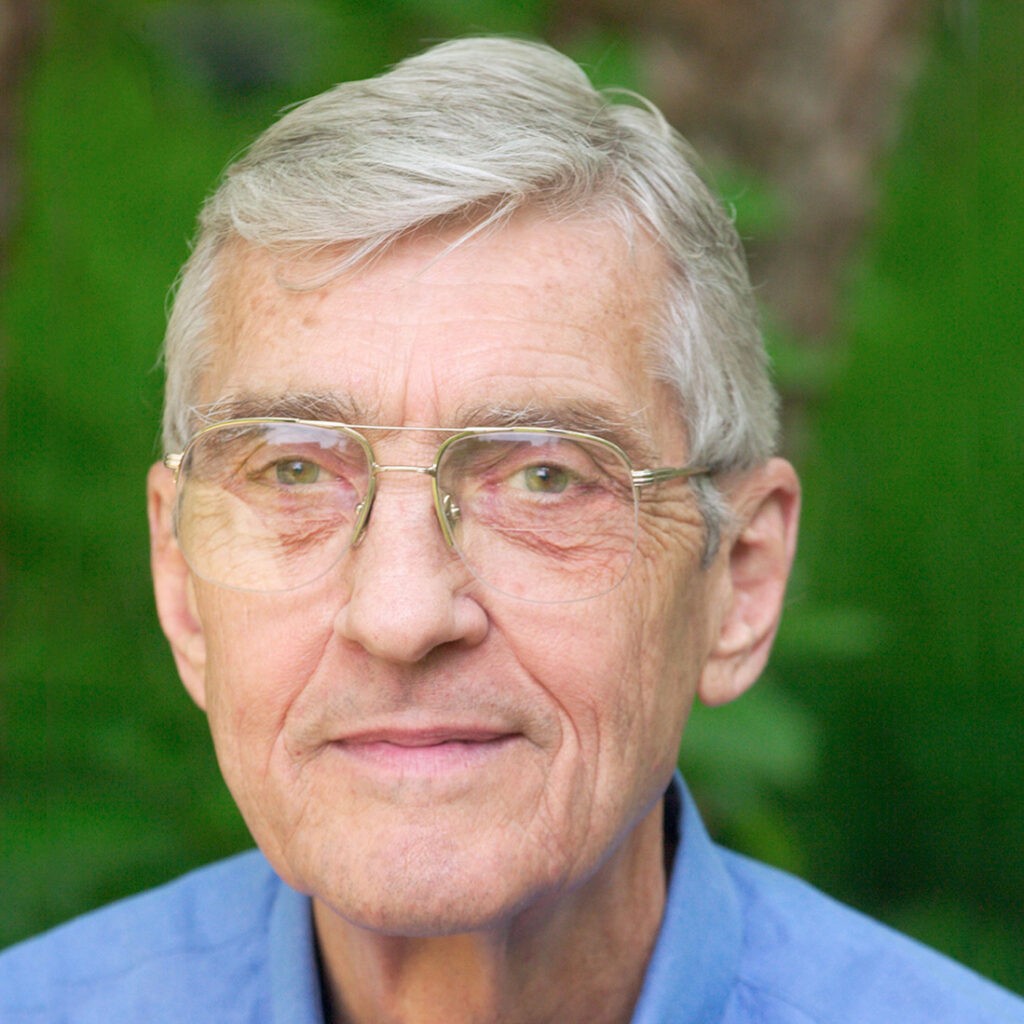 Bernard C. Patten (Bernard Patten)合作论文数Odum School of Ecology, University of Georgia2
 Anne D. Guerry合作论文数Nat Capital Project, Stanford Univ2
 Robert Costanza合作论文数Stockholm Resilience Center;Gund Institute of Ecological Economics, Rubenstein School of Environment and Natural Resources, The University of Vermont;Institute for Global Prosperity, University College London2
 Marion Potschin合作论文数School of Geography, University of Nottingham Centre for Environmental Management2
 Todd C Rasmussen合作论文数School of Forest Resources2Thomas O. Mcshane合作论文数2
 Patricia Balvanera合作论文数Centro de Investigaciones en Ecosistemas;noma de Mexico, Universidad Nacional Auto;Centro de Investigaciones en Ecosistemas, Universidad Nacional Autonoma de Mexico2
 Karina Benessaiah合作论文数2
 Ben A. Minteer合作论文数Sch Life Sci, Arizona State Univ2Konrad Ott合作论文数2
 Bettina Matzdorf合作论文数Institute of Socio-economics;Leibniz-Centre for Agricultural Landscape Research;Institute of Socio-economics, Leibniz-Centre for Agricultural Landscape Research2A. K. Parker合作论文数2
 J. Baird Callicott合作论文数Department of Philosophy, University of Wisconsin2
 Kurt Jax合作论文数2J. Peter Brosius合作论文数Department of Anthropology, University of Georgia2
 Barbara Muraca合作论文数University of Greifswald2
 Sara Metcalf合作论文数Department of Geography, University of Illinois2
 Douglas Noonan合作论文数School of Public Policy;Georgia Institute of Technology;School of Public Policy, Georgia Institute of Technology2
 Christopher M. Raymond合作论文数Centre for Rural Health and Community Development, University of South Australia2victoria davion合作论文数1deane curtin合作论文数1Ma Toman合作论文数1arne naess合作论文数1bob pepperman taylor合作论文数1jonathan m smith合作论文数1miriam macgillis合作论文数1




