The importance of culture as a pillar of cultural sustainability needs to be better recognised and appreciated, especially in rural areas. Everyone has a responsibility to prepare future generations for living in our culturally complex world BUT educators especially must step up and take a pivotal role in ensuring future generations appreciate the importance of cultural sustainability. The nine papers selected for inclusion in this Special Issue provide the opportunity to share just some of the thought-provoking research and practice that was shared at ISFIRE2021 Educating for Cultural Sustainability: Innovation for the Future. A clearer focus on culture can be achieved within schools by transforming curriculum, teaching practice, and the way that school performance is assessed. For teachers, bringing culture to the fore in professional learning and teacher preparation, can facilitate the development of a better rural sense of belonging and ultimately improve teacher retention in rural areas. In particular, prioritising Indigenous languages and creating more Indigenous language resources will help to bring Indigenous languages to the forefront in schools.
At a time when social, economic and political decisions, along with environmental events, challenge the viability of remote communities, educators need to better prepare young people in these communities to work towards sustainability. Remote locations can be defined by their inaccessibility rather than just distance from the nearest services, while the sustainability construct encapsulates a range of community needs: environmental, social, cultural and economic. This paper describes experiences that involve innovative approaches towards educating for sustainability in remote locations in six diverse countries: South Africa, Scotland, Canada, United States of America, Pacific Island Nations, and Australia. For each, the nature of what constitutes a “remote” location, as well as the detail and challenges of the innovation are presented. Readers should consider how they might more suitably educate the next generation to protect, showcase and learn from/with the local knowledges and capacities of the people and environments in remote locations.
Three distinct clusters were identified from a survey study of a sample of 127 unit coordinators from a regional Australian University. The clusters emerged after a survey that explored perceptions of pedagogical practices that incorporated the use of Information Communication and Technology (ICT). The key components of the survey were based on seven constructs derived from the Technological Pedagogical and Content Knowledge (TPACK). For future investigations of TPACK application in university contexts, a three-cluster configuration of teacher-practitioners is proposed that requires empirical confirmation. Alongside the theorised clusters of university lecturers according to their perceived engagement with ICT, several layers of technology policy disconnect have also been discovered. The relevance of the findings of the inquiry and their implications on universities that conduct ICT intensive courses are also discussed, especially in relation to improving teaching practices.
Four distinct constructs were identified from a survey of a sample of pre-service science teachers at a regional Australian University. The constructs emerged after employing Exploratory Factor Analysis (EFA) on respondents' perceptions of pedagogical practices incorporating the use of Information Communication and Technology (ICT). The key components of the survey were derived from a Technological Pedagogical and Content Knowledge (TPACK) survey developed for a national project. For future investigations of TPACK application in university contexts, a four-construct configuration of pre-service teacher TPACK perceptions is proposed requiring empirical confirmation. This inquiry depicts a portrait of emerging domains of TPACK. The relevance of the findings and their implications for universities that rely heavily on ICT in the delivery of are discussed, especially in relation to improving teaching practices.
Three distinct clusters were identified from a survey study of a sample of 127 unit coordinators from a regional Australian University. The clusters emerged after a survey that explored perceptions of pedagogical practices that incorporated the use of Information Communication and Technology (ICT). The key components of the survey were based on seven constructs derived from the Technological Pedagogical and Content Knowledge (TPACK). For future investigations of TPACK application in university contexts, a three-cluster configuration of teacher-practitioners is proposed that requires empirical confirmation. The relevance of the findings of the inquiry and their implications on universities that conduct ICT intensive courses were also discussed, especially in relation to improving teaching practices. ICT Teaching Practices from a TPACK Perspective – A View from a Regional Australian University, Vicente Reyes, Sue Gregory, Chris Reading, and Helen Doyle, First published, August 2014 PLS Working Paper Series, 12 First published by the National Institute of Education (NIE), August 2014
The current generation of learners have been referred to as ‘digital natives’ in reflection of their apparent ease and familiarity with digital technology. However, questions remain about how prepared students are for university e-learning environments. This research explores student and staff perceptions of the level of preparedness for students for a university e-learning environment mediated by a Learning Management System. Findings suggest that while students may be reasonably prepared to deal with the technology of e-learning, for activities such as, reading and writing, being clear and concise in responses, synthesizing ideas, planning strategies, making arguments, and working with others, students are not well prepared.
It’s time for teachers to consider themselves as learners in ICT-rich learning environments and to become more aware of factors that enable their learning in such environments. The notion of teachers as learners in ICT-rich environments is not new but the focus is usually on school teachers and formal professional development, rather than teachers in universities learning as part of the change-of-practice process. This research investigated the enablers that were identified by teacher educators as most significant in the development of their Technological Pedagogical Content Knowledge (TPACK) while transforming their teaching practice. As part of the evaluation of the effectiveness of strategies implemented to improve graduating pre-service teacher ability to demonstrate innovative use of ICT in education, Most Significant Change Stories were compiled from focus group discussions with teacher educators in four curriculum areas, English, Mathematics, Science and History. The teacher educators were provided with support, an ICT Pedagogy Officer, as they planned, implemented and evaluated innovative ICT-rich learning experiences. The enablers identified by the teacher educators as contributing most significantly to their learning are explained. Findings show that there are common themes across these enablers and that not all enablers are factors over which the teacher educator has control.
The need for Australian school students to develop a strong understanding of Asian culture has been recognised in the cross-curriculum priority, Asia and Australia's Engagement with Asia, of the Australian Curriculum. School students in rural and remote Australia have limited opportunities to engage with Asians and learn about their culture. The Australia-Korea ConneXion (AKC) Program digitally connects Australian and Korean schools to develop cultural exchange. In particular, lessons incorporating videoconferencing enable interactions that enhance the cultural values and attitudes of the students involved. While recognising the potential of videoconferencing to enrich their students‘ experiences of other cultures, teachers in rural and remote schools may not feel confident in the practicalities of incorporating videoconferencing into lessons to connect their students with students in other countries. This paper aims to inform teachers on the analysis of AKC Program lessons utilising videoconferencing. Although there is a cultural focus, each pair of teachers has flexibility in the choice of lesson content. Guidance is provided for teachers who might want to begin videoconferencing with classes in another country, including steps from making first contact with the teacher to planning the learning, setting up the technology and finally facilitating the lessons. As part of research evaluating this program, a rubric was developed to code the quality of a videoconferencing lesson. Analysis of data from lessons between four pairs of schools provides insight into the videoconferencing lessons and a range of pedagogical and technological advice to assist teachers to improve the quality of their future use of videoconferencing to connect students and allow them to explore new cultural horizons.
It’s time to prepare teachers to take the plunge to teach in virtual worlds. Students are already there and their teachers need to follow. Unfortunately, teachers are often resistant to change their teaching practice, especially regarding the use of Information and Communication Technology (ICT) such as virtual worlds. The authors report on the experience of a cohort of pre-service teachers who transitioned from resistance to advocacy as a consequence of immersion in a curriculum-based virtual world. Curriculumbased interactive multi-user virtual worlds contribute to learning through transformational play combining learning, playing and helping. Learners make informed decisions whilst immersed in play. A recommended virtual world is Quest Atlantis; research-based and designed for learners aged nine to sixteen. Importantly, teachers need to be convinced that teaching objectives can be met in virtual worlds. Use of the Technological Pedagogical Content Knowledges (TPACK) framework can provide such evidence. Most Significant Change Stories gathered from pre-service teachers show the pre-service teachers transforming from resistance to advocacy. Findings indicated that once the pre-service teachers experienced transformational play they realised the value of the use of virtual worlds in teaching and that play can support learning and meet teaching objectives.
The aim of this study was to identify and rate the importance of the competencies required by students for effective performance in a university e-learning environment mediated by a learning management system. Two expert panels identified 58 e-learning competencies considered to be essential for e-learning. Of these competencies, 22 were related to the use of technology. The remaining 36 competencies encapsulated a range of practices considered to be essential for learning within a social constructivist framework. Six of the competencies identified were either new or substantially different from what had been previously identified in the literature. A survey of e-learning stakeholders rating the importance of the e-learning competencies indicated that the competencies were not of equal importance. Critically, a number of key competencies from a social constructivist perspective that dealt with interacting and working with others were rated as being unimportant. This suggests that there is a disconnect between what the literature says about the importance of social constructivism to e-learning environments in theory and what e-learning stakeholders perceive its importance to be in practice.
The need for Australian school students to develop a strong understanding of Asian culture has been recognised in the cross-curriculum priority, Asia and Australia‟s Engagement with Asia, of the Australian Curriculum. School students in rural and remote Australia have limited opportunities to engage with Asians and learn about their culture. The Australia-Korea ConneXion (AKC) Program digitally connects Australian and Korean schools to develop cultural exchange. In particular, lessons incorporating videoconferencing enable interactions that enhance the cultural values and attitudes of the students involved. While recognising the potential of videoconferencing to enrich their students' experiences of other cultures, teachers in rural and remote schools may not feel confident in the practicalities of incorporating videoconferencing into lessons to connect their students with students in other countries. This paper aims to inform teachers on the analysis of AKC Program lessons utilising videoconferencing. Although there is a cultural focus, each pair of teachers has flexibility in the choice of lesson content. Guidance is provided for teachers who might want to begin videoconferencing with classes in another country, including steps from making first contact with the teacher to planning the learning, setting up the technology and finally facilitating the lessons. As part of research evaluating this program, a rubric was developed to code the quality of a videoconferencing lesson. Analysis of data from lessons between four pairs of schools provides insight into the videoconferencing lessons and a range of pedagogical and technological advice to assist teachers to improve the quality of their future use of videoconferencing to connect students and allow them to explore new cultural horizons.
Teacher educators with TPACK are critical to the development of the ICT competence of the next generation of teachers. To effect real change in ICT education leaders must be developed amongst teacher educators as well as teachers. An Australian university implemented a supported program of professional development for teacher educators as they implemented innovative ICT-rich practice. This paper reports on data collected before, during and after the process to inform planning. Areas identified where teacher educator TPACK was lacking were used to inform the professional development process. For a variety of ICT competences teacher educators were generally convinced of the usefulness but not so convinced of their own confidence. Enablers of learning identified by teacher educators, who had engaged in innovative practice, showed that they were building TPACK that would equip them to be leaders and thus catalysts for change in ICT education.
To teach statistics effectively teachers need to have a well-developed knowledge of distribution. As a key concept in an intricate web of statistical knowledge, distribution depends on, and is depended on by many other statistical concepts. Various frameworks have been developed as researchers strive to describe the cognitive development of knowledge of distribution. Considering the professional learning continuum that a teacher needs to traverse, research studies are reported that have focused, from the perspective of teachers as learners, on the development of teacher knowledge of distribution both before teaching and while teaching. Recommendations are made for teacher learning and future research into teachers' knowledge of distribution.
In C. Reading (Ed.), Data and context in statistics education: Towards an evidence-based society. Proceedings of the Eighth International Conference on Teaching Statistics (ICOTS8, July, 2010), Ljubljana, Slovenia. Voorburg, The Netherlands: International Statistical Institute. www.stat.auckland.ac.nz/~iase/publications.php [© 2010 ISI/IASE] DEVELOPING A FRAMEWORK FOR REASONING ABOUT EXPLAINED AND
 Helen Doyle合作论文数School of Education, University of Queensland8
 Jackie Reid合作论文数Centre for Bioactive Discovery in Health and Ageing, School of Science &University of New England;School of Science & Technology, University of New England8
 Mitchell Parkes合作论文数Learning & Teaching Transformat, Univ New England6
 Vicente Reyes合作论文数3
 Myung-Sook Auh合作论文数3
 Bruce White合作论文数Educ Futures, Univ South Australia3
 Sue Gregory合作论文数3
 Andrew Fluck合作论文数University of Tasmania3Neil Anderson合作论文数3
 Catherine Mcloughlin合作论文数Faculty of Education and Arts, School of Education NSW/ACT - Canberra, Australian Catholic University2
 Jo-Anne Reid合作论文数University of New England2J. Michael Shaughnessy合作论文数2Gail Burrill合作论文数2
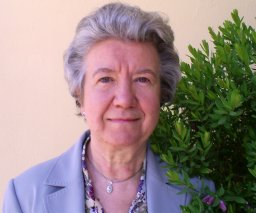 Carmen Batanero合作论文数University of Granada2
 Greg Shaw合作论文数The Prostate Centre;Queen Mary University of London;University College London2Sarah Stein合作论文数2Jonathan Moritz合作论文数1sandra frid合作论文数1
 Neil Taylor合作论文数1mike shaughnessy合作论文数1
 Patrick Hampton合作论文数1Tena M. Versland合作论文数1
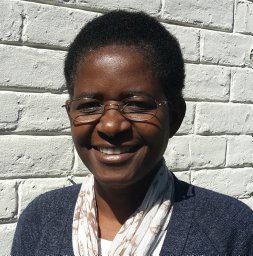 Constance Khupe合作论文数University of the Witwatersrand1
 Zieffler Andrew合作论文数1
 Howard L. Smith合作论文数1
 Caven S. Mcloughlin合作论文数Kent State University1
 Jane Watson合作论文数University of Tasmania1Susan Brown Trinidad合作论文数1
 Theodosia Prodromou合作论文数University of Warwick1Ted Redden合作论文数1
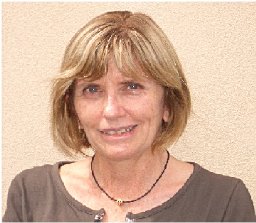 Sue Trinidad合作论文数Faculty of Education, Languages Studies and Social Work, Curtin University of Technology1
 Robert Claude delMas合作论文数University of Minnesota1
 Nadya Rizk合作论文数American University of Beirut1Belinda Tynan合作论文数1Maxine Pfannkuch合作论文数1Dan Canada合作论文数1Christine Lawrie合作论文数1
 Dawn Wallin合作论文数University of Manitoba1Joan Garfield合作论文数1




