We are interested in developing a data-driven method to evaluate race-induced biases in law enforcement systems. While the recent works have addressed this question in the context of police-civilian interactions using police stop data, they have two key limitations. First, bias can only be properly quantified if true criminality is accounted for in addition to race, but it is absent in prior works. Second, law enforcement systems are multi-stage and hence it is important to isolate the true source of bias within the "causal chain of interactions" rather than simply focusing on the end outcome; this can help guide reforms. In this work, we address these challenges by presenting a multi-stage causal framework incorporating criminality. We provide a theoretical characterization and an associated data-driven method to evaluate (a) the presence of any form of racial bias, and (b) if so, the primary source of such a bias in terms of race and criminality. Our framework identifies three canonical scenarios with distinct characteristics: in settings like (1) airport security, the primary source of observed bias against a race is likely to be bias in law enforcement against innocents of that race; (2) AI-empowered policing, the primary source of observed bias against a race is likely to be bias in law enforcement against criminals of that race; and (3) police-civilian interaction, the primary source of observed bias against a race could be bias in law enforcement against that race or bias from the general public in reporting against the other race. Through an extensive empirical study using police-civilian interaction data and 911 call data, we find an instance of such a counter-intuitive phenomenon: in New Orleans, the observed bias is against the majority race and the likely reason for it is the over-reporting (via 911 calls) of incidents involving the minority race by the general public.
Only recently have sociologists begun to examine the social origins of educational mismatches in more detail. This research not only repeatedly found, but also investigated why individuals from lower social origin more often have a higher level of education than required for their job (overeducation), and why individuals from a higher social origin more often realize high positions despite having a lower level of education than required for their job (undereducation). While these studies provide additional and valuable empirical insights into the effect of social origin on both types of mismatch separately, to date there has been no investigation on general sociological meaningful conditions, under which the social origin unfolds an effect on undereducation and overeducation in the first place. This paper addresses this gap by examining the relevance of intergenerational stability for the effect of social origin on mismatches. It does so by drawing on arguments from sociological theories on intergenerational (im-)mobility, data from the German Socio-Economic Panel (SOEP) for the period 1990–2017, and two different measurement methods for educational mismatches. The empirical results show evidence of substantial heterogeneity in the effect of social origin on educational mismatches: A higher parental status is found to be advantageous only for employees with intergenerational stability in social classes and/or occupational tasks. This indicates that the intergenerational transmission of class-specific traits and occupational skills contribute to the effect of social origin on mismatches. The results show no effect of parental status on educational mismatches among employees who are intergenerationally mobile and make up half of the German labor force under investigation. Since this heterogeneity is also found among workers who immigrated to Germany as adults, parental networks within Germany and the corresponding social capital can be ruled out as the main driver behind this finding. Although educational attainment is the most important pathway of intergenerational status maintenance, the results suggest that educational mismatches offer a means of identifying systematic deviations from this pathway. Individuals who follow in the footsteps of their high-status parents are more likely to be employed either at or above their level of education. In the light of the strong heterogeneity revealed, complementary explanations and routes for further research to investigate the link between intergenerational (im-)mobility, social origin and educational mismatches are discussed.
For decades, researchers have sought to understand the separate contributions of age, period, and cohort (APC) on a wide range of outcomes. However, a major challenge in these efforts is the linear dependence among the three time scales. Previous methods have been plagued by either arbitrary assumptions or extreme sensitivity to small variations in model specification. In this article, we present an alternative method that achieves partial identification by leveraging additional information about subpopulations (or strata) such as race, gender, and social class. Our first goal is to introduce the cross-strata linearized APC (CSL-APC) model, a re-parameterization of the traditional APC model that focuses on cross-group variations in effects instead of overall effects. Similar to the traditional model, the linear cross-strata APC effects are not identified. The second goal is to show how Fosse and Winship's (2019) bounding approach can be used to address the identification problem of the CSL-APC model, allowing one to partially identify cross-group differences in effects. This approach often involves weaker assumptions than previously used techniques and, in some cases, can lead to highly informative bounds. To illustrate our method, we examine differences in temporal effects on wages between men and women in the United States.
Spurred by the success of public health violence interventions, and accelerated by policy pressure to reduce violence without exacerbating overpolicing and mass incarceration, streetwork programs—those that provide anti‐violence services by neighborhood‐based workers who perform their work beyond the walls of parochial institutions—have positioned themselves as the most important non–law‐enforcement violence prevention option available to urban policy makers. Yet despite their importance, the state of the field seems difficult to interpret for academics and practitioners alike. In this article, we make several contributions that bring forth new findings and deliver new perspectives on streetwork as a violence reduction strategy. First, we offer an extended analytic review of the streetwork evaluation literature that connects the study of contemporary public health violence interventions to a preceding tradition of criminologically inspired streetwork studies. Second, we present the results of an impact evaluation of StreetSafe Boston (SSB)—a multiyear streetwork intervention that served 20 Boston gangs. We find that the SSB intervention had no detectable effect on violence among the gangs that it served. We conclude by offering a framework for understanding a field at multiple crossroads: past and present, proclaimed successes and failures, help and harm.
Although sociologists and political philosophers have shared intellectual agendas, rarely do the insights of the two fields intersect. Sociologists develop empirical explanations of social inequalities, but few develop explicit social theories of how to ameliorate those injustices. Philosophers, especially those in the tradition of contemporary political liberalism, develop theories of distributional injustices, but often without an accompanying theory of the society, as if one could be an architect without considering any insights from civil engineering. In this paper, we exegete a political philosophical tradition (“relational egalitarianism”) and a social theoretical tradition (“relational sociology”). These two traditions provide a common intellectual terrain for sociologists and political theorists as each tradition recognizes the importance of non-hierarchical social relationships for just democratic societies. Through two brief case studies (one of a failed unionization campaign and the other a successful policing program), we show why theories of justice are consequential for empirical investigations and why theories of society are both necessary to develop prescriptions for just social structures.
In a widely influential essay, Ryder argued that to understand social change, researchers should compare cohort careers, contrasting how different cohorts change over the life cycle with respect to some outcome. Ryder, however, provided few technical details on how to actually conduct a cohort analysis. In this article, the authors develop a framework for analyzing temporally structured data grounded in the construction, comparison, and decomposition of cohort careers. The authors begin by illustrating how one can analyze age-period-cohort (APC) data by constructing graphs of cohort careers. Although a useful starting point, the major problem with this approach is that the graphs are typically of sufficient complexity that it can be difficult, if not impossible, to discern the underlying trends and patterns in the data. To provide a more useful foundation for cohort analysis, the authors therefore introduce three distinct improvements over the purely graphical approach. First, they provide a mathematical definition of a cohort career, demonstrating how the underlying parameters of interest can be estimated using a reparameterized version of the conventional APC model. The authors call this the life cycle and social change (LC-SC) model. Second, they contrast the proposed model with two alternative three-factor APC models and all logically possible two-factor models, showing that none of these other models are adequate for fully representing Ryder’s ideas. Third, the authors present the article’s major accomplishment: using the LC-SC model, they show how a collection of cohort careers can be decomposed into just four basic components: a curve representing an overall intracohort trend (or life cycle change); a curve representing an overall intercohort trend (or social change); a set of common cross-period temporal fluctuations that permit variability across cohort careers; and, finally, a set of terms representing cell-specific heterogeneity (or, equivalently, interactions among age, period, and/or cohort). As the authors demonstrate, these parts can be reassembled into simpler versions of cohort careers, revealing underlying trends and patterns that may not be evident otherwise. The authors illustrate this approach by analyzing trends in political party strength in the General Social Survey.
In Boston, the key community group working with the police has been a set of black churches known as the Ten Point Coalition. Rival gangs turned to firearms to protect and defend their turf and gang identity. Boston's faith-based organizations did not begin working together as a group until 1992. The ministers' message to the youths, nevertheless, is quite different. Public awareness of such "moral realities" translates into a special variety of political capital that allows clergy to transcend stale partisan political debates, even while injecting their political views into those debates. In traditional political discourse, emphases on structural determinacy and individual responsibility are at odds. The New Testament demands action on behalf of others. Hundreds of organizations around the country, including the Ten Point Coalition, have taken this mandate seriously, developing a plethora of "faith-based" responses to human suffering in urban cores. Ministers may possibly be ideal partners.
The extensive causal inference revolution in statistics, epidemiology and other social science fields based on Rubin's potential outcome model and Pearl's directed acyclic graphs (DAGs) has not penetrated the research of analytical sociologists as yet. In this chapter we introduce empirical examples, primarily relying on the Merton Award winning papers to demonstrate the value of these frameworks as a way of providing theoretical clarity for assumed causal structures, and methodological clarity for what is needed for the identification of causal effects. We provide a brief introduction to the potential outcome model and DAGs and discuss different strategies for mechanism-based identification of causal effects. Finally, we make use of an extended empirical example to demonstrate recent methodological developments in mediation analysis in order to enrich the analytical sociologists' methodological toolkit.
Introduction A key issue is how to interpret t-statistics when publication bias is present. In this paper we propose a set of rough rules of thumb to assist readers to interpret t-values in published results under publication bias. Unlike most previous methods that utilize collections of studies, our approach evaluates the strength of evidence under publication bias when there is only a single study. Methods We first re-interpret t-statistics in a one-tailed hypothesis test in terms of their associated p-values when there is extreme publication bias, that is, when no null findings are published. We then consider the consequences of different degrees of publication bias. We show that under even moderate levels of publication bias adjusting one’s p-values to insure Type I error rates of either 0.05 or 0.01 result in far higher t-values than those in a conventional t-statistics table. Under a conservative assumption that publication bias occurs 20 percent of the time, with a one-tailed test at a significance level of 0.05, a t-value equal or greater than 2.311 is needed. For a two-tailed test the appropriate standard would be equal or above 2.766. Both cutoffs are far higher than the traditional ones of 1.645 and 1.96. To achieve a p-value less than 0.01, the adjusted t-values would be 2.865 (one-tail) and 3.254 (two-tail), as opposed to the traditional values 2.326 (one-tail) and 2.576 (two-tail). We illustrate our approach by applying it to evaluate the hypothesis tests in recent issues of Criminology and Journal of Quantitative Criminology ( JQC ). Conclusion Under publication bias much higher t-values are needed to restore the intended p-value. By comparing the observed test scores with the adjusted critical values, this paper provides a rough rule of thumb for readers to evaluate the degree to which a reported positive result in a single publication reflects a true positive effect. Further measures to increase the reporting of robust null findings are needed to ameliorate the issue of publication bias.
Pioneered in Boston as part of its Operation Ceasefire strategy to halt serious youth violence in the 1990s, focused deterrence approaches (also known as “pulling levers” policing) have been embraced by police departments in the United States and other countries as an effective approach to crime prevention (Travis, 1998; Dalton, 2002; Deuchar, 2013). In its simplest form, the approach consists of selecting a particular crime problem, such as youth homicide; convening an interagency working group of law enforcement practitioners; conducting research to identify key offenders, groups, and behavior patterns; framing a response to offenders and groups of offenders that uses a varied menu of sanctions to stop them from continuing their violent behavior; focusing social services and community resources on targeted offenders and groups to match law enforcement prevention efforts; and directly and repeatedly communicating with offenders to make them understand why they are receiving this special attention (Kennedy, 1997; Kennedy, Chapter 9 in this volume). Although the goal of focused deterrence strategies is to prevent crime by changing offender perceptions of sanction risk, other complementary crime prevention mechanisms seem to support the crime control efficacy of these programs (Braga & Kennedy, 2012; Kennedy, Kleiman & Braga, 2017). These strategies are also intended to change offender behavior by mobilizing community action, enhancing procedural justice, and improving police legitimacy. A growing body of rigorous scientific evidence suggests focused deterrence strategies have been useful in preventing violence beyond …
 Steve Morgan合作论文数Department of Sociology, Johns Hopkins University30
 Robert D. Mare合作论文数University of California, Los Angeles15
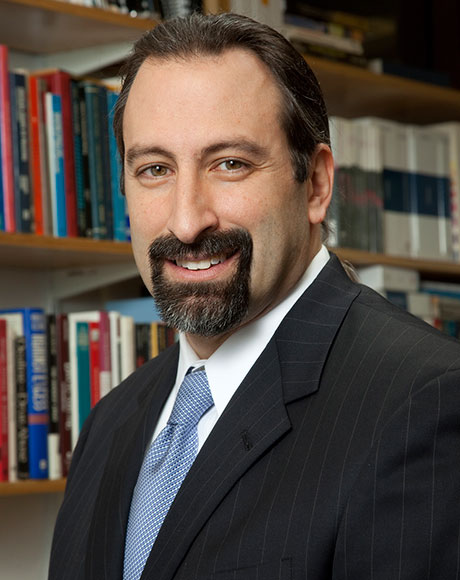 Anthony A. Braga合作论文数School of Criminology and Criminal Justice, College of Social Sciences and Humanities, Northeastern University11
 Ethan Fosse合作论文数Department of Sociology, University of Toronto Scarborough8
 jenny berrien合作论文数7
 Sanders Korenman合作论文数Humphrey Institu of Public Affairs, University of Minnesota7R. D. Mare合作论文数6
 Brandon Turchan合作论文数Dept Criminol, Univ Penn4
 Robert J. Sampson合作论文数Department of Sociology, Harvard University4
 David James Harding合作论文数Department of Sociology, University of California, Berkeley4
 Carly R. Knight合作论文数Cambridge, Harvard University4
 Wesley Lindahl合作论文数3
 Daniel T. O'Brien合作论文数Boston Area Res Initiat, Northeastern & Harvard Univ3
 Christopher Muller合作论文数Department of Sociology, Harvard University3Martin Rein合作论文数3v vroomans合作论文数2m pena claros合作论文数2j chambi合作论文数2y bustamente合作论文数2b louman合作论文数2j c licona合作论文数2Felix Elwert合作论文数2a alarcon合作论文数2
 Lisa A. Gennetian合作论文数Sanford School of Public Policy, Duke University2
 L (Lourens) Poorter合作论文数Forest Ecology and Forest Management Group, Wageningen University & Research2Warren N. Kubitschek合作论文数2
 Peter Bearman合作论文数Department of Sociology, Columbia University;London School of Economics;Center for Innovative Theory and Empirics, Columbia University;Nuffield College, University of Oxford2
 Paul E. Peterson合作论文数Department of Government, Harvard University/Harvard Kennedy School, Harvard University2
 Peter Hedstrom合作论文数Institute for Analytical Sociology, Linköping University;Department of Management and Engineering, Linköping University;Nuffield College, Oxford University2
 David M. Hureau合作论文数Cambridge, Harvard University2
 Mario Luis Small合作论文数Columbia University2Lisa Sanbonmatsu合作论文数2
 B. Mostacedo合作论文数School of Forest Resources and Conservation;University of Florida;Departrrtent qf Botany;School of Forest Resources and Conservation, University of Florida2
 Sarah Morgan合作论文数The University of Alabama at Birmingham2Z. Villegas合作论文数2Susan E. Mayer合作论文数2f mesen合作论文数1c j pierce colfer合作论文数1m k cotta合作论文数1s s ribeiro合作论文数1t vilen合作论文数1p a leffelaar合作论文数1g s maddala合作论文数1d f karnosky合作论文数1m m de bentesgamma合作论文数1a elameen合作论文数1l villalobos fiatt合作论文数1j a reque合作论文数1




