Certified reference material (CRM) for natural (40K, 210Pb, 210Po, 226Ra, 228Ra, 228Th, 230Th, 232Th, 234U, 235U, and 238U) and anthropogenic (137Cs, 239+240Pu, and 241Am) radionuclides in marine sediment from the Baltic Sea (IAEA-465) has been developed. Information values are given for 238Pu, 239Pu and 240Pu. Altogether 27 laboratories participated in this exercise. Radiometric (alpha-spectrometry, gamma-spectrometry and beta counting, as well as mass spectrometry (ICP-MS and AMS) techniques were applied in measurements. The CRM is intended to be used for Quality Assurance/Quality Control of radionuclide analyses, for the development and validation of analytical methods, for the development of reference methods and for training purposes.
Ambient neutrons may cause significant background for underground experiments. Therefore, it is necessary to investigate their flux and energy spectrum in order to devise a proper shielding. Here, two sets of altogether ten moderated He-3 neutron counters are used for a detailed study of the ambient neutron background in tunnel IV of the Felsenkeller facility, underground below 45 m of rock in Dresden/Germany. One of the moderators is lined with lead and thus sensitive to neutrons of energies higher than 10 MeV. For each He-3 counter moderator assembly, the energy-dependent neutron sensitivity was calculated with the FLUKA code. The count rates of the ten detectors were then fitted with the MAXED and GRAVEL packages. As a result, both the neutron energy spectrum from 10(-9) to 300 MeV and the flux integrated over the same energy range were determined experimentally. The data show that at a given depth, both the flux and the spectrum vary significantly depending on local conditions. Energy-integrated fluxes of (0.61 +/- 0.05), (1.96 +/- 0.15), and (4.6 +/- 0.4) x 10(-4) cm(-2) s(-1), respectively, are measured for three sites within Felsenkeller tunnel IV which have similar muon flux but different shielding wall configurations. The integrated neutron flux data and the obtained spectra for the three sites are matched reasonably well by FLUKA Monte Carlo calculations that are based on the known muon flux and composition of the measurement room walls.
The muon intensity and angular distribution in the shallow-underground laboratory Felsenkeller in Dresden, Germany have been studied using a portable muon detector based on the close cathode chamber design. Data has been taken at four positions in Felsenkeller tunnels VIII and IX, where a new 5 MV underground ion accelerator is being installed, and in addition at four positions in Felsenkeller tunnel IV, which hosts a low-radioactivity counting facility. At each of the eight positions studied, seven different orientations of the detector were used to compile a map of the upper hemisphere with 0.85 degrees angular resolution. The muon intensity is found to be suppressed by a factor of 40 due to the 45 m thick rock overburden, corresponding to 140m water equivalent. The angular data are matched by two different simulations taking into account the known geodetic features of the terrain: First, simply by determining the cutoff energy using the projected slant depth in rock and the known muon energy spectrum, and second, in a Geant4 simulation propagating the muons through a column of rock equal to the known slant depth. The present data are instrumental for studying muon-induced effects at these depths and also in the planning of an active veto for accelerator-based underground nuclear astrophysics experiments. (C) 2019 Elsevier B.V. All rights reserved.
A search for the double beta decay transition of Zr-94 into the first excited state of Mo-94 has been performed at the Felsenkeller underground laboratory in Dresden, Germany. A 341.1. g zirconium sample with natural isotopic composition has been measured for 43.9. d in an ultra low background gamma spectroscopy setup. No signal has been observed and a new best lower halflife limit is set as 5.2 x 10(19) yr (90% CI). This limit is valid for the 0 nu beta beta and 2 nu beta beta decay into excited states of Mo-94 but cannot distinguish between the two modes. Existing limits are improved by 50%.
An investigation of the alpha decay of Sm-147 was performed using an ultra-low-background twin Frisch-grid ionization chamber (TF-GIC). Four natural samarium samples were produced using pulsed laser deposition in ultrahigh vacuum. The abundance of the Sm-147 isotope was measured using inductively coupled plasma mass spectrometry. A combined half-life value for Sm-147 of 1.079(26) x 10(11) yr was measured. A search for the alpha decay into the first excited state of Nd-143 has been performed using gamma spectroscopy, resulting in a lower half-life limit of T-1/2 > 3.1 x 10(18) yr (at 90% C. L.).
We show that Zhang and Li’s sedimentological model for the Chusang travertine neglects the three-dimensional information from multiple outcrops and that their optically stimulated luminescence (OSL) age of about 20,000 years for the human imprints is untenable. We highlight the robustness of our chronology and explore reasons why Zhang and Li’s OSL age is a gross overestimation of the real depositional age of the imprinted travertine.
Current models of the peopling of the higher-elevation zones of the Tibetan Plateau postulate that permanent occupation could only have been facilitated by an agricultural lifeway at ~3.6 thousand calibrated carbon-14 years before present. Here we report a reanalysis of the chronology of the Chusang site, located on the central Tibetan Plateau at an elevation of ~4270 meters above sea level. The minimum age of the site is fixed at ~7.4 thousand years (thorium-230/uranium dating), with a maximum age between ~8.20 and 12.67 thousand calibrated carbon-14 years before present (carbon-14 assays). Travel cost modeling and archaeological data suggest that the site was part of an annual, permanent, preagricultural occupation of the central plateau. These findings challenge current models of the occupation of the Tibetan Plateau.
A search for the radiative neutrinoless double electron capture with single \gray\ emission has been performed in $^{58}$Ni. Gamma radiation from a 7286 g nickel sample in natural isotope composition was measured for 58.3 d with an ultra low background HPGe detector in the Felsenkeller underground laboratory in Dresden, Germany. A new lower half-life limit of $2.1 \times 10^{21}$ yr (90% CL) was obtained for this decay mode. This half-life limit is two orders of magnitude higher than the existing limit for $^{58}$Ni and among the best half-life limits for neutrinoless double electron capture decays.
A search for double beta decays of Pd-110 and Pd-102 into excited states of the daughter nuclides has been performed using three ultra-low background gamma-spectrometry measurements in the Felsenkeller laboratory, Germany, the HADES laboratory, Belgium and at the LNGS, Italy. The combined Bayesian analysis of the three measurements sets improved half-life limits for the 2v beta beta and 0v beta beta decay modes of the 2(1)(+), 0(1)(+) and 2(2)(+) transitions in Pd-110 to 2.9 . 10(20) yr, 4.0 . 10(20) yr and 3.0 . 10(20) yr, respectively, and in Pd-102 to 7.6 . 10(18) yr, 8.8 . 10(18) yr and 1.4 . 10(19) yr, respectively, with 90% credibility.
A search for various double electron capture modes of $^{74}$Se has been performed using an ultralow background Ge-detector in the Felsenkeller laboratory, Germany. Especially for the potentially resonant transition into the 1204.2 keV excited state of $^{74}$Ge a lower half-life limit of $0.70\cdot 10^{19}$ yr (90% credibility) has been obtained. Serious concerns are raised about the validity of obtained $^{74}$Se limits in some recent publications.
A reference material designed for the determination of natural radionuclides in solid samples (glass pellets) is described and the results of certification are presented. The material has been certified for 7 natural radionuclides ( 40 K, 226 Ra, 228 Ra, 228 Th, 232 Th, 235 U and 238 U). An information value is given for 210 Pb. Radon ( 222 Rn) emanation experiments showed results comparable within participating laboratories, however, the number of data and precision was too low to carry out a certification process. The reference material may be used for quality management of analytical laboratories engaged in the high-sensitive analysis of radionuclides in the construction materials of detectors placed in ultra low background underground laboratories.
The preparation and characterization of certified reference materials (CRMs) for radionuclide content in sediments collected offshore of Bikini Atoll (IAEA-410) and in the open northwest Pacific Ocean (IAEA-412) are described and the results of the certification process are presented. The certified radionuclides include: 40K, 210Pb (210Po), 226Ra, 228Ra, 228Th, 232Th, 234U, 238U, 239Pu, 239+240Pu and 241Am for IAEA-410 and 40K, 137Cs, 210Pb (210Po), 226Ra, 228Ra, 228Th, 232Th, 235U, 238U, 239Pu, 240Pu and 239+240Pu for IAEA-412. The CRMs can be used for quality assurance and quality control purposes in the analysis of radionuclides in sediments, for development and validation of analytical methods and for staff training.
The paper describes radionuclide impurities (γ-emitters and 3H) in proton irradiated 18O enriched water from an Nb target vessel with Nb entrance window, their distribution in different synthesis steps and finally in the PET radiopharmaceuticals [18F]Fluoride and [18F]FDG.
activation probe G.Bonheure, M.Hult, A.Fenyvesi, S.Akaslompolo, D.Carralero, D.Degering, A.de-Vismes Ott, M.Garcia-Munoz, B.Gmeiner, A.Herrmann, M.Laubenstein, G.Lutter, J. Mlynar, H.W.Mueller, V.Rohde, W.Suttrop, G.Tardini and the ASDEX Upgrade Team ERM-KMS, B-1000 Brussels, Belgium, Partner in the Trilateral Euregio Cluster EC-JRC-IRMM, Retieseweg 111, B-2440 Geel, Belgium Nuclear Research Institute, Hungarian Academy of Sciences, H-4026 Debrecen, Bem ter 18/c, Hungary Association EURATOM-Tekes, Aalto University, Department of Applied Physics, P.O.Box 14100 FI-00076 AALTO, Finland Max-Planck-Institut fur Plasmaphysik, EURATOM-Assoziation, D-85748 Garching, Germany VKTA Rossendorf e.V., Postfach 510119, 01314 Dresden, Germany IRSN-LMRE, Bois des Rames, Bât. 501, 91400 Orsay, France Faculty of Physics, Seville University, Seville, Spain Laboratori Nazionali del Gran Sasso, S.S. 17/bis km 18+910, I-67010 Assergi (AQ), Italy Association Euratom-IPP.CR, CZ-182 21 Praha 8, Czech Republic
A Certified Reference Material (CRM) for radionuclides in seaweed (Fucus vesiculosus) from the Baltic Sea (IAEA-446) is described and the results of the certification process are presented. The 40K, 137Cs, 234U and 239+240Pu radionuclides were certified for this material, and information values for 12 other radionuclides (90Sr, 99Tc, 210Pb (210Po), 226Ra, 228Ra, 228Th, 230Th, 232Th, 235U, 238U, 239Pu and 240Pu) are presented. The CRM can be used for Quality Assurance/Quality Control of analysis of radionuclides in seaweed and other biota samples, as well as for development and validation of analytical methods, and for training purposes.
A low-level γ-ray spectrometry system, based on an HPGe-detector with 92% relative efficiency recently installed in the underground laboratory Felsenkeller at 110m water equivalent (w.e.) depth, is described. The integral background count rate normalised to the Ge-crystal mass in the energy range from 40keV until 2.7MeV of 0.034s−1kg−1 has been achieved by careful material selection of the detector construction material, a graded shielding construction and effective radon suppression. The detector is highly suitable for the effective surveillance of water for human consumption with decision thresholds for 226Ra and 228Ra in the order of some mBqL−1.
Luminescence dating is a tool frequently used for age determination of Quaternary materials such as archaeological artefacts, volcanic deposits and a variety of sediments from different environmental settings. The present paper gives an overview of the physical basics of luminescence dating, the necessary procedures from sampling to age calculation, potential problems that may interfere with correct age calculation as well as procedures to identify and resolve those problems. Finally, a brief summary of the most common fields of application is given ranging from artefacts to the variety of different sediments suitable for luminescence dating.
A search for the various double-beta decay modes of Sn-124 and Sn-112 has been performed on 75 kg days of data. New half-life limits for excited states in Sn-124 have been obtained including a lower limit for decay into the first excited 2(+) state of Te-124 of T-1/2 > 0.87 x 10(20) yr (90% C.L.) and into the first excited 0(+) state of T-1/2 > 1.08 x 10(20) yr (90% C.L.). Ground state and excited state transitions of Sn-112 have also been experimentally explored. A limit for the 2 nu EC/EC of T-1/2 > 1.8 x 10(19) yr (90% C. L.) is obtained. The nonobservation of deexcitation gamma from the 0(+) at 1888.5 keV results in a lower half-life limit on the 0 nu EC/EC decay of Sn-112 of T-1/2 > 0.8 x 10(19)yr (90% C.L.), despite a possible resonant enhancement of the decay rate due to degenerated states.
Luminescence dating methods like optically stimulated luminescence (OSL) or radiofluorescence (RF) offer possibilities for age determination on a large variety of interglacial sediments. Nevertheless, sediments deposited in warm stages show a number of peculiarities which have to be considered for reliable results. Especially, the effects of radioactive disequilibria and partial bleaching must be discussed carefully. Age determination by infrared-RF on sediments is possible up to MIS 9. The approaches for dating interglacial sediments are illustrated exemplarily on deposits from Central and Eastern Europe.
 Kai Zuber合作论文数Institute of Nuclear and Particle Physics, Faculty of Physics, Technische Universität Dresden9
 Mikael Hult合作论文数6
 Matthias Laubenstein合作论文数Laboratori Nazionali del Gran Sasso, Istituto Nazionale di Fisica Nucleare5
 Mai Khanh Pham合作论文数4
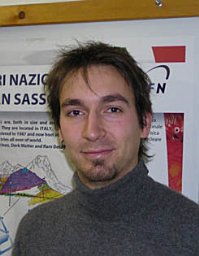 Bjoern Lehnert合作论文数Nuclear Science Division, Lawrence Berkeley National Laboratory4
 C Ilchmann合作论文数3U Rieth合作论文数3J. Schikowski合作论文数3m suplinska合作论文数3
 Fernando Carvalho合作论文数3C Gascó合作论文数3
 Daniel Bemmerer合作论文数Division of Nuclear Physics, Institute of Radiation Physics, Helmholtz-Zentrum Dresden-Rossendorf;Institute of Nuclear and Particle Physics, Technische Universität Dresden3Paul Smedley合作论文数3Sven Poul Nielsen合作论文数3
 Tamara Zalewska合作论文数Department of Chemical Technology, Technical University of Gdańsk3Ivan Sýkora合作论文数Faculty of Mathematics, Physics and Informatics, Comenius University Bratislava;Katedra Jadrovej Fyziky A Biofyziky, Comenius University Bratislava;Oddelenie Radiačnej Fyziky, Comenius University Bratislava3
 E. Chamizo合作论文数3C Engeler合作论文数2M. Grieger合作论文数2t wester合作论文数2T. Hensel合作论文数2margaret kloster合作论文数2g kanisch合作论文数2Randall Haas合作论文数2
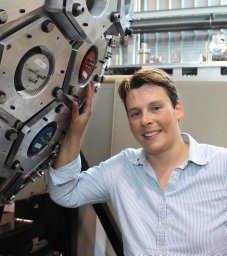 I. Dillmann合作论文数TRIUMF2
 Thomas D Szucs合作论文数2
 Ulli Köster合作论文数Institut Laue-Langevin;Université Grenoble Alpes2Wagner Abram L合作论文数2Zhou W合作论文数2Vartti V-P合作论文数2Arvic Harms合作论文数2Matthias Krbetschek合作论文数2
 Montse Llaurado合作论文数2
 Masanao Nakano合作论文数2J. L. Tain合作论文数2
 Michael C. Meyer合作论文数Department of Biochemistry, University of Massachusetts2
 R. Gurriaran合作论文数CENBG, IN2P3-CNRS et Université de Bordeaux2J. Agramunt合作论文数IFIC-Università Valencia2
 John Arne Dahl合作论文数Faculty of Medicine, University of Oslo Institute of Basic Medical Sciences2
 Luis Mario Fraile Prieto合作论文数Departamento de Estructura de la Materia, Física Térmica y Electrónica, Facultad de Ciencias Físicas, Universidad Complutense Madrid2I. Osvath合作论文数2Michele Marta合作论文数2Dirk L. Hoffmann合作论文数2
 Mark S. Aldenderfer合作论文数Department of Anthropology & Heritage Studies, School of Social Sciences, Humanities and Arts, University of California2
 Pieter Van Beek合作论文数University of Toulouse;LEGOS2G. Surányi合作论文数1S. Nour合作论文数1
 Beata Vilimaite Silobritiene合作论文数1Y. Hamajima合作论文数1




