Abstract This chapter discusses ideas of Peirce’s philosophy, especially his semeiotics, that bear on the development and assessment of the methods, results, and objectives of modern linguistics, especially in regard to the theme of universal grammar. Because a single chapter must restrict its scope, this chapter will keep to those topics that seem to distinguish Peirce’s views, and those of any future Peircean linguistics, from current theories of language. As a further narrowing of the latter subtopic, the discussion of universal grammar will focus on the ideas of Peirce and Noam Chomsky.
Este trabalho apresenta um panorama de algumas pesquisas a respeito de como a cultura está relacionada de forma causal com o entendimento da cognição humana. Particularmente, avalio estudos a respeito da influência da cultura na memória de curto prazo, na percepção visual, na gramática, na cognição numérica, e na evolução linguística. Além disso, apresento um desiderato de metodologias sobre as conexões entre cultura e cognição, e um direcionamento para pesquisas futuras.
Reviewed by: Recursion across domains ed. by Luiz Amaral et al. Daniel L. Everett and Edward Gibson Recursion across domains. Ed. by Luiz Amaral, Marcus Maia, Andrew Nevins, and Tom Roeper. Cambridge: Cambridge University Press, 2018. Pp. 404. ISBN 9781108418065. $125 (Hb).1 [ Clarification ] 1. Introduction The purpose of this review article is to evaluate the research reported in Recursion across domains (henceforth RAD) in the context of wider issues that impinge upon it, especially the nature of grammar and its functions in human languages. RAD resulted from a conference organized by the editors and authors on the topic of recursion in cognition and language at the Federal University of Rio de Janeiro in August 2013. RAD assumes one particular approach to recursion in language, in which recursion is purported to be a genetically supplied feature of the syntax of human languages (Hauser, Chomsky, & Fitch 2002; henceforth HC&F). The book consists of a foreword and an introductory chapter, followed by eighteen chapters organized in four sections. Four of the chapters across the sections discuss fieldwork or experiments investigating the Pirahã language, ten of the chapters discuss particular constructions involving embedding of various kinds in South American languages, and the remaining four chapters discuss the acquisition of recursive structures in other languages. In what follows, we first review three perspectives on the nature and locus of recursion: the syntactic one that the authors of RAD assume (due to HC&F), and two precursors, which are not specifically syntactic: Peirce’s (1865) semantic proposal, and a special case of Simon’s (1962) proposal that hierarchy is the most economic way to organize information. Next, we examine the basic findings of the non-Pirahã chapters of RAD taken as a group, looking at the empirical lessons they contribute within the larger theoretical context. Section 4—the bulk of our review—discusses the four chapters about Pirahã. We focus on Pirahã because this is the language of most theoretical interest: it is unique among the languages that are investigated here in that it has been claimed to lack syntactic recursion. 2. Different conceptions of recursion RAD addresses theoretical and empirical aspects of recursion for the understanding of human languages. The book assumes Hauser, Chomsky, and Fitch’s (2002) approach to recursion in language, where recursion is assumed to be a genetically supplied feature of the syntax of human languages. This view contrasts with two prominent precursors in linguistics and psychology, neither of which assumes that recursion is specific to the syntax of human language. [End Page 777] In 1865, borrowing a term from the thirteenth-century Modistae, Charles Peirce reintroduced the phrase ‘universal grammar’ into linguistics and semiotics, arguing that the grammar of meaning required recursion for reasons of logic (Peirce 1982 [1865]). Peirce considered grammar to be a device for supporting the accurate interpretation of signs (icons, indexes, and symbols, as manifested in words, propositions, phrases, phonemes, photographs, semaphores, etc.). In Peirce’s version of universal grammar, recursion was a logical requirement on interpretation, not on grammatical structures. For example, a sign like bachelor is interpreted via other signs (e.g. unmarried and man), and this interpretative procedure produces a chain of interpretation of one sign in terms of another, of arbitrary depth. There can be no language without recursion in Peircean semiotics. But recursion in this Peircean sense is not the syntactic phenomenon intended by HC&F. Peirce does not predict that all languages will manifest evidence of syntactic recursion (e.g. coordination, morphosyntactic embedding, factive predicates, etc.; see Everett 2012 for a more complete list). For Peirce, neither nature nor nurture is the source of interpretative recursion. Peirce’s recursion is the sole consequence of logical constraint on semiotic interpretation (see also Everett 2019). In a second influential work on recursion, Simon (1962) argued that hierarchy emerges from a constraint of efficiency of information processing across all domains, because hierarchical structures are inherently more efficient and stable than other ways of organizing a complex system. Hierarchy is found in atomic structure, in the organization of societies, in the way that we process information, in the organization of galaxies, in management...
This paper provides an overview of some recent research on how culture is causally implicated in the understanding of human cognition. In particular I review studies on the influence of culture on short-term memory, visual perception, grammar, numerical cognition, and language evolution. I also provide a list of desiderata for research methodologies on the connections between culture and cognition and a direction for future research.
This paper argues that language is primarily a tool for communication, not primarily a means of thought expression, It makes the case that language has its roots in intentional iconicity of Australopithecines and probably had reached the level of a G1 grammar (linear ordering of symbols + gestures) some 2.5 million years ago. Other forms of language, e.g. hierarchical, recursive grammars, are later embellishments that are neither necessary nor sufficient to have human language. The paper looks in detail at the evolution of culture among early hominins and how gap between indexes and icons to symbols might have been bridged. It then discusses the basic composition of phonology, morphology and syntax. The paper rejects the idea of a proto-language, as it also rejects the "X-men" view of language evolution/mutation proposed in Berwick and Chomsky (2016). (C) 2016 Elsevier Ltd. All rights reserved.
The Pirahã language has been at the center of recent debates in linguistics, in large part because it is claimed not to exhibit recursion, a purported universal of human language. Here, we present an analysis of a novel corpus of natural Pirahã speech that was originally collected by Dan Everett and Steve Sheldon. We make the corpus freely available for further research. In the corpus, Pirahã sentences have been shallowly parsed and given morpheme-aligned English translations. We use the corpus to investigate the formal complexity of Pirahã syntax by searching for evidence of syntactic embedding. In particular, we search for sentences which could be analyzed as containing center-embedding, sentential complements, adverbials, complementizers, embedded possessors, conjunction or disjunction. We do not find unambiguous evidence for recursive embedding of sentences or noun phrases in the corpus. We find that the corpus is plausibly consistent with an analysis of Pirahã as a regular language, although this is not the only plausible analysis.
This paper argues against the hypothesis of a "phonological mind" advanced by Berent. It establishes that there is no evidence that phonology is innate and that, in fact, the simplest hypothesis seems to be that phonology is learned like other human abilities. Moreover, the paper fleshes out the original claim of Philip Lieberman that Universal Grammar predicts that not everyone should be able to learn every language, i.e., the opposite of what UG is normally thought to predict. The paper also underscores the problem that the absence of recursion in Pirahã represents for Universal Grammar proposals.
Preview this article: N. J. Enfield. 2013. Relationship Thinking: Agency, Enchrony, and Human Sociality., Page 1 of 1 < Previous page | Next page > /docserver/preview/fulltext/ld.6.3.07eve-1.gif
This chapter examines the idea that language is significantly shaped by culture. It considers how linguistics has been led away from its traditional concern – to understand language as partially constructed by culture – by means of a reification of the field that began with Chomsky's earliest work, continuing through to the present state of formal linguistics. The chapter discusses the nature of cultural knowledge, in order to make the point that children are learning their culture at least as early, perhaps even before, they begin to learn their language. It describes two short Pirahã texts as small examples of how culture and language interact at the level of discourse. The chapter also examines how Pirahã culture profoundly affects Pirahã "core grammar" by means of an overarching cultural value, Immediacy of Experience, and the reflex of this value in the evidentiality system of the grammar, through a Potential Evidentiality Domain.
Visual illusions and other perceptual phenomena can be used as tools to uncover the otherwise hidden constructive processes that give rise to perception. Although many perceptual processes are assumed to be universal, variable susceptibility to certain illusions and perceptual effects across populations suggests a role for factors that vary culturally. One striking phenomenon is seen with two-tone images—photos reduced to two tones: black and white. Deficient recognition is observed in young children under conditions that trigger automatic recognition in adults. Here we show a similar lack of cue-triggered perceptual reorganization in the Pirahã, a hunter-gatherer tribe with limited exposure to modern visual media, suggesting such recognition is experience- and culture-specific.
 Jeanette Sakel合作论文数6
 Edward Gibson合作论文数Department of Brain and Cognitive Sciences, Massachusetts Institute of Technology6
 Michael C. Frank合作论文数Department of Psychology, School of Humanities and Sciences, Stanford University3
 Jonathan Winawer合作论文数Department of Psychology, College of Arts and Science, New York University2
 Peter Ladefoged合作论文数2Nathan Witthoft合作论文数Department of Brain and Cognitive Sciences, MIT2Jennifer M. D. Yoon合作论文数2
 James Walker合作论文数1Laura Stearns合作论文数1Julie Sutton合作论文数1Gail Coelho合作论文数1Michael J. Page合作论文数1
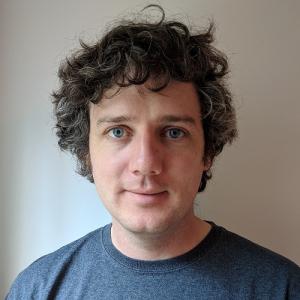 Steven Piantadosi合作论文数Department of Psychology, University of California, Berkeley1
 Sarah Thomason合作论文数Department of Linguistics, College of Literature, Science, and the Arts, University of Michigan-Ann Arbor1
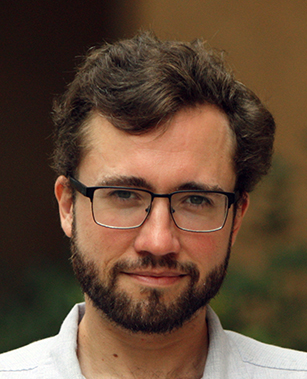 Richard Futrell (付礼诚)合作论文数Department of Language Science, School of Social Sciences, University of California, Irvine1
 Louisa Sadler合作论文数Department of Language and Linguistics;University of Essex;Department of Language and Linguistics, University of Essex1Lucy Middleton合作论文数1
 Charlotte Galves合作论文数Instituto de Matematica e Estat ´ õstica;Instituto de Estudos da Linguagem, University of Sao Paulo;University of Campinas;University of Sao Paulo, University of Campinas1Jenny Ladefoged合作论文数1Barbara Buller合作论文数1Liz Else合作论文数1Keren Everett合作论文数1Ernest Buller合作论文数1Joseph Shimron合作论文数1
 Asifa Majid合作论文数Department of Experimental Psychology, University of Oxford;Max Planck Institute for Psycholinguistics;Donders Institute for Brain, Cognition and Behaviour1
 Iris Berent合作论文数Florida Atlantic University1
 Evelina Fedorenko合作论文数MIT Department of Brain and Cognitive Sciences1




