Global-scale quantum networking faces significant technical and scientific obstacles. Quantum repeaters (QRs) have been proposed to overcome the inherent direct transmission range limit through optical fibre. However, QRs are typically limited to a total distance of a few thousand kilometres and/or require extensive hardware overhead. Recent proposals suggest that strings of space-borne QRs with on-board quantum memories (QMs) are able to provide global coverage. Here, we propose an alternative to such repeater constellations using a single satellite with two QMs that effectively acts as a time-delayed version of a single QR node. Using QKD as a benchmark, we estimate the amount of finite secure key generated and demonstrate an improvement of at least three orders of magnitude over prior single-satellite methods that rely on a single QM, while simultaneously reducing the necessary memory capacity similarly. We propose an experimental platform to realise this scheme based on rare-Earth ion doped crystals with appropriate performance parameters.
Space-based quantum technologies are essential building blocks for global quantum networks. However, the optoelectronic components used can be susceptible to radiation damage. Predicting long-term instrument performance in the presence of radiation remains a challenging part of space missions. We present a model that accounts for differences in radiation shielding and can predict the trends for dark count rates of space-based silicon Geiger-mode avalanche photodiodes (GM-APD). We find that the predicted trends are correlated with in-situ observations from GM-APDs on-board the SpooQy-1 CubeSat mission.
Space quantum communications is a potential means for establishing global secure communications and quantum networking. Despite pioneering demonstrations of satellite quantum key distribution, considerable challenges remain for wide deployment such as the local effects of the atmosphere on the transmission of single-photon level quantum signals. As part of Ireland's efforts to establish quantum links with the rest of Europe and further afield, we present a preliminary study of the feasibility of satellite quantum key distribution taking into account geographic and weather effects on the space-Earth channel. Weather data over 5 years covering 4 locations across Ireland were used to assess performance and the prospects of optical ground station (OGS) geographic diversity to improve service availability. Despite significant cloud cover that may reduce the performance of a single OGS location, the use of a 4-OGS network can provide up to 45% improvement for a single satellite exploiting anti-correlation in cloud cover, though most gains are achieved with 2 or 3 OGSs.
This summary of the second Terrestrial Very-Long-Baseline Atom Interferometry (TVLBAI) Workshop provides a comprehensive overview of our meeting held in London in April 2024 (Second Terrestrial Very-Long-Baseline Atom Interferometry Workshop, Imperial College, April 2024), building on the initial discussions during the inaugural workshop held at CERN in March 2023 (First Terrestrial Very-Long-Baseline Atom Interferometry Workshop, CERN, March 2023). Like the summary of the first workshop (Abend et al. in AVS Quantum Sci. 6:024701, 2024), this document records a critical milestone for the international atom interferometry community. It documents our concerted efforts to evaluate progress, address emerging challenges, and refine strategic directions for future large-scale atom interferometry projects. Our commitment to collaboration is manifested by the integration of diverse expertise and the coordination of international resources, all aimed at advancing the frontiers of atom interferometry physics and technology, as set out in a Memorandum of Understanding signed by over 50 institutions (Memorandum of Understanding for the Terrestrial Very Long Baseline Atom Interferometer Study).
This document presents a summary of the 2023 Terrestrial Very-Long-Baseline Atom Interferometry Workshop hosted by CERN. The workshop brought together experts from around the world to discuss the exciting developments in large-scale atom interferometer (AI) prototypes and their potential for detecting ultralight dark matter and gravitational waves. The primary objective of the workshop was to lay the groundwork for an international TVLBAI proto-collaboration. This collaboration aims to unite researchers from different institutions to strategize and secure funding for terrestrial large-scale AI projects. The ultimate goal is to create a roadmap detailing the design and technology choices for one or more km-scale detectors, which will be operational in the mid-2030s. The key sections of this report present the physics case and technical challenges, together with a comprehensive overview of the discussions at the workshop together with the main conclusions.
Quantum key distribution (QKD) has matured in recent years from laboratory proof-of-principle demonstrations to commercially available systems. One of the major bottlenecks is the limited communication distance in fiber networks due to the exponential signal damping. To bridge intercontinental distances, low Earth orbit satellites transmitting the quantum signals over the atmosphere can be used. These free-space links, however, can only operate during the night, as the sunlight otherwise saturates the detectors used to measure the quantum states. For applying QKD in a global quantum internet with continuous availability and high data rates, operation during daylight is required. In this work, we model a satellite-to-ground quantum channel for different quantum light sources to identify the optimal wavelength for free-space QKD in ambient conditions. Daylight quantum communication is possible within the Fraunhofer lines or in the near-infrared spectrum, where the intrinsic background from the sun is comparably low. The highest annual secret key length considering the finite key effect is achievable at the H\textalpha\ Fraunhofer line. More importantly, we provide the full model that can be adapted in general to any other specific link scenario. We also propose a true single-photon source based on a color center in hexagonal boron nitride coupled to a microresonator that can implement such a scheme. Our results can also be applied in roof-to-roof scenarios and are therefore relevant for near-future quantum networks.
In satellite-based quantum key distribution (QKD), the number of secret bits that can be generated in a single satellite pass over the ground station is severely restricted by the pass duration and the free-space optical channel loss. High channel loss may decrease the signal-to-noise ratio due to background noise, reduce the number of generated raw key bits, and increase the quantum bit error rate (QBER), all of which have detrimental effects on the output secret key length. Under finite-size security analysis, higher QBER increases the minimum raw key length necessary for non-zero secret key length extraction due to less efficient reconciliation and post-processing overheads. We show that recent developments in finite key analysis allow three different small-satellite-based QKD projects CQT-Sat, UK-QUARC-ROKS, and QEYSSat to produce secret keys even under very high loss conditions, improving on estimates based on previous finite key bounds. This suggests that satellites in low Earth orbit can satisfy finite-size security requirements, but remains challenging for satellites further from Earth. We analyse the performance of each mission to provide an informed route toward improving the performance of small-satellite QKD missions. We highlight the short and long-term perspectives on the challenges and potential future developments in small-satellite-based QKD and quantum networks. In particular, we discuss some of the experimental and theoretical bottlenecks, and improvements necessary to achieve QKD and wider quantum networking capabilities in daylight and at different altitudes.
Abstract Long‐distance free space quantum key distribution based on CubeSats can be used to establish global quantum secure communication networks, with potential commercial applications benefitting from the low cost of its design and launch. Detecting single‐photon level optical pulses sent from space requires highly accurate and robust timing systems to pick out signals from the noise. For such high‐loss applications, we envisage a low‐repetition (sub‐MHz) beacon laser emitting short (ns) high‐peak‐power pulses from which interpolated quantum signal arrival windows can be derived. We firstly study theoretically the effects of jitter on the efficiency of gating quantum signals including all important jitter sources, and then experimentally investigated it by changing the clock jitter, and the result shows that the greater jitter will reduce the gating rate of the signal. The experimental interpolation error is tested against loss under laboratory conditions giving results close to our model. We also found that the jitter introduced by the Doppler effect can be ignored with a repetition rate larger than 1 kHz. This model can be directly used for the performance analysis and optimisation of all quantum and non‐quantum systems using similar synchronisation schemes over terrestrial free space or fibre.
Global-scale quantum communication networks will require efficient long-distance distribution of quantum signals. Optical fibre communication channels have range constraints due to exponential losses in the absence of quantum memories and repeaters. Satellites enable intercontinental quantum communication by exploiting more benign inverse square free-space attenuation and long sight lines. However, the design and engineering of satellite quantum key distribution (QKD) systems are difficult and characteristic differences to terrestrial QKD networks and operations pose additional challenges. The typical approach to modelling satellite QKD (SatQKD) has been to estimate performances with a fully optimised protocol parameter space and with few payload and platform resource limitations. Here, we analyse how practical constraints affect the performance of SatQKD for the Bennett-Brassard 1984 (BB84) weak coherent pulse decoy state protocol with finite-key size effects. We consider engineering limitations and trade-offs in mission design including limited in-orbit tunability, quantum random number generation rates and storage, and source intensity uncertainty. We quantify practical SatQKD performance limits to determine the long-term key generation capacity and provide important performance benchmarks to support the design of upcoming missions.
Advancements in practical single-photon sources (SPS) exhibiting high brightness and low $g^{(2)}(0)$ have garnered significant interest for their application in quantum key distribution (QKD). To assess their QKD performance, it is essential to compare them with the widely employed weak coherent pulses (WCPs) in the decoy state method. In this work, we analyze the non-decoy efficient BB84 protocol for an SPS, partially characterising its photon statistics by its $g^{(2)}(0)$ and mean photon number. We compare it to the 2-decoy efficient BB84 with WCPs within the finite-key analysis framework while optimizing the parameters of both protocols. Our findings indicate that the non-decoy SPS with a mean photon number of $\langle n \rangle = 0.5$ and $g^{(2)}(0) = 3.6\%$ can enhance the secure key generation over the 2-decoy WCP for block sizes under $4.66 \cdot 10^9$ sent signals ($29$ seconds of acquisition time) at a channel loss of $10$ dB ($52.5$ km of optical fibre). Additionally, we demonstrate an increase in the maximum tolerable channel loss for SPSs with mean photon number $\langle n \rangle \geq 0.0142$ at block sizes below $10^8$ sent signals ($0.62$ seconds of acquisition time). These results suggest that SPSs hold potential for key rate enhancement in short-range QKD networks, though further research is required to evaluate their key generation capabilities when integrated into the decoy method.
We present a preliminary assessment of satellite quantum key distribution (SatQKD), estimating the QKD potential between a satellite and a ground station in Waterford, Ireland, considering local effects and atmosphere using the Pirandola-Laurenza-Ottaviani-Banchi (PLOB) bound.
Satellite based Quantum Key Distribution (QKD) in Low Earth Orbit (LEO) is currently the only viable technology to span thousands of kilometres. Since the typical overhead pass of a satellite lasts for a few minutes, it is crucial to increase the the signal rate to maximise the secret key length. For the QUARC CubeSat mission due to be launched within two years, we are designing a dual wavelength, weak-coherent-pulse decoy-state Bennett- Brassard '84 (WCP DS BB84) QKD source. The optical payload is designed in a 12×9×5cm3 bespoke aluminium casing. The Discrete Variable QKD Source consists of two symmetric sources operating at 785 nm and 808 nm. The laser diodes are fixed to produce Horizontal,Vertical, Diagonal, and Anti-diagonal (H,V,D,A) polarisation respectively, which are combined and attenuated to a mean photon number of 0.3 and 0.5 photons/pulse. We ensure that the source is secure against most side channel attacks by spatially mode filtering the output beam and characterising their spectral and temporal characterstics. The extinction ratio of the source contributes to the intrinsic Qubit Error Rate(QBER) with 0.817±0.001%. This source operates at 200MHz, which is enough to provide secure key rates of a few kilo bits per second despite 40 dB of estimated loss in the free space channel.1
Quantum Key Distribution (QKD) is a potential mitigation against quantum computation advances that threaten currently deployed public key cryptosystems. QKD is also a precursor to large-scale quantum communications and the quantum internet. Terrestrial direct transmission of quantum photonic signals is restricted by optical fibre exponential absorption, hence space-based systems have been proposed for intercontinental distribution of quantum keys with lower-loss free-space transmission through vacuum. However, challenges remain for the practical deployment of satellite QKD (SatQKD) such as weather, background light, and terminal deployment. In particular, the short transmission time inherent in low Earth orbit satellite QKD and finite statistical uncertainty can limit secure key generation. Here we illustrate the analysis of these effects and some practical engineering design and operational constraints on key length using the Satellite Quantum Modelling and Analysis (SatQuMA) software package being developed for satellite quantum communications research.
Photonic quantum memories are required in many applications in quantum information science with varying performance requirements depending on specific applications. Although classical light storage has been demonstrated in time scales of minutes (Dudin et al., 2013; Heinze et al., 2013) to hours (Ma et al., 2021) in different systems, storing true single photons and single photon level coherent pulses are still limited to around a few seconds at most (Wang et al., 2021; Ortu et al., 2022; Hain et al., 2022; Stas et al., 2022). In this question, we would like to explore what the challenges for quantum memory storage for the purposes of quantum communication and the distribution of entanglement are, e.g. in quantum repeaters. Furthermore, recent work has proposed using quantum memories with hour-long storage times for quantum computation (Gouzien and Sangouard, 2021) and physically transporting single photons for astronomical interferometry (Bland-Hawthorn et al., 2021) and global quantum communications (Wittig et al., 2017; Gündoğan et al., 2023).
The objective of the proposed macroscopic quantum resonators (MAQRO) mission is to harness space for achieving long free-fall times, extreme vacuum, nano-gravity, and cryogenic temperatures to test the foundations of physics in macroscopic quantum experiments at the interface with gravity. Developing the necessary technologies, achieving the required sensitivities and providing the necessary isolation of macroscopic quantum systems from their environment will lay the path for developing novel quantum sensors. Earlier studies showed that the proposal is feasible but that several critical challenges remain, and key technologies need to be developed. Recent scientific and technological developments since the original proposal of MAQRO promise the potential for achieving additional science objectives. The proposed research campaign aims to advance the state of the art and to perform the first macroscopic quantum experiments in space. Experiments on the ground, in micro-gravity, and in space will drive the proposed research campaign during the current decade to enable the implementation of MAQRO within the subsequent decade.
Quantum key distribution with solid-state single-photon emitters is gaining traction due to their rapidly improving performance and compatibility with future quantum networks. Here we emulate a quantum key distribution scheme with quantum-dot-generated single photons frequency-converted to 1550 nm, achieving count rates of 1.6 MHz with g^(2)(0)=3.6% and asymptotic positive key rates over 175 km of telecom fibre. We show that the commonly used finite-key analysis for non-decoy state QKD drastically overestimates secure key acquisition times due to overly loose bounds on statistical fluctuations. Using the tighter multiplicative Chernoff bound to constrain the estimated finite key parameters, we reduce the required number of received signals by a factor 10 8 . The resulting finite key rate approaches the asymptotic limit at all achievable distances in acquisition times of one hour, and at 100 km we generate finite keys at 13 kbps for one minute of acquisition. This result is an important step towards long-distance single-emitter quantum networking.
We summarise the discussions at a virtual Community Workshop on Cold Atoms in Space concerning the status of cold atom technologies, the prospective scientific and societal opportunities offered by their deployment in space, and the developments needed before cold atoms could be operated in space. The cold atom technologies discussed include atomic clocks, quantum gravimeters and accelerometers, and atom interferometers. Prospective applications include metrology, geodesy and measurement of terrestrial mass change due to, e.g., climate change, and fundamental science experiments such as tests of the equivalence principle, searches for dark matter, measurements of gravitational waves and tests of quantum mechanics. We review the current status of cold atom technologies and outline the requirements for their space qualification, including the development paths and the corresponding technical milestones, and identifying possible pathfinder missions to pave the way for missions to exploit the full potential of cold atoms in space. Finally, we present a first draft of a possible road-map for achieving these goals, that we propose for discussion by the interested cold atom, Earth Observation, fundamental physics and other prospective scientific user communities, together with the European Space Agency (ESA) and national space and research funding agencies.
Satellite QKD enables quantum-secure communications at global scale. However, practical systems require high-rate, low size, weight and power photon sources and ground stations. We present systems enabling CubeSat QKD missions and demonstrate their interoperation.
Terrestrial free-space (FS) quantum key distribution (QKD) is ideally suited for deployment in dense urban environments. The transition from laboratory to commercial deployment, however, raises a number of important engineering and deployment issues. Here, we investigate these issues for efficient BB84 using a weak coherent pulse-decoy state protocol. We calculate expected key lengths for different environmental conditions and when the scope for optimisation of protocol parameters is restricted due to practical considerations. In particular, we find that for a fixed receiver basis choice probability, it can be advantageous to allow the transmitter to have a different basis choice probability depending on varying channel loss and background light levels. Finally, we examine the effects of pulse intensity uncertainty finding that they can dramatically reduce the key length. These results can be used to determine the loss budget for the FS optics of a QKD systems and assist in their design.
Quantum key distribution (QKD) is a theoretically proven future-proof secure encryption method that inherits its security from fundamental physical principles. Craft Prospect, working with a number of UK organisations, has been focused on miniaturising the technologies that enable QKD so that they may be used in smaller platforms including nanosatellites. The significant reduction of size, and therefore the cost of launching quantum communication technologies either on a dedicated platform or hosted as part of a larger optical communications will improve potential access to quantum encryption on a relatively quick timescale. The ROKS mission seeks to be among the first to send a QKD payload on a CubeSat into low Earth orbit, demonstrating the capabilities of newly developed modular quantum technologies. The ROKS payload comprises a quantum source module that supplies photons randomly in any of four linear polarisation states fed from a quantum random number generator; an acquisition, pointing, and tracking system to fine-tune alignment of the quantum source beam with an optical ground station; an imager that will detect cloud cover autonomously; and an onboard computer that controls and monitors the other modules, which manages the payload and assures the overall performance and security of the system. Each of these modules have been developed with low SWaP for CubeSats, but with interoperability in mind for other satellite form factors. We present each of the listed components, together with the initial test results from our test bench and the performance of our protoflight models prior to initial integration with the 6U CubeSat platform systems. The completed ROKS payload will be ready for flight at the end of 2022, with various modular components already being baselined for flight and integrated into third party communication missions.
 Alexander Ling Euk Jin合作论文数Department of Physics, Faculty of Science, National University of Singapore14
 Jasminder Sidhu合作论文数SUPA Dept Phys, Univ Strathclyde13
 Markus Krutzik合作论文数Joint Lab Integrated Quantum Sensors, Humboldt-Universität zu Berlin;Rydberg Photonics;Ferdinand-Braun-Institut, Leibniz-Institut für Höchstfrequenztechnik11
 John Jeffers合作论文数Department of Physics;University of Strathclyde;Department of Physics, University of Strathclyde10
 Artur Ekert (阿图尔·埃克特)合作论文数Mathematical Institute, University of Oxford9
 Thomas Brougham合作论文数9
 Luca Mazzarella合作论文数Jet Prop Lab, Quantum Sci & Technol Grp8
 John Rarity合作论文数School of Electrical, Electronic and Mechanical Engineering, Faculty of Engineering, University of Bristol8Roberto G. Pousa合作论文数7David Lowndes合作论文数Univ Bristol, HH Wills Phys Lab, Quantum Engn Technol Labs, Bristol BS8 1FD, Avon, England7
 Mustafa Gündoğan合作论文数7
 Joshi Siddarth K合作论文数6S. G. Schirmer合作论文数Quantum Processes Group;Open University;Quantum Processes Group, Open University6
 Angelo Bassi合作论文数Department of Physics, University of Trieste6
 Victoria Henderson合作论文数Inst Phys, Humboldt Univ5
 Tanvirul Islam合作论文数Ctr Quantum Technol, Natl Univ Singapore5Tang Zhongkan合作论文数Centre for Quantum Technologies, National University of Singapore5
 Mauro Paternostro合作论文数Department of Physics and Chemistry, University of Palermo5
 Rakhitha Chandrasekara合作论文数5Duncan Mcarthur合作论文数Department of Psychology, Georgia State University5
 Leong Chuan Kwek (郭龙泉)合作论文数Quantum Science and Engineering Centre, Nanyang Technological University;Center for Quantum Technologies, National University of Singapore5
 Albert Roura合作论文数Institute of Quantum Technologies, German Aerospace Center5
 Gavin Morley合作论文数Department of Physics, Faculty of Science, Engineering and Medicine, The University of Warwick5Lisa Wörner合作论文数4Steve Greenland合作论文数4Paul F. Griffin合作论文数4Milan Stefko合作论文数4
 Peide Zhang合作论文数4Tom Vergoossen合作论文数National University of Singapore4Xueliang Bai合作论文数4
 Kadir Durak合作论文数Ozyegin University4
 Christian Vogt合作论文数Univ Bremen4
 Aitor Villar合作论文数Ctr Quantum Technol, Natl Univ Singapore4Johan Åberg合作论文数4
 Thomas Jennewein合作论文数Department of Physics, Simon Fraser University;QEYNet;Universal Quantum Devices Inc.4
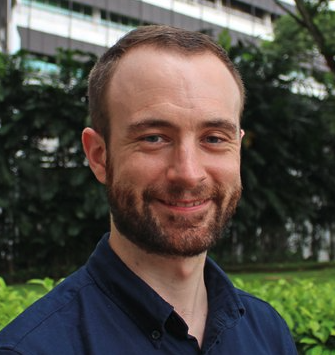 Robert Bedington合作论文数SpeQtral4
 Lloyd Hollenberg合作论文数Division of Science, University of Melbourne;Australian Institute of Physics, University of Melbourne4Marie Ericsson合作论文数Department of Quantum Chemistry;Uppsala University;Department of Quantum Chemistry, Uppsala University4
 Anna Erika Elisabeth Andersson合作论文数Institute of Photonics and Quantum Sciences, School of Engineering & Physical Sciences, Heriot-Watt University Edinburgh Campus4
 Sven Herrmann合作论文数Center of Applied Space Technology and Microgravity, University Bremen4
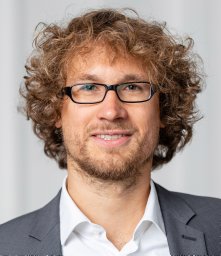 Janik Wolters合作论文数4
 Rainer Kaltenbaek合作论文数Institute for Quantum Computing;Department of Physics & Astronomy;University of Waterloo;Institute for Quantum Computing, University of Waterloo4
 Jacob Dunningham合作论文数School of Physics and Astronomy;University of Leeds;School of Physics and Astronomy, University of Leeds4
 Simon Devitt合作论文数School of Computer Science, University of Technology, Sydney;Centre for Quantum Software and Information, University of Technology, Sydney;Eigensystems4
 Wolfgang P. Schleich合作论文数Institut für Quantenphysik, Universität Ulm4
 Makan Mohageg合作论文数4Mattia Fanì合作论文数3Farida Fassi合作论文数3Petruta Stefanescu合作论文数3




