施工仿真参数是影响高心墙堆石坝仿真结果准确性的关键.现有方法基于历史数据来预测未来填筑层的仿真参数,忽略了不同层之间的施工差异;同时,在新一层开始时往往存在数据不足或缺失的问题;此外,施工参数受到气象条件、机械运行状态等多因素影响而动态变化.本文利用迁移学习解决了上述问题,该方法具有通过知识迁移解决少样本建模问题的优势,同时考虑气象条件、机械运行状态等多种因素的定量影响,提出迁移学习框架下的高心墙堆石坝施工仿真参数改进蝗虫算法优化的多层感知机动态预测模型.首先,建立综合考虑多因素影响的施工仿真参数IGOA-MLP预测模型;其中,采用非线性缩减因子和柯西-高斯混合变异模式改进蝗虫优化算法(IGOA),并利用IGOA高效全局最优搜索能力来优化多层感知机(MLP)的超参数.其次,引入迁移学习策略,将训练集划分为源域和目标域,并在MLP隐藏层中增加自适应层以表征源域数据与目标域数据的差异性,实现历史工况和新工况间的知识迁移,从而解决新工况下缺少数据的问题.工程实例表明,相比于传统MLP模型以及未使用迁移学习的IGOA-MLP模型,本文所提方法的平均绝对百分比误差(MAPE)分别降低了 54.68%、40.57%,证明了本文所提模型能够更准确地预测仿真参数,为仿真计算提供可靠的数据基础.
Cement intake is a key factor that must be precisely controlled during the curtain grouting construction process. However, in traditional grouting construction, the amount of cement intake depends on the personnel experience, and thus, it is desirable to formulate a scientific control criterion and control method. To this end, in this study, a method to predict and control the cement intake was developed. Based on the fractal theory, the relationship between the cement intake and transmissivity was established considering the fracture roughness, and a control criterion for the cement intake was established. Furthermore, a model to predict the cement intake, based on the mixed kernel function support vector machine optimized using the Levy flight trajectory-based whale optimization algorithm was developed. Based on these aspects, the method to predict and control the cement intake was established, and a case study was performed to demonstrate the effectiveness and advantages of the proposed method. The proposed approach can overcome the limitations of the conventional practice, in which the quality control is often manual and subjective. Moreover, the approach can help realize grouting quality control in complex construction situations, providing a strong technical guarantee for lean construction and long-term safe operation of dam foundations.
施工仿真参数的更新对于施工仿真结果的准确性具有重要影响.然而目前的引水隧洞施工进度仿真参数更新多采用贝叶斯更新方法,存在需要假定参数分布形式,且无法得到预测参数的序列来描述参数动态变化过程的不足.针对上述问题,文章提出了基于自适应混沌差分进化支持向量机(adaptive chaos differential evolution-support vector machine,ACDE-SVM)的引水隧洞施工仿真参数动态更新方法.首先,采用自适应缩放因子和混沌理论对差分进化算法进行改进,提出自适应混沌差分进化算法(ACDE),ACDE算法既使搜索时间大大缩减,又弥补了差分进化算法后期局部搜索弱而使群体陷入早熟的缺陷;其次,基于现场施工参数时间序列,采用ACDE算法对支持向量机(SVM)进行参数寻优,进而构建基于ACDE-SVM的施工仿真参数预测模型,克服了传统SVM参数选择效率低、泛化能力弱的不足;最后,采用误差指标对模型性能进行评价,并与常规仿真方法及贝叶斯更新方法的仿真结果进行对比,验证基于ACDE-SVM的仿真参数动态更新方法的一致性和优越性.工程实例表明,该方法能够较好地拟合仿真参数随时间变化趋势,并能够提高引水隧洞钻爆法施工进度动态仿真的准确性.
针对现有碾压混凝土坝地震动力响应分析未考虑施工质量影响的问题,提出一种考虑施工质量影响的碾压混凝土坝分析方法.基于碾压混凝土坝施工质量实时监控系统数据,分析施工质量对物理力学参数的影响;建立考虑施工质量影响的有限元分析模型,并结合实际工程,进行地震动力响应计算.结果表明,该方法可以分析施工质量对地震动力响应的影响,为抗震设计提供科学依据.
针对常用的压实质量评价存在未能够实现压实质量的实时评价,且模型的精度与鲁棒性有待提高等问题,建立一种新的压实质量实时评价模型.该模型由提出的基于核方法(kernel method,KM)与自适应混沌细菌觅食算法(adaptive chaotic bacteria foraging algorithm,AC-BFA)的模糊逻辑构建,同时将被碾材料的物理参数、料源特性参数、施工过程碾压参数作为模型的输入参数,其中被碾压材料的物理参数由振动信号分解后得到的基波与一次谐波的振幅表征.工程应用表明,该模型与常用压实质量评价模型相比,不仅在精度上具有一致性与优越性,而且在加噪数据与异常数据测试中显示出更强的鲁棒性,在进一步嵌入到碾压质量实时监控系统后能够实现压实质量的实时评价.
Construction simulation has been widely applied in schedule analysis. However, traditional simulation is based on static models built in the planning or design phase, which focuses on overall project-level schedule analysis. To provide activity-level simulation for on-site schedule management, a construction phase oriented dynamic simulation method is proposed, which takes roller compacted concrete (RCC) dam placement process as an example. Considering various inner-layer and inter-layer activities and different construction organization modes, a detailed placement process simulation model is built. Based on construction data collected by real-time monitoring, a construction activity modeling method is given. Additionally, Dirichlet process mixture (DPM) models are applied for simulation parameter updates, which endows density estimation with considerable flexibility and robustness. A fast inference algorithm is also proposed to realize the fast posterior computation of DPM models. The proposed method is tested by an RCC dam project in southwest China. The results show that the proposed method can reflect the dynamic features of the actual placement process in the construction phase and provide accurate schedule predictions for on-site construction management.
The existing construction schedule simulation,which considered machine failure,utilized the whole troubleshooting time to reflect the impact of the machine failure. These studies ignore the situation of failure to com-plete maintenance work before the end of the original unit operation,and the remaining fault handling activities do not affect schedule;this consequently affects the accuracy of machine breakdown analysis. In this study,fine simu-lation and tracking of the whole process of machine withdrawal from work due to failure and reinstallment after repair are performed,and an approach for simulating the construction schedule of diversion tunnel based on fine analysis of machine breakdowns is proposed. First,the working trajectory of each machine was tracked during simulation,and the failure moment could be determined. The machine failure type could be determined by analyzing the relationship between troubleshooting duration and the remaining original operation. In addition,formulas for calculating the op-eration delay caused by two types of machine breakdown were derived to realize the fine analysis of failure conse-quences. Finally,construction schedule considering machine breakdowns was obtained with the construction simula-tion method,and the sensitivity index of diverse machine failures on construction schedule was obtained through sensitivity analysis. Compared with current construction schedule simulation methods,the proposed approach can realize fine analysis of machine failure and obtain a simulation schedule that is more in line with actual schedule.
大坝智能建设对全面提高我国大坝建设智能化管理水平和保障大坝建设质量至关重要.在新一代信息技术(如云计算、大数据、物联网、移动互联网等)、人工智能、区块链、互联网+等技术与大坝建设深度融合并飞速发展的新时代背景下,大坝建设面临着如何提高智能化、信息化、数字化和精准化水平等一系列问题,而大坝智能建设则是应对这些挑战的有效战略措施.本文首先厘清大坝智能建设的原动力、基本理念与技术内涵;其次着重梳理了大坝智能建设中关键的理论、方法与技术的研究进展;最后探讨了大坝智能建设未来的发展方向及趋势.
地下洞室群施工仿真是分析地下洞室群施工过程的重要手段.针对传统仿真模型难以实现对出渣运输时间的高精度仿真计算,而且在量化运输机械故障对施工进度的影响时存在主观性强、误差大等不足,本研究提出了基于M5P-SVR故障预测的地下洞室群施工仿真模型,模型的建立包括以下两个方面:(1)对传统CYCLONE模型中的出渣模块进行了改进,建立了交通运输仿真回路来计算出渣运输时间,提高了这一关键工艺的仿真精度;(2)科学地考虑地质等外在因素的影响,结合M5P模型树训练规则的简单有效的优点以及支持向量机回归(SVR)可以有效解决小样本、非线性预测问题的优势,提出了基于M5P-SVR的运输机械故障预测方法,交叉验证结果表明该方法有效地提高了预测精度.最后采用该模型对某实际工程进行仿真模拟并与传统方法计算结果进行对比分析,分析结果验证了M5P-SVR机械故障预测方法的有效性及该仿真模型的准确性和优越性.
Rockfill dams are among the most complex, significant, and costly infrastructure projects of great national importance. A key issue in their design is the construction stage and zone optimization. However, a detailed flow shop construction scheme that considers the opinions of decision makers cannot be obtained using the current rock-fill dam construction stage and zone optimization methods, and the robustness and efficiency of existing construction stage and zone optimization approaches are not sufficient. This research presents a construction stage and zone optimization model based on a data-driven analytical hierarchy process extended by D numbers (D-AHP) and an enhanced whale optimization algorithm (EWOA). The flow shop construction scheme is optimized by presenting an automatic flow shop construction scheme multi-criteria decision making (MCDM) method, which integrates the data-driven D-AHP with an improved construction simulation of a high rockfill dam (CSHRD). The EWOA, which uses Levy flight to improve the robustness and efficiency of the whale optimization algorithm (WOA), is adopted for optimization. This proposed model is implemented to optimize the construction stages and zones while obtaining a preferable flow shop construction scheme. The effectiveness and advantages of the model are proven by an example of a large-scale rockfill dam.
Updating the compaction quality assessment model of earth-rock dams is important to ensure long-term and high-precision evaluation of the compaction quality. However,there is a lack of research on the update of the com-paction quality model.In this study,based on the idea of concept drift detection in stream data,as well as the charac-teristics of construction stream data such as slow velocity,existing noise data,and unbalanced data,a method of detecting concept drift and updating the compaction quality assessment model is proposed. First,a down sampling technology based on K-means is designed to address the unbalanced data. Second,a concept drift detection method based on enhanced probabilistic neural network(EPNN)and variable window technique(VWT)is proposed. The com-paction quality assessment model is updated if a concept drift is detected. The engineering application shows that the down sampling method based on K-means ensures high consistency of classifier. The method based on EPNN and VWT can effectively detect the concept drift of compaction stream data.
我国高拱坝工程多位于西南高山峡谷地区,自然环境条件复杂,正面临着如何实现复杂建设条件下进度与质量的精细化管控问题.随着物联网、人工智能、大数据、智能视觉以及云计算等新一代信息技术快速发展,为高拱坝建设进度与质量智能控制提供了技术支撑.首先阐述了高拱坝建设进度与质量智能控制研究的背景、基本概念和研究内容;其次梳理了高拱坝建设进度与质量智能控制的关键技术;最后以某实际高拱坝工程为例,分析了高拱坝建设进度与质量智能控制关键技术的具体应用及取得的成果,为高拱坝工程智能化建设提供了理论基础和技术支撑.
As an important method for improving dam foundations, curtain grouting is designed to create a hydraulic barrier to decrease permeability, enhance strength, and reduce deformability of rock masses. To evaluate the improvement of rock masses, the Lugeon value (LU), rock quality designation (RQD), and fracture filled rate (FFR) after grouting are key evaluation indicators of grouting efficiency. A prediction method based on an adaptive neuro-fuzzy inference system is proposed to predict and evaluate curtain grouting efficiency in this study. Geological factors (fracture intensity, LU, and RQD before grouting), effective grouting operation factors (effective grouting pressure, effective grouting time, effective grout volume, and effective cement take), and tested interval depth are considered to be the critical factors that greatly influence the efficiency of curtain grouting and are selected as input parameters for prediction models. The grouting efficiency evaluation indicators (the LU value, RQD, and FFR after grouting) are selected as output parameters for evaluation of the efficiency. In addition, a formula for estimating the influence radius of grouting boreholes, which is used to determine the sphere of grouting influence, is proposed. To better reflect the influence of the position of grouting boreholes on the effects of grouting, this study suggests that the effective grouting operation factors can be calculated using an improved inverse distance weighting method. As a case study, this approach is used to predict the results of grouting and to evaluate the efficiency of curtain grouting in hydropower project A, located in the southwestern part of China. The approach shows considerable accuracy in predicting the results of grouting and evaluating grouting efficiency.
In rockfall hazard management, the investigation and detection of potential rockfall source areas on rock cliffs by remote-sensing-based susceptibility analysis are of primary importance. However, when the rockfall analysis results are used as feedback to the fieldwork, the irregular slope surface morphology makes it difficult to objectively locate the risk zones of hazard maps on the real slopes, and the problem of straightforward on-site visualization of rockfall susceptibility remains a research gap. This paper presents some of the pioneering studies on the augmented reality (AR) mapping of geospatial information from cyberspace within 2D screens to the physical world for on-site visualization, which directly recognizes the rock mass and superimposes corresponding rock discontinuities and rockfall susceptibility onto the real slopes. A novel method of edge-based tracking of the rock mass target for mobile AR is proposed, where the model edges extracted from unmanned aerial vehicle (UAV) structure-from-motion (SfM) 3D reconstructions are aligned with the corresponding actual rock mass to estimate the camera pose accurately. Specifically, the visually prominent edges of dominant structural planes were first explored and discovered to be a robust visual feature of rock mass for AR tracking. The novel approaches of visual-geometric synthetic image (VGSI) and prominent structural plane (Pro-SP) were developed to extract structural planes with identified prominent edges as 3D template models which could provide a pose estimation reference. An experiment verified that the proposed Pro-SP template model could effectively improve the edge tracking performance and quality, and this approach was relatively robust to the changes of sunlight conditions. A case study was carried out on a typical roadcut cliff in the Mentougou District of Beijing, China. The results validate the scalability of the proposed mobile AR strategy, which is applicable and suitable for cliff-scale fieldwork. The results also demonstrate the feasibility, efficiency, and significance of the geoinformation AR mapping methodology for on-site zoning and locating of potential rockfalls, and providing relevant guidance for subsequent detailed site investigation.
目前心墙堆石坝施工过程可视化仿真研究多是基于施工仿真结果构建的纯虚拟三维可视化,其地形模型多根据前期勘测数据建立,其渲染消耗资源多且不易被修改,且与实际施工场景有很大差别.针对此问题,将增强现实技术(AR)引入水利水电工程施工仿真中,提出了基于增强现实的心墙堆石坝施工过程可视化仿真方法,该方法主要解决两个方面的问题:如何利用虚拟相机的三维注册技术解决虚拟场景与真实场景不处于同一空间的问题,以使可视化仿真具有动态时效性;如何通过视频监控获取的三维场景信息与虚拟物体叠加,以解决传统可视化仿真中地形模型占用过多资源的问题,并提高可视化仿真效率.结合西南某大型水利水电工程,利用AR技术对该工程的施工进度仿真进行可视化展示.首先在无需建立地形模型的情况下实现了施工仿真和施工现场的紧密结合;其次,基于web service的数据查询和传输实现仿真成果的交互式动态三维场景查询,同时通过基于硬件的增强现实方法以更少的资源消耗实现了更真实直观的可视化仿真,为水利水电工程施工可视化仿真提供了新思路.
During the storehouse surface rolling construction of a core rockfill dam, the spreading thickness of dam face is an important factor that affects the construction quality of the dam storehouse’ rolling surface and the overall quality of the entire dam. Currently, the method used to monitor and control spreading thickness during the dam construction process is artificial sampling check after spreading, which makes it difficult to monitor the entire dam storehouse surface. In this paper, we present an in-depth study based on real-time monitoring and control theory of storehouse surface rolling construction and obtain the rolling compaction thickness by analyzing the construction track of the rolling machine. Comparatively, the traditional method can only analyze the rolling thickness of the dam storehouse surface after it has been compacted and cannot determine the thickness of the dam storehouse surface in real time. To solve these problems, our system monitors the construction progress of the leveling machine and employs a real-time spreading thickness monitoring model based on the K-nearest neighbor algorithm. Taking the LHK core rockfill dam in Southwest China as an example, we performed real-time monitoring for the spreading thickness and conducted real-time interactive queries regarding the spreading thickness. This approach provides a new method for controlling the spreading thickness of the core rockfill dam storehouse surface.
In traditional construction simulation of rockfill dam,the storehouse construction was simplified as a single and predetermined process.Mechanical allocation was adjusted to reach the desired schedule.But the construction process was influenced by various factors,such as rolling state,spreading elevation and rolling elevation,which is difficult to be simulated by the construction parameters of the design phase.In view of such condition,a simulation method of rockfill dam is proposed in this article based on the parameters of the digital monitoring method.First,the rolling parameters and storehouse thickness based on the digital monitoring model were analyzed,the regularities of distributions were achieved,which served as parameters of the simulation model.Secondly,the relationship between the rolling passes and the rolling thickness was established,based on which the rolling thickness of the storehouse was gained after the simulation.Finally,taking a core rockfill dam under construction in southwest China as a case study,the simulation method ofrockfill dam based on the influence of storehouse thickness was built.The result shown that compared with the real process,the progress deviation calculated by the simulation proposed by this article was 3.59%,which is less than the result of the traditional construction simulation model (7.90%).The two methods being compared,the simulation model proposed by this article can reflect the real process more accurately.What's more,regardless of the influence of storehouse thickness,the progress deviation was 4.90% more than considering the influence of storehouse thickness,which illustrated the importance of storehouse thickness on construction progress.By using the optimization model proposed in this article,technical support for construction progress analysis and construction management can be gained.
 Mingchao Li (李明超)合作论文数School of Civil Engineering, Tianjin University48
 Bingyu Ren (任炳昱)合作论文数School of Civil Engineering, Tianjin University39
 Bo Cui (崔博)合作论文数School of Civil Engineering, Tianjin University29
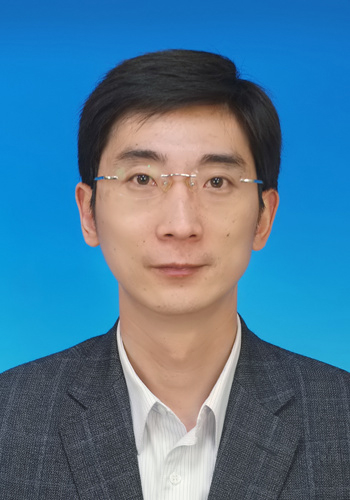 Donghai Liu (刘东海)合作论文数School of Civil Engineering, Tianjin University29Dawei Tong (佟大威)合作论文数School of Civil Engineering, Tianjin University25
 Tao Guan (关涛)合作论文数School of Civil Engineering, Tianjin University19Yang Song (宋洋)合作论文数17ChengShun Hu合作论文数16
 Jingru Li (李景茹)合作论文数College of Civil Engineering, Shenzhen University15Binping Wu合作论文数Tianjin University14Jiaxiang Zheng (郑家祥)合作论文数Power Construction Corporation of China14Jia Yu (余佳)合作论文数School of Civil Engineering, Tianjin University12JiLiang Lian (练继亮)合作论文数10Gang Wang合作论文数10Haotian Chang合作论文数9MengQi Zhao (赵梦琦)合作论文数8HuiRong Zhu (朱慧蓉)合作论文数8Kaizhi Xiong (熊开智)合作论文数8Kangxin Wu合作论文数8Kui-jian LIU (刘奎建)合作论文数7Xiao-chao LI (李晓超)合作论文数7RongXiang Du (杜荣祥)合作论文数7YuLing Yan (鄢玉玲)合作论文数7WeiBo Zhang (张伟波)合作论文数7
 Pan Yue合作论文数7
 Guichao Fan合作论文数6Fugen YAN (闫福根)合作论文数6ZhaiHan Mao (毛寨汉)合作论文数6ChuanShu Mei (梅传书)合作论文数6Lei Bi合作论文数6
 Jing Zhang (张静)合作论文数School of Mechanical Engineering, Tianjin University6
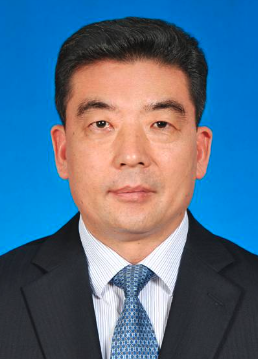 Guangjing Cao (曹广晶)合作论文数Hubei Provincial People's Government6Wenshuai Song合作论文数5Yichi Zhang合作论文数5Wei Hu (胡炜)合作论文数5Zhengjian Miao合作论文数5Xiang Guo (郭享)合作论文数5Mengnan Shi合作论文数4Qianwei Wang (王乾伟)合作论文数4XiaoJun Liu (刘肖军)合作论文数4Fei Wang (王飞)合作论文数4Lianxing Hu合作论文数4Jinqiang Fu (付金强)合作论文数4Wei Huang合作论文数3Yuxi Liu合作论文数3Wenqian LI (李文倩)合作论文数3Dong WANG (王栋)合作论文数3XIAO Yao (肖尧)合作论文数3




