This article examines how on-Country healing practices operate as cultural determinants of health for Indigenous men in Australia. Country, understood as ancestral lands that embody lore, kinship, spirituality, and identity, remains central to wellbeing, yet few self-determined studies have explored the therapeutic benefits of such programmes. Health disparities between Indigenous and non-Indigenous peoples are stark, with Aboriginal men experiencing some of the most adverse outcomes at the intersection of ethnicity and gender. Drawing on 11 semi-structured interviews, this study identifies four key benefits of on-Country participation: safe expression of Indigenous masculinity, strengthening of cultural identity, holistic improvements to health and wellbeing, and the development of social connections. Framed by settler colonialism and cultural determinants of health, findings suggest how land-based programmes challenge colonial disruptions to culture and identity while fostering holistic wellbeing. The study highlights the importance of incorporating cultural determinants and promoting Indigenous self-determination within health policy and practice.
LGBTQ+ workers employed in religiously affiliated education, social welfare, and health care workplaces experience significant discrimination in Australia. This is important as approximately one third of education and one quarter of health care and social welfare is government funded and religiously affiliated. We conducted a survey of 347 LGBTQ+ workers employed in religiously affiliated education, health care, and social welfare in Australia. Most of the data was collected in 2021. Results indicate a range of experiences, from very affirming workplaces through to workplaces with high levels of discrimination. Education workplaces tend to be more religious than social welfare and health care organisations, and the experiences of discrimination in educational workplaces are more likely to relate to employment insecurity grounded in the inability to be out. In addition, the results indicate that LGBTQ+ people in our data working in religiously affiliated workplaces are more religious than the general LGBTQ+ population. The presence, or absence, of an organisational inclusion policy was closely related to levels of workplace discrimination, such as snide remarks, mental health problems, and feeling unsafe in the workplace. The presence or absence of an inclusion policy in religiously affiliated education, social welfare, and health care is strongly associated with workplace LGBTQ+ worker experiences of harassment and discrimination. LGBTQ+ workers in religiously affiliated educational workplaces are more likely to experience employment insecurity and are less likely to be out in the workplace. Australian government policy currently permits various forms of LGBTQ+ discrimination in religiously affiliated education, social welfare, and health care. This has significant negative consequences for LGBTQ+ workers.
This article argues that the focus on the harm and stigma experienced by LGBTQ+ Christians misrepresents the complexity of the experience of many LGBTQ+ Christians, many of whom report affirmation and self-acceptance. A national representative survey indicates 5.5% of all Australians, 2.9% of Christians, and 8.4% of those with no religion identify their sexuality as lesbian, gay, bisexual, or ‘other’. LGB+ Christians appear to be distributed through all large Christian denominations. A second non-random national online survey indicates that many LGBTQ+ Christians report both self-acceptance and acceptance in their Christian community. While many LGBTQ+ Christians experience significant discrimination in Christian contexts, the often reported incompatibility of Christianity with LGBTQ+ sexual and gender identities is only one part of the story. There are significant sectors of Australian Christianity that are welcoming of LGBTQ+ people. Furthermore, LGBTQ+ people who remain Christians are often deeply committed to their faith.
This paper examines the religiosity, sexuality, and attitudes towards same-sex relationships among young people who were students at religiously affiliated schools in Australia and the staff who work in these schools, drawing on a national representative survey. It demonstrates that students are increasingly nonreligious, and accepting of alternatively sexualities, and increasingly identify as lesbian, gay, and bisexual. The religiosity of staff has changed less, but teachers have become increasingly accepting of alternative sexualities. These changes are important because they present a very different picture of religiously affiliated education to that portrayed by the conservative religious authorities who shape the policies and practices in these schools. Conservative Christian church leaders are using discursive practices of religious freedom to support governmental techniques and institutional privilege within religiously affiliated educational contexts to constitute conservative sexual subjectivities among the general Australian public who work in and attend these schools.
There is a common misconception that to be LGBTQ+ and religious is incompatible. This article deconstructs this binarised understanding, arguing that it delegitimises both sexual and gender identity and also the religious identity of some LGBTQ+ people, hindering their religious freedom. The article is based on findings from a large multifaceted study conducted in Australia. Three sources of data are analysed: a non-representative Australian national survey of religious people that included 463 LGBTQ+ people; a non-representative survey of LGBTQ+ people working in religiously affiliated workplaces in Australia (n = 430); and 42 interviews with LGBTQ+ people working in religiously affiliated workplaces. The surveys show that there is a large minority of religious people who identify as LGBTQ+ and that many LGBTQ+ people working in religiously affiliated workplaces are deeply religious and deliberately choose to work in these workplaces.
Australian religious conservatives continue to argue that religiously affiliated schools should be able to discriminate based on the sexuality and/or gender identity of students. We argue that this discussion fails to adequately consider the serious harms that discrimination against LGBTQ+ educators has on LGBTQ+ and questioning students. The article uses data from an Australian qualitative study examining the experience of LGBTQ+ educators in religiously affiliated organisations. We describe how heteronormative/cisnormative discourses and discriminatory practices toward LGBTQ+ educators have a direct negative impact on LGBTQ+ students. Even in relatively inclusive schools, the heteronormative and cisnormative climate of the schools is damaging, not only for educators but also for LGBTQ+ students. These serious harms need to be given greater consideration in evaluating the arguments for discriminatory practices in religiously affiliated schools funded by the government to provide education to the general Australian population.
This article examines the role of legal frameworks and everyday interaction in the negotiation of religious diversity in Victoria, Australia. We argue that both formal legal frameworks and everyday interactions are significant in encouraging the respectful negotiation of religious difference. Experiences of historical privilege and visibility impact how religious people and groups experience and understand these processes. Or, put another way, the social position of various faith groups in Australian society shapes how people engage with both legal frameworks such as anti-discrimination legislation, and with other people in everyday interaction. Further, people's everyday interactions shape their responses towards legal frameworks. Anti-discrimination and anti-vilification laws also shape everyday interactions through an effect that can be described as the 'shadow of the law', in which legal decisions communicate information about normative expectations that particular forms of behaviour are acceptable or unacceptable.
Anti-discrimination laws around the world have explicitly protected LGBTQ+ people from discrimination with various levels of exceptions for religion. Some conservative religious organisations in Australia are advocating to be allowed to discriminate against LGBTQ+ people in certain organisations they manage. The political debate in Australia has focused on religiously affiliated organisations that provide services in education, social welfare, health care, and aged care. We argue that religious exceptions allowing discrimination should be narrow because they cause considerable harm, reinforce, disadvantage and because LGBTQ+ people are deserving of respect and rights. We draw on a national representative survey to demonstrate that the views of some conservative religious lobby groups do not represent the views of the majority of religious people in Australia or the views of the majority of Christian people.
Religiously affiliated schools employ a substantial portion of the Australian educational workforce. These religiously affiliated schools are exempt from Australian state-based anti-discrimination legislation in varying degrees. This can have a devastating effect on LGBT+ employees. While NSW has broad exemptions to anti-discrimination legislation, in contrast Tasmanian anti-discrimination legislation provides very limited exemptions. This paper examines and compares the experiences of ten LGBT+ teachers employed in religiously affiliated schools in Tasmania and New South Wales. The aim of this paper is to document the differing experiences of these LGBT+ teachers, examining whether the distinctive state-based legislation has an impact on their lives. The small number of cases examined here suggests that the state difference in anti-discrimination legislation has a significant impact on LGBT+ peoples' job security and career development.
Academics engage in a form of reflexive sequestration of religious experience in which they silence their own religious experiences, and the experiences of those they write about. The social sources of this silencing are not hard to identify. As Edith Turner herself notes, at the time that Victor Turner was working on his PhD in the 1950s almost everyone in anthropology was a left-leaning atheist (Engelke 2000: 847, the interview is reproduced in this volume). The successful completion of Turner's PhD required that he sequester his interests in, and accounts of, religious experience. In other words, an endemic methodological atheism has been central to anthropological theory and writing as a consequence of the constraining power of atheistic beliefs of key anthropologists, rather than a product of the irrelevance of religious experience to the cultures that anthropolOgists have studied.
 Helen A. Berger合作论文数18
 Bronwyn Fielder合作论文数11
 Alison Venn合作论文数Menzies Institute for Medical Research, University of Tasmania10
 Rebecca Banham合作论文数Univ Tasmania8Stephen Wilkinson合作论文数7
 Richard de Visser合作论文数School of Psychology, University of Sussex/School of Brighton & Sussex Medical, University of Sussex7
 Melanie J. Sharman合作论文数Menzies Inst Med Res, Univ Tasmania6
 Martin Hensher合作论文数is head of the Quality Information and Analysis Team and Senior Economic Adviser in the Department of Health, UK. Conflicts of interest: none declared6
 Angela Dwyer合作论文数School of Social Sciences, University of Tasmania6
 Andrew John Palmer合作论文数Health Economics Department, University of Tasmania5
 Kim A Jose合作论文数Menzies Research Institute Tasmania, University of Tasmania5Lori G. Beaman合作论文数5
 Anna Halafoff合作论文数School of Political and Social Inquiry;Monash University;School of Political and Social Inquiry, Monash University5
 Louise Richardson-Self合作论文数Sch Humanities, Univ Tasmania4
 Danielle Williams合作论文数4
 Maggie Walter合作论文数Dept. of Neurology, Ludwig-Maximilians-University Munich Friedrich-Baur-Institute4Mark R Nelson合作论文数3
 Ailsa Welch合作论文数Norwich Medical School, University of East Anglia;Norwich Institute for Healthy Aging, University of East Anglia;Norwich Epidemiology Centre, University of East Anglia3
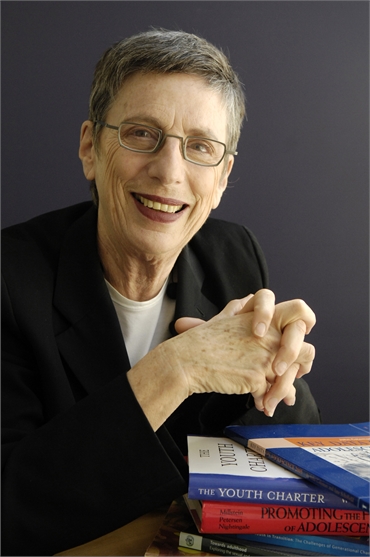 Doreen Anne Rosenthal AO合作论文数Key Centre for Women's Health in Society, University of Melbourne3julie matthews合作论文数2Angus McLeay合作论文数2becky williamson合作论文数2elsna koleth合作论文数2douglas lorman合作论文数2
 Michael Bartos合作论文数2
 Margot Ford合作论文数Univ Newcastle2joanna sikora合作论文数2Sheree K. Gregory合作论文数University of Western Sydney School of Business2
 Niamh Chapman合作论文数Menzies Institute for Medical Research, University of Tasmania2
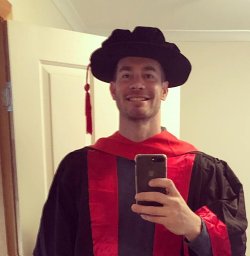 Jacob Prehn合作论文数Social Work, Univ Tasmania2
 theresa petray合作论文数Coll Arts Soc & Educ, James Cook Univ2
 Mary Holmes合作论文数Sociology, School of Social and Political Science, The University of Edinburgh2
 Fran Collyer合作论文数Department of Sociology and Social Policy, School of Social and Political Sciences, Faculty of Arts and Social Sciences, The University of Sydney2
 Lynda Cheshire合作论文数School of Social Science, Faculty of Humanities, Arts and Social Sciences, The University of Queensland2
 Jens Zinn合作论文数School of Social and Political Sciences, Faculty of Arts, The University of Melbourne2
 Dan Woodman合作论文数School of Social and Political Sciences, Faculty of Arts, The University of Melbourne2Belinda Hewitt合作论文数School of Social and Political Sciences, Faculty of Arts, The University of Melbourne2
 Sarah MacLean合作论文数Turning Point Alcohol and Drug Centre2
 McWhirter Rebekah E合作论文数Centre for Population Health Sciences, University of Edinburgh2
 Derya Ozkul合作论文数Oxford Department of International Development, University of Oxford2
 Lyndal-Joy Thompson合作论文数2
 Martin Schultz合作论文数Menzies Institute for Medical Research, University of Tasmania2
 Kirsten Harley合作论文数Faculty of Health Sciences, The University of Sydney;Faculty of Health Sciences, The University of Sydney2
 Dina Bowman合作论文数2
 Ruth Barton合作论文数2
 James E. Sharman合作论文数Menzies Research Institute, University of Tasmania2
 Alphia Possamai-Inesedy合作论文数2Christine Bond合作论文数2




