We draw on a dataset of 1,044 state and national party platforms from 1980 to 2025 to track the evolution of Democratic and Republican positions with respect to higher education. The sector enjoyed considerable bipartisan support in the 1980s and early 1990s, with both parties generally expressing the view that 4-year colleges and universities contribute to economic vitality and student advancement. Starting in the mid-1990s, Republicans' position gradually became more critical-even so, there is considerable diversity in views across states as late as 2010. In recent years, the party's platforms have become almost uniformly negative toward higher education. The first line of GOP criticism focused on concerns about speech and alleged liberal bias. In the past decade, the party increasingly focused its criticism on higher education's approach to racial and gender/sexuality issues-just as the intensity of opposition ramped up. Democratic platforms show much more stability but have expressed increased concern about college costs since the 2010s. Democrats also became more likely to express a liberal position on race and gender/sexuality policies just as the GOP became more vocal in criticizing these policies from the right. Our evidence suggests that the shift in the GOP's positioning began at the national level and was instigated by nationally oriented ideological activists rather than mass-level demands. In a highly polarized and nationalized two-party system, the case of higher education illuminates the dangers that exist for any civil society institution when one party becomes hostile to its purposes and orientation.
Generations of political scientists have viewed the American constitutional system and its surrounding pluralist civil society as stable touchstones that safeguard against the threat of authoritarian leadership. Capitalizing on changes that go back several decades-the rise of nationalized polarization, the development of the unitary executive theory, and the growing sway of populist conservatives within the Republican Party-Donald Trump has demonstrated that the sources of countervailing power in the U.S. political system are far more fragile than previously understood. Trump has prevailed upon congressional Republicans to surrender their core constitutional responsibilities, has eviscerated critical foundations of the modern administrative state, and upended the relationship between the federal government and major civil society actors. Political scientists did not anticipate the potential for democratic breakdown that has emerged; we must now direct our energies to understanding this new constellation of power, as well as the pathways available for opponents to respond.
Abstract Many contend that U.S. state parties are increasingly polarized and nationalized, meaning that they have adopted divergent positions matching their national counterparts’ positions. Such trends reflect a transformation of America's historically decentralized party system. Yet, the precise timing of these related trends—as well as the mechanisms underpinning them—remain unclear. We assess these dynamics using a novel data set of 1,783 state party platforms between 1918 and 2017. Applying tools from automated and manual content analysis, we document a dramatic divergence in the topics emphasized by Democrats and Republicans starting in the mid-1990s, just as congressional speech became polarized. During this period, cross-state differences in each party's agenda decreased and regional/sectoral issues became less prominent, suggesting tight connections between polarization, nationalization, and state agendas. We also find that innovative phrases increasingly debut in state (not national) platforms. Overall, the evidence undercuts claims of top-down polarization emanating from national party leaders in Washington, DC. Polarization at the state and federal levels coincided with the development of an integrated network of activists spanning multiple levels of the polity.
The 1947 Labor Management Relations Act—better known as the Taft-Hartley Act after its two congressional sponsors—was a watershed moment in the development of the US political economy. The act revised the 1935 National Labor Relations (or Wagner) Act, which had established a legal regime far more favorable to labor unions than any before or since.1 Though spearheaded by Democrats and signed by President Franklin Roosevelt, the Wagner Act received substantial support from Republicans as well. The 1935 act helped drive union density to unprecedented heights, even as the labor movement itself splintered into the incumbent AFL and the insurgent CIO. By the Second World War, labor unions were far more plentiful, and organized labor far more powerful, than had ever been the case, a state of affairs reinforced by “maintenance of membership” and other wartime policies of the union-friendly Roosevelt administration. President Roosevelt and his successor, Harry Truman, also stymied most congressional attempts to rein in the increasingly powerful, assertive, and unpopular labor movement—attempts that a new “conservative coalition” of Republicans and southern Democrats had initiated within two years of the Wagner Act's passage and continued to pursue throughout the war.The breakthrough for congressional opponents of organized labor came in 1946, when Republicans finally recaptured control of Congress. Building on earlier antiunion initiatives and aided by southern Democrats, Republicans crafted legislation to “rebalance” relations between business and labor. While it accepted the Wagner Act's basic framework of state-regulated collective bargaining, the resulting Taft-Hartley Act restricted union organizing tactics, imposed strict reporting requirements, purged communists from union leadership, and limited the use of union security agreements. In particular, Taft-Hartley authorized state right-to-work laws, whose proliferation outside the industrial core of the United States inhibited unions’ spread and undermined their leverage even where they were well established. In the short term, these reforms curtailed the political ambitions of organized labor, reducing it to a mere interest group rather than the cornerstone of a social-democratic polity.2 Over the longer term, union density, especially in the private sector, plateaued until the 1970s, when it began its devastating and as-yet-unreversed decline. From this perspective, Taft-Hartley signaled a key turning point in American political development, a “lost opportunity” to consolidate European-style social democracy in the United States.3What explains this dramatic turn in American political development? While acknowledging the value of existing explanations, Dean and Obert's stimulating article offers an original and provocative alternative: the decision of organized labor—more specifically, the CIO—to abandon the AFL's “pure and simple unionism” and ally itself firmly with the Democratic Party. This strategy, crystallized by the 1943 creation of the CIO's Political Action Committee, committed the organization to supporting Democrats over Republicans in almost every electoral race. In doing so, Dean and Obert argue, the CIO induced the Republican Party to abandon hope of competing for labor's votes and instead align itself irrevocably with the antiunion preferences of business. Whereas in the 1930s unions could find allies in both parties, by the 1940s Republicans and Democrats (at least those outside the South) had polarized over labor questions. More to the point, Republicans had come to see organized labor as an almost existential political threat, such that they were willing to take drastic and possibly unpopular actions to undermine its power.4 And in 1947, when Republicans finally had their opportunity, they took full advantage.Dean and Obert support this argument with two main kinds of evidence. The first is a qualitative account of CIO's embrace of a partisan political strategy and the Republican Party's reaction to it. The second consists of a statistical analysis of congressional voting on the Taft-Hartley Act, focusing on the influence of constituency-level CIO density, along with a parallel analysis of the Wagner Act. Each of these sets of evidence is interesting and informative, but in our view neither is entirely persuasive.Dean and Obert's qualitative evidence draws primarily from the ample historical literature on labor politics in this period, supplemented by contemporaneous periodicals and CIO publications. Using these sources, they first trace the evolution of the CIO's political strategy between its founding in 1935 through the CIO-PAC's involvement in the 1944 elections. They then turn to the lesser-known story of Republicans’ reaction to the CIO. This account is critical to their argument, which rests on the claim that Republicans changed positions on labor because the CIO adopted a new strategy (rather than vice versa). Dean and Obert discuss some national developments, such as the anti-labor activism of Senator Robert Taft (R-Ohio) and the isolation of the prolabor Senator Wayne Morse (R-Oregon), but the bulk of their account focuses on New York. In particular, Dean and Obert argue that after nominating prolabor Senate candidates in 1938 and 1940, New York Republicans switched strategy in 1944 by selecting the anti-labor Thomas Curran over the prolabor Irving Ives. Moreover, according to the New York Times, Republicans did so because “party leaders decided that there was no point in going after the labor vote”—perhaps the most powerful single piece of qualitative evidence that Dean and Obert marshal in support of their argument.On the whole, however, Dean and Obert's qualitative evidence is less than fully satisfying. In addition to focusing on one (unusually urban and liberal) state, the account of the Republican reaction is mostly a snapshot of events in 1944. As such, it sheds little light on the sequence of events—in particular, on whether Republicans or the CIO changed first. This is an important omission, for the conservative counterreaction against labor was already well underway in Congress by the late 1930s, with overwhelming support from Republicans. It seems reasonable to expect that this affected the CIO's strategy as much as the other way around. The focus on 1944 is also misleading insofar as it suggests that the parties’ polarization over labor was locked in thereafter. The New York case itself suggests this was not so: in 1946, the state's Republicans reversed course and gave their Senate nomination to Ives, who (with AFL support) won election and represented the state until 1959. In short, Dean and Obert's limited geographic and temporal focus may lead them to overstate both the rapidity and the irrevocability of the Republican anti-labor reaction.Dean and Obert's argument, however, does not rest solely on this qualitative evidence. Rather, they complement it with a statistical analysis that relies on an innovative measure of constituency-level CIO density. Making clever use of the minutes of CIO unions’ annual meetings, the state-level version of this measure is calculated based on the number of delegates allotted to each state, which in turn was based on the number of dues-paying members in the state. The estimated CIO density for each state is the number of CIO members as a proportion of manufacturing employment. More innovative still is their measure of CIO density by congressional district, which is the state-level measure multiplied by the fraction of district employment in manufacturing.5 Using these measures, Dean and Obert examine the relationship between CIO density and congressional support for Taft-Hartley (and, as a baseline, the Wagner Act), separately for Democrats and Republicans.Though their argument, being focused on the national level, does not require it, a natural corollary of the claim that the parties polarized in reaction to the CIO is that this polarization was more intense where the CIO was strongest. More precisely, Dean and Obert posit not only that Democrats’ support for unions increased with the strength of the CIO in their constituency—a natural expectation under most theories of representation—but also that Republicans’ support decreased with CIO strength. In this claim, one can hear echoes of V. O. Key's seminal “racial threat” hypothesis; the important difference is that unlike the African Americans in Key's story, CIO members were fully enfranchised.6 This provocative claim does find some support in Dean and Obert's statistical analysis, which shows Republicans’ support for Taft-Hartley to have a slight positive correlation with CIO density (Dean and Obert, figure 2). Among Democrats, the correlation is more robustly negative. The net result is indeed greater polarization between the parties in CIO-heavy constituencies. Given the nonrandom distribution of CIO membership as well as the CIO's influence over the partisan outcome of elections, the casual status of these correlations is uncertain, but they are clearly consistent with Dean and Obert's argument about the CIO's role in partisan polarization. This is a valuable contribution, for existing scholarship has focused more on the one-sided effect of labor's political mobilization on the Democratic Party than its influence on Republicans.Dean and Obert, however, do not argue merely that the CIO's alliance with the Democrats polarized the parties. Rather, they make the bolder claim that “Taft-Hartley was, in part, a negative consequence of the CIO's decision.” Couched in counterfactual terms, this claim states that a law like Taft-Hartley likely would not have passed had the CIO made a different decision. Is this stronger claim tenable?To answer this, we should first distinguish between the level of support for unions and the pattern of support.7 Both changed dramatically between the mid-1930s and mid-1940s. In 1935, the vast majority of both southern and non-southern Democrats, along with a slimmer majority of Republicans, voted to enact the Wagner Act. In 1947, the vast majority of southerners joined nearly all Republicans in support of Taft-Hartley, while non-southern Democrats (their ranks much reduced since 1935) steadfastly opposed it. Clearly, through a combination of conversion and partisan replacement, Congress as a whole had moved sharply rightward on labor issues between these two votes. The movement was concentrated among Republicans and (especially) southern Democrats, while non-southern Democrats barely budged.As Dean and Obert note, existing explanations for Taft-Hartley tend to emphasize (a) Congress's responsiveness to the general anti-labor turn in the public; and/or (b) the shift in southern Democrats’ “axis of preferences” as they came to view organized labor as a threat to Jim Crow.8 While not dismissing these explanations (their own regressions show both public opinion and region to be powerful predictors), Dean and Obert's argument is meant to explain why Republicans specifically turned so sharply against unions and to suggest that this turn cost unions more than it gained them. Even if we grant the polarization claim, as we are inclined to do, the latter conclusion does not follow. Rather, we would argue that it was only because the CIO was so closely tied to the Democratic Party that it avoided anti-labor legislation as long as it did.Here the sequence of events is again crucial. The anti-labor reaction in Congress began shortly after the 1936 elections with an investigation into sit-down strikes. It continued with a 1939 investigation of the National Labor Relations Board, a 1941 anti-strike bill that died in the Senate, the (ineffectual but portentous) War Labor Disputes Act of 1943, and another antistrike bill vetoed by Truman in 1946. These conservative efforts were supported, if not actively spurred, by a marked anti-labor turn in the American public. Nevertheless, despite an anti-labor floor majority of Republicans and southern Democrats, the legislative fruits of this backlash were meager, due largely to the agenda control and vetoes of Democratic leaders and presidents. In short, the CIO's alliance with the Democratic Party arguably allowed it to stave off a virulent anti-labor reaction for a decade, buying it crucial time to institutionalize and entrench the New Deal labor regime. This is not to say that the CIO made no mistakes—it would surely have helped the group's political standing had John L. Lewis avoided the antics that made him the most hated man in America—but in our view allying with the Democratic Party was probably not one of them.
Since the 1970s the American political system has undergone a dramatic increase in partisan polarization. By polarization, we mean that the parties are “far apart” from each other. This is largely, but not exclusively, a matter of policy views, although it may include important elements of identity-based tribalism. In a highly polarized environment, parties view one another as competing camps engaged in a battle where the stakes attached to victory or defeat are extremely high.
We elaborate a general workflow of weighting-based survey inference, decomposing it into two main tasks. The first is the estimation of population targets from one or more sources of auxiliary information. The second is the construction of weights that calibrate the survey sample to the population targets. We emphasize that these tasks are predicated on models of the measurement, sampling, and nonresponse process whose assumptions cannot be fully tested. After describing this workflow in abstract terms, we then describe in detail how it can be applied to the analysis of historical and contemporary opinion polls. We also discuss extensions of the basic workflow, particularly inference for causal quantities and multilevel regression and poststratification.
We present a “developmental” approach to understanding why rising polarization in the United States has not been self-correcting but instead continues to intensify. Under specified conditions, initial increases in polarization may change the meso-environment, including such features as state parties, the structure of media, and the configuration of interest groups. These shifts can in turn influence other aspects of politics, leading to a further intensification of polarization. This analysis has four important benefits: ( a) It directs our attention to the meso-institutional environment of the American polity; ( b) it clarifies the features of the polity that have traditionally limited the extent and duration of polarization, and the reasons why their contemporary impact may be attenuated; ( c) it helps us analyze asymmetrical, or party-specific, aspects of polarization; and ( d) it provides an analytic foundation that connects discussions of American politics to the comparative politics literature on democratic backsliding.
Recent research has challenged the policy bases of the New Deal realignment, arguing that it was instead driven by retrospective evaluations of the economy. Using a comprehensive analysis of opinion polls conducted in 1936–52, we argue that policy preferences were far from irrelevant. At the individual level, presidential Republicans who became Democrats were much more supportive of New Deal policies than those who remained loyal (vice versa for Democrats). At the state level, both public support for the New Deal—as measured by a group-level item response model—and income growth predict pro-Democratic shifts in presidential elections. In short, the realignment was rooted in both policy preferences and economic retrospection. Moreover, mass support for the New Deal, unlike partisan identification, was a leading indicator of long-term electoral trends, predicting presidential elections decades in the future even better than it does contemporaneous elections.
An interview with Theda Skocpol took place at Harvard University in December 2017. Professor Skocpol is the Victor S. Thomas Professor of Government and Sociology at Harvard University. Skocpol is the author of numerous books and articles well known in political science and beyond, including States and Social Revolutions, Protecting Soldiers and Mothers, Diminished Democracy: From Membership to Management in American Civic Life, and The Tea Party and the Remaking of Republican Conservatism (the latter coauthored with Vanessa Williamson). Skocpol has served as President of the American Political Science Association and the Social Science History Association. Among her honors, she is an elected member of the American Academy of Arts and Sciences, the American Philosophical Society, and the National Academy of Sciences, and she was awarded the Johan Skytte Prize in Political Science. She was interviewed by Eric Schickler, the Jeffrey & Ashley McDermott Professor of Political Science at the University of California, Berkeley. The following is an edited transcript; a video of the entire interview can be viewed at https://www.annualreviews.org/r/theda-skocpol.
The causal inference (CI) movement has forced political scientists to think far more seriously about what can be learned from a particular research design and to be more attentive to making design choices that allow for credible causal inferences. At the same time, the rise of CI has given rise to the concern that political scientists have been better at making particular contributions isolating the effect of a single independent variable than at developing and testing theories that help us understand how these diverse findings fit together. For all of American political development’s (APD’s) distance from the causal inference revolution, a parallel can be drawn between the state of APD today and some of the concerns expressed about the broader state of political science in the wake of the rise of CI. This essay considers ways in which APD and CI can each be enriched through greater mutual engagement, suggesting that one should not dichotomize research into mutually exclusive categories of “well-identified research that makes credible causal claims” and “purely descriptive” APD studies.
Christopher Achen and Larry Bartels's Democracy for Realists offers a compelling critique of voters' role in democratic politics and underscores the importance of group identity to vote choice. Even so, there may be grounds for attributing greater policy meaning to elections than Achen and Bartels acknowledge. Politicians have an incentive to respond to widely shared views in the electorate; this can often make it difficult to detect issue voting even when ordinary citizens' issue preferences are critical. Group-based voting also may have policy content. Understanding the connections between group identity and policy substance constitutes an important challenge for future work building upon Achen and Bartels's foundation.
The return of unified government following President Trump's election in 2016 triggered fears that separation of powers could fail to rein in executive misconduct. However, Congress' handling of the Russia probe largely accords with lessons derived from analysis of more than a century of investigative activity. Unified government greatly blunted the force of the probe in the House; however, the Senate investigation has been more productive and comprehensive. The investigation directly led to sanctions legislation and contributed to the pressure to appoint a special counsel. More generally, it has significantly weakened President Trump's political position by eroding his support among the public.
 Gregory J. Wawro合作论文数Political Science and History;Department of Political Science;Departments of Political Science and History;Political Science and History|Department of Political Science|Departments of Political Science and History12
 G Cristina Mora合作论文数Department of Sociology, University of California, Berkeley11
 Donald P. Green合作论文数Department of Political Science, Columbia University10
 John Sides合作论文数Department of Political Science;George Washington University;Department of Political Science, George Washington University8
 bradley palmquist合作论文数7
 Douglas L. Kriner合作论文数7
 Devin Caughey合作论文数Department of Political Science, MIT6
 Jack Citrin合作论文数Department of Political Science, University of California, Berkeley6
 Alein Y Haro-Ramos合作论文数Div Hlth Policy, Univ Calif Berkeley4
 Brian D. Feinstein合作论文数Legal Studies and Business Ethics Department, The Wharton School, University of Pennsylvania4Kathryn Pearson合作论文数4
 Nolan McCarty合作论文数Department of Politics, Princeton University;School of Public and International Affairs, Princeton University;National Bureau of Economic Research3Andrew Rich合作论文数3
 Paul Pierson合作论文数Department of Political Science, University of California, Berkeley2
 Adam J. Berinsky合作论文数Department of Political Science, School of Humanities, Arts, and Social Sciences, Massachusetts Institute of Technology/Institute for Data, Systems, and Society, Massachusetts Institute of Technology/Political Experiments Research Lab, Massachusetts Institute of Technology2
 Jeffery A. Jenkins合作论文数Department of Political Science, University of Virginia2
 Alan S. Gerber合作论文数Department of Political Science, Yale University;Jameel Poverty Action Lab-North America;NBER2
 Jamie L. Carson合作论文数Department of Political Science, The University of Georgia2David Azizi合作论文数1
 Hector P. Rodriguez合作论文数Division of Health Policy and Management, University of California, Berkeley;Center for Healthcare Organizational and Innovation Research, School of Public Health, University of California, Berkeley1Eleanor Neff Powell合作论文数1Barry Burden合作论文数1
 Sara Chatfield合作论文数Tufts University1Tianna Paschel合作论文数Polit Sci, Univ Chicago1
 Erin Hartman合作论文数Department of Political Science and Statsitics, University of California, Berkeley1
 Sean Gailmard合作论文数Department of Political Science, University of California, Berkeley1
 Charles Shipan合作论文数Department of Political Science, College of Literature, Science, and the Arts, University of Michigan-Ann Arbor1
 David Alexander Bateman合作论文数The College of Arts and Sciences, Cornell University1
 Dan Hopkins合作论文数Department of Political Science, College of Arts & Sciences, University of Pennsylvania1
 Frances E. Lee合作论文数Department of Politics, Princeton University1
 Ruth Bloch Rubin合作论文数Faculty in American Politics, Department of Political Science, The University of Chicago1William Minozzi合作论文数Department of Political Science, The Ohio State University;Department of Political Science, The Ohio State University1
 Gary Cox合作论文数Department of Political Science, School of Humanities and Sciences, Stanford University1
 Gary J. Miller合作论文数Department of Political Science, Washington University in St. Louis1
 Nicholas H Wolfinger合作论文数Department of Family and Consumer Studies, University of Utah1Eric M Mcghee合作论文数1
 Jonathan Bendor合作论文数Graduate School of Business, Stanford University1Alan E. Wiseman合作论文数Department of Political Science;Ohio State University;Department of Political Science, Ohio State University1
 John A. Ferejohn合作论文数School of Law, New York University1
 Craig Volden合作论文数Frank Batten School, University of Virginia1
 Kenneth A. Shepsle合作论文数Department of Government, Harvard University;Institute for Quantitative Social Science, Harvard University1
 Benjamin Highton合作论文数Department of Political Science, University of California1Nelson W. Polsby合作论文数1
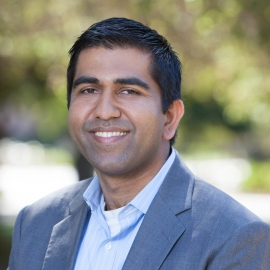 Neil Malhotra合作论文数Center for Social Innovation, Stanford University;Golub Capital Social Impact Lab, Graduate School of Business, Stanford University;Center for Entrepreneurial Studies, Graduate School of Business, Stanford University1Daniel Diermeier合作论文数1
 Ken Shotts合作论文数School of Humanities and Sciences, Stanford University;Graduate School of Business, Stanford University1
 John Mark Hansen合作论文数The Department of Political Science, Division of the Social Sciences, The University of Chicago1
 John W. Patty合作论文数Department of Government;Harvard University;Department of Government, Harvard University1




