IntroductionMemory is a reconstructive process susceptible to external influences. The misinformation effect, extensively studied in eyewitness testimony, refers to the distortion of post-event information upon memory recall. However, limited research has examined how misinformation influences memory along with evaluation of an event involving physical touch.MethodsParticipants of the present study (N = 184) watched a video depicting a professor-student interaction including a physical touch (male professor/female student vs. female professor/male student), followed by a free and cued recall, and evaluative ratings. After 1 day, participants received either neutral or misleading post-event information (i.e., the professor working on teaching materials vs. the professor being under investigation for sexual harassment of students) and completed a second recall and rating session. Measures of interrogative suggestibility, working memory, and executive functioning were also assessed.ResultsResults showed that misinformation significantly increased memory errors and influenced evaluative judgments over time, particularly in the male professor/ female student condition. Participants exposed to misinformation judged the professor’s behavior as more inappropriate and severe, and recommended a harsher punishment. A high level of individual’s suggestibility was associated with lower perceived intentionality, independent of exposure to misinformation.DiscussionThese findings support the effect of misinformation on memory and judgments, highlighting critical implications for legal contexts.
ABSTRACT War‐related autobiographical memories are often vivid, emotionally consequential, and embedded in social and public narratives. This study examined nonbelieved memories (NBMs) in 146 Chinese participants with self‐reported war‐related experiences. Participants completed an online questionnaire assessing war‐memory characteristics, social and media influences, and memories they once accepted as real but later came to doubt. Among valid respondents, 33.6% reported a war‐related NBM. After doubt emerged, belief in occurrence declined from 6.57 to 3.61 and plausibility from 5.80 to 3.91, whereas recollection changed little, from 5.67 to 5.33. Reported reasons for belief reduction included plausibility concerns, internal memory features or contradictory evidence, social feedback, media‐related information, broader memory doubts, and, less often, personal motivation. Media discrepancies formed part of the context for reinterpretation but did not directly explain belief reduction. Disbelief was associated with both emotional relief and disruption.
Malingering is a well-known phenomenon which has strong social implications. A person often adopts it during psychological evaluation and is particularly difficult to detect as the malingerer’s ability to simulate increases. The public primarily uses Large Language Models (LLMs) to educate themselves and gather information on various topics. Hence, it is crucial to assess whether LLMs can be a source for people learning how to deceive. The present study tested this issue by investigating whether ChatGPT 3.5 is able to malinger depression, one of the easiest and most commonly feigned conditions. We therefore collected 228 responses from humans and ChatGPT 3.5 (114 human participants vs ChatGPT responses) to the Minnesota Multiphasic Personality Inventory-2 (MMPI-2) with the instructions of either malingering depression or being honest. Our results showed that both humans and ChatGPT were able to malinger to suffer from depressive symptoms while illing the MMPI-2, although the validity scales of the MMPI-2 allowed us to identify malingered responses for both groups (humans and ChatGPT). In addition, humans and ChatGPT performance signi icantly differed.or people learning how to deceive without being caught since LLMs have shown to hold internal representation of many concepts. The present study tested this research question by investigating whether ChatGPT (i.e., 3.5 turbo) is able to malinger depression, one of the easiest and most commonly feigned conditions in different contexts (i.e., forensic, clinical, workplace). We, therefore, collected 228 responses from humans and ChatGPT (i.e., 114 humans’ responses and 114 ChatGPT responses) or people learning how to deceive without being caught since LLMs have shown to hold internal representation of many concepts. The present study tested this research question by investigating whether ChatGPT (i.e., 3.5 turbo) is able to malinger depression, one of the easiest and most commonly feigned conditions in different contexts (i.e., forensic, clinical, workplace). We, therefore, collected 228 responses from humans and ChatGPT (i.e., 114 humans’ responses and 114 ChatGPT responses)or people learning how to deceive without being caught since LLMs have shown to hold internal representation of many concepts. The present study tested this research question by investigating whether ChatGPT (i.e., 3.5 turbo) is able to malinger depression, one of the easiest and most commonly feigned conditions in different contexts (i.e., forensic, clinical, workplace). We, therefore, collected 228 responses from humans and ChatGPT (i.e., 114 humans’ responses and 114 ChatGPT responses)
Interpersonal synchronization represents a core dimension of supportive dyads, with a growing body of evidence demonstrating its role in fostering a positive, cooperative, and effective bond. This connection may be detected through measurable patterns of alignment in autonomic responses during interaction, leading to client change and cooperation with the clinician. Recent advances in wearable technology offer new opportunities for monitoring such physiological processes in real-world clinical settings; however, few studies have analysed synchronization via wearable devices across multiple sessions in supportive settings, such as university counseling services. The present study investigated physiological synchronization processes within 44 student-counselor dyads in a brief university counseling setting and explored their association with therapeutic alliance and clinical change. Multi-channel physiological data, specifically heart rate (HR) and electrodermal activity (EDA), were continuously recorded using non-invasive wristbands (Empatica E4) during the first, third, and fifth sessions. Synchronization processes were evaluated by integrating explicit self-report measures (assessing emotion regulation, therapeutic alliance, clinical symptoms, and general psychological well-being) with a set of physiological synchrony indices capturing coordination, alignment, and directionality. Physiological metrics captured across the three sessions were used to predict self-reported scores on the Working Alliance Inventory-Short Revised (WAI-SR), the Emotion Regulation Questionnaire (ERQ), the Clinical Outcomes in Routine Evaluation (CORE-10), and the Psychological General Wellbeing Index (PGWBI). Analyses revealed that cardiac coordination - but not electrodermal activity - progressed alongside the development of the working alliance, whereas the remaining outcomes, despite showing overall clinical improvement across sessions, did not exhibit systematic convergence with the physiological metrics.
Background/Aim: Repressed memory and dissociative amnesia are contested concepts in psychology with serious ramifications in the courtroom. We investigated whether legal professionals (judges, prosecutors, and lawyers) had encountered these concepts in the legal arena, their beliefs concerning them, and gathered insights from their practical experiences. Method: A total of 77 legal professionals answered a survey about thier beliefs and practical experiences with repressed memories and dissociative amnesia in court. Results: Reported encountering cases involving repressed memory and dissociative amnesia, and that such cases have increased over time, particularly during 2010-2023. Interestingly, most legal professionals opposed setting time limits after which the retrieval of traumatic experiences should be considered unreliable. Moreover, many participants held inaccurate beliefs about traumatic memory. Conclusions: These findings highlight the critical need for improved education on traumatic memory loss among legal professionals and law students to ensure fair and accurate handling of cases involving such claims. Antecedentes/objetivo: La memoria reprimida y la amnesia disociativa son conceptos controvertidos en psicolog & iacute;a, con serias repercusiones en los tribunales. Hemos investigado si los operadores jur & iacute;dicos (jueces, fiscales y abogados) se han topado con estos conceptos en el terreno legal, sus creencias al respecto y su experiencia pr & aacute;ctica. M & eacute;todo: Un total de 77 operadores jur & iacute;dicos respondieron a una encuesta sobre creencias y experiencias pr & aacute;cticas en juzgados y tribunales con memorias reprimidas y amnesia disociativa. Resultados: Los operadores jur & iacute;dicos dicen que se han encontrado con casos sobre memoria reprimida y amnesia disociativa, aumentando tales casos con el tiempo, sobre todo en el periodo 2010-2023 y, lo que es m & aacute;s interesante, la mayor & iacute;a de los operadores jur & iacute;dicos se han opuesto a poner l & iacute;mites temporales, m & aacute;s all & aacute; de los cuales la recuperaci & oacute;n de experiencias traum & aacute;ticas podr & iacute;an ser consideradas poco fiables. Por otra parte, muchos operadores mantienen creencias inexactas sobre la memoria traum & aacute;tica. Conclusiones: Estos resultados destacan la necesidad imperiosa de mejorar la formaci & oacute;n de los operadores jur & iacute;dicos y estudiantes de Derecho en la p & eacute;rdida traum & aacute;tica de memoria para garantizar un manejo justo y preciso de los casos que presentan estas reclamaciones.
Studies so far have strived to define the characteristics of autobiographical memories accounting for their veracity and accuracy. Our study aimed to test whether it is possible to distinguish between true and fabricated autobiographical memories by adopting the Flashbulb Memory Checklist (FBMC), a validated tool used to assess the phenomenological features of emotional autobiographical memories. We asked participants to first recall a negative event truly experienced in the last 12-18 months and report a negative event that they never experienced. We calculated the FBMC scores (i.e., FBM Specificity, FBM Confidence) and checked whether these would help to distinguish between true and fabricated memories for negative events. Our findings showed that FBMC scores can be informative for memories' evaluation although they do not allow a proper discrimination between the two types of memories. The legal implications of our findings are discussed.
Being exposed to a traumatic event can engender repetitive, distressing, and interfering memories, also called intrusive memories. In addition, over time, people sometimes recall additional and new details of the traumatic experience. In the current study, we examined whether people could report intrusive memories for false details of a traumatic event. Participants (N = 39) completed nine study sessions. In the first session, they watched a video of a traumatic event (i.e., sexual assault) and performed a recognition task. From the second session to the eighth session, each day, participants reported their intrusive memories for the event by replying to some questions related to true and false event-related details. In the final session, we asked them to complete again the same recognition task from the first session. People reported having intrusive memories for false event-related details. These memories did not statistically differ in terms of vividness and distress as compared with intrusive memories for true details. However, overall, the reporting of both intrusive memories for true and false details decreased over time and did not influence the voluntary recall of the traumatic event. These findings are important for theoretical insights on the phenomenon of intrusive memories and the memory amplification effect.
INTRODUCTION:Fake news detection falls within the field of deception detection and, consequently, can be problematic due to no consensus on which cues increase the detection accuracy and because people's ability to detect is poor. METHODS:The present study aimed to investigate the criteria used by general population to establish if a given news item is true or fake by surveying a sample of the Italian population. We recruited 329 participants who had to reply to some questions on which criteria they used to conclude a given news item was true. The same questions were also asked to investigate the ones used for fake news judgments. RESULTS AND CONCLUSION:Our results showed that, overall, people use similar criteria (e.g., reliability of the source and presence of scientific references) to conclude that news is true versus fake, although their use rates differ for true and fake news.
After experiencing an event, the passage of time may lead to forgetting certain details. An important question is whether forgetting contributes to the formation of false memories. We conducted a preregistered systematic review to understand whether a specific type of forgetting (i.e., intentional) might affect false memory formation. We reviewed 27 English publications (from Scopus and Web of Science) to check the robustness of the results, and we conducted a meta-analysis. We found mixed results with 44% (n = 15) of publications showing that forgetting led to an increase in false memory rates, 26% (n = 9) led to a decrease in false memory rates and in 29% (n = 10) no relationship was detected. Concerning the meta-analysis, the results showed that there is no relation between forgetting in general and false memories. Our findings provide useful insights, theoretically and practically relevant, into the interplay between forgetting and false memories.
Research has shown that lying can affect memory differently depending on the type of strategy (e.g., false denials, feigning amnesia, fabrication). At present, no studies have investigated how using different strategies simultaneously while replying to questions concerning the event impacts on memory. Hence, in the present experiment, participants watched a mock crime video, then they either told the truth (i.e., truth-telling group) or lied about the crime by adopting the three deceptive strategies (i.e., mixed lying group). We also included a third group that did not answer any question (i.e., delayed testing-only control group). After one-week, all participants provided an honest account of their memory for the interview and the crime, along with memory and belief ratings. Lying exerted an undermining effect on memory. That is, liars reported an impaired recall (i.e., fewer correct details and higher commissions) of the event and the interview as compared with those in the truth-telling group. However, the delayed testing-only control group reported a higher impairment than liars and truth-tellers. These findings provide insightful information on the possible mechanisms behind the effects of lying on memory (e.g., lack of rehearsal).
People oftentimes have misconceptions related to different legal psychological phenomena. These misconceptions can be potentially deleterious when they influence legal decisions. We examined whether these beliefs can be corrected with education. In Study 1, participants provided their agreement for statements related to four case vignettes about different kinds of psychology and law phenomena. Participants were also asked to write the reasons why they provided such an evaluation. In Study 2, we added one additional case vignette. Students improved their beliefs and knowledge concerning the majority of the investigated legal psychological topics after attending the course, except for the evaluation of recidivism risk. Our findings encourage the introduction of courses in legal psychology for students who will become legal practitioners.
The current study examined how mood affects the impact of false feedback on belief and recollection. In a three-session experiment, participants first watched 40 neutral mini videos, which were accompanied by music to induce either a positive or negative mood, or no music. Following a recognition test, they received false feedback to reduce belief in the occurrence of the events displayed in some of the videos (Session 2). This was followed by an immediate memory test and a delayed memory assessment one week later (Session 3). The results revealed that participants in negative mood reported higher belief scores compared to those in positive moods, despite an overall decline in belief scores for all groups following the false feedback. Notably, individuals in negative moods exhibited less reduction in their belief scores after encountering challenges, thereby maintaining a higher accuracy in their testimonies. Over time, a reduction in the clarity of participants’ memory recall was observed, which correspondingly reduced their testimony accuracy. This study thus indicates that mood states play a role in shaping belief and memory recall under the influence of false feedback.
A plethora of studies have shown that people persistently remember public and personal events experienced during adolescence and early adulthood, particularly with a positive valence. In five studies, we investigate the reminiscence bump (RB) for positive and negative memories of public events (Studies 1 and 2), private events (Study 3), music-related events (Study 4), and cross-cultural memory differences (i.e., China and US) (Study 5). Participants retrieved either one positive or one negative memory, indicated their Age of Encoding, and provided secondary measures, i.e., memory vividness and rehearsal (Studies 1 and 3) and emotional intensity (Studies 2 and 4). About 10,000 memories were collected and positive memories appeared generally older than negative recollections, but the RB emerged for both positive and negative memories. Furthermore, the peak was earlier for positive memories of public events (<15 years old) than for negative memories (20-40 years), while no differences were found for private events or music-related experiences (15-25 years). Chinese had their RB later than US respondents. Finally, autobiographical recollections have moderate to low associations with secondary measures of phenomenological features of memory. These findings are consistent with the identity-formation theory, providing additional and important information on the development of the Self.
Research on post-event misinformation demonstrated that being exposed to such information can undermine people's memory for the original event. Similarly, studies on lying and memory showed that lying upon an event can negatively impact memory. We asked participants to read a case vignette about an accident, and answered some questions on true and misleading details. Participants either lied (i.e. liars group) or told the truth (i.e. truth-tellers group) about false misleading (distorted: details partially false and fabricated: completely false details compared to the ones in the case-vignette) information (Experiment 1). In Experiment 2, an additional group of participants was included who did not perform the lying/truth-telling phase (i.e. delayed test group). After 1-week, all participants genuinely recalled the case vignette and provided their beliefs for its occurrence. Liars reported more fabricated information than truth-tellers (Experiment 1). The delayed test group reported fewer correct information than the other groups while liars reported more memory errors than the former (Experiment 2). Also, liars reported lower recollection and belief ratings than truth-tellers (Experiment 1), while the delayed test group reported lower recollection and beliefs than both liars and truth-tellers (Experiment 2). Overall, our findings showed that lying on misinformation results in memory errors.
 Antonietta Curci合作论文数Dept Educ, Psychol, Commun, Univ Bari Aldo Moro31
 Henry Otgaar合作论文数Faculty of Psychology and Neuroscience, Maastricht University25
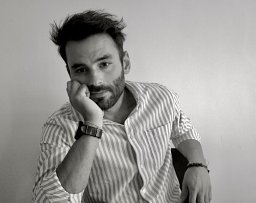 Ivan Mangiulli合作论文数Katholieke Univ Leuven, Leuven Inst Criminol, Leuven, Belgium23
 Tiziana Lanciano合作论文数20
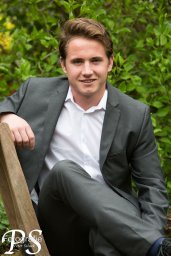 Paul Riesthuis合作论文数Fac Law & Criminol, Katholieke Univ Leuven5
 Marco de Gemmis合作论文数Dipartimento di Informatica, Università degli studi di Bari Aldo Moro4
 Jianqin Wang (王俭勤)合作论文数Department of Psychology, School of Social Development and Public Policy, Fudan University3
 Chunlin Li合作论文数2
 Yikang Zhang合作论文数Fac Psychol & Neurosci, Maastricht Univ2
 Vita Santa Barletta合作论文数University of Bari2
 Lucia Siciliani合作论文数Dept Comp Sci, Univ Bari Aldo Moro2
 Paolo Buono合作论文数Univ Bari Aldo Moro, Dipartimento Informat, Bari, Italy2
 Marco Polignano合作论文数Dept. of Computer Science, Univ. of Bari2Mirandola Chiara合作论文数2Marko Jelicic合作论文数2
 Peter Muris合作论文数Department of Clinical Psychological Science, Maastricht University2
 Pierpaolo Basile合作论文数Department of Computer Science, University of Bari Aldo Moro2
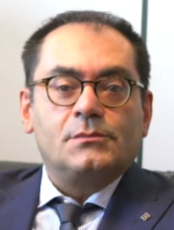 Giovanni Semeraro合作论文数Department of Computer Science, University of Bari Aldo Moro2
 Danilo Caivano合作论文数Dipartimento di Informatica, Università degli Studi di Bari Aldo Moro2Daphne Gasparre合作论文数1Chiara Abbatantuono合作论文数1
 Mara Georgiana Moldoveanu合作论文数1Elio Musacchio合作论文数1
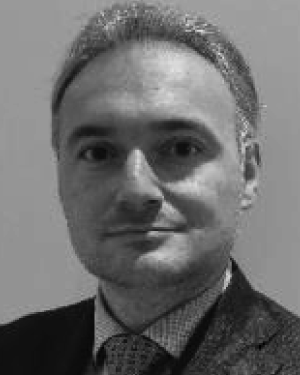 Donato Impedovo合作论文数1
 Federica Alfeo合作论文数1Livio Clemente合作论文数1
 Charlotte A. Bucken合作论文数Forens Psychol Sect, Maastricht Univ1
 Tamara L. F. De Beuf合作论文数Maastricht University1
 Vincenzo Gattulli合作论文数Digital Innovat Srl1
 Timothy J. Luke合作论文数Department of Psychology, University of Gothenburg1
 Sanne T. L. Houben合作论文数1
 Olivier Dodier合作论文数APSY-v Laboratory, Université de Nîmes1
 Giuseppe Sartori合作论文数Department of General Psychology, University of Padova1
 Lawrence Patihis合作论文数Department of Psychology and Social Behavior,1
 d'Ovidio Francesco Domenico合作论文数1
 Gillian Murphy合作论文数The Chemistry Department, University College Cork1Martin A Conway合作论文数Institute of Psychological Sciences, University of Leeds1
 Filippo Lanubile合作论文数University of Bari1
 Nicole Novielli合作论文数University of Bari1
 Kamala London合作论文数University of Toledo1
 Ciara M Greene合作论文数1Mark Howe合作论文数Department of Psychology, School of Arts and Social Sciences, University of London1
 Paolo Taurisano合作论文数Psychiatric Neuroscience Group, University of Bari1
 Kim van Oorsouw合作论文数1




