This article argues that Nobel Prize-winning chemist Paul Crutzen (1933–2021) spoke in the name of science over several decades as a public intellectual who shaped research fields, environmental policy, and public understanding of the environment. It analyses the atmospheric chemist as a case study to explain the formation and influence of the scientist as a public intellectual, tracing the trajectory of his public career, focusing on his critical contributions to four significant episodes in modern environmental politics: his warnings in the 1970s of damage to the ozone layer, his catalysing impact on the nuclear winter debates of the 1980s, his turn-of-the-century conceptualization of the Anthropocene, and his late-career advocacy of solar geoengineering. It undertakes a textual analysis of four agenda-setting articles to demonstrate how Crutzen performed the public intellectual functions of testing the assumptions of scientific and policy elites, and framing new ways of understanding environmental problems. It argues that he was a technocratic public intellectual who viewed scientists as guides for society to understand and respond to human-caused environmental threats. As climate change becomes a defining issue of the twenty-second century, Crutzen’s career illuminates the potential and limitations of the technocratic public intellectual to shape global environmental politics.
‘Don't look up’ represents the news media as harmful to the public understanding of science. The news media turns honest scientists into corrupted and compromised media personalities. Its dynamics and demands make it unable to inform the public that a planet-killing comet, the film's allegory for climate change, is an existential threat. This commentary argues that these representations devalue the power of celebrity scientists to communicate science, ignore how journalists have placed climate change and ideas of climate catastrophe on the public agenda, and imply there is an idealised type of science communication — the deficit model — that journalists have corroded.
The interviews with experts in multidisciplinary teams make this analysis very interesting since they illuminate definitions of expertise across disciplines. Chapter 5 is devoted to how citizen scientists perceive and assess the above-mentioned aspects of expertise. It is noteworthy that the book gives so much attention to citizen scientists and their assessment of expertise because it underscores how important making a meaningful contribution is as a facet of expertise. For science communication scholars, this aspect is also particularly interesting in how it relates to studies on public engagement with science. In the conclusion, the author relates to the unfolding events of the Covid-19 pandemic to stress the importance of ethically crafted communication of expertise – not only with regards to Covid but also other major issues such as the climate crisis. Throughout the book, Mehlenbacher also refers to trust as a central concept because trust in science and expertise also encompasses trust in the fact that expertise is morally grounded. In this way, she touches upon central debates on trust in science and expertise. However, here the book could have included other scholarly literature on trust in science from psychology or communication science to demonstrate even more fully the interdisciplinary value of the author’s conceptualisation of expertise. The book is very dense in its account of rhetorical concepts. On the one hand, this leads to a theoretically thick line of reasoning but, on the other hand, it is not always easily accessible to those without a background in rhetoric. However, the interweaving of theoretical arguments and quotes from the interviews helps readers from other disciplines to follow the line of argumentation. Overall, the book is a timely account of expertise and expert status, illuminating the concepts from a rhetorical perspective.
Sciendo provides publishing services and solutions to academic and professional organizations and individual authors. We publish journals, books, conference proceedings and a variety of other publications.
A new biography considers the cosmologist's reputation while placing his work in context
A new biography considers the cosmologist's reputation while placing his work in context For decades, cosmologist Stephen Hawking was caught in a contradiction. In popular culture, he was portrayed as a pure mind roaming the cosmos to uncover fundamental truths of the Universe, the modern heir to Albert Einstein and Isaac Newton. In the physics community, he was respected as a productive theorist who made seminal contributions to black hole research, but many scientists considered his popular reputation to be ludicrously overblown. Veteran science writer Charles Seife seeks to resolve this contradiction in Hawking Hawking, the best biography yet published of the most famous scientist of recent decades.
Ireland’s slow movement to a low-carbon society has followed a distinct process of sustainable development: ecological modernisation, which sees ecological protection as compatible with, and underpinning, economic growth. But this process of environmental-driven social change has been weak and ineffective in Ireland, as policymakers have for decades prioritised economic development over ecological conservation. It also has been difficult for ecological modernist ideas to take root in Irish society because of fundamental factors in the country’s history, notably the economic and political power wielded by the agricultural sector since the State’s foundation in 1922. Irish citizens, moreover, have had low levels of environmental consciousness, because three powerful shapers of public opinion—environmental journalism, green politics, and the environmental movement—have been marginal presences in Irish civic life. However, recent political and technological developments have pointed to Ireland’s potential to become a late, but effective, ecological moderniser.
“We are citizens and subjects of fossil fuels through and through, whether we know it or not”, write Imre Szeman and Dominic Boyer (2017, p. 1), the editors of Energy Humanities, an absorbing antho...
This chapter argues that an influential strand of scholarship in the field of science studies, focused on expertise and experience, has much to offer scholars and practitioners of science communication training. The sociologists of science Harry Collins and Robert Evans have argued that expertise has been central to the role and function of scientists in contemporary culture. They argued that it was the particular specialist expertise and experience of scientists, underpinned by the community's distinctive scientific ethos, which has granted scientists the legitimacy to contribute to public debate. As scientists are likely to undertake roles as public experts, the work of Collins and Evans has implications for communication training. Their scholarship argues that scientists should communicate only from their specialist expertise, convey the nature of their expertise, explain how they adhere to the scientific ethos, and constantly evaluate how far their expertise extends. The expertise-based communication has democratic dimensions in that scientists can help citizens make sound judgements about which experts to believe. Such an understanding is vital in contemporary culture where expertise is challenged, where knowledge is uncertain, where multiple experts communicate in public, and where citizens expect to participate in debates around science and technology.
When scientists become Nobel laureates, they become famous in science and public life, but few studies have examined the nature of their scientific celebrity. This article examines how Scientific American portrayed laureates in order to identify and explain core features of Nobel fame. It examines the portrayals of seven laureates - Francis Crick, Linus Pauling, Hans Bethe, Murray Gell-Mann, Brian Josephson, Philip Anderson and Subrahmanyan Chandrasekhar - in magazine profiles written between 1992 and 1995 by science writer John Horgan. Its textual analysis finds the scientists are portrayed as combining the sociological characteristics of genius, including enormous productivity and lasting impact, with the representational characteristics of celebrities, such as the merging of public and private lives. Their form of scientific celebrity is grounded in their field-changing research, which is presented as a product of their idiosyncratic personalities. Nobel science is presented as knowledge created by an ultra-elite of exceptional individuals.
Amid debate about the role and practices of journalism in the era of Presidents Trump and Putin, this commentary argues that environmental journalism offers a conceptual model and guide to action for all journalists in the "post-truth" or "post-fact" era. Since the specialism was formed in the 1960s, environmental journalists have reported on politically partisan issues where facts are contested, expertise is challenged, and uncertainty is heightened. To deal with these and other challenges, environmental journalism, this commentary argues, has reassessed and reconfigured the foundational journalistic concept of objectivity. The specialism has come to view objectivity as the implementation of a transparent method, as the pluralistic search for consensus, and, most importantly, as trained judgment. By developing these definitions through the reporting of several science policy controversies, environmental journalists have pioneered journalism for the "post-truth" era.
Objectivity and advocacy have been contentious topics within environmental journalism since the specialism was formed in the 1960s. Objectivity is a broad term, but has been commonly interpreted to mean the reporting of news in an impartial and unbiased way by finding and verifying facts, reporting facts accurately, separating facts from values, and giving two sides of an issue equal attention to make news reports balanced. Advocacy journalism, by contrast, presents news from a distinct point of view, a perspective that often aligns with a specific political ideology. It does not separate facts from values and is less concerned with presenting reports that are conventionally balanced. Environmental reporters have found it difficult to categorize their work as either objective or advocacy journalism, because studies show that many of them are sympathetic to environmental values even as they strive to be rigorously professional in their reporting. Journalists have struggled historically to apply the notion of balance to the reporting of climate change science, because even though the overwhelming majority of the world’s experts agree that human-driven climate change is real and will have major future impacts, a minority of scientists dispute this consensus. Reporters aimed to be fair by giving both viewpoints equal attention, a practice scholars have labeled false balance. The reporting of climate change has changed over time, especially as the topic moved from the scientific domain to encompass also the political, social, legal, and economic realms. Objectivity and advocacy remain important guiding concepts for environmental journalism today, but they have been reconfigured in the digital era that has transformed climate change news. Objectivity in climate reporting can be viewed as going beyond the need to present both sides of an issue to the application in reports of a journalist’s trained judgment, where reporters use their training and knowledge to interpret evidence on a climate-related topic. Objectivity can also be viewed as a transparent method for finding, verifying, and communicating facts. Objectivity can also be seen as the synthesis and curation of multiple points of view. In a pluralistic media ecosystem, there are now multiple forms of advocacy journalism that present climate coverage from various points of view—various forms of climate coverage with a worldview. False balance had declined dramatically over time in mainstream reportorial sources, but it remains a pitfall for reporters to avoid in coverage of two climate change topics: the presentation of the many potential future impacts or risks and the coverage of different policy responses in a climate-challenged society.
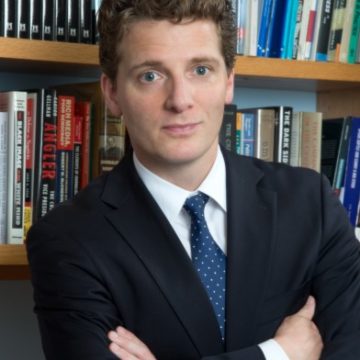 Matthew C. Nisbet合作论文数College of Arts, Media and Design, Northeastern University5
 Farrel Corcoran合作论文数2
 Steve Miller合作论文数Department of Science & Technology Studies, Faculty of Maths & Physical Sciences, University College London2
 Luke Clancy合作论文数1
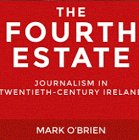 Mark O'Brien合作论文数Sch Commun, Dublin City Univ1Richard Holliman合作论文数1
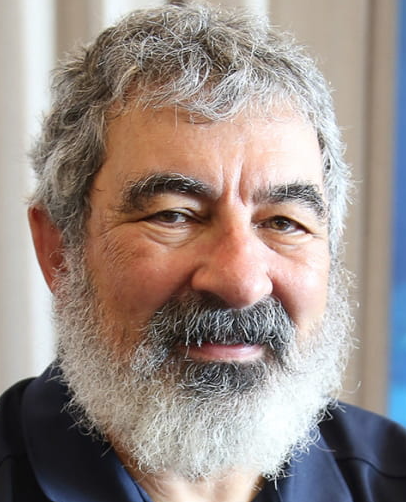 Bruce V. Lewenstein合作论文数Department of Communication, College of Agriculture and Life Sciences, Cornell University;Department of Science & Technology Studies, College of Arts & Sciences, Cornell University1
 Timothy Allen Caulfield合作论文数School of Public Health, University of Alberta;Faculty of Law, University of Alberta1
 Valerio Poti合作论文数NATIONAL BUREAU OF ECONOMIC RESEARCH1
 Matthew R. Hartings合作论文数Beckman Institute, California Institute of Technology1
 Brian Trench合作论文数1
 Baudouin Jurdant合作论文数1




