Mathematics serves as a fundamental intelligent theoretic basis for computation, and mathematical analysis is very useful to develop computational methods to solve various problems in science and engineering. Integral transforms such as Laplace Transform have been playing an important role in computational methods. In this paper, we will introduce Sumudu Transform in a new computational approach, in which effective computational methods will be developed and implemented. Such computational methods are straightforward to understand, but powerful to incorporate into computational science to solve different problems automatically. We will provide computational analysis and essentiality by surveying and summarizing some related recent works, with additional automatic proof details by applying system built-in functions. Applications include the computation of coefficients of Taylor's expansions, calculation of generating functions, mathematical identity proofs, solving differential equations and integral equations. For demonstration purposes, some of the methods were implemented in Maple with demonstrational results matching the expected values.
With a strong demand for online education and project management in deeper scope and larger scale to better fit COVID-19 pandemic situation, exploring new knowledge of online education to make it more effective became vital with the new challenges of STEM education. To resolve the above problem, this paper focuses on various aspects of online STEM education project management where the Enhanced Noyce Explorers, Scholars, Teachers (E-NEST) three-tiered structure was implemented during the COVID-19 period. Two City University of New York (CUNY) institutions, New York City College of Technology (City Tech) and Borough of Manhattan Community College (BMCC) used the three-tiered structure referred to as Explorer, Scholar and Teacher which incorporated advancements in teaching internships, professional development workshops and mentorships remotely. Built upon the theories of engagement, capacity and continuity (ECC) and team-based learning (TBL), this remote learning model and infrastructure had a positive impact on STEM education and project management. The technological tools utilized included Zoom, Google Meet, Microsoft teams, Blackboard Collaborate Ultra, Skype and SurveyMonkey. The results from qualitative and quantitative data including project evaluation, online surveys and focus group interviews demonstrate that the modified remote learning and management tools were effective. This indicated that the E-NEST model greatly supported student success and faculty in online learning and project management meetings.The E-NEST STEM education project was compared to two other project management models along with the previous NEST curriculum. Faculty emphasized practicing project management proactively and utilized best practices of classroom and time management consistent with Project Management Body of Knowledge (PMBOK) and Project Cycle Management (PCM) guidelines. The comparisons attest that the E-NEST project developed excellent and innovative online platforms for student learning with project management and ECC and TBL applications.Hereafter, this research can be used to constructively develop more online STEM education learning models and platforms and integrate new practice and technology globally. These ideas can contribute to future research that could be applied internationally to STEM education projects in K-12 and higher education institutions.
Online study is a very powerful method for global education, as it is available anywhere for anyone with internet access. It is getting more and more important, especially during the pandemic. Computational science is relatively new but very important. It is considered as the third pillar for scientific research, which advances all sciences and technologies in a new dimension. More and more institutes offer online courses or programs in computational science. Unfortunately, almost no rigorous educational study was publicly available towards online computational science education. In this paper, the authors shall introduce a new Automatic Verification Strategy (AVS) in online study of computational science by using Sumudu transform as an example to undergraduate or graduate students in computational science related courses. AVS is a set of programs to provide interaction and verification during the learning process. AVS will reduce cognitive load and support both synchronous and asynchronous learning. Once the AVS is implemented, it is sustainable and can be used any number of times anywhere anytime, like students have private teachers helping them anytime anywhere. Type: Full / Regular Research Paper for CSCI-RTED
Three-dimensional (3D) models have been used as essential tools in medical training. In this study, we visualize 3D models of human organs with graphics software for the purpose of training medical students. This study investigates whether 3D organ visualizations will be more recognizable to medical students than two-dimensional (2D) organ images. In our experiments, the models were shown to health science students to determine how useful they were in training and we compared the use of 3D models with 2D images. We conclude that the 3D organ models we used are more likely to be recognized by the students.
The Laplace Transform has been widely used for about two centuries in problem solving in mathematics, engineering and sciences. The Sumudu Transform is very recent, it is as powerful as the Laplace Transform and has many nice features. Traditionally, when these transforms are used, the calculations of the inverse transforms are necessary; unfortunately, the calculations of Inverse Laplace Transform and Inverse Sumudu Transform are problematic and challenging. The authors studied Sumudu Transform in the computational approaches. We shall introduce a few novel algorithms on the computations of Inverse Sumudu Transform and Inverse Laplace Transform in this paper. The algorithms introduced here are straightforward to understand and powerful for problem solving, and some demo versions were implemented in the Maple Computer Algebra Systems. Type: Full / Regular Research Paper for CSCI-RTCS
The student retention in undergraduate computer science degrees has been decreasing over the past 15 years where an attrition rate as high as 30% to 40% was observed during that period, with most students leaving the field after taking some introductory courses. Observing a similar trend or worse could be possible during or after the COVID-19 pandemic. A possible solution for this problem is to introduce highly motivating topics in the lower-division courses that will keep the students intrigued and wanting to learn more, and eventually, register in higher division courses. In this paper we provide a systematic review of the topics and subjects adopted in many institutions to motivate students of computer science in lower-division undergraduate curriculum. Then, we summarize the common attributes of these motivating subjects. In addition, we propose to leverage data processing subjects or big data problems to motivate college students to learn in lower-division courses. Based on the attributes of the existing motivating topics and the method of logic inference, we show that it is feasible and effective to motivate students’ learning by injecting data processing subjects or big data problems in lower-division computer science courses.
Due to limited computation and storage resources of industrial internet of things (IoT) edge devices, many emerging intelligent industrial IoT applications based on deep neural networks (DNNs) heavily depend on cloud computing for computation and storage. However, cloud computing faces technical issues in long latency, poor reliability, and weak privacy, resulting in the need for on-device computation and storage. On-device computation is essential for many time-critical industrial IoT applications, which require real-time data processing. In this paper, we review three major research areas for on-device computation, specifically quantization, pruning, and network architecture design. The three techniques could enable a DNN model to be deployed on edge devices for real-time computation and storage, mainly due to the reduction of computation and space complexity. More importantly, these techniques could make DNNs applicable to industrial IoT devices.
This research analyzes how remote learning models are utilized in STEM Education. The E-NEST project developed online teaching models to instruct teaching interns during the unprecedented times of the coronavirus pandemic including mentorships, internships and culturally responsive teaching summer workshops. Based on key findings from data collection and program evaluations from the National Science Foundation Robert Noyce Teacher Scholarship program, a comprehensive online learning classroom was created to teach cultural diversity in STEM Education with modified project management and recruitment approaches. As a result, E-NEST online internships and professional development workshops were effective and promoted student achievement during the transition to remote learning. The project team learned the functions of online apps to instruct students and gained experience in facilitating online learning classes.
Generating functions (GFs) are one of the most useful tools for problem solving, as they have been playing an important role in many applications, including but not limited to counting, identity proving, analysis of algorithms, problem representation and solving in combinatorics. The authors have been studying a new transform called Sumudu Transform in a computational approach, in this work, it shall show that Sumudu Transform transfers the exponential generating functions to the ordinary generating functions and the transform also serves as a new powerful tool in the calculation of generating functions and applications. Applications include new methods in solving differential and integral equations automatically by using generating functions.
This work applies a graphics processing unit (GPU) to the study of molecular communication (MC) systems where molecules are used to exchange information. Most MC is based on Brownian motion and modeled via a stochastic differential equation that admits analytical solutions under certain rather restrictive assumptions. As such, emphasis is placed on Monte Carlo simulation methods to study MC. This paper explores the application of a GPU to reduce this simulation time using two different approaches. This work will show that the GPU can offer significant speedup relative to the CPU, providing avenues to deeper MC research unavailable using a CPU based simulator. With that, it will also show that some avenues towards deeper MC research remain infeasible due to excessively long simulation times, even when using a GPU.
This paper explores recent trends in field of big data visualization based on cloud computing via the use of virtual machine hosted servers. Specifically, the visualization of terrain data acquired from several major open data sets using a graphics library for browser based rendering will be explored. It will be shown that three dimensional terrain information may be viewed and interacted with by many remote clients within a browser when using modern graphics libraries, and a collection of Amazon EC-2 machines for fetching and decoding of the terrain data. Data pre-fetching and a parallel implementation of each server further improves performance. Results from this study are expected to enable and expedite existing and future research in the terrain data visualization field.
This research discusses the pedagogy, Culturally Responsive Teaching and its significant role in the Noyce project curriculum. Culturally Responsive Teaching has been incorporated into all three of the chief tiers of Noyce: Explorer; Scholar; and Teacher. This main progressive mechanism has successfully prepared and trained outstanding STEM teachers. Based on the summative and formative evaluations from the NSF Noyce Scholarship Phase I program, there were several significant results that demonstrated the success of the NEST project. The Noyce project faculty plans to continue to integrate Culturally Responsive Teaching into the second phase of the Noyce program.
A limited number of graphics processing unit algorithms exist for frequent itemset and association rule mining. This paper attempts to address that gap by introducing algorithms that lend themselves to massively parallel processing in a tool we call GPUMiner. The performance of GPUMiner will be contrasted against classic algorithms developed for a central processing unit type architecture. Multiple optimizations are adopted to improve efficiency in our design, including separate bitmaps for drugs and symptoms, parallel reduction for sum operation and a thread combination matrix that enables multiple-drug combinations to explored. Experiments, using the popular test dataset T40I10D100K.data, show that our GPUMiner is able to achieve a speedup of 13.7 in comparison to the existing implementation. In addition, we apply GPUMiner in discovering drug-symptom associations and report on some well-known symptoms associated with a single drug or a combination of multiple drugs.
Addition is the most fundamental operation in mathematics and sciences. Summation of a sequence of numbers is a common task in mathematical related calculations and problem solving. Sumudu Transform was only introduced recently but has many nice properties for solving problems in computational science. In this work, the authors shall explore Sumudu Transform in computational approach which serves as foundation to various interesting and useful applications; we shall show that Sumudu Transform is a powerful tool to calculate the summations for both sequences of finite numbers and infinite numbers. Furthermore, the algorithms presented here can be implemented in algebra systems such as Maple to calculate the summations automatically.
The delay feedback reservoir, as a branch of reservoir computing, has attracted a wide range of research interests because of its training efficiency and its simplicity for hardware implementation. However, its potential for processing various kinds of data, like sequential and matrix data, has not been fully explored. In this paper, we present a unified information processing structure by fusing the convolutional or fully connected neural network with the delay feedback reservoir into a hybrid neural network model to accomplish the comprehensive information processing goal. Our experimental results show that our methodology achieves high accuracy in both image classification and speech recognition, yielding 99.03% testing accuracy on the handwritten digits dataset (MNIST) and 97.3% on Spoken Digits Command Dataset (SDCD).
Integral equations come from a wide range of applications. Laplace transform has been playing an important role in mathematics; it is very powerful and widely used in solving integral equations, however, such a traditional method suffers a serious drawback, which is the calculation of inverse Laplace transform. Such a kind of inverse calculation is problematic or impossible, except some very simple functions. Sumudu transform is a new integral transform with nice features like Laplace transform, in addition, it provides new methodology for problem solving. In this work, a new computational method is proposed to solve integral equations, the new method incorporates useful features from both Laplace transform and Sumudu transform such that the calculation of the inverse Laplace transform is avoided. In addition, it is demonstrated with implementations that the new method and techniques presented in this work can be implemented in computer algebra systems such as Maple to solve Volterra convolution integral equations and mixed differential Volterra convolution integral equations automatically.
This research discusses the enhanced three-tiered structure used in the NEST project model which has been designed to recruit and retain interns and scholars to become qualified STEM teachers. Based on existing program data and external program evaluations through surveys and interviews from the existing NSF Noyce Scholarship Phase I program, several key findings were used to enrich the design of the NEST project. Several improvements were implemented from the current model.
A booming global economy and demand for customized products has led to a buyers’ market outweighing a sellers’ market in the manufacturing industry. This means that a deeper conversion towards manufacturing structures to handle the increasing production complexity should be studied. With an increased adoption of the Internet of Things (IoT) and Cyber-Physical Systems (CPS), realization of smart factory will become possible. The smart factory can provide a solution for handling the complexity through the establishment of intelligent products and production processes.
Transmission Control Protocol (TCP) is connection oriented transport protocol used on IP in wireless medium and it insists lossless data transmission in proper order. When TCP is used as a transmission protocol where physical layer is wireless medium, results high packet reordering due to bursty traffic and drastic variation in quality of service with respect to time. By sharing the same path for data and acknowledgement increases the traffic and collision, resulting in reduced throughput. In order to improve QoS this paper proposes a solution "Improved Delay the Duplicate Acknowledgement" (IDDA). This reduces traffic and spurious retransmissions, thereby improving TCP performance.
 Yanqing Ji (籍延青)合作论文数17
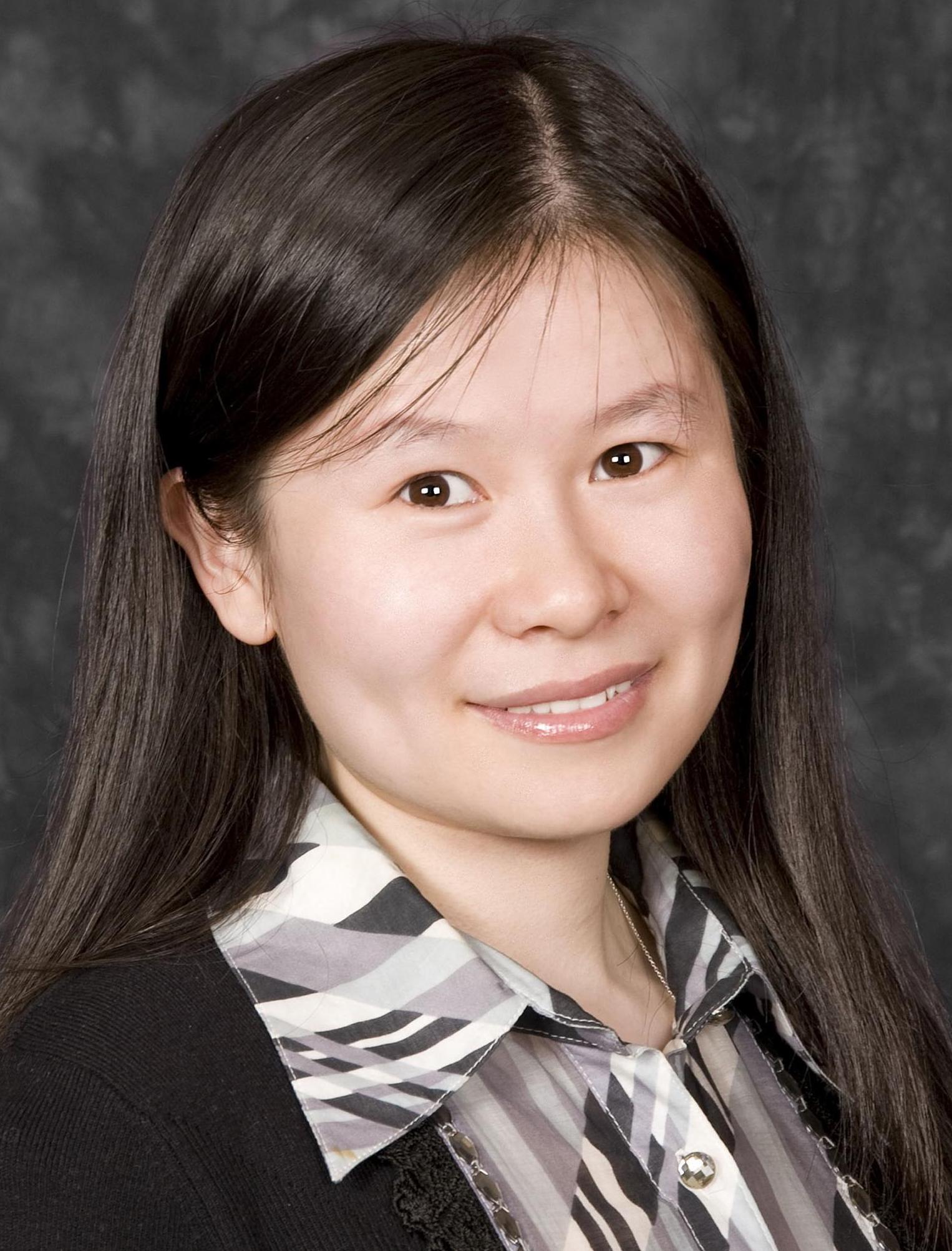 Yang (Cindy) Yi合作论文数Institute for Advanced Computing, Virginia Polytechnic Institute and State University;BRain Inspired Computing and Communications Lab, Bradley Department of Electrical and Computer Engineering, College of Engineering, Virginia Polytechnic Institute and State University13
 Yun Tian合作论文数Dept. of Comput. Sci., Eastern Washington Univ.;c;Dept. of Comput. Sci., Eastern Washington Univ.12
 John Tran合作论文数8Bing Qi合作论文数7Janine Roccosalvo合作论文数6Jun Zhang合作论文数6
 Min-Te Sun合作论文数Department of Computer Science and Information Engineering, National Central University5
 Mei Yang (杨梅)合作论文数Department of Electrical and Computer Engineering, University of Nevada4
 Maurizio Palesi合作论文数Department of Electrical, Electronic and Computer Engineering, University of Catania4Ruzong Fan合作论文数Department of Statistics, Texas A and M University4
 Chunlei Liu合作论文数Department of Mathematics and Computer Science,Valdosta State University4Ahmet Mete Kok合作论文数3
 Andres Salazar Llinas合作论文数3
 Xin Fu合作论文数Efficient Computer Systems Lab, Department of Electrical and Computer Engineering, Cullen College of Engineering, University of Houston3
 Uri Rogers合作论文数3
 Lingjia Liu合作论文数Bradley Department of Electrical and Computer Engineering, College of Engineering, Virginia Tech3Yi Han合作论文数2Weiwei Zhu合作论文数2
 Yongbo Liao (廖永波)合作论文数School of Electronic Science and Engineering(National Exemplary School of Microelectronics), University of Electronic Science and Technology of China2
 Saad Biaz合作论文数Auburn University2
 Xiao Qin合作论文数Department of Computer Science and Software Engineering, Samuel Ginn College of Engineering, Auburn University2
 Jiafu Wan (万加富)合作论文数School of Mechanical & Automotive Engineering, South China University of Technology2Bogdan Moraru合作论文数1Gabriel Lazar合作论文数1Jesse Scholer合作论文数1M. Lakshmi Nadh合作论文数1Yi Yang合作论文数1
 Lieselle Trinidad合作论文数1
 Halim Dmitry Acosta合作论文数1
 Sundara Krishna Y.K合作论文数1Tobias Cain合作论文数Eastern Washington Univ, Sch Comp & Engn Sci, Cheney, WA 99004 USA1Jun Zhang合作论文数1Jian Liu合作论文数1Kazuya Sakai合作论文数Tokyo Metropolitan University1
 Shiya Liu合作论文数1
 Qiyuan An合作论文数1
 Kangjun Bai合作论文数Department of Electrical and Computer Engineering, Virginia Tech1Saqer Alhloul合作论文数Eng. & Design Dept., Eastern Washington Univ.;c;Eng. & Design Dept., Eastern Washington Univ.1Daniel Caban合作论文数1
 Zhen Zhou合作论文数1
 Md. Amimul Ehsan合作论文数Dept. of Comput. Sci. & Electr. Eng., Univ. of Missouri-Kansas City;c1Yaping Zhou合作论文数1
 Junyi Tu合作论文数1
 Bin Wang (王斌)合作论文数College of Computer Science and Technology, China University of Petroleum1
 Hongyu An合作论文数1Chunhua Zhang (张春华)合作论文数School of Mechanical & Automotive Engineering, South China University of Technology1
 Jingweijia Tan (谭婧炜佳)合作论文数College of Computer Science and Technology, Jilin University1




