IntroductionHuman space exploration is progressing into an unprecedented era characterized by extended-duration missions, the establishment of permanent lunar bases, and planned crewed voyages to Mars. These activities introduce important physiological challenges, primarily driven by exposure to altered gravity environments. Microgravity disrupts vestibular input, generating sensory conflicts that impair spatial orientation, motor coordination, and cognitive performance. Although adaptation to such conditions involves neuroplasticity, the precise neural mechanisms underlying altered gravity exposure remain unclear.MethodsTo address this knowledge gap, we performed a coordinate-based meta-analysis of 15 neuroimaging studies examining functional brain changes associated with spaceflight and validated ground-based analogs. Activation likelihood estimation (ALE) was used to identify convergent patterns of brain activity across studies.ResultsThe analysis revealed a predominantly right-lateralized network centred on primary sensorimotor cortices, including the precentral and postcentral gyri, as well as the insula and opercular cortex.DiscussionThese findings suggest that alterations in brain dynamics reflect neuroplastic adaptations to the absence or modification of gravitational signals, supporting the recalibration of internal models that predict and compensate for gravity’s influence on perception and motor behaviour.
Human consciousness has evolved under the constant pull of terrestrial gravity, yet its role in shaping perception and awareness has received limited theoretical attention. As spaceflight transitions from short missions to long-duration habitation, understanding how consciousness responds to non-terrestrial gravity becomes increasingly urgent. In this perspective, we synthesise behavioural, neurophysiological and neuroimaging evidence to argue that Earth’s gravity functions as a deeply entrenched 1G super-prior within the brain’s predictive architecture. This super-prior stabilises multisensory integration and constrains large-scale brain network organisation. Exposure to microgravity disrupts vestibular reliability, destabilising this super-prior and triggering cascades of prediction errors that necessitate widespread recalibration across cortical and subcortical systems. We show that these processes extend beyond sensorimotor adaptation, reshaping conscious experience through altered self-location, emotional regulation and perceptual coherence, and potentially underpinning transformative phenomena. Drawing computational parallels with psychedelic states, we propose that microgravity constitutes a non-pharmacological perturbation that transiently relaxes high-level priors, loosens hierarchical constraints and enhances global integration. By situating consciousness in an environment for which evolution offers no precedent, spaceflight provides a unique experiment for probing the contingent foundations of human awareness and the mechanisms through which consciousness can be transformed.
Abstract A critical aspect of human cognition is the ability to use our knowledge about the laws of physics to make predictions about physical events. Whether this ability is based on abstract processes or is grounded in our body-environment interactions remains an open debate. We used physical reasoning under altered gravity as a model system to show that humans’ real-time embodied experience modifies their high-level physical reasoning. Specifically, we tested participants in computerised reasoning games, while disrupting their gravitational signalling using Galvanic Vestibular Stimulation (GVS). Participants failed more and had suboptimal strategies under the GVS condition compared to no-GVS in games requiring reasoning about terrestrial gravity. However, the effects of GVS were reduced when the games included reasoning about altered gravity. Our findings demonstrate how the physical experience of the body shifts high-level cognitive skill as reasoning, suggesting that humans’ mental representation of the world is grounded in adaptable physical mechanisms.
The faces of conspecifics are a critical feature of our social world. The visual system includes specialised processes for perceiving upright faces, which are not engaged to the same extent when faces are inverted (the face inversion effect). Recently, a face size illusion has been described in which upright faces are perceived as physically smaller than identical inverted faces. This effect appears highly specific to faces and does not occur for other stimuli, such as objects, hands, bodies and letters. We investigated whether this face size illusion is specific to faces in general or to human faces in particular. On each trial, participants saw two faces, one upright and one inverted and judged which face appeared physically larger. Across blocks, participants saw faces of humans, monkeys and cats. For human faces, there was a clear bias for upright faces to be perceived as smaller than inverted ones, consistent with previous findings. No such effect was found for the faces of cats or monkeys, for which there was a significant bias in the opposite direction. These results provide further evidence for the specificity of the face size illusion, showing that it is specific not just to faces, but to human faces.
Verticality is the perception of what’s upright relative to gravity. The vestibular system provides information about the head’s orientation relative to gravity, while visual cues influence the perception of external objects’ alignment with the vertical. According to Bayesian integration, the perception of verticality depends on the relative reliability of visual and vestibular cues. Ambiguities in vestibular signals are resolved through visual information, with the brain integrating these cues alongside prior knowledge of the upright orientation. While it is established that both vestibular and visual cues contribute to verticality perception, the precise mechanisms underlying this integration remain unclear. Here we investigated how the human brain combines vestibular and visual cues to perceive verticality based on their reliability. We assessed verticality perception using a signal detection theory based visual verticality detection task. Participants were shown lines that were either vertical or tilted and asked to judge their orientation. To manipulate cue reliability, we used optokinetic stimulation for visual cues, galvanic vestibular stimulation for vestibular cues, and a combined visual-vestibular condition by simultaneously delivering optokinetic and galvanic vestibular stimulation. Sham stimulations were administered to control for non-specific effects. Our findings demonstrate that reductions in the reliability of visual and vestibular cues impair sensitivity to verticality, with visual cues exerting a more pronounced influence. Importantly, no changes in response bias were observed. The observed pattern aligns with a model in which the relative contributions of visual and vestibular inputs are determined by linear weightings and their combined summation.
Fatigue has a profound impact on various sensory and perceptual processes; yet, its effects differ depending on whether it arises from physical or mental exertion. While physical fatigue is known to alter body weight perception, it remains unclear whether mental fatigue has a similar effect. This study tested the hypothesis that mental fatigue, like physical fatigue, would influence the recently identified perceptual bias of hand weight underestimation, where individuals perceive their hand as lighter than its actual weight. Twenty-four participants completed a validated mental fatigue induction task, followed by pre- and post-fatigue assessments of hand weight perception using a weight judgment paradigm. As expected, the fatigue task significantly increased subjective ratings of mental fatigue. However, contrary to our hypothesis, the degree of hand weight underestimation remained unchanged between pre- and post-fatigue sessions; a Bayesian analysis strongly supported the null hypothesis. These results suggest that mental fatigue, unlike physical fatigue, does not significantly alter sensory mechanisms underlying hand weight perception. This study underscores the distinct pathways through which physical and mental fatigue interact with perceptual processes.
Earth's gravity has fundamentally shaped human development by guiding the brain's integration of vestibular, visual, and proprioceptive inputs into an internal model of gravity: a dynamic neural representation enabling prediction and interpretation of gravitational forces. This work presents a dual computational framework to quantitatively model these adaptations. The first component is a lightweight Multi-Layer Perceptron (MLP) that predicts g-load-dependent changes in key electroencephalographic (EEG) frequency bands, representing the brain's cortical state. The second component utilizes a suite of independent Gaussian Processes (GPs) to model the body's broader physiological state, including Heart Rate Variability (HRV), Electrodermal Activity (EDA), and motor behavior. Both models were trained on data derived from a comprehensive review of parabolic flight literature, using published findings as anchor points to construct robust, continuous functions. To complement this quantitative analysis, we simulated subjective human experience under different gravitational loads, ranging from microgravity (0g) and partial gravity (Moon 0.17g, Mars 0.38g) to hypergravity associated with spacecraft launch and re-entry (1.8g), using a large language model (Claude 3.5 Sonnet). The model was prompted with physiological parameters to generate introspective narratives of alertness and self-awareness, which closely aligned with the quantitative findings from both the EEG and physiological models. This combined framework integrates quantitative physiological modeling with generative cognitive simulation, offering a novel approach to understanding and predicting human performance in altered gravity
Research on media's effects on body perception has mainly focused on the role of vision of extreme body types. However, haptics is a major part of the way children experience bodies. Playing with unrealistically thin dolls has been linked to the emergence of body image concerns, but the perceptual mechanisms remain unknown. We explore the effects of haptic experience of extreme body types on body perception, using adaptation aftereffects. Blindfolded participants judged whether the doll-like stimuli explored haptically were thinner or fatter than the average body before and after adaptation to an underweight or overweight doll. In a second experiment, participants underwent a traditional visual adaptation paradigm to extreme bodies, using stimuli matched to those in Experiment 1. For both modalities, after adaptation to an underweight body test bodies were judged as fatter. Adaptation to an overweight body produced opposite results. For the first time, we show adiposity aftereffects in haptic modality, analogous to those established in vision, using matched stimuli across visual and haptic paradigms.
While navigating through the surroundings, we constantly rely on inertial vestibular signals for self-motion along with visual and acoustic spatial references from the environment. However, the interaction between inertial cues and environmental spatial references is not yet fully understood. Here we investigated whether vestibular self-motion sensitivity is influenced by sensory spatial references. Healthy participants were administered a Vestibular Self-Motion Detection Task in which they were asked to detect vestibular self-motion sensations induced by low-intensity Galvanic Vestibular Stimulation. Participants performed this detection task with or without an external visual or acoustic spatial reference placed directly in front of them. We computed the d prime ( d ' ) as a measure of participants' vestibular sensitivity and the criterion as an index of their response bias. Results showed that the visual spatial reference increased sensitivity to detect vestibular self-motion. Conversely, the acoustic spatial reference did not influence self-motion sensitivity. Both visual and auditory spatial references did not cause changes in response bias. Environmental visual spatial references provide relevant information to enhance our ability to perceive inertial self-motion cues, suggesting a specific interaction between visual and vestibular systems in self-motion perception.
A central question about the human mind is whether perception is an encapsulated process driven purely by sensory information or whether it is intricately linked with cognitive processes. This debate about the cognitive penetrability of perception is discussed in psychology, cognitive neuroscience and philosophy. Thus far, the debate has centred on vision, without major attempts to examine other senses. In this Review, we provide an overview of the key empirical evidence about cognitive penetrability of perception in vision, audition, somatosensation (including proprioception and pain perception), vestibular perception and chemosensation (gustation, chemesthesis and olfaction). We conclude that many (but not all) of the senses are cognitively penetrable. Specifically, cognitive penetrability seems to vary with the extent to which a sense is intrinsically multimodal, the extent to which it receives indirect cognitive influences, and whether hedonic evaluation is an integral aspect of the perceptual experience. We suggest that the debate about cognitive penetrability needs to be more differentiated with respect to the sensory modality of the perceptual experience and the diversity of cognitive influences on that modality. The debate over cognitive penetrability of perception, which has been largely limited to vision, remains unsolved; in this Review, Vetter and colleagues detail cognitive influences on perception across vision, audition, somatosensation, vestibular perception and chemosensation to advance the debate.
The dimensions of objects and our body parts influence our perception of the weight of objects in our surroundings. It has been recently described a dramatic underestimation of the perceived weight of the hand. However, little is known on how perceived size informs the perceived weight of our own body parts. Here we investigated the effects of embodying an enlarged and a shrunken hand on perceived hand weight. We manipulated hand size using a visual-tactile illusion with magnifying and minifying mirrors. We then measured perceived hand weight using a psychophysical matching task in which participants estimate if a weight hanged on their wrist feels heavier or lighter than the experienced weight of their hand. Our results indicated that participants tended to underestimate the weight of their hand more when embodying a smaller hand, and less so when embodying a larger hand. That is, the perceived size of the hand plays a role in shaping its perceived weight. Importantly, our results revealed that the perception of the weight of body parts is processed differently from the perception of object weight, demonstrating resistance to the size-weight illusion. We suggest a model based on constant density to elucidate the influence of hand size in determining hand weight.
According to Newton's laws, the weight of a body part is equal to its mass times gravitational acceleration. Our experience of body part weight, however, is constructed by the central nervous system. No sensory receptors directly specify the weight of body parts, and the factors influencing perceived weight remain unknown. The perceived weight of held objects has been linked to sensations of the magnitude of central motor commands sent to the muscles, what Helmholtz called the effort of will and has subsequently been called the sense of effort1. The link between the sense of effort and the perceived weight of objects is shown by studies demonstrating that held weights feel heavier when muscles are weakened by fatigue1, anaesthesia2, and following brain damage3. Similar drive to muscles is required to counteract the force of gravity on the limbs themselves, though few studies have investigated the perceived weight of body parts4. Stroke patients with hemiplegia frequently comment that their limbs feel heavy5, an effect linked to fatigue in the affected limb6. Similarly, amputees commonly complain of the weight of prosthetic limbs7, despite these typically weighing less than actual limbs. Here we report that healthy adult humans systematically underestimate hand weight. We used a psychophysical matching task to measure the experience of hand weight, which was underestimated on average by 49.4%. We further found that experimental induction of hand fatigue causes a systematic increase in perceived hand weight. Our results demonstrate that humans fail to experience the full weight of their body.
Spatial navigation requires us to precisely perceive our position and the spatial relationships between our own and environmental objects’ location in space. As we move through the environment, multiple cues convey congruent spatial information: indeed, we rely both on inertial vestibular self-motion information and on visual and auditory landmarks. Here we directly investigate the perceptual interaction between inertial cues and environmental landmarks. Twenty-six healthy participants sat on a chair in a darkened room, leaning on a chin rest. On each trial, to test for self-motion detection, we delivered Galvanic Vestibular Stimulation (GVS) or sham stimulation pulse (0.7 mA of amplitude and 250 ms of duration). Critically, GVS activates the peripheral vestibular organs, i.e., the otoliths and semicircular canal afferents, eliciting a self-motion sensation (a roll tilt sensation). However, the chosen stimulation parameters induce a relatively weak virtual sensation of roll rotation. To test whether self-motion sensitivity could be aided by the environmental cue, participants performed the detection task with or without external visual (LED red light) or auditory landmark (pink noise sound emitted by a loudspeaker) both placed in front of them, in different blocks of trials. Participants’ ability to detect virtual vestibular-induced self-motion sensation with and without a landmark was measured using a signal detection approach. We computed the d prime as a measure of participants’ sensitivity and the criterion as an index of their response bias. Results showed that the sensitivity to detect self-motion was higher in the presence of the visual landmark, but not in the presence of the auditory one. The response bias remained unaffected. This finding shows that visual signals coming from the environment provide relevant information to enhance our ability to perceive inertial self-motion cues, suggesting a specific interaction between visual and vestibular systems in self-motion perception.
Csv file containing the summary of the results for Experiment 2. For each chick (‘ID’), the file contains its sex, the preference indices at the four time bins (‘t1’, ‘t2’, ‘t3’, ‘t4’), the first choice (‘first_approach’) and the approach latency (‘latency’).
BACKGROUND: The vestibular system provides a comprehensive estimate of self-motion in 3D space. Widely used to artificially stimulate the vestibular system, binaural-bipolar square-wave Galvanic Vestibular Stimulation (GVS) elicits a virtual sensation of roll rotation. Postural responses to GVS have been clearly delineated, however quantifying the perceived virtual rotation vector has not been fully realised. OBJECTIVE: We aimed to quantify the perceived virtual roll rotation vector elicited by GVS using a psychophysical approach on a 3D turntable. METHODS: Participants were placed supine on the 3D turntable and rotated around the naso-occipital axis while supine and received square-wave binaural-bipolar GVS or sham stimulation. GVS amplitudes and intensities were systematically manipulated. The turntable motion profile consisted of a velocity step of 20°/s2 until the trial velocity between 0–20°/s was reached, followed by a 1°/s ramp until the end of the trial. In a psychophysical adaptive staircase procedure, we systematically varied the roll velocity to identify the exact velocity that cancelled the perceived roll sensation induced by GVS. RESULTS: Participants perceived a virtual roll rotation towards the cathode of approximately 2°/s velocity for 1 mA GVS and 6°/s velocity for 2.5 mA GVS. The observed values were stable across repetitions. CONCLUSIONS: Our results quantify for the first time the perceived virtual roll rotations induced by binaural-bipolar square-wave GVS. Importantly, estimates were based on perceptual judgements, in the absence of motor or postural responses and in a head orientation where the GVS-induced roll sensation did not interact with the perceived direction of gravity. This is an important step towards applications of GVS in different settings, including sensory substitution or Virtual Reality.
The dawn of a new age of space exploration is thrilling. But there is a gap in our preparation for space flight, warns Elisa Raffaella Ferrè
When reproducing the remembered location of dots within a circle, judgments are biased toward the center of imaginary quadrants formed by imaginary vertical and horizontal axes. This effect may result from the heightened precision in the visual system for these orientations in a retinotopic reference frame, or alternately on the internal representation of gravity. We dissociated reference frames defined by the retina and by gravity by having participants locate dots from memory in a circle when their head was upright (aligned with gravity) versus tilted 30° to the left (misaligned with gravity). We mapped the structure of spatial prototypes in a data-driven way using a novel "imaging" procedure. We calculated the rotation of the prototype maps which maximized the similarity between postures, letting us quantify the contribution of each reference frame. Spatial categories are determined by a combination of reference frames, with clear contributions from both gravitational and retinal factors. (PsycInfo Database Record (c) 2023 APA, all rights reserved).
Determining the spatial relation between objects and our location in the surroundings is essential for survival. Vestibular inputs provide key information about the position and movement of our head in the three-dimensional space, contributing to spatial navigation. Yet, their role in encoding spatial localisation of environmental targets remains to be fully understood. We probed the accuracy and precision of healthy participants' representations of environmental space by measuring their ability to encode the spatial location of visual targets (Experiment 1). Participants were asked to detect a visual light and then walk towards it. Vestibular signalling was artificially disrupted using stochastic galvanic vestibular stimulation (sGVS) applied selectively during encoding targets' location. sGVS impaired the accuracy and precision of locating the environmental visual targets. Importantly, this effect was specific to the visual modality. The location of acoustic targets was not influenced by vestibular alterations (Experiment 2). Our findings indicate that the vestibular system plays a role in localising visual targets in the surrounding environment, suggesting a crucial functional interaction between vestibular and visual signals for the encoding of the spatial relationship between our body position and the surrounding objects.
IntroductionSpace Motion Sickness (SMS) is a syndrome that affects around 70% of astronauts and includes symptoms of nausea, dizziness, fatigue, vertigo, headaches, vomiting, and cold sweating. Consequences range from discomfort to severe sensorimotor and cognitive incapacitation, which might cause potential problems for mission-critical tasks and astronauts and cosmonauts' well-being. Both pharmacological and non-pharmacological countermeasures have been proposed to mitigate SMS. However, their effectiveness has not been systematically evaluated. Here we present the first systematic review of published peer-reviewed research on the effectiveness of pharmacological and non-pharmacological countermeasures to SMS.MethodsWe performed a double-blind title and abstract screening using the online Rayyan collaboration tool for systematic reviews, followed by a full-text screening. Eventually, only 23 peer-reviewed studies underwent data extraction.ResultsBoth pharmacological and non-pharmacological countermeasures can help mitigate SMS symptoms.DiscussionNo definitive recommendation can be given regarding the superiority of any particular countermeasure approach. Importantly, there is considerable heterogeneity in the published research methods, lack of a standardized assessment approach, and small sample sizes. To allow for consistent comparisons between SMS countermeasures in the future, standardized testing protocols for spaceflight and ground-based analogs are needed. We believe that the data should be made openly available, given the uniqueness of the environment in which it is collected.Systematic review registrationhttps://www.crd.york.ac.uk/prospero/display_record.php?ID=CRD42021244131.
As humanity prepares for deep space exploration, understanding the impact of spaceflight on bodily physiology is critical. While the effects of non-terrestrial gravity on the body are well established, little is known about its impact on human behaviour and cognition. Astronauts often describe dramatic alterations in sensorimotor functioning, including orientation, postural control, and balance. Changes in cognitive functioning as well as in socio-affective processing have also been observed. Strikingly, no comprehensive theoretical model exists to outline the impact of non-terrestrial gravity on behaviour. Here, we have reviewed the key literature across the last 10 years and explored the impact of non-terrestrial gravity across three key functional domains: sensorimotor functioning, cognition, and socio-affective processing. We have proposed and preliminary validated a neurocognitive model to account for the effects of non-terrestrial gravity in these domains. Understanding the impact of non-terrestrial gravity on human behaviour has never been timelier and it will help mitigate against risks in both commercial and non-commercial spaceflight.
 Patrick Haggard合作论文数Institute of Cognitive Neuroscience, University College London36
 Gabriella Bottini合作论文数Department of Brain and Behavioral Sciences, University of Pavia;Neuroscience and Society Lab, University of Pavia;Cognitive and Forensic Neuropsychology Lab, University of Pavia14
 Matthew R. Longo合作论文数Body Representation Laboratory, Department of Psychological Sciences, Birkbeck, University of London13
 Maria Gallagher合作论文数School of Psychology, Cardiff University9
 Anna Sedda合作论文数Department of Psychology, University of Pavia7
 Iqra Arshad合作论文数Department of Psychology, University of London5
 Antonio Cataldo合作论文数5
 Silvia Zanchi合作论文数4
 Christophe Lopez合作论文数Department of Psychology, University of Bern4
 Ágoston Török合作论文数Inst. of Cognitive Neurosci. & Psychol., Budapest, Hungary;c;Inst. of Cognitive Neurosci. & Psychol., Budapest, Hungary|c|4
 Cuturi Luigi F合作论文数German Center for Vertigo, University Hospital of Munich;Graduate School of Systemic Neurosciences, Ludwig-Maximilians University;University Hospital of Munich, Ludwig-Maximilians University4
 Pavlidou Anastasia合作论文数Institute of Clinical Neuroscience and Medical Psychology, Heinrich-Heine-University Düsseldorf4
 Monica Gori合作论文数U VIP Unit Visually Impaired People, Ist Italiano Tecnol4
 Martina Gandola合作论文数Department of Psychology, University of Milano Bicocca4Fabrizio Pasotti合作论文数3
 Adrian Alsmith合作论文数Department of Philosophy, Faculty of Arts & Humanities, King’s College London3
 Federico Fiori合作论文数3Kaliuzhna Mariia合作论文数School of Life Science, École Polytechnique Fédérale de Lausanne3
 Angela Marotta合作论文数3
 Giandomenico Iannetti合作论文数Neuroscience, Physiology and Pharmacology, Division of Biosciences, Faculty of Life Sciences, University College London3
 Elena Azañón合作论文数Departament de Psicologia Bàsica, Universitat de Barcelona3
 Giuseppe Di Pellegrino合作论文数Dipartimento di Psicologia, Università degli studi di Bologna/Centro Studi e Ricerche in Neuroscienze Cognitive, Università di Bologna, Sede di Cesena3
 Bruno Herbelin合作论文数Université Louis Pasteur3Larry Bliss合作论文数2Robyn Roach合作论文数2M Gallagher合作论文数2Laura Freeland合作论文数Department of Biological and Experimental Psychology, Queen Mary University of London2
 Denise Cadete合作论文数Department of Psychological Sciences, University of LondonBirkbeck2Paola Invernizzi合作论文数Psychol Dept, Univ Milano Bicocca2
 Linkenauger Sally A合作论文数Dept Psychol, Univ Virginia2
 Olaf Blanke合作论文数Geneva University Hospital2
 Ovadia Daniela合作论文数2
 Christos Ganos合作论文数2
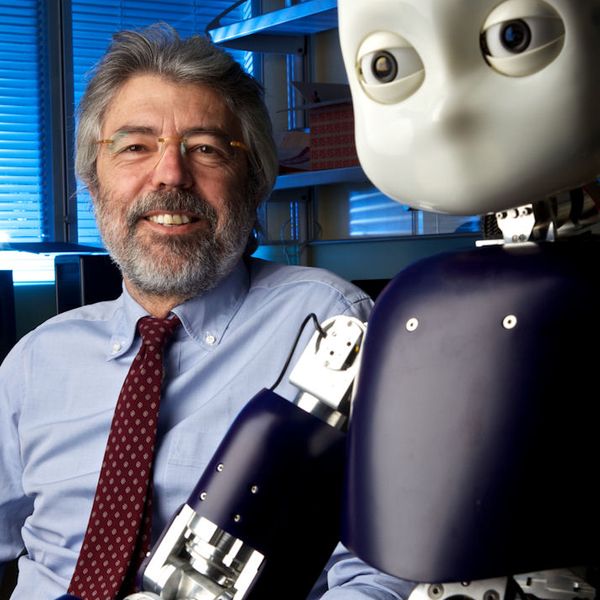 Giulio Sandini合作论文数Istituto Italiano di Tecnologia2
 Vagnoni Eleonora合作论文数Department of Psychological Sciences, University of London2
 Valeria Csepe合作论文数Institute for Psychology, Hungarian Academy of Sciences2
 Laurence R Harris合作论文数Centre for Vision Research, York University2
 Elisabetta Versace合作论文数Department of Psychology and B.R.A.I.N. Centre for Neuroscience, University of Trieste2
 Elena Kokkinara合作论文数Trinity College Dublin2
 David Swapp合作论文数Department of Computer Science, University College London2Vera Vasas合作论文数School of Biological and Chemical Sciences, Queen Mary University of London2
 Eraldo Paulesu合作论文数Dipartimento di Psicologia, Università degli Studi di Milano-Bicocca2
 Alessio Toraldo合作论文数International School for Advanced Studies (SISSA), Trieste, Italy2T. Frett合作论文数1Tiziana Redaelli合作论文数1Ross Dowsett合作论文数1Matteo Querzola合作论文数1
 Klaudia Berenika Ambroziak合作论文数1




