Translating and interpreting, the process by which verbal utterances in one language are expressed in another, takes on a variety of forms and functions depending on the context in which it takes place. The translation of sacred texts has traditionally been a source of social concern and religious controversy. Negotiations between rulers and states have, just like international trade, routinely involved forms of translating. The international circulation of movies and television programmes is accompanied by dubbing and subtitling. Literary debates frequently engage with translations as well, either as models to be followed or as examples to be resisted. Since it is impossible to do justice to this variety of translation practices in a single chapter, we shall restrict ourselves to one major form of translation: the translation of books. Book translations leave public traces; in the modern era they imply a transfer of property rights, are registered, appear in book statistics, and are publicly evaluated and debated. As such they represent an observable and interrelated subset of translation practices, which has only recently begun to attract attention from social scientists.
Translating books is more significant for the international circulation of ideas within the social and human sciences than it is within the sciences. However, chances of a book being translated vary according to various factors: the centrality of original language, the symbolic capital of the author, and that of their publisher. This study of works in the social and human sciences translated into French between 2003 and 2013 reveals the state of unequal power relations between the three languages from which most of them originate: English, German, and Italian. The study shows that although the German tradition is still valued in the sub-field of the human and social sciences publishing in France, we are witnessing the virtual disappearance of contemporary German authors in favor of British and American researchers. This finding tends to confirm the idea of an American hegemony, which however needs to be relativized. The study of the authors of prefaces also reveals the different importation strategies of the cultural intermediaries (editors, literary agents) in this sub-field: economic, political, symbolic and academic.
This article approaches the notion of academic freedom as a social construct and argues that this construct is currently subjected to multiple attempts to de- or re-construct it. It outlines how the contributions to this symposium reflect on these attempts and, in doing so, how they analyse the complex relationship between the institutional autonomy of universities and research institutions, the professional autonomy of academics, the autonomy of scientific fields, and academic freedom. They rely on theoretical considerations, empirical research, reflexivity, and practical experience.
Cet article est un compte-rendu du livre : Pascale Casanova, La République mondiale des lettres, Seuil, 1999 ; rééd. coll. « Points », 2008, 504 p., EAN 9782757809983.
Responding to Sari Hanafi's article on academic freedom and freedom of expression in a conjuncture of societal polarization, this paper argues that, while it is pertinent to examine cancellation practices by the conservative camp, as Hanafi suggests, drawing an equivalence between these practices and what is labelled by them ‘wokeism’ is problematic. Such equivalence obscures the socio-historical contexts from which these movements have emerged and conflates the denunciation of what I call ‘stigmatizing discourses’ with an ideological assault on the left and on universities. The framing of the student protests demanding a ceasefire in Gaza as terrorist propaganda and antisemitism was part of this assault. In a second part, the response engages with Hanafi's analysis of key aspects of the societal polarization surrounding the Gaza war.
This article discusses theoretical and methodological issues that have advanced field theory in the domain of literature, and some other that have not been previously addressed. First are presented the alternative research strategies to construct the field as a space of possibles and as a space of position. The question of the field's social and geo-cultural boundaries is then considered, before revisiting the concept of autonomy and its methodological implications. The article ends by suggesting the use of Bourdieu's concept of symbolic violence in the study of literary texts. The conclusion raises the question of the impure foundations of autonomy.
RESUMO Este artigo analisa a presença e o reconhecimento das mulheres nas ciências sociais. Utilizando dados coletados em pesquisas anteriores e em levantamento sobre a composição dos membros dos comitês executivo e de pesquisa da Associação Internacional de Sociologia, a autora critica os argumentos que justificam a exclusão das mulheres nesse campo, os quais oscilam entre a excelência e a representatividade estatística. Sugere que seria mais apropriado identificar os processos históricos de exclusão ou subordinação das mulheres no ensino, na pesquisa acadêmica, no acesso à publicação e à tradução e, finalmente, na canonização. Concluiu que é necessário localizar no passado os mecanismos de desvalorização das mulheres em relação aos homens e examinar as formas como eles persistem hoje.
Canadian sociologists have been significantly involved in the International Sociological Association since its inception. Three of its congresses have been held in Canada. This article maps this involvement at the level of governing bodies and research committee steering committees. A comparison of the participation of Quebec sociologists with that of English-Canadian sociologists reveals not only chronological gaps and differentiated investments (which fade from the 1990s onward in the context of globalization) but also shared dispositions toward internationalization (based on previous experiences abroad, such as doctorates obtained abroad and migratory paths).
Les sociologues canadiennes se sont significativement impliquées dans l’Association internationale de sociologie depuis sa création. Trois de ses congrès se sont tenus au Canada. Le présent article cartographie cette implication au niveau des instances de direction et des comités directeurs des comités de recherche. La comparaison de la participation des sociologues québécoises à celle des sociologues canadiennes anglaises fait apparaître des décalages chronologiques et des investissements différenciés, qui s’estompent à partir des années 1990, dans la conjoncture de la mondialisation, mais aussi des dispositions partagées à l’internationalisation, à partir d’expériences antérieures à l’étranger (doctorats obtenus à l’étranger, parcours migratoires).
Connecting translation studies and authorship studies, this article offers a theoretical framework for a sociology of world literature, which can enrich the research program on world literature established by Pascale Casanova, David Damrosch, and Franco Moretti. A sociological perspective needs to consider the network of individuals and institutions which contributes to the making of world authorship. If Bourdieu asked: "who created the creator?", this paper asks: "who created the world author?" Focusing on literary translations, the paper makes first some theoretical propositions to distinguish different categories of actors which take part in transcultural (inter)mediation: intermediaries, translators and mediators. It then examines their respective roles in the two stages of production and reception of literary translations.
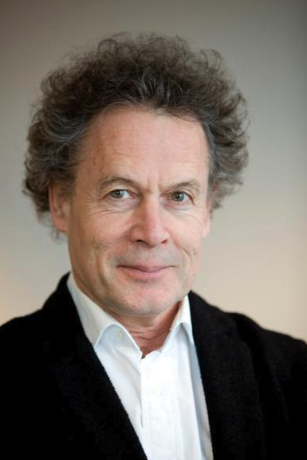 Johan Heilbron合作论文数Department of History of Science and Ideas, Uppsala University;Centre Européen de Sociologie et de Science Politique;Erasmus Center for Economic Sociology, Erasmus Univerity Rotterdam15
 Gisèle Sapiro合作论文数Centre National De La Recherche Scientifique;Ecole des Hautes Etudes en Sciences Sociales8
 Tristan Leperlier合作论文数UMR, THALIM -7
 frederique matonti合作论文数4George Steinmetz合作论文数African Studies Center, College of Literature, Science, and the Arts, University of Michigan-Ann Arbor4Franck Poupeau合作论文数4François Denord合作论文数3Claire Ducournau合作论文数3
 Helene Seiler合作论文数3
 Pierre Bourdieu合作论文数College de France3Thibaud Boncourt合作论文数3
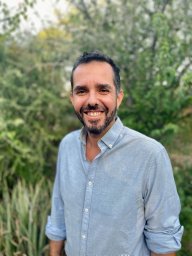 Sebastien Roux合作论文数INRA;CNRS3
 Laurent Jeanpierre合作论文数Université de Caen Basse-Normandie;GREYC3alain delissen合作论文数2guillaume carre合作论文数2Lucile Dumont合作论文数2Boris Gobille合作论文数2Mohamed Amine Brahimi合作论文数2Nicole Racine合作论文数2
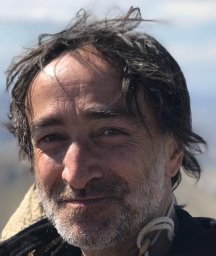 Gustavo Sorá合作论文数2Dinah Ribard合作论文数2
 Catherine Maire合作论文数2Brian McHale合作论文数2Christian Lallier合作论文数1Michèle Leclerc-Olive合作论文数1Sophie Mentzel合作论文数1robert descimon合作论文数1jean schmitz合作论文数1patrick mignon合作论文数1Alejandro Dujovne合作论文数1Laurence Macé合作论文数1Claude Lefébure合作论文数1patrick goujon合作论文数1jerome heurtaux合作论文数1Yannis Tsiomis合作论文数1Sara Le Menestrel合作论文数1Laure Blévis合作论文数1Alexandre Escudier合作论文数1myriam desert合作论文数1Thierry Bonnot合作论文数1nicolas flamant合作论文数1Anne Cheng合作论文数1alain cottereau合作论文数1Rick Razanadrakoto合作论文数1
 Emmanuel Pedler合作论文数1Benoît Trépied合作论文数1Ran Halévi合作论文数1paolo odorico合作论文数1




