In his introductory paper Evers advocates Norbert Elias’s concept of figuration as an antidote to narrow interpretations of ‘the civilising process’. According to Alfred Weber, the key to macro-history is to be understood as the interaction of three different long-term macro-processes: (1) the civilisatory process (more or less identical to Max Weber’s concept of a long-term process of intellectualisation or ‘enlightenment’); (2) the emergence and change of societal formations; and (3) the cultural process. Systems theories such as Luhmann’s and Wallerstein’s assume a global trend towards a coherent global entity or system without boundaries, either a ‘world system’ or—Wallerstein’s version—a ‘modern world economy’. Elias’s theory combines these diverse dimensions of change in his concepts of figurations and civilising processes. Elias’s analysis and concepts are similar to, but more flexible, open-ended and more open to the empirical investigation of the component (micro-)processes than the concepts and conceptions of these systems theories of social evolution or long-term change in history. Furthermore Evers suggests that civilising processes have been and are always combined, in a dialectical manner, with decivilising trends, civilisation with barbarism, developments towards pacification (or civility or mutual identification or empathy) in the centres of these large-scale processes with counter-processes of intensifying violence, of exclusion and marginalisation, which become concentrated at the periphery of the global system or of global processes and in marginalised groupings in the resulting societal formations.
In this paper, we explain how an experiential learning course and study tour to Gansu Province (People’s Republic of China) enabled undergraduates at the Singapore Management University (SMU) to acquire 21st-century competencies and higher-order thinking skills by analyzing and evaluating specific aspects of China’s Belt and Road Initiative (BRI) and China–Singapore (Chongqing) Connectivity Initiative — New International Land–Sea Trade Corridor (CCI-ILSTC) with emphasis on developing viable Go-To-Market (GTM) strategies aimed at selling Gansu produce in four Southeast Asian markets. We share how the course was designed to support the attainment of key learning goals and discuss how we turned pedagogical aspirations into concrete learning outcomes. We introduce key aspects of the so-called “SMU-XO” project that the students conducted in partnership with an industry partner, Pacific International Lines (PIL), and discuss how the project work helped learners to gain global competency by (i) examining critical issues related to BRI such as multi-modal infrastructure connectivity, (ii) appreciating the local perspectives of project stakeholders in Lanzhou and Shanghai and (iii) successfully interacting with people from different cultures, namely China, Indonesia, Vietnam, Malaysia and Thailand.
This paper centres around China’s Belt and Road Initiative (BRI) and makes a case for further examining the possible effects of the complementary ‘Maritime Silk Road’ on Southeast Asia’s maritime clusters with reference to Singapore, Malaysia and Indonesia. Port development with “Chinese engagement” from Port Klang in Malaysia to Sri Lanka to Gwadar in Pakistan to some Gulf state ports to Piraeus in Greece provides a string of valuable pearls in the form of harbours from which adjoining areas can be serviced through feeder vessels or railway lines by Chinese governmentlinked companies. Whether China’s heavy investments in land and maritime infrastructure will lead to the intended development of strong and dense maritime clusters with deep connectivity and complementary sub-clusters for mutual socio-economic development benefits remains to be seen. Academic research to follow these trends, as well as the creation of a comprehensive maritime policy, is advocated for ASEAN nations. key words: maritime clusters, maritime policy, connectivity, Belt and Road Initiative (BRI), China, Indonesia, Malaysia China’s Belt and Road Initiative and ASEAN’s Maritime Clusters 9
New knowledge is produced at great speed and fed into a global epistemic machinery of data banks, publications, and think tanks. In reverse, global knowledge is absorbed and used locally. Locally produced knowledge is on the increase as society moves towards a knowledge society. Social science research adds to knowledge of societies. If it is locally produced, it can be interpreted as reflexive modernization in so far as it provides paradigms for an interpretation of social processes and structures. This article traces the development of social science research on Southeast Asia and its increasing localization. A model is developed to summarize the output of interpretative schemes and published documents. Statistical data on the global absorption of locally produced knowledge are used to measure the extent of the move towards a knowledge society. Singapore, Brunei, Malaysia, and the Philippines have relatively high local social science output, whereas Indonesia, Cambodia, Vietnam, Myanmar, and Laos have low output rates. We diagnose four different paths from 1970 to 2000: Indonesia shows a stable high level of dependence, Malaysia and the Philippines are increasing local output but also increasing dependence, whereas Singapore is increasing output with decreasing dependence on global social science knowledge.
Whereas since the 1990s national and regional planners saw the creation of knowledge clusters as a panacea for gaining a competitive advantage to propel a region or country into a higher stage of industrial development, recent research suggests that connectivity (e.g. through broadband penetration or joint research connections with collaborators elsewhere) is one of the enablers for socio-economic development. This paper will draw on the results of studies on knowledge clusters in Southeast Asian countries as well as the relevant current literature to ask the question, whether knowledge clusters really contribute to regional development and if yes, under what circumstances. The paper will also draw on lessons learned from knowledge cluster initiatives in OECD countries and highlight policy options to enhance connectivity in the context of knowledge cluster development.
The Chinese Government has embarked on a new strategy, known as “One Belt, One Road” or OBOR. This paper concentrates on the maritime part of this development policy, which entails heavy infrastructure investments in ports and railroads, but also property developments like satellite cities or condominiums, offered for sale mainly to Chinese citizens. There will be obvious commercial benefits to economies along the Southern Silk Road, but also geo-political effects like increasing political dependency due to Chinese capital investments and acquisition of property rights in ports and condominiums. Regarding these developments, a Malaysian maritime policy is called for to match OBOR and the Indonesian Maritime Fulcrum, as well as ASEAN integration.
Introduction: Historical Ethnography of Class and State FormationChapter 1. Counterinsurgency, Silences, Forgetting, 1946-69Part I. Development (1969-85)Preface: Colonial Residues and DevelopmentChapter 2. Boom Town in the Making, 1978-80Chapter 3. Getting By: The Arts of Deception and the Typical ChineseChapter 4. Banalities of the Urban: Hegemony or State Predation?Chapter 5. Class Dismissed!Chapter 6. Men in Motion: The Dialectics of Disputatiousness and Rice-Eating MoneyChapter 7. Chinese Society as A Sheet of Loose Sand: Elite Arguments and Class Discipline in a Postcolonial EraPart II. Globalization (1985-97)Preface: Going GlobalChapter 8. Subsumption and Encompassment: Class, State Formation, and Production of Urban Space, 1980-97Chapter 9. Covert Global: Exit, Alternative Sovereignties, and Being StuckChapter 10. Walking On Two Roads and Jumping AirplanesEpilogue: 1997-2007Appendix: Profile of Economic Domination? Notes References Index
Employment in the informal sector has risen sharply until about 1980, but has sice started to decline. This is also true for employment in trade, which accounts for the mayor part of informal sector employment. On the basis of data derived from a survey in informal sector trade in Central Java it is shown that the informal sector is increasingly formalized. Consequently the labor absorption capacity of informal sector trade has declined. It will be necessary to take account of this fact in formulating employment targets for the next Indonesian development plan REPELITA VI.
The dictionary meaning of ‘Nusantara’ is ‘Indonesia’ (in Indonesia) and ‘Malay World’ (in Malaysia), but different meanings have been attached to the concept throughout Southeast Asian history. It appears in fourteenth-century Javanese texts but largely disappeared from written materials for a time, and surfaced again when its almost magical qualities were (re)discovered in the late twentieth century. The meaning of the term has changed over time. In 1334, Gadjah Mada, the chief minister of the Majapahit Empire, used it to refer to the maritime fringes (the nusantara) of the Majapahit Empire. During the anticolonial struggle, the term captured the imagination of writers, novelists, poets, and politicians in Indonesia and in British Malaya but it then disappeared from public debates, only to resurface in the 1990s with the emergence of a Nusantara youth culture and a politicized Nusantara Islam in Southeast Asia.
Off-farm employment and non-agriculture activities have grown rapidly in the rural areas of Java due mainly to the increasing number of female workers employed in small-scale trade. Based on a through discussion on various definitions and hypotheses on the growths of trade and off-farm employment, it could be assumed that the growth of the small-scale traders does not signify that some stagnation of economy or an agricultural involution would take place, but that there will be a significant step in the transformation process on the part of the Javanese farming community as well as on the future economic development.
Whereas since the 1990s national and regional planners saw the creation of knowledge clusters as a panacea for gaining a competitive advantage to propel a region or country into a higher stage of industrial development, recent research suggest a more complex connection between broadband enabled knowledge clusters and social and economic development. This paper will draw on the results of studies on knowledge clusters in Southeast Asian countries as well as the relevant current literature to ask the question, whether knowledge clusters really contribute to regional development and if yes, under what circumstances. The paper will also draw on lessons learned from k-cluster initiatives in OECD countries and highlight policy options for broadband enabled knowledge cluster development.
This paper presents the results of a baseline study of settlements built on water ( kampung air ) along the coast and rivers of Borneo. Using remote sensing data we measured the extent of water villages and estimated their number of households and inhabitants. We estimate that water villages cover an area of approximately 25 sq. km, housing 215,000 inhabitants. Though water villages are closely routed in Malay customs and traditions, it appears that other communities have also moved in, making use of relatively cheap accommodation. Further research is advocated, especially in view of the fact that climate change and sea level rise will reduce land areas suitable for housing construction.
Despite its extreme diversity in terms of population density, ethnic groupings, religion and economic development Southeast Asia has common characteristics constructed by social scientists and politicians that are increasingly recognized. Specific terms, like dualism, plural societies, involution, strategic groups, or loosely structured social systems were used to describe Southeast Asian social conditions. The peoples of Southeast Asia have been classified along linguistic lines. Despite recent criticism the classification into Sino-Tibetan, Austroasiatic, Tai-Kadai, and Malayo-Polynesian is still widely used. Boundaries between ethnic groups are blurred and there are differences between self-interpretation and ethnic classifications imposed by others. The difference between lowland, rice-growing peasant society and nonsedentary ‘tribal groups’ practicing shifting agriculture is disappearing slowly due to assimilation or replacement. Most major world religions are found in Southeast Asia. During the second half of the twentieth century religious revivalist movements have swept through most of Southeast Asia. Urbanization has led to the formation of mega-cities like Jakarta, Bangkok, or Manila and to a new urban middle class. As a reaction to the spread of a globalized consumer culture local or Asian values are emphasized. Transnational labor migration and social mobility are high.
The rapid integration of nations, regions and localities into the world economy, the increasing density of communication networks and the diminishing importance of national boundaries for the flow of commodities, capital, workers, information and knowledge have established conditions for the rise of a knowledge-driven world economy and society. Epistemic cultures of vast knowledge producing and processing organisations increasingly structure society. The old question of classical sociology, initiated by Karl Marx and Max Weber, whether the relations of production or rather knowledge and the spirit of capitalism determine economy and society seems to have been settled once and for all in favour of the Weberian position. Knowledge governs economy and society. But now this process appears to reach a new stage, not thought of by Scheler, where Sein und Bewusstsein merge and knowledge becomes a reality. This is the new reality with which a new sociology of knowledge has to contend.
 Thomas Menkhoff合作论文数Singapore Management University66
 Solvay Gerke合作论文数Knowledge Society49
 Chay Yue Wah合作论文数39Benjamin Loh合作论文数20
 Markus Kaiser合作论文数Darmstadt University of Technology7eng fong pang合作论文数6conrad schetter合作论文数6
 Peter Paul Mollinga合作论文数Dep . of Political and Cultural Change;Center for Development Research;Dep . of Political and Cultural Change|Center for Development Research6
 Chang Yau Hoon合作论文数School of Social Sciences, Singapore Management University6zentrum fur entwicklungsforschung合作论文数5
 Farah Purwaningrum合作论文数Sch Social Sci, Univ Sains Malaysia5
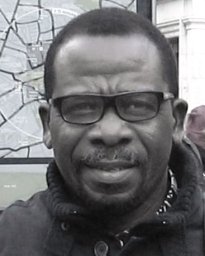 George Yaw Obeng合作论文数Technology Consultancy Centre, Kwame Nkrumah University of Science and Technology (KNUST),5tilman schiel合作论文数3
 Patrick H M Loh合作论文数3Christine Müller合作论文数3tatjana bauer合作论文数3
 Anthony Banyouko Ndah合作论文数Biol Anstalt Helgoland, Alfred Wegener Inst3Mohorn M合作论文数3
 Joan A. Smith合作论文数Old Dominion University;Department of Computer Science;Department of Computer Science, Dominion University3
 Marshall Meyer合作论文数3
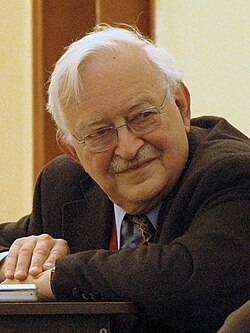 Immanuel Wallerstein合作论文数Yale University3M Schlegel合作论文数2F Liehs合作论文数2G Kummer合作论文数2boer den d j合作论文数2jayarani tan合作论文数2W Pielesch合作论文数2D Schneider合作论文数2rebecca schweishelm合作论文数2M Krause合作论文数2
 simon benedikter合作论文数Inst Int Forestry & Forest Prod, Tech Univ Dresden TU Dresden2W Mahrlein合作论文数2Syamimi Ariff Lim合作论文数Univ Brunei Darussalam, Sch Business & Econ, Jl Tungku Link, Gadong, Bandar Seri Beg, Brunei2Merkel S合作论文数2
 Imoro Braimah合作论文数University of Science and Technology2F Akuffo合作论文数2
 Rashila Ramli合作论文数Institute of Occidental Studies (IKON),, Universiti Kebangsaan Malaysia2
 Benjamin Schraven合作论文数Table of Contents2
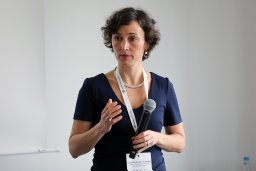 Anna-Katharina Hornidge合作论文数Center for Development Research (ZEF),, University of Bonn2
 Jantine C van Middelkoop合作论文数2R Leonhardt合作论文数1W Weinecke合作论文数1K Ziesenhenn合作论文数1D Scheuler合作论文数1
 Kan Siew Ning合作论文数1reinhard sieder合作论文数1michael mitterauer合作论文数1Walter F. Carroll合作论文数1georg elwert合作论文数1




