The classical physical theories that prevailed in science from the time of Isaac Newton until the dawn of the twentieth century were empirically based on human experience and made predictions about our mental experiences, yet excluded from the dynamics all mental properties. But how can one rationally get mental things out if no mental elements are put in? The key step in the creation of quantum mechanics during 1925 by Heisenberg and his colleagues was to recognize and emphasize the essential dynamical role of mental properties in the creation of our mental empirical findings. This basic feature of quantum mechanics was cast into rigorous mathematical form by John von Neumann, and was made a central feature of contemporary relativistic quantum field theory by the work of Tomonaga and Schwinger. That theory is causally strictly forward in time. But it is explained here how it can nevertheless accommodate the seeming backward-in-time causal effects reported by D.J. Bem, and many others, by means of a slight biasing of the famous Born Rule. The purpose of this communication is to explain how those reported retrocausal findings can be explained by a strictly forward-in-time and nearly orthodox causal dynamics that, however, permits the Born Rule to be slightly biased under certain conditions. A feasible experiment is proposed that, if it gives the outcomes predicted by the proposed theory, will provide evidence in favor of this causally forward-in-time and nearly orthodox explanation of the reported retrocausal effects.
This book explains, in simple but accurate terms, how orthodox quantum mechanics works. The author, a distinguished theoretical physicist, shows how this theory, realistically interpreted, assigns an
Danko Georgiev has published a series of papers that claim that the Quantum Zeno Effect that I employ in my explanation of how our minds are able to influence our actions is nullifies by environmental decoherence effects. I give here a simple proof that environmental decoherence does not nullify the quantum Zeno effect.
beyond physicalism toward reconciliation of science and beyond physicalism toward reconciliation of science and beyond physicalism toward reconciliation of science and beyond physicalism toward reconciliation of science and something higher lessons from beyond physicalism beyond physicalism toward reconciliation of science and mystical experience and metaphysics esalen institute edward f. kelly toward reconciliation of science and and the varieties of religious experience: a study in jse 294 online brian martin loriliai biernacki curriculum vitae home | university of 0051 study guide browserfame free download beyond physicalism book bookfeeder manual solutions of ugural advanced strength ebook international accounting and multinational enterprises 6th is it floating trupin the library innovation toolkit ideas strategies and friends worship today comtemporary concepts and practices manual for powerhouse mpex browserfame guided reading activity 7 1 demand answers mrvisa imagining the new britain jbacs democratic deficitdemocratic accountability and the brothers the hidden history of kennedy years david talbot journal of the society for psychical research spr berlitz chinese mandarin cassette pack wlets dark dont catch me lxnews free download acgih industrial ventilation manual 2004 cellular respiration guide answers xciii lamb v bowen haruns review chemical equilibrium answers section 2 vaelid kessler v united states draxit the varieties of religious experience a mentor book ebook geometry final exam semester 2 answer sheet ricuk department of institutions v kinchen pugcit erg ver and psychophysics tomig stihl 029 039 chain saw service repair manual trupin hyundai galloper parts manual catalog 1991 2003 die einsamen by hkan nesser sqlman monster manual 1st edition freshu
A physics-based understanding of how our conscious thoughts can affect our physically described brains is presented. This understanding depends on the shift from the mechanical conception of nature that prevailed in science from the time of Isaac Newton until the dawn of the twentieth century to the psychophysical conception that emerged from the findings of Planck, Bohr, Heisenberg, and von Neumann. This shift converted the role of our conscious thoughts from that of passive observers of a causally closed physically described universe to that of active participants in an essentially psychophysical understanding of nature. 1. The Basic Question and Why It Is Important. Science’s conception of the physical world changed radically during the twentieth century. At the end of the nineteenth century most scientists still viewed the physical universe as essentially a giant machine. This mechanical view emerged from the seventeenth century work of Isaac Newton, who built his conception of nature on the ideas of Rene Descartes. According to Descartes, the universe is composed of two kinds of elements, the first consisting of elements each of which occupies at each instant of time a definite region in space, and the second consisting of elements that include our human thoughts. Descartes allowed these two parts of nature to interact causally within our brains, but Newton specified that the motions of the elements of the first kind are completely determined by laws of motion that refer exclusively to elements of this kind. In Newtonian-type physics these elements of the first kind are, moreover, essentially mechanical, in the sense that they have been stripped of the experiential qualities that characterize our thoughts, such as the conscious awareness of feelings, and the capacity to grasp meanings. Consequently there is in Newtonian-type physics no possibility for any causally effective role for any aspects of our being that are essentially different in kind from the mechanical elements that occur in that type of physics. Descartes’ views accommodated our intuitive feeling that our conscious thoughts can influence our bodily movements – my conscious intent to raise my arm seems to cause my arm to rise – whereas Newton’s physics leads to the contrary conclusion that, in spite of what may seem to be the case, the notion that human thoughts, per se, can affect human actions is a deeply misleading illusion. Newton’s ideas led eventually to the classical physics of the late nineteenth century. Its main premises are these: 2 1. There exists a material universe that develops over the course of time by means of interactions of its tiny mechanical parts with neighboring tiny mechanical parts. 2. These interactions are governed by mathematical laws. 3. These laws entail that the mechanically described future is completely determined by the mechanically described past, with no reference to human thoughts, choices, or
Quantum mechanics as conceived by Niels Bohr and formulated in rigorous terms by John von Neumann is expressed as quantum neuroscience: a description of the relationship between certain conscious experiences of an observer that are described in terms of the concepts of classical physics and neural processes that are described in terms of the concepts of quantum physics. The theory is applied to recent neuroscience data to determine the rapidity of the observer's probing actions that is needed to account for the capacity of a person's mental intentions to influence that person's bodily actions in the intended way.
 Takahiro Kawai合作论文数9
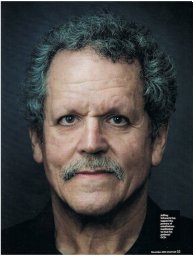 Jeffrey M. Schwartz合作论文数UCLA Neuropsychiatric Institute5
 Mario Beauregard合作论文数Department of Psychology, University of Arizona5Naofumi Honda合作论文数3ruben m pegorer合作论文数2
 Harald Atmanspacher合作论文数Institute for Frontier Areas of Psychology and Mental Health2
 Douglas Watt合作论文数1
 Ilya Farber合作论文数George Washington University|Singapore Management University1T Kawai合作论文数1
 Bill Faw合作论文数1
 Kevin Cahill合作论文数Ctr Aging & Work, Boston Coll1David Presti合作论文数Neurobiology Faculty, Department of Molecular and Cell Biology, University of California, Berkeley1Clark Thomas W合作论文数1
 Beaton Michael合作论文数IAS-Research Center for Life, Mind, and Society, University of the Basque Country San Sebastián;Centre for Computational Neuroscience and Robotics, University of Sussex Brighton;University of the Basque Country San Sebastián, University of Sussex Brighton1
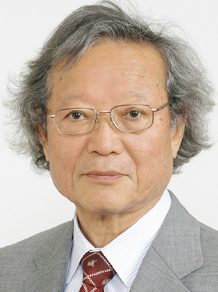 Masaki Kashiwara (柏原正樹)合作论文数Institute for Advanced Study, Kyoto University;Research Institute for Mathematical Sciences, Kyoto University1
 Gennaro Rocco合作论文数1Daniel Iagolnitzer合作论文数1
 Wolfgang Fach合作论文数Institut fur Grenzgebiete der Psychologie und Psychohygiene1Bruce Rosenblum合作论文数1
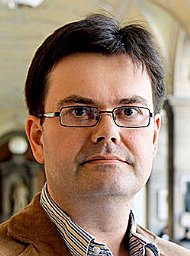 Matthew Ratcliffe合作论文数Department of Philosophy, Durham University1
 Fred Kuttner合作论文数1
 Jesse J. Prinz合作论文数Graduate Center, City University of New York1Loriliai Biernacki合作论文数1
 Louis C. Charland合作论文数University of Western Ontario1
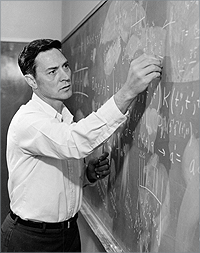 Geoffrey F. Chew合作论文数Lawrence Berkeley National Laboratory1
 Jonathan Edwards合作论文数Division of Medicine, University College London1R. Gomatam合作论文数1
 Colston Chandler合作论文数Department of Physics and Astronomy, University of New Nexico1




