People's multiple identities often wax, wane, and are transformed over their lifetimes, both as sources of personal meaning and as realities communicated to others. Yet, despite a research turn toward studying identities as multiple and dynamic, largely still missing is a cohesive view of people's efforts to narratively integrate the sum of their many evolving parts. In this paper, we take a narrative perspective on the notion of identity holism to theorize how people build a meaningful whole by making narrative claims involving "4Cs"—credibility, coherence, continuity, and causality. Cutting across these claims are more abstract themes, or leitmotifs, of identity coalescence and coevolution, which are internally experienced as static and dynamic holism, respectively. We discuss how holism, and particularly dynamic holism, fosters personal authenticity, wisdom, adaptiveness, and resilience; the broader contributions of our theorizing to the literatures on identity and narrative; and implications for management and future research.
The evolving landscape of contemporary careers is marked by frequent nonlinear transitions and their concomitant identity dynamics. In this review we define career transition as a movement from one institutionally recognized work role sequence into a role that forms part of a different role sequence and that is perceived as career discontinuity by the person making the transition. We review the current state of research on career transition and professional identity to uncover overarching themes and important lacunae in our understanding of the antecedents, processes, and outcomes of change in today's varied and often circuitous careers, recommend directions for future research, and elaborate on practical implications for people and organizations.
You aspire to lead with greater impact. The problem is you're busy executing on today's demands. You know you have to carve out time from your day job to build your leadership skills, but it's easy to let immediate problems and old mind-sets get in the way. Herminia Ibarra--an expert on professional leadership and development and a renowned professor at INSEAD, a leading international business school--shows how managers and executives at all levels can step up to leadership by making small but crucial changes in their jobs, their networks, and themselves. In Act Like a Leader, Think Like a Leader, she offers advice to help you: * Redefine your job in order to make more strategic contributions * Diversify your network so that you connect to, and learn from, a bigger range of stakeholders * Become more playful with your self-concept, allowing your familiar--and possibly outdated--leadership style to evolve Ibarra turns the usual "think first and then act" philosophy on its head by arguing that doing these three things will help you learn through action and will increase what she calls your outsight--the valuable external perspective you gain from direct experiences and experimentation. As opposed to insight, outsight will then help change the way you think as a leader: about what kind of work is important; how you should invest your time; why and which relationships matter in informing and supporting your leadership; and, ultimately, who you want to become. Packed with self-assessments and practical advice to help define your most pressing leadership challenges, this book will help you devise a plan of action to become a better leader and move your career to the next level. It's time to learn by doing.
This symposium showcases a set of papers that deepen our understanding of the dynamic relationship between intra-organizational networks and race, ethnicity, and gender-based inequalities in workplace experiences and attainment. It brings together leading scholars to shed light on novel theoretical mechanisms, processes, and frameworks of interest to inequality, social networks, and DEI scholars. The first two papers focus on intra-organizational network inequalities, unpacking the conditions under which race, ethnicity, and gender differences in social networks emerge and persist. The latter two papers focus on unpacking the construct of inclusion by offering novel theoretical frameworks of inclusion and re-conceptualizing it as a structural, network-based phenomenon. Collectively, the four papers presented in this symposium offer novel empirical and theoretical mechanisms to explain differences in intra-organizational network characteristics, attainment, and perceptions and behaviors of inclusion. These papers employ a variety of research methods, ranging from qualitative interviews, observational data, surveys, to field interventions. In line with the AOM 2023 theme, Putting the Worker Front and Center, the four papers in this symposium unilaterally zoom in on the workers, especially workers who are members of disadvantaged groups in organizations and society, and seek to identify new ways in which social networks can be used to mitigate race and gender-based inequalities in work experience and attainment. Gendered and Racialized Effects of New Employees’ Initial Ties on Organizational Integration Author: Mabel Abraham; Columbia Business School Author: Sanaz Mobasseri; Boston U. Questrom School of Business Author: Elizabeth Linos; U. of California, Berkeley Author: Dawn Graham; Boston U. Differential Network Resources and Returns for Men and Women Author: Brian Silverman; U. of Toronto Author: Bill McEvily; U. of Toronto Author: Paola Criscuolo; Imperial College London Author: Andrew Cohen; U. of Denver Author: Martine Haas; The Wharton School, U. of Pennsylvania A Structural Framework of Inclusion at Work Author: Lara Yang; Stanford Graduate School of Business Author: Francesca Gino; Harvard U. Author: Paul Isaac Green; U. of Texas at Austin Author: Sameer B. Srivastava; U. of California, Berkeley A Network Perspective on Inclusion: A Research Agenda Author: Adam M. Kleinbaum; Dartmouth College, Tuck School of Business
Mentoring programs operate under the promise that matching seasoned executives with up-and-coming professionals will produce all sorts of benefits. Unfortunately, relationships often remain superficial and transactional. These problems have only gotten worse with remote and hybrid work, which makes meaningful personal interaction difficult. To reap the full benefits of developmental relationships and create "authentic sponsorship," companies must focus on two vital qualities: public advocacy and relational authenticity. Public advocacy is a one-way process by which "seniors" use their power to help "juniors" get career opportunities. It produces visible and measurable outcomes, such as promotions and stretch assignments. Relational authenticity is a two-way process in which both parties share their perspectives and make themselves open to hearing and learning from each other. Juniors get the support and validation they need to take on new challenges, and seniors understand where their juniors' capabilities and talents lie and care enough about them to put their own reputations on the line. This article lays out the various stages of the journey to authentic sponsorship: mentor, strategizer, connector, opportunity giver, and sponsor.
Noting the need for what Harvard Kennedy School professor Ronald Heifetz calls “adaptive challenges” to areas such as environmental issues, and systemic racism, the author has “found that five critical leadership skills are vital for creating an environment in which learning things the organization does not know how to do is valued over executing flawlessly on what it knows already.” The five skills, in the author's words, are cross-cutting, collaborating, coaching, culture shaping, and connecting. Within cross-cutting, she notes that Google “found that its higher performing employees tended to build larger, more productive networks by using intentional strategies like deliberately eating lunch with different people in order to do so.” In collaborating, she writes of the importance of psychological safety. In coaching, she explains the crucial nature of “using questions to spark insights in the other person and a choice to give support and guidance rather than instructions.” In culture shaping, she writes about how Microsoft eliminated its quarterly business reviews, “in favor of a more learning oriented session in which coaching could take place.” And in connecting, she employs the example of two different leaders, New Zealand prime minister Jacinda Ardern and Kaiser Permanente chief executive officer Greg A. Adams.
Liminality is the individual or group experience of being betwixt and between states, roles, and/or identities. For both individuals and organizations, liminal experience is pervasive, often permanent, intrinsically problematic and a crucible for innovation and growth. Yet advances in our understanding of liminality in organizational life have remained fragmented, uninformed by empirical research in adjacent fields of scholarly inquiry or theorizing at different levels of analysis. This chapter aims to bring together disparate research and theorizing on liminality’s contemporary manifestations to conceptualize liminality as a creative process that affects the renewal and adaptability functions that are so vital to personal and organizational thriving.
Over the past couple of decades, organizational scholars have been particularly active in investigating biases and barriers that prevent women and minorities from entering and remaining in the upper echelons of organizations. Although extant research on leadership biases and barriers associated with gender, race, and intersectionality present group-specific explanations for underrepresentation, there are important commonalities across these streams of research. This symposium will aim to facilitate discussion and further our understanding of whether and when theories related to a particular social group of interest can be applied to other underrepresented social groups in the context of leadership. Can Predecessors Activate Leadership Selection Biases? Successive Comparison Effects on the Evaluation of Leadership Candidates Presenter: McKenzie Preston; The Wharton School, U. of Pennsylvania Racial Stereotypicality in Appearance and Leadership Attainment: Opposing Effects for White and Black Football Coaches Presenter: Melissa J. Williams; Emory U. Presenter: James Wade; George Washington U. Presenter: Tosen Nwadei; Emory U., Goizueta Business School Presenter: Anand Swaminathan; Emory U. Presenter: C. Keith Harrison; - Presenter: Scott Bukstein; U. of Central Florida Race, Agency, and Leadership: Intersectional Stereotypes Shape Hiring Outcomes for Women Leaders Presenter: Rebecca Ponce de Leon; Fuqua School of Business, Duke U. Presenter: Ashleigh Shelby Rosette; Duke U. Collaborative Brokerage: Gender, Brokerage Behavior, and Performance in Professional Services Presenter: Raina A. Brands; London Business School Presenter: Herminia Ibarra; London Business School
Liminality is the individual or group experience of being betwixt and between states, roles, and/or identities. For both individuals and organizations, liminal experience is pervasive, often permanent, intrinsically problematic and a crucible for innovation and growth. Yet advances in our understanding of liminality in organizational life have remained fragmented, uninformed by empirical research in adjacent fields of scholarly inquiry or theorizing at different levels of analysis. This chapter aims to bring together disparate research and theorizing on liminality’s contemporary manifestations to conceptualize liminality as a creative process that affects the renewal and adaptability functions that are so vital to personal and organizational thriving.
In the face of rapid, disruptive change, companies are realizing that managers can’t be expected to have all the answers and that command-and-control leadership is no longer viable. As a result, many firms are moving toward a coaching model in which managers facilitate problem solving and encourage employees’ development by asking questions and offering support and guidance rather than giving orders and making judgments. The authors explain the merits of different types of coaching—directive, nondirective, and situational—and note that sometimes no coaching at all is appropriate. They describe how managers can use the four-step GROW model to become more skilled at listening, questioning, and drawing insights out of the people they supervise. The article concludes with recommendations for making coaching an organizational capacity—effecting a cultural transformation by articulating why coaching is valuable for the firm as well as individuals, ensuring that leaders embrace and model it, building coaching capabilities throughout the ranks, and removing barriers to change.
People do not stop growing and learning when they finish their formal education – in fact today’s organizations desperately need people who stand ready to take on new challenges and learn new skills, who are ready to achieve increasing job demands, who address issues of diversity in productive ways, and who know how to lead effective and inclusive organizations. How will organizations reshape their cultures and practices to promote people’s readiness to take on these organizational, interpersonal, and inclusion-related challenges that they face? This symposium brings together research investigating the potential role of the growth mindset. Although many organizations have seized on the concept, less scholarly research has directly investigated mindsets in organizational contexts. The goal of this symposium is to address this critical oversight in organizational behavior scholarship. The talks in this symposium will address how mindsets work at the organizational level, how they relate to key aspects of employee well-being, how they shape people’s responses to and coping with overt bias in the workplace, and how to actually translate what we know about mindsets to leaders within an organization. Each presentation pays particular attention to issues of diversity and inclusion as they relate to mindsets and the organizational challenges of interest. Growth Mindset Cultures at Work Presenter: Mary Murphy; Indiana U. Bettering Organizations after Overt Bias: Mindsets & The Confrontation of Biased Statements Presenter: Aneeta Rattan; London Business School Foundations of Culture Change to Advance Workplace Equality: Teaching Leaders to Learn How to Learn Presenter: Robin Ely; Harvard U. Presenter: Heidi Stultz Brooks; Yale School of Management Presenter: Lisa Lahey; Harvard Graduate School of Education Presenter: Susan Sturm; Columbia U. Employees’ Implicit Theories about Willpower: Implications for Job Burnout Presenter: KM Savani; NTU Business School Presenter: Sonja Heller; U. of Zurich Presenter: Veronika Job; Technical U. of Dresden
The challenge of caregiving and its effects on careers (and particularly, women’s careers) has long been studied, and the discussion around this topic is perhaps more relevant today than ever before. Women now outnumber men in many fields of university study, and have the potential and drive to reach the upper echelons of organizations; yet, the reality is that many with the potential to do so will not. This panel symposium will engage a group of senior scholars in an interactive discussion to (1) review how career paths over the life-course are gendered, have changed, and are likely to change; (2) discuss the ‘reality of constraint’ for workers with caregiving responsibilities; (3) examine effective tactics at the individual level that workers use to navigate encountered constraints, and at the macro level, highlight situations of structural successes; and (4) call for future cross-disciplinary research on gender inequality related to caregiving and gendered career paths at the individual and macro levels, over the life-course.
When Satya Nadella became CEO of Microsoft in February 2014, the company seemed in danger of fading into irrelevance. Now its share price is at an all‐time high. How did he do it? By Herminia Ibarra and Aneeta Rattan
Don't sit around thinking about what kind of leader you would like to be, says Herminia Ibarra – take action
 Otilia Obodaru合作论文数9
 Morten T. Hansen合作论文数School of Information, University of California, Berkeley;Apple9
 Roxana Barbulescu合作论文数McGill University7
 Urs Peyer合作论文数INSEAD5
 Sarah Wittman合作论文数George Mason U.4
 Robin J. Ely合作论文数Harvard Business School, Harvard University4
 Jennifer Tosti-Kharas合作论文数Babson Coll3
 Rattan Aneeta合作论文数Department of Psychology, Stanford University3
 yu zi you he (裕子 有賀)合作论文数2
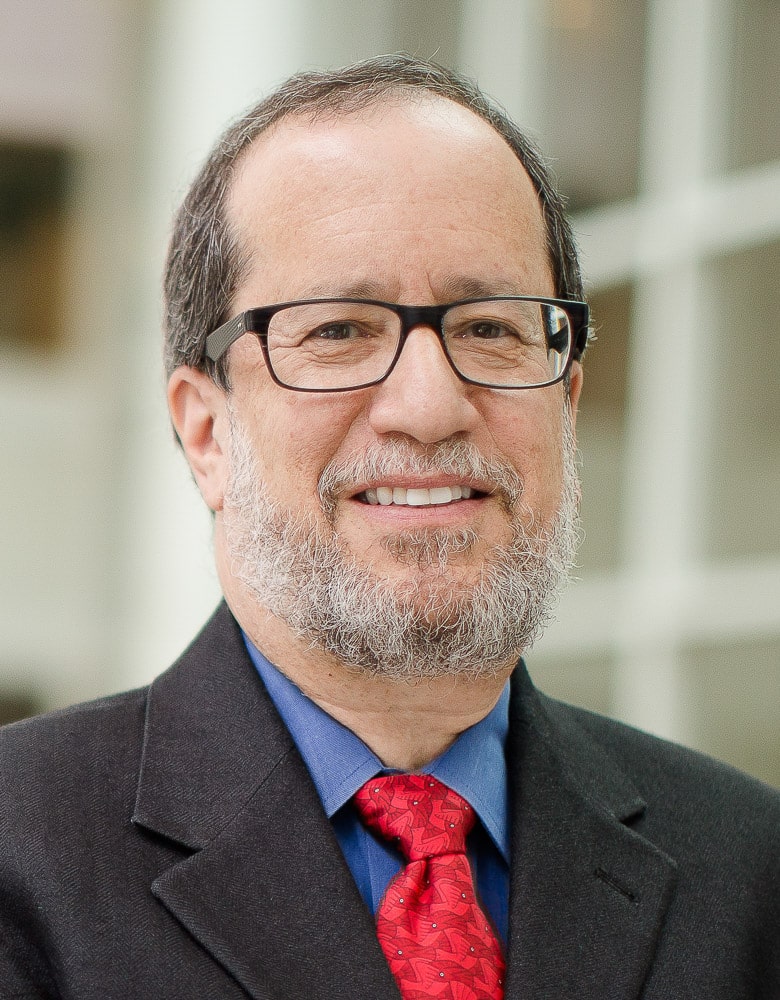 Sim B. Sitkin合作论文数Fuqua School of Business, Duke University2
 Martin Kilduff合作论文数School of Management, University College London2
 Mabel Abraham合作论文数Management Division, Columbia Business School, Columbia University2Snook Scott合作论文数2
 Wenpin Tsai合作论文数Management and Organization Department, Smeal College of Business, The Pennsylvania State University2
 Jennifer L. Petriglieri合作论文数2
 Adam M. Kleinbaum合作论文数Tuck Sch Business, Dartmouth Coll2
 Raina Brands合作论文数2Deborah M. Kolb合作论文数2Fontainebleau Cedex合作论文数2
 William W. George合作论文数Harvard Business School, Harvard University2
 Gianpiero Petriglieri合作论文数2Boulevard De Constance合作论文数2
 David V. Day合作论文数Department of Psychology, Claremont McKenna College2Susan Wolf Ditkoff合作论文数1Susan J. Colby合作论文数1klaus schwab合作论文数1Mark Hunter合作论文数1Shoshana Schwartz合作论文数1Tosen Nwadei合作论文数1Anja Krstic合作论文数1Pamela Stone合作论文数1Yan Anthea Zhang合作论文数1ying jie ling mu (英介 鈴木)合作论文数1David Pellauer合作论文数1Charles Harvey合作论文数1fernandez araoz合作论文数1Norma T. Hollis合作论文数1Tore Bakken合作论文数1
 Alyson Gounden Rock合作论文数McGill University1Genevieve Musca合作论文数Dept Management, Strategy & Org, Univ Paris Ouest Nanterre La Def1
 Robert Wapshott合作论文数Business School, Faculty of Social Sciences, The University of Nottingham1Robert E Quinn合作论文数1Katherine Klein合作论文数1
 brooke r buckman合作论文数Florida Int Univ1Elise Tak合作论文数655 Knight Way, Stanford, CA 94305 USA1Frank Mueller合作论文数1
 Sanaz Mobasseri合作论文数Corresponding author at: 595 Commonwealth Avenue, Boston, MA 02215, United States.1
 Rohny Saylors合作论文数Washington State University1
 Dana Kanze合作论文数London Business School1




