Large language models (LLMs) have achieved impressive performance on knowledge-intensive tasks, yet they often struggle with multi-step reasoning due to the unstructured nature of retrieved context. While retrieval-augmented generation (RAG) methods provide external information, the lack of explicit organization among retrieved passages limits their effectiveness, leading to brittle reasoning pathways. Recent interpretability studies highlighting the importance of structured intermediate reasoning further align with this perspective. We propose Retrieval-And-Structuring (RAS), a framework that dynamically constructs question-specific knowledge graphs through iterative retrieval and structured knowledge building. RAS interleaves targeted retrieval planning with incremental graph construction, enabling models to assemble and reason over evolving knowledge structures tailored to each query. On seven knowledge-intensive benchmarks, RAS consistently outperforms strong baselines, achieving up to 8.7\% and 7.0\% gains with proprietary and open-source LLMs, respectively. Our results demonstrate that dynamic, question-specific knowledge structuring offers a robust path to improving reasoning accuracy and robustness in language model generation.
Recent studies have shown that large language models' (LLMs) mathematical problem-solving capabilities can be enhanced by integrating external tools, such as code interpreters, and employing multi-turn Chain-of-Thought (CoT) reasoning. While current methods focus on synthetic data generation and Supervised Fine-Tuning (SFT), this paper studies the complementary direct preference learning approach to further improve model performance. However, existing direct preference learning algorithms are originally designed for the single-turn chat task, and do not fully address the complexities of multi-turn reasoning and external tool integration required for tool-integrated mathematical reasoning tasks. To fill in this gap, we introduce a multi-turn direct preference learning framework, tailored for this context, that leverages feedback from code interpreters and optimizes trajectory-level preferences. This framework includes multi-turn DPO and multi-turn KTO as specific implementations. The effectiveness of our framework is validated through training of various language models using an augmented prompt set from the GSM8K and MATH datasets. Our results demonstrate substantial improvements: a supervised fine-tuned Gemma-1.1-it-7B model's performance increased from 77.5% to 83.9% on GSM8K and from 46.1% to 51.2% on MATH. Similarly, a Gemma-2-it-9B model improved from 84.1% to 86.3% on GSM8K and from 51.0% to 54.5% on MATH.
Reward models (RMs) play a pivotal role in aligning large language models (LLMs) with human preferences. However, traditional RM training, which relies on response pairs tied to specific prompts, struggles to disentangle prompt-driven preferences from prompt-independent artifacts, such as response length and format. In this work, we expose a fundamental limitation of current RM training methods, where RMs fail to effectively distinguish between contextual signals and irrelevant artifacts when determining preferences. To address this, we introduce a causal framework that learns preferences independent of these artifacts and propose a novel data augmentation technique designed to eliminate them. Extensive experiments show that our approach successfully filters out undesirable artifacts, yielding a more robust reward model (RRM). Our RRM improves the performance of a pairwise reward model trained on Gemma-2-9b-it, on Reward-Bench, increasing accuracy from 80.61% to 84.15%. Additionally, we train two DPO policies using both the RM and RRM, demonstrating that the RRM significantly enhances DPO-aligned policies, improving MT-Bench scores from 7.27 to 8.31 and length-controlled win-rates in AlpacaEval-2 from 33.46% to 52.49%.
Aligning language models (LMs) with curated human feedback is critical to control their behaviors in real-world applications. Several recent policy optimization methods, such as DPO and SLiC, serve as promising alternatives to the traditional Reinforcement Learning from Human Feedback (RLHF) approach. In practice, human feedback often comes in a format of a ranked list over multiple responses to amortize the cost of reading prompt. Multiple responses can also be ranked by reward models or AI feedback. There lacks such a thorough study on directly fitting upon a list of responses. In this work, we formulate the LM alignment as a listwise ranking problem and describe the LiPO framework, where the policy can potentially learn more effectively from a ranked list of plausible responses given the prompt. This view draws an explicit connection to Learning-to-Rank (LTR), where most existing preference optimization work can be mapped to existing ranking objectives. Following this connection, we provide an examination of ranking objectives that are not well studied for LM alignment, with DPO and SLiC as special cases when list size is two. In particular, we highlight a specific method, LiPO-lambda, which leverages a state-of-the-art listwise ranking objective and weights each preference pair in a more advanced manner. We show that LiPO-lambda can outperform DPO variants and SLiC by a clear margin on several preference alignment tasks with both curated and real rankwise preference data.
Hierarchical text classification aims to categorize each document into a set of classes in a label taxonomy, which is a fundamental web text mining task with broad applications such as web content analysis and semantic indexing. Most earlier works focus on fully or semi-supervised methods that require a large amount of human annotated data which is costly and time-consuming to acquire. To alleviate human efforts, in this paper, we work on hierarchical text classification with a minimal amount of supervision: using the sole class name of each node as the only supervision. Recently, large language models (LLM) have shown competitive performance on various tasks through zero-shot prompting, but this method performs poorly in the hierarchical setting because it is ineffective to include the large and structured label space in a prompt. On the other hand, previous weakly-supervised hierarchical text classification methods only utilize the raw taxonomy skeleton and ignore the rich information hidden in the text corpus that can serve as additional class-indicative features. To tackle the above challenges, we propose TELEClass, Taxonomy Enrichment and LLM-Enhanced weakly-supervised hierarchical text Classification, which combines the general knowledge of LLMs and task-specific features mined from an unlabeled corpus. TELEClass automatically enriches the raw taxonomy with class-indicative features for better label space understanding and utilizes novel LLM-based data annotation and generation methods specifically tailored for the hierarchical setting. Experiments show that TELEClass can significantly outperform previous baselines while achieving comparable performance to zero-shot prompting of LLMs with drastically less inference cost.
Large language models (LLMs) have excelled in various applications, yet serving them at scale is challenging due to their substantial resource demands and high latency. Our real-world studies reveal that over 70% of user requests to LLMs have semantically similar counterparts, suggesting the potential for knowledge transfer among requests. However, naively caching and reusing past responses leads to a big quality drop. In this paper, we introduce IC-Cache, a caching system that enables live LLM capability augmentation to improve serving efficiency: by leveraging historical request-response pairs from larger models as in-context examples, IC-Cache empowers small LLMs to imitate and even exceed the compositional abilities (e.g., reasoning) of their larger counterparts, enabling selective offloading of requests to reduce cost and latency. Achieving this live augmentation at scale introduces intricate trade-offs between response quality, latency, and system throughput. For a new request, IC-Cache efficiently selects similar, high-utility examples to prepend them to the new request's input. At scale, it adaptively routes requests across LLMs of varying capabilities, accounting for response quality and serving loads. IC-Cache employs a cost-aware cache replay mechanism that refines example quality offline to maximize online cache utility and efficiency. Evaluations on millions of realistic requests demonstrate that IC-Cache improves LLM serving throughput by 1.4-5.9x and reduces latency by 28-71% without hurting response quality.
Large language models (LLMs) have shown remarkable capabilities in various natural language understanding tasks. With only a few demonstration examples, these LLMs can quickly adapt to target tasks without expensive gradient updates. Common strategies to boost such 'in-context' learning ability are to ensemble multiple model decoded results and require the model to generate an explanation along with the prediction. However, these models often treat different class predictions equally and neglect the potential discrepancy between the explanations and predictions. To fully unleash the power of explanations, we propose EASE, an Explanation-Aware Soft Ensemble framework to empower in-context learning with LLMs. We design two techniques, explanation-guided ensemble, and soft probability aggregation, to mitigate the effect of unreliable explanations and improve the consistency between explanations and final predictions. Experiments on seven natural language understanding tasks and four varying-size LLMs demonstrate the effectiveness of our proposed framework.
Large Language Models (LLMs) have exhibited impressive capabilities in various tasks, yet their vast parameter sizes restrict their applicability in resource-constrained settings. Knowledge distillation (KD) offers a viable solution by transferring expertise from large teacher models to compact student models. However, traditional KD techniques face specific challenges when applied to LLMs, including restricted access to LLM outputs, significant teacher-student capacity gaps, and the inherited mis-calibration issue. In this work, we present PLaD, a novel preference-based LLM distillation framework. PLaD exploits the teacher-student capacity discrepancy to generate pseudo-preference pairs where teacher outputs are preferred over student outputs. Then, PLaD leverages a ranking loss to re-calibrate student's estimation of sequence likelihood, which steers the student's focus towards understanding the relative quality of outputs instead of simply imitating the teacher. PLaD bypasses the need for access to teacher LLM's internal states, tackles the student's expressivity limitations, and mitigates the student mis-calibration issue. Through extensive experiments on two sequence generation tasks and with various LLMs, we demonstrate the effectiveness of our proposed PLaD framework.
Comparative reasoning plays a crucial role in text preference prediction; however, large language models (LLMs) often demonstrate inconsistencies in their reasoning. While approaches like Chain-of-Thought improve accuracy in many other settings, they struggle to consistently distinguish the similarities and differences of complex texts. We introduce SC, a prompting approach that predicts text preferences by generating structured intermediate comparisons. SC begins by proposing aspects of comparison, followed by generating textual comparisons under each aspect. We select consistent comparisons with a pairwise consistency comparator that ensures each aspect's comparisons clearly distinguish differences between texts, significantly reducing hallucination and improving consistency. Our comprehensive evaluations across various NLP tasks, including summarization, retrieval, and automatic rating, demonstrate that SC equips LLMs to achieve state-of-the-art performance in text preference prediction.
Reward models (RMs) are crucial for aligning large language models (LLMs) with human preferences. They are trained using preference datasets where each example consists of one input prompt, two responses, and a preference label. As curating a high-quality human labeled preference dataset is both time-consuming and expensive, people often rely on existing powerful LLMs for preference label generation. This can potentially introduce noise and impede RM training. In this work, we present RMBoost, a novel synthetic preference data generation paradigm to boost reward model quality. Unlike traditional methods, which generate two responses before obtaining the preference label, RMBoost first generates one response and selects a preference label, followed by generating the second more (or less) preferred response conditioned on the pre-selected preference label and the first response. This approach offers two main advantages. First, RMBoost reduces labeling noise since preference pairs are constructed intentionally. Second, RMBoost facilitates the creation of more diverse responses by incorporating various quality aspects (e.g., helpfulness, relevance, completeness) into the prompts. We conduct extensive experiments across three diverse datasets and demonstrate that RMBoost outperforms other synthetic preference data generation techniques and significantly boosts the performance of four distinct reward models.
Generating high-quality, in-depth textual documents, such as academic papers, news articles, Wikipedia entries, and books, remains a significant challenge for Large Language Models (LLMs). In this paper, we propose to use planning to generate long form content. To achieve our goal, we generate intermediate steps via an auxiliary task that teaches the LLM to plan, reason and structure before generating the final text. Our main novelty lies in a single auxiliary task that does not require multiple rounds of prompting or planning. To overcome the scarcity of training data for these intermediate steps, we leverage LLMs to generate synthetic intermediate writing data such as outlines, key information and summaries from existing full articles. Our experiments demonstrate on two datasets from different domains, namely the scientific news dataset SciNews and Wikipedia datasets in KILT-Wiki and FreshWiki, that LLMs fine-tuned with the auxiliary task generate higher quality documents. We observed +2.5 in ROUGE-Lsum, and a strong 3.60 overall win/loss ratio via human SxS evaluation, with clear wins in organization, relevance, and verifiability.
Ranking documents using Large Language Models (LLMs) by directly feeding the query and candidate documents into the prompt is an interesting and practical problem. However, researchers have found it difficult to outperform fine-tuned baseline rankers on benchmark datasets. We analyze pointwise and listwise ranking prompts used by existing methods and argue that off-the-shelf LLMs do not fully understand these challenging ranking formulations. In this paper, we propose to significantly reduce the burden on LLMs by using a new technique called Pairwise Ranking Prompting (PRP). Our results are the first in the literature to achieve state-of-the-art ranking performance on standard benchmarks using moderate-sized open-sourced LLMs. On TREC-DL 2019&2020, PRP based on the Flan-UL2 model with 20B parameters performs favorably with the previous best approach in the literature, which is based on the blackbox commercial GPT-4 that has 50x (estimated) model size, while outperforming other LLM-based solutions, such as InstructGPT which has 175B parameters, by over 10% for all ranking metrics. By using the same prompt template on seven BEIR tasks, PRP outperforms supervised baselines and outperforms the blackbox commercial ChatGPT solution by 4.2% and pointwise LLM-based solutions by more than 10% on average NDCG@10. Furthermore, we propose several variants of PRP to improve efficiency and show that it is possible to achieve competitive results even with linear complexity.
Knowledge distillation is a popular technique to transfer knowledge from a large teacher model to a small student model. Typically, the student learns to imitate the teacher by minimizing the KL divergence of its output distribution with the teacher's output distribution. In this work, we argue that such a learning objective is sub-optimal because there exists a discrepancy between the teacher's output distribution and the ground truth label distribution. Therefore, forcing the student to blindly imitate the unreliable teacher output distribution leads to inferior performance. To this end, we propose a novel knowledge distillation objective PTLoss by first representing the vanilla KL-based distillation loss function via a Maclaurin series and then perturbing the leading-order terms in this series. This perturbed loss implicitly transforms the original teacher into a proxy teacher with a distribution closer to the ground truth distribution. We establish the theoretical connection between this "distribution closeness'' and the student model generalizability, which enables us to select the PTLoss's perturbation coefficients in a principled way. Extensive experiments on six public benchmark datasets demonstrate the effectiveness of PTLoss with teachers of different scales.
The popularity of automated news headline generation has surged with advancements in pre-trained language models. However, these models often suffer from the “hallucination” problem, where the generated headline is not fully supported by its source article. Efforts to address this issue have predominantly focused on English, using over-simplistic classification schemes that overlook nuanced hallucination types. In this study, we introduce the first multilingual, fine-grained news headline hallucination detection dataset that contains over 11 thousand pairs in 5 languages, each annotated with detailed hallucination types by experts. We conduct extensive experiments on this dataset under two settings. First, we implement several supervised fine-tuning approaches as preparatory solutions and demonstrate this dataset's challenges and utilities. Second, we test various large language models' in-context learning abilities and propose two novel techniques, language-dependent demonstration selection and coarse-to-fine prompting, to boost the few-shot hallucination detection performance in terms of the example-F1 metric. We release this dataset to foster further research in multilingual, fine-grained headline hallucination detection.
We introduce LAMPO, a novel paradigm that leverages Large Language Models (LLMs) for solving few-shot multi-class ordinal classification tasks. Unlike conventional methods, which concatenate all demonstration examples with the test instance and prompt LLMs to produce the pointwise prediction, our framework uses the LLM as a preference machine that makes a relative comparative decision between the test instance and each demonstration. A self-supervised method is then introduced to aggregate these binary comparisons into the final ordinal decision. LAMPO addresses several limitations inherent in previous methods, including context length constraints, ordering biases, and challenges associated with absolute point-wise estimation. Extensive experiments on seven public datasets demonstrate LAMPO's remarkably competitive performance across a diverse spectrum of applications (e.g., movie review analysis and hate speech detection). Notably, in certain applications, the improvement can be substantial, exceeding 20% in an absolute term. Moreover, we believe LAMPO represents an interesting addition to the non-parametric application layered on top of LLMs, as it supports black-box LLMs without necessitating the outputting of LLM's internal states (e.g., embeddings), as seen in previous approaches.
Automatic headline generation enables users to comprehend ongoing news events promptly and has recently become an important task in web mining and natural language processing. With the growing need for news headline generation, we argue that the hallucination issue, namely the generated headlines being not supported by the original news stories, is a critical challenge for the deployment of this feature in web-scale systems Meanwhile, due to the infrequency of hallucination cases and the requirement of careful reading for raters to reach the correct consensus, it is difficult to acquire a large dataset for training a model to detect such hallucinations through human curation. In this work, we present a new framework named ExHalder to address this challenge for headline hallucination detection. ExHalder adapts the knowledge from public natural language inference datasets into the news domain and learns to generate natural language sentences to explain the hallucination detection results. To evaluate the model performance, we carefully collect a dataset with more than six thousand labeled ⟨ article, headline⟩ pairs. Extensive experiments on this dataset and another six public ones demonstrate that ExHalder can identify hallucinated headlines accurately and justifies its predictions with human-readable natural language explanations.
Chain-of-Thought (CoT) prompting can dramatically improve the multi-step reasoning abilities of large language models (LLMs). CoT explicitly encourages the LLM to generate intermediate rationales for solving a problem, by providing a series of reasoning steps in the demonstrations. Despite its success, there is still little understanding of what makes CoT prompting effective and which aspects of the demonstrated reasoning steps contribute to its performance. In this paper, we show that CoT reasoning is possible even with invalid demonstrations - prompting with invalid reasoning steps can achieve over 80-90% of the performance obtained using CoT under various metrics, while still generating coherent lines of reasoning during inference. Further experiments show that other aspects of the rationales, such as being relevant to the query and correctly ordering the reasoning steps, are much more important for effective CoT reasoning. Overall, these findings both deepen our understanding of CoT prompting, and open up new questions regarding LLMs' capability to learn to reason in context.
Automatic recognition and extraction of roads from high-resolution satellite images is a crucial task in remote sensing and computer vision. With the continuous development of remote sensing technology, more ground object information is contained in images, making it more challenging to extract roads due to increased interference. This paper proposes a gated fusion and dual attention network with an encoder-decoder structure to address this problem. The full-stage gated fusion module in skip connection selectively fuses feature maps of different scales using the Gated Fusion (GFF) unit, which increases the receptive field of the network and improves the accuracy of road extraction. The context extraction and dual attention module introduce rich global information and simultaneously weights features from both spatial and channel dimensions. This improves the semantic segmentation problem caused by focusing only on local information in current road extraction models. Experimental results on two public datasets show that GFDANet can effectively extract roads in complex scenes.
Comparative reasoning plays a crucial role in text preference prediction; however, large language models (LLMs) often demonstrate inconsistencies in their reasoning. While approaches like Chain-of-Thought improve accuracy in many other settings, they struggle to consistently distinguish the similarities and differences of complex texts. We introduce SC, a prompting approach that predicts text preferences by generating structured intermediate comparisons. SC begins by proposing aspects of comparison, followed by generating textual comparisons under each aspect. We select consistent comparisons with a pairwise consistency comparator that ensures each aspect's comparisons clearly distinguish differences between texts, significantly reducing hallucination and improving consistency. Our comprehensive evaluations across various NLP tasks, including summarization, retrieval, and automatic rating, demonstrate that SC equips LLMs to achieve state-of-the-art performance in text preference prediction.
Automated relation extraction without extensive human-annotated data is a crucial yet challenging task in text mining. Existing studies typically use lexical patterns to label a small set of high-precision relation triples and then employ distributional methods to enhance detection recall. This precision-first approach works well for common relation types but struggles with unconventional and infrequent ones. In this work, we propose a recall-first approach that first leverages high-recall patterns (e.g., a per:siblings relation normally requires both the head and tail entities in the person type) to provide initial candidate relation triples with weak labels and then clusters these candidate relation triples in a latent spherical space to extract high-quality weak supervisions. Specifically, we present a novel framework, RClus, where each relation triple is represented by its head/tail entity type and the shortest dependency path between the entity mentions. RClus first applies high-recall patterns to narrow down each relation type’s candidate space. Then, it embeds candidate relation triples in a latent space and conducts spherical clustering to further filter out noisy candidates and identify high-quality weakly-labeled triples. Finally, RClus leverages the above-obtained triples to prompt-tune a pre-trained language model and utilizes it for improved extraction coverage. We conduct extensive experiments on three public datasets and demonstrate that RClus outperforms the weakly-supervised baselines by a large margin and achieves generally better performance than fully-supervised methods in low-resource settings.
 Jiawei Han (韩家炜)合作论文数Siebel School of Computing and Data Science, The Grainger College of Engineering, University of Illinois Urbana-Champaign47
 Chao Zhang合作论文数School of Computational Science and Engineering, College of Computing, Georgia Institute of Technology17
 Zhen Qin (秦臻)合作论文数Google DeepMind GenAI Unit15
 Tianqi Liu合作论文数Google DeepMind14
 Jingbo Shang合作论文数Department of Computer Science and Engineering, Jacobs School of Engineering, University of California, San Diego;Halicioglu Data Science Institute, University of California, San Diego13
 Michael Bendersky合作论文数Databricks13
 Jialu Liu合作论文数Google Research10
 Sean (Xiang) Ren合作论文数Department of Computer Science, School of Engineering, University of Southern California9
 Yue Yu合作论文数8
 Yuning Mao (毛宇寧)合作论文数Meta AI7
 Yunyi Zhang (张云逸)合作论文数Amazon Web Services7
 Carl Yang (阳及)合作论文数Department of Computer Science, Emory University;Department of Biostatistics and Bioinformatics, Rollins School of Public Health, Emory University;Center for Data Science, Nell Hodgson Woodruff School of Nursing, Emory University6
 Rongzhi Zhang合作论文数Amazon6
 Yu Meng (孟瑜)合作论文数Computer Science Department, University of Virginia6
 Michelle Vanni合作论文数U.S. Army Research Laboratory6
 Jieyu Zhang合作论文数University of Washington5Xinbing Wang (王新兵)合作论文数5
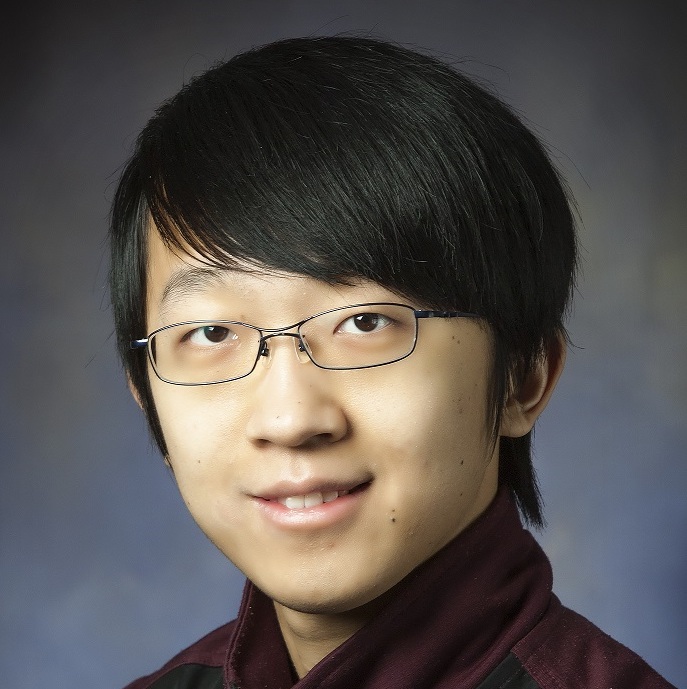 Jinfeng Xiao (肖劲峰)合作论文数Amazon5
 Peipei Ping合作论文数Department of Physiology, David Geffen School of Medicine, University of California, Los Angeles;Scalable Analytics Institute, University of California, Los Angeles5
 Xuanhui Wang合作论文数Google DeepMind5
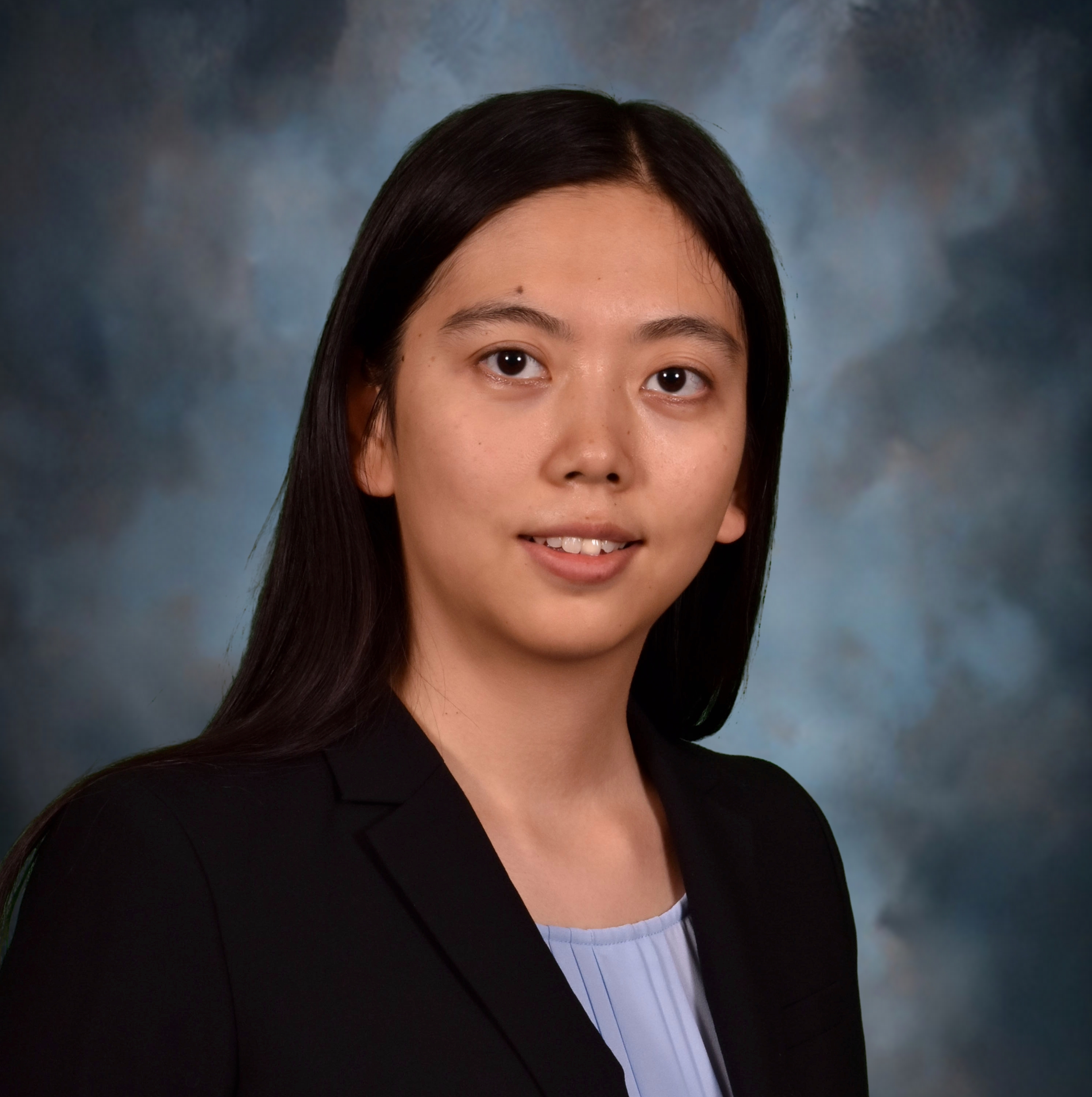 Xuan Wang合作论文数Department of Computer Science, College of Engineering, Virginia Polytechnic Institute and State University5
 Qi Zhu合作论文数Think Forward Lab, Amazon Web Services5
 Ellen (Zeqiu) Wu合作论文数NLP Research Group, University of Washington4
 Zhaowei Tan合作论文数Department of Computer Science and Engineering, Marlan and Rosemary Bourns College of Engineering, University of California, Riverside;Department of Electrical and Computer Engineering, Marlan and Rosemary Bourns College of Engineering, University of California, Riverside4Simon Baumgartner合作论文数4
 Xiaotao Gu (顾晓韬)合作论文数Zhipu AI4
 Brian Sadler合作论文数Center for Autonomy, Oden Institute for Computational Engineering & Sciences, The University of Texas at Austin4Junru Wu合作论文数Department of Computer Science & Enigneering, Texas A&M University4
 Meng Jiang合作论文数Department of Computer Science and Engineering, College of Engineering, University of Notre Dame4
 Fangbo Tao合作论文数University of Illinois at Urbana-Champaign, Urbana, IL, USA4David Liem合作论文数4
 Marc Najork合作论文数Google DeepMind4
 Xinwei He (何新卫)合作论文数College of Informatics, Huazhong Agricultural University3
 Sha Li合作论文数Department of Computer Science, University of Illinois Urbana-Champaign3
 Changfeng Liu合作论文数Shanghai Jiao Tong University, Shanghai, China3
 Jing Nathan Yan合作论文数Google DeepMind, Google3
 Rishabh Joshi合作论文数Google DeepMind3Yu Shi合作论文数3
 Yiqing Xie合作论文数Language Technologies Institute, School of Computer Science, Carnegie Mellon University3
 Cong Yu合作论文数Celonis Inc.3
 Mohammad Saleh合作论文数Google3
 Richard Weinshilboum合作论文数Mayo Clinic Comprehensive Cancer Center3
 Honglei Zhuang合作论文数3Charu Lakshmanan合作论文数2Yair Kurzion合作论文数2Haijuan Wang合作论文数2
 Misha Khalman合作论文数Google DeepMind2
 Ran Xu合作论文数Google DeepMind2
 Susik Yoon合作论文数Data Mining Group, Department of Computer Science, The Grainger College of Engineering, University of Illinois Urbana-Champaign2




