Adam Smith’s remarkable book, The Theory of Moral Sentiments, now deservedly coming to greater prominence, combines classical philosophy, early modern psychology and incisive observations of everyday life into a complex theory of human behaviour. New Perspectives on Adam Smith’s “The Theory of Moral Sentiments” is a comprehensive study of Smith’s ideas, reflecting the explosion of interest in his work. It brings together themes and methodologies from a variety of fields, including politics, sociology, intellectual history, history of science and evolutionary psychology. The contributions revolve around four themes: the ways in which Smith combined both classical and modern sources to create his own account of human economic and social behaviour; the insights gained from taking seriously the centrality of a benevolent deity to Smith’s system; Smith’s exploration of new forms of civility and self-formation, and the relationship between Smith’s moral philosophy and the emerging bodies of knowledge that were formalised in the nineteenth century as sociology and science. Economists and political economists have predominated in Adam Smith scholarship. This book looks at Smith’s ideas from a much broader set of disciplinary perspectives and as such will appeal to historians of economic, political and moral thought as well as Adam Smith scholars in particular and economists more generally
Henry George's Progress and Poverty sold more than 3 million copies by the time of its 50th anniversary in 1929 -outselling other works on economics - yet today economics students can complete their courses without ever having heard of the author's name. This collection aims to redress this neglect, by presenting a range of perspectives on Henry George's fertile ideas which, it is increasingly argued, merit revisiting in terms of their capactiy to contribute towards solutions to current problems including runaway land values, nationalization of land, monopoloy control of public assets and environmental degradation. The book also discusses George's significant theoretical contributions, including the 'Henry George Theorem' - named after him by two Nobel prize winning economists - and important insights bearing on the relation of evolutionary theory to economics. The authors also discuss George's powerful influence on the economic development of Australia and new Zealand, and the affinity he felt for these countries is also considered.
Adam Smith has been portrayed as a proto-Darwinist (Hayek, 1967 and Flew, 1985 cited in Hill, 2001, pp. 17-19; Alvey, this volume), largely based on his account of human development as a form of linear progression and the ubiquity of spontaneous order within nature. In this chapter, these and other possible connections between Smith and some strands of evolutionary thought are developed and considered. The focus is on Smith's assumptions about nature in general and human nature in particular in The Theory of Moral Sentiments and possible connections between these and the biology of evolution. The initial connection is that Smith's ideas on sympathy and beneficence were approvingly noted by Darwin, who in turn proposed some explanations for the evolutionary origins of sympathy. There were subsequent attempts to explain the possible evolutionary origins of beneficence in the related fields of sociobiology, evolutionary psychology, game theory and economic psychology, with at least one contemporary work from the latter field explicitly bringing the ideas of Darwin and Smith back together (Gintis et al., 2005). Yet as will be argued in this chapter, neither this joint contribution to a contemporary field of intellectual endeavour nor a shared interest in innate moral sense necessarily makes Smith a proto-Darwinist. There is insufficient evidence of direct connections between Smith and evolutionary thought or of critical fundamental agreements between Smith and the evolutionists, including Darwin, to make such a claim. In particular, Smith's theory of moral sentiments relies on ends whereas theories of natural and sexual selection, at the core of evolutionary theories, are only descriptions of mechanisms of change, or means. The ends are always uncertain. In Smith, the sentiment of sympathy, reinforced by habits of affection, reciprocity and social approval, can lead to beneficent actions (Smith, [1790] 1984, p. 78). It is possible to trace an interest in sympathy from Smith to Darwin, and from Darwin to contemporary evolutionary theorists and economic behaviourists. From the latter field, and following both Smith and Darwin, Paul Ormerod (1994, p. 13) has argued that there are 'propensities in human nature which incline us toward society, such as fellow feeling and the desire to obtain the approval of others and to be worthy of that approval'. Sympathy, reinforced by social approval and reason, can lead us to moderate our wants in order to take account of the welfare of others. According to Ormerod, for Smith, life would be intolerable 'if everyone pursued a career of fraud, pillage and murder' - self-control was a 'natural, integral part of human nature' (ibid.). Ormerod further argues that economics has been out of step with developments in our understanding of human nature and motivation, especially stemming from advances in the life sciences. Against the 'individualistic behavioural model' of orthodox economics, Ormerod (ibid., p. 35) proposes the cooperative model of, for example, Robert Axelrod, whose The Evolution of Cooperation (1984) showed that in Prisoner's Dilemma and other games, participants frequently employed cooperative strategies rather than aiming at favourable zero-sum outcomes. More recently, Duncan Foley (cited in Colander, 2(04) has similarly noted Axelrod's finding that 'cooperation survives as a strategy in competitive tournaments with a high probability' (p. 203), and Kenneth Binmore (cited in Colander p. 71) has likewise drawn attention to Axelrod's 'evolutionary simulations'. Another contributor to the debate, Herbert Gintis, subsequently co-authored with Samuel Bowles, Robert Boyd and Ernst Fehr 'Moral Sentiments and Material Interests: The Foundations of Cooperation in Economic Life' (Gintis et al.,) and 'The Theory of Moral Sentiments'(hereafter TMS) is discussed at length in the book's Introduction. For Gintis et al. Smith is: often portrayed as a proponent of Homo economicus - that selfish, materialistic creature that has traditionally inhabited the economics textbooks. This view overlooks Smith's second - and equally important -contribution, 'The Theory of Moral Sentiments', in which Smith promotes a far more complex picture of the human character. His book is a thorough scrutiny of human behavior with the goal of establishing 'sympathy' as a central emotion motivating our behaviour towards others. (Gintis et al., 2005, p. 3) Gintis et al. (2005, p. 3) claim their own work is: 'part of a continuous line of intellectual inheritance from Adam Smith and his friend and mentor David Hume1, through Thomas Malthus, Charles Darwin and Emile Durkheim, and more recently the biologists William Hamilton and Robert Trivers'. The notion of a related set of attempts to explain cooperative and beneficent or altruistic behaviour running from Smith to Darwin and on to Hamilton and Trivers will be considered below.
The authors address the question of human nature in economics, examining not only some of the recent writing on this subject in evolutionary psychology and related disciplines, but also the ideas of important thinkers in the Western intellectual tradition. Beginning with the ancient Greeks and progressing to the modern day, the contributors explore the works of such thinkers as Augustine, Adam Smith, Thomas Malthus, Alfred Marshall and Kenneth Boulding.
Darwinism and Evolutionary Economics brings together contributions from eminent authors who, building on Darwin’s own insights and on developments in evolutionary theory, offer challenging views on how economics can use evolutionary ideas effectively.
Darwinism and Evolutionary Economics brings together contributions from eminent authors who, building on Darwin's own insights and on developments in evolutionary theory, offer challenging views on how economics can use evolutionary ideas effectively.
In this book so far, readers have been introduced to a range of issues involved in the interactions of science, technology and society, and it has been seen that science and technology have been steadily growing in importance throughout history, especially since the so-called Scientific Revolution of the sixteenth century, at about the time of Copernicus. Much of this importance has arisen from the employment of science and technology, from an early date in the economic sphere—as was seen, for example, in Newton's attempted experiments in alchemy (Westfall 1994) and, more recently and seriously, the vast expenditure on R&D in the drugs industry. But contrary to a commonly held view—that there exists some kind of inevitability in scientific and technological ‘progress’—it can be shown that conscious decision by policy-makers can have a major bearing on the directions taken by science and technology, including the kinds of economic activity in which science and technology are employed. In this chapter, specific illustrations of this general principle will be given, beginning with a study of the British alkali industry of the eighteenth and nineteenth centuries, and following this with a comparison of the ways in which science and technology have been utilised in Australia and in two highly industrialised nations—Sweden and Japan.
The success of impression cytology as a technique for collecting conjunctival cells1 suggested to us that a contact lens could be used to collect cells from the corneal surface2. This paper describes the size of corneal epithelial cells collected using contact lens cytology (CLC) from patients with dry eye.
 martin bridgstock合作论文数6john forge合作论文数5ian lowe合作论文数5david burch合作论文数5
 Geoff Cockfield合作论文数Faculty of Business;University of Southern Queensland;Faculty of Business, University of Southern Queensland4William Cheek合作论文数3Dawna Armstrong合作论文数3Graeme Wilson合作论文数2Graeme Osborne合作论文数1mario talbot合作论文数1Hongwei Ren合作论文数1Geoffrey Martin Hodgson合作论文数1
 Roger Clarke合作论文数College of Engineering & Computer Science, Australian National University1Donald H. Mahoney合作论文数1
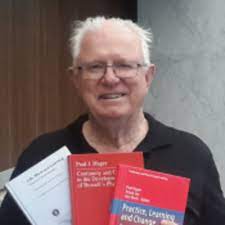 Paul Hager合作论文数Faculty of Arts and Social Sciences, University of Technology Sydney1John Houghton合作论文数1
 Ian Lowe合作论文数griffith university1Jacobus Doelman合作论文数1Mark Alleyne合作论文数1
 Steven A. Schneider合作论文数1Chidambaram Balasubramaniam合作论文数1Joshua Gans合作论文数1Ann Moyal合作论文数1Murali Chintagumpala合作论文数1Steven C. Schallhorn合作论文数1Gerry P. Sweeney合作论文数1Lorna Tilley合作论文数1Seiko Miki合作论文数1James Colgain合作论文数1Ernst Braun合作论文数1Sue Whyte合作论文数1Emilie Rouah合作论文数1D. P. Doessel合作论文数1Oswald Ganley合作论文数1




