This paper compares a collision-avoidance controller with a common factory-configured adaptive cruise control system, with respect to the speed controller’s acceleration signal energy. While many vehicles manufactured today include an option with adaptive cruise control, those controllers are typically designed to enhance the comfort of passengers, and are not specifically designed for energy efficiency. Similarly, controllers designed for purposes of dampening traffic waves typically require supervisory solutions that avoid collision with the car ahead, and are not designed to be energy efficient. The approach of this paper is to compare the desired acceleration signal for the factory controller, and the supervisory controller, to assess whether they significantly differ in the characteristics of their signals. The foundations for the two controllers are outlined, and an open-road test is performed to validate the approach. The results demonstrate that the safety supervisory controller is not necessarily going to be more energy efficient, especially if the nominal controller is aggressive in its driving.
Human-centered cyber-physical systems (CPS) that rely on AI-driven sequential decision-making under uncertainty are often difficult for field operators to understand, limiting trust, verifiability, and effective human oversight. In this demo, we present LogiEx, a logic-integrated framework that combines large language models (LLMs) with formal logic to derive trustworthy explanations for the planning behavior of Monte Carlo Tree Search (MCTS). The system features a web-based chatbot interface that allows users to ask free-form questions about the algorithm from multiple perspectives, including a Human-Guided Search (HuGS) functionality. We view this tool not only as a step toward more trustworthy human-centered CPS, but also as a foundation for future improvements in explainable planning systems.1
Text based configuration files for cyber-physical systems show the hierarchy of component modules well but often hide the details of connections and interfaces between modules. A model-based visual approach to these configuration files can better capture this information. The XML structure of Robot Operating System (ROS) launch files can be improved using a modeling approach. This paper presents ROSLaunchVisual, a model-integrated environment built on WebGME for designing, visualizing, and managing ROS launch files. The tool raises the level of abstraction by allowing developers to create and modify launch files using a graphical interface that represents nodes, publishers, subscribers, and arguments as interconnected components. The tool provides a dynamic system analysis that can then be used in the static development and analysis of new and existing launch files. ROSLaunchVisual incorporates features such as metamodel-driven validation, automatic import/export of launch files, and visual communication mapping. Plugins further enhance functionality by updating libraries, checking for semantic errors, and managing remaps. By making launch file creation more intuitive and less error-prone, ROSLaunchVisual improves development efficiency and system understanding, especially in collaborative or large-scale robotics projects.
Advanced Traffic Signal Control (TSC) algorithms require real-time phase control, yet existing Hardware-in-the-Loop Simulation (HILS) testbeds only support pre-programmed timing plans. In this paper, we present the first HILS testbed for real-time phase control. We develop a novel middleware architecture that translates dynamic phase actions (selection, switch, and duration) into commands for NTCIP-compliant commercial hardware controllers. This middleware manages phase transitions, synchronizes signal states, and handles errors without interrupting the hardware's internal operations. Experimental validation demonstrates that the system executes real-time phase commands, handles system conflicts, and achieves a low system internal latency at sub-millisecond on average.
Analyzing stop-and-go waves at the scale of miles and hours of data is an emerging challenge in traffic research. The past 5 years have seen an explosion in the availability of large-scale traffic data containing traffic waves and complex congestion patterns, making existing approaches unsuitable for repeatable and scalable analysis of traffic waves in these data. This paper makes a first step towards addressing this challenge by introducing an automatic and scalable stop-and-go wave identification method capable of capturing wave generation, propagation, dissipation, as well as bifurcation and merging, which have previously been observed only very rarely. Using a concise and simple critical-speed based definition of a stop-and-go wave, the proposed method identifies all wave boundaries that encompass spatio-temporal points where vehicle speed is below a chosen critical speed. The method is built upon a graph representation of the spatio-temporal points associated with stop-and-go waves, specifically wave front (start) points and wave tail (end) points, and approaches the solution as a graph component identification problem. It enables the measurement of wave properties at scale. The method is implemented in Python and demonstrated on a large-scale dataset, I-24 MOTION INCEPTION. Our results show insights on the complexity of traffic waves. Traffic waves can bifurcate and merge at a scale that has never been observed or described before. The clustering analysis of all the identified wave components reveals the different topological structures of traffic waves. We explored that the wave merge or bifurcation points can be explained by spatial features. The gallery of all the identified wave topologies is demonstrated at https://trafficwaves.github.io/.
The real-world potential of stop-and-go wave smoothing at scale remains largely unquantified. Smoothing freeway waves requires opening a gap large enough for them to dissipate, but that gap is often impractically large. We propose a counterfactual wave-smoothing benchmark that reconstructs a smooth, feasible trajectory from each empirical trajectory by solving a quadratic program with fixed boundary conditions and a maximum-gap constraint, and we use the MOVES model to estimate the resulting emission reduction potential. Applying the framework to nine weeks of weekday peak-period data from the I-24 MOTION testbed, which exhibits rich day-to-day variation in wave dynamics, we find meaningful potential for passenger cars under a 0.1-mile maximum-gap constraint: average CO2 reductions of 9.80% to 14.08% across lanes, with 12.94% to 25.70% in CO, 24.29% to 29.76% in HC, and 29.40% to 36.03% in NOx. Trucks emerge as particularly attractive targets, showing roughly twice the reduction potential of passenger cars.
Human-centered cyber-physical systems (CPS), such as intelligent transportation services, warehouse robotics operated by human supervisors, and healthcare infrastructures involving clinicians and medical staff, increasingly rely on Artificial Intelligence (AI)-driven sequential decision-making under uncertainty. However, the lack of transparent reasoning in these systems limits trust, verifiability, and human oversight. This challenge is particularly acute for planning algorithms like Monte Carlo Tree Search (MCTS), whose stochastic search processes are opaque to engineers and operators. To address this gap, we introduce LogiEx, a logic-integrated framework that combines large language models (LLMs) with formal methods to generate trustworthy explanations for planning behavior. LogiEx transforms free-form user queries into logical statements with templated variables, then verifies whether evidence extracted from the decision process aligns with both the environment state and the constraints of the stochastic planning model. This enables grounded explanations across a wide range of user questions—from factual retrieval to comparative reasoning. LogiEx also supports Human-Guided Search (HuGS), allowing users to pose conditional “what-if” queries that trigger new, scenario-specific searches, ensuring that humans are not passive observers but active participants who can steer and refine the planning process. We evaluate LogiEx through both quantitative assessments and user studies, finding that it consistently outperforms baselines, achieving up to $7.9 \times$ higher semantic similarity (BERTScore) and $\mathbf{1. 6} \times$ higher factual consistency (FactCC) compared to baseline LLMs, and is the most preferred form of explanation among CPS practitioners.1
The rapid rise of large language models (LLMs) is transforming transportation research, with significant advancements emerging between 2023 and 2025, a period marked by the inception and swift growth of adopting and adapting LLMs for various transportation applications. Despite these significant advancements, however, a systematic review and synthesis of the existing literature remains lacking. This paper aims to fill this gap by providing a comprehensive review of the methodologies and applications of LLMs in transportation. We explore key applications, including autonomous driving, travel behavior prediction, and general transportation-related queries, alongside LLM methodologies such as zero-or few-shot learning, prompt engineering, and fine-tuning. From the review, critical research gaps are identified. From the methodological perspective, many of the research limitations can be addressed by integrating LLMs with existing tools and refining LLM architectures. From the application perspective, research opportunities for LLMs to address various transportation challenges are also explored. By synthesizing these findings, this review not only presents the state-of-the-art LLM adoption and adaptation in transportation, but also proposes future research directions as well as insights and recommendations for policymakers and practitioners, paving the way for greater LLM-driven research innovations in transportation in the future.
This paper introduces a data-driven traffic microsimulation framework in CARLA that reconstructs real-world wave dynamics using high-fidelity time-space data from the I-24 MOTION testbed. Calibration of road networks in microsimulators to reproduce ephemeral phenomena such as traffic waves for large-scale simulation is a process that is fraught with challenges. This work reconsiders the existence of the traffic state data as boundary conditions on an ego vehicle moving through previously recorded traffic data, rather than reproducing those traffic phenomena in a calibrated microsim. Our approach is to autogenerate a 1 mile highway segment corresponding to I-24, and use the I-24 data to power a cosimulation module that injects traffic information into the simulation. The CARLA and cosimulation simulations are centered around an ego vehicle sampled from the empirical data, with autogeneration of "visible" traffic within the longitudinal range of the ego vehicle. Boundary control beyond these visible ranges is achieved using ghost cells behind (upstream) and ahead (downstream) of the ego vehicle. Unlike prior simulation work that focuses on local car-following behavior or abstract geometries, our framework targets full time-space diagram fidelity as the validation objective. Leveraging CARLA's rich sensor suite and configurable vehicle dynamics, we simulate wave formation and dissipation in both low-congestion and high-congestion scenarios for qualitative analysis. The resulting emergent behavior closely mirrors that of real traffic, providing a novel cosimulation framework for evaluating traffic control strategies, perception-driven autonomy, and future deployment of wave mitigation solutions. Our work bridges microscopic modeling with physical experimental data, enabling the first perceptually realistic, boundary-driven simulation of empirical traffic wave phenomena in CARLA.
This article presents a novel hierarchical speed planning framework for variable speed limits in mixed-autonomy traffic environments, leveraging server-side macroscopic control and vehicle-side microscopic execution. The framework integrates real-time traffic state estimation (TSE) and reinforcement learning (RL)-based control to mitigate congestion and improve traffic flow. A TSE enhancement module combines macroscopic data from sources like INRIX with high-resolution observations from connected autonomous vehicles (CAVs), enabling predictive modeling to address latency and noise. The target speed design module employs kernel smoothing and a buffer zone strategy to optimize traffic density and flow around bottlenecks. The proposed system was validated in the largest open-road test to date with 100 CAVs, demonstrating an overall 8% traffic density decrease, with a specific decrease of 7% upstream, 10% downstream, and a 52% decrease during the congestion formation phase at bottlenecks.
This paper describes the persistent monitoring with mounted lidar sensors of a transportation corridor over the course of 120 uninterrupted days in Nashville, TN. The data for these 120 days are publicly released as part of publication of this work. The goal of this monitoring is to provide opportunities to design interventions for unsafe intersections, better understand traffic dynamics, and explore the potential for closed-loop control of vehicle signals and walk signs. Lidar units are installed with some overlapping, and some non-overlapping fields of view, offering coverage of eight locations (five intersections and three mid-block areas) across a span of two miles. Continuous object trajectories for all modes of travel are generated from edge processing of raw lidar point cloud data. Unlike camera-based sensing, lidar is natively privacy preserving. This provides an opportunity for improved reception in communities. The paper provides a full description of the corridor, the types of classifications performed by each lidar installation, and the refresh rates and data types recorded. In addition, sample analyses are given to demonstrate the richness of the data. Sample results include hot spots for near-miss events between classified objects, daily turning count statistical analysis, and out of crosswalk pedestrian activity.
Transportation studies generate massive amounts of data that are difficult to store, process, query and visualize quickly and easily. Overcoming these challenges are an essential aspect of making the collected data useful to both the original study and other research that could build on the results. We explore the impact of database implementation, specifically IoTDB, on these aspects of data management with respect to transportation on existing datasets.
The goal of this paper is to explore the accuracy of dashcam footage to predict the actual kinematic motion of a car-like vehicle. Our approach uses ground truth information from the vehicle's on-board data stream, through the controller area network, and a time-synchronized dashboard camera, mounted to a consumer-grade vehicle, for 18 hours of footage and driving. The contributions of the paper include neural network models that allow us to quantify the accuracy of predicting the vehicle speed and yaw, as well as the presence of a lead vehicle, and its relative distance and speed. In addition, the paper describes how other researchers can gather their own data to perform similar experiments, using open-source tools and off-the-shelf technology.
This work presents amodel-integrated approach using WebGME for visual design of launch files within the Robotic Operating System (ROS). A ROS launch file defines nodes to run and the appropriate runtime configuration, allowing quick and easy startup of a complex ROS network. These launch files aid in repeatable management and configuration of multiple nodes in a robotic system. However, manually creating and modifying these XML-based launch files can be complex and error-prone. The contribution of this paper is describing a tool that allows users to raise the level of abstraction when interacting with these launch files. It supports direct construction of launch files by dragging and dropping elements, automatically generating the output XML representation. It also supports importing existing launch files, visualizing node connections, and validating configurations to prevent errors such as duplicate node names and incorrect argument dependencies. Additional plugins facilitate library updates, communication mapping, and automated launch file export. By integrating model validation, connection visualization, and automated code generation, this approach enhances usability and reduces errors in ROS system configuration.
Many decision-making scenarios in modern life benefit from the decision support of artificial intelligence algorithms, which focus on a data-driven philosophy and automated programs or systems. However, crucial decision issues related to security, fairness, and privacy should consider more human knowledge and principles to supervise such AI algorithms to reach more proper solutions and to benefit society more effectively. In this work, we extract knowledge-based logic that defines risky driving formats learned from public transportation accident datasets, which haven't been analyzed in detail to the best of our knowledge. More importantly, this knowledge is critical for recognizing traffic hazards and could supervise and improve AI models in safety-critical systems. Then we use automated verification methods to verify the robustness of such logic. More specifically, we gather 72 accident datasets from Data.gov and organize them by state. Further, we train Decision Tree and XGBoost models on each state's dataset, deriving accident judgment logic. Finally, we deploy robustness verification on these tree-based models under multiple parameter combinations.
Autonomous Vehicle (AV) simulations are ubiquitous and crucial for offline analysis and development of AV solutions. However, deploying and utilizing simulation technology at scale is, in practice, a constant challenge - especially for independent researchers with limited resources. This is compounded by the fact that publicly available simulators are fraught with poorly documented technical limitations which unnecessarily hinder adoption of these simulators. In this case study, we examine CARLA, a popular AV simulator with a rich feature set. CARLA provides an API and feature set which ostensibly offers the ability to run and manage an arbitrary number of simultaneous simulation instances for an indefinite period of time. This is essential for large scale data collection and offline AV solution testing. However, CARLA suffers from multiple unaddressed, poorly documented stability and scalability issues. These render these use cases impossible when performed naively. We outline a framework, along with code and best practices, for running an arbitrary number of CARLA simulations in parallel without manual oversight. This approach is generalizable to other simulators with similar challenges.
The CIRCLES project aims to reduce instabilities in traffic flow, which are naturally occurring phenomena due to human driving behavior. These "phantom jams" or "stop-and-go waves,"are a significant source of wasted energy. Toward this goal, the CIRCLES project designed a control system referred to as the MegaController by the CIRCLES team, that could be deployed in real traffic. Our field experiment leveraged a heterogeneous fleet of 100 longitudinally-controlled vehicles as Lagrangian traffic actuators, each of which ran a controller with the architecture described in this paper. The MegaController is a hierarchical control architecture, which consists of two main layers. The upper layer is called Speed Planner, and is a centralized optimal control algorithm. It assigns speed targets to the vehicles, conveyed through the LTE cellular network. The lower layer is a control layer, running on each vehicle. It performs local actuation by overriding the stock adaptive cruise controller, using the stock on-board sensors. The Speed Planner ingests live data feeds provided by third parties, as well as data from our own control vehicles, and uses both to perform the speed assignment. The architecture of the speed planner allows for modular use of standard control techniques, such as optimal control, model predictive control, kernel methods and others, including Deep RL, model predictive control and explicit controllers. Depending on the vehicle architecture, all onboard sensing data can be accessed by the local controllers, or only some. Control inputs vary across different automakers, with inputs ranging from torque or acceleration requests for some cars, and electronic selection of ACC set points in others. The proposed architecture allows for the combination of all possible settings proposed above. Most configurations were tested throughout the ramp up to the MegaVandertest.
This article presents the comprehensive design, setup, execution, and evaluation of the MegaVanderTest (MVT) experiment conducted by the Congestion Impacts Reduction via CAV-in-the-Loop Lagrangian Energy Smoothing (CIRCLES) Consortium, which aimed to mitigate traffic congestion using partially autonomous vehicles (AVs) (see “Summary”). The experiment involved 100 vehicles on Nashville’s Interstate 24 (I-24) highway, utilizing various control algorithms to smooth stop-and-go traffic waves. The execution of the MVT experiment required a coordinated effort from multiple teams. This article details the meticulous planning process, the coordinated efforts of multiple teams, and the innovative use of a dynamic agent-based simulation framework for traffic evaluation. The contributions of this work include demonstrating and providing a detailed roadmap for large-scale live traffic experiments, illustrating the lessons learned from the MVT experiment, and introducing the other articles in this issue and their complementary relationship in the MVT experiment.
In this article, we explore the technical details of the reinforcement learning (RL) algorithms that were deployed in the largest field test of automated vehicles designed to smooth traffic flow in history as of 2023, uncovering the challenges and breakthroughs that come with developing RL controllers for automated vehicles. We delve into the fundamental concepts behind RL algorithms and their application in the context of self-driving cars, discussing the developmental process from simulation to deployment in detail, from designing simulators to reward function shaping. We present the results in both simulation and deployment, discussing the flow-smoothing benefits of the RL controller. From understanding the basics of Markov decision processes to exploring advanced techniques such as deep RL, our article offers a comprehensive overview and deep dive of the theoretical foundations and practical implementations driving this rapidly evolving field. We also showcase real-world case studies and alternative research projects that highlight the impact of RL controllers in revolutionizing autonomous driving. From tackling complex urban environments to dealing with unpredictable traffic scenarios, these intelligent controllers are pushing the boundaries of what automated vehicles can achieve. Furthermore, we examine the safety considerations and hardware-focused technical details surrounding deployment of RL controllers into automated vehicles. As these algorithms learn and evolve through interactions with the environment, ensuring their behavior aligns with safety standards becomes crucial. We explore the methodologies and frameworks being developed to address these challenges, emphasizing the importance of building reliable control systems for automated vehicles.
This review offers a comprehensive overview of current traffic modeling, estimation, and control methods, along with resulting field experiments. It highlights key developments and future directions in leveraging technological advancements to improve traffic management and safety. The focus is on macroscopic, microscopic, and micro-macro models, as well as state-of-the-art control techniques and estimation methods for deploying vehicles in traffic field experiments.
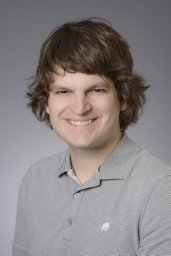 Matt Bunting合作论文数The University of Arizona52
 Benedetto Piccoli合作论文数Department of Mathematical Sciences, Rutgers University–Camden;Center for Computational and Integrative Biology, Rutgers University–Camden39
 Rahul Bhadani合作论文数Univ Arizona, Dept Elect & Comp Engn, Tucson, AZ 85721 USA38
 Benjamin Seibold合作论文数Applied Mathematics and Scientific Computing Group, Center for Computational Mathematics and Modeling, Temple University;Department of Mathematics, Temple University34
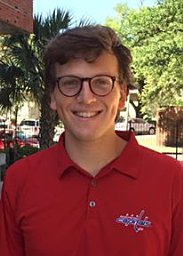 Matthew Nice合作论文数Vanderbilt University31
 Maria Laura Delle Monache合作论文数Department of Civil and Environmental Engineering, University of California, Berkeley28
 Daniel B. Work合作论文数University26
 Alex Bayen合作论文数Mobile Sensing Lab, Division of Electrical Engineering, Department of Electrical Engineering and Computer Science, University of California, Berkeley;Department of Civil and Environmental Engineering, University of California, Berkeley;Lawrence Berkeley National Laboratory24
 Jonathan W. Lee合作论文数18
 Matti Rossi合作论文数Helsinki Sch Econ, Helsinki, Finland17
 Juha-Pekka Tolvanen合作论文数MetaCase17
 S. Shankar Sastry合作论文数Department of Electrical Engineering and Computer Sciences, University of California, Berkeley;C3 Digital Transformation Institute;FHL Vive Center for Enhanced Reality;Richard C. Blum Center for Developing Economies16
 Jeff Gray合作论文数Department of Computer Science, University of Alabama16
 George Gunter合作论文数Vanderbilt Univ, 221 Kirkland Hall, Nashville, TN 37235 USA14
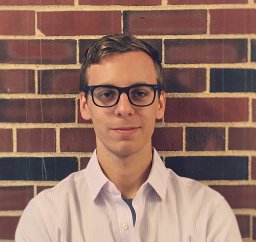 William Barbour合作论文数Department of Civil and Environmental Engineering, University of Illinois at Urbana-Champaign, 205 N. Mathews Ave, Urbana, IL 61801, USA14
 Sean Whitsitt合作论文数14
 Dan Work合作论文数13
 Derek Gloudemans合作论文数Institute for Software Integrated Systems, Vanderbilt University, Nashville, TN, USA13
 Raphael Stern合作论文数University of Illinois at Urbana-Champaign13
 Fangyu Wu合作论文数12
 Roman Lysecky合作论文数Electrical & Computer Engr, THE UNIVERSITY OF ARIZONA12
 Gergely Zachár合作论文数11
 J. Mikael Eklund合作论文数Inst Technol, Univ Ontario11
 Gabor Karsai合作论文数Department of Computer Science, School of Engineering, Vanderbilt University;Department of Electrical and Computer Engineering, School of Engineering, Vanderbilt University;Institute for Software-Integrated Systems, Vanderbilt University10
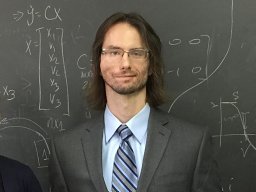 Sean McQuade合作论文数Ctr Computat & Integrat Biol, Rutgers Camden9Miles Churchill合作论文数8
 Junyi Ji合作论文数Institute for Software Integrated Systems, Vanderbilt University8
 Ziyan An合作论文数Department of Computer Science, Vanderbilt University;Institute for Software Integrated Systems, Vanderbilt University7
 Nathaniel Hamilton合作论文数Parallax Advanced Research, Beavercreek, OH, USA7
 Shumo Cui (崔书墨)合作论文数International Center for Mathematics, Southern University of Science and Technology;Department of Mathematics, Southern University of Science and Technology7Alexander Richardson合作论文数University of Cambridge7Meiyi Ma合作论文数7Diyang Chu合作论文数6R’mani Haulcy合作论文数6Nathan Lichtlé合作论文数6
 Yanbing Wang合作论文数School of Sustainable Engineering and the Built Environment, Arizona State University6
 Eugene Vinitsky合作论文数Tandon School of Engineering, New York University6
 Amaury Hayat合作论文数Institut Polytechnique de Paris, Ecole des Ponts;Korea Institute for Advanced Study6
 Brandon Eames合作论文数Vanderbilt University6Sharon Hornstein合作论文数5Alex Richardson合作论文数5Safwan Elmadani合作论文数Electrical & Computer Engineering, The University of Arizona5
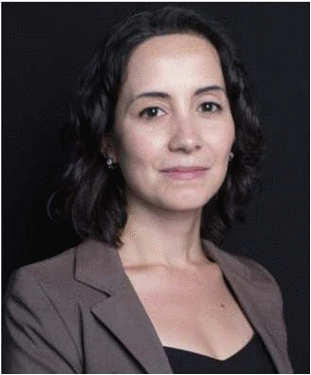 Nathalie Risso合作论文数University of Arizona5
 Kun Zhang合作论文数5Nathan Sandoval合作论文数5Casey Mackin合作论文数5
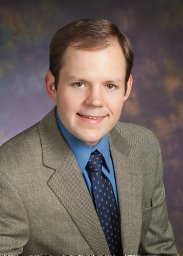 Taylor T Johnson合作论文数Department of Electrical and Computer Engineering, University of Illinois at Urbana-Champaign5
 Susan Lysecky合作论文数5




