We refer to enterprise cartography (EC) as the process of representing an enterprise as it is observed directly from reality. It differentiates from enterprise architecture (EA) because it focuses on producing representations based on observations and, therefore, does not include the purposeful design, as one expects in EA. To abstract and represent an enterprise, one requires a full set of familiar concepts from the EA discipline, such as models, views, viewpoints, representation rules, etc. However, to abstract and represent the enterprise reality, one also needs principles and instruments to deal with the continuous and fast transformations going on in the enterprise. Without them, enterprises will likely change faster than one can represent them, and representations become obsolete long before they are completed. We have been working on this issue over a decade and have come up with a set principles and instruments to enable effective EC in continuously changing enterprises. We have applied and improved our methods in several enterprises of different sizes, sectors, and countries and have had our share of successes, failures, and lessons learned.
Cybersecurity is growing in importance, with recent cyberattacks showing an exceptional level of impact in organizations. This chapter presents a cybersecurity capability building proposal for organizations that the authors designate cybersecurity learning framework (CyberLearn). The chapter discusses cybersec initiatives in Portugal, in the European Union, in the North Atlantic Treaty Organization, and the United States of America, introducing the NICE framework as a basis to develop the CyberLearn framework and the concept representation considering functions, roles, and work roles and the knowledge units related to each role area. This framework has been applied in Portugal by Técnico to meet business needs on this domain.
In this chapter, a proposal is made for framework aimed at bringing about a convergence between the concepts of organizational self-awareness (OSA) and organizational identity, as part of a much needed integration effort between enterprise engineering and a situated interpretation of organizational design. Such a proposal is presented with human-centered design as the intellectual background. As aforementioned, one aim of the proposal is to identify potential research topics. The integrated framework fosters multidisciplinary studies that take into account both identity and organizational awareness issues. In particular, the framework is intended at promoting studies aimed at assessing the effect that OSA tools, methodologies, or models have on organizational identity. Conversely, it also aims at informing studies that develop forms of organizational self-awareness, based on theories of organizational identity.
This paper frames the enterprise engineering body of knowledge within the scope of the general system’s theory to challenge researchers and practitioners working in this field. Understanding that an organization is a living being that exist, acts and interacts, the goal of the paper is to narrow the discussion on how to observe, represent and act the enterprise in real-time. To that end, the following set of core elements are conceptualized and discussed: the organization, the actor, the observation, the time and the Kalman’s dynamic control. Afterwards, those elements are combined to describe the duality that exists between the Human-self/organization-self dynamic control mechanisms including the time-delay concerns.
We need constructs to better model enterprises self governing system, by modeling enteprises as self-observing systems and not merely as observed systems. We introduce the concept of Enterprise Operating System (EOS), as the emerging enterprise self governing system, which turns enterprises into autonomous, intelligent and viable entities. Our assumption is that all organizations, evolve to higher complex levels, whereby at some point “organizational autonomous life” emerges as a reification, at a macro systemic level, of the social-technical network of its autonomous agents. This reification is precisely realized by the emergence of the EOS, enabling the enterpise closure, characterized by its completeness and self-reference, and the preservation of its wholeness and distinctiveness. The EOS should be able to compile in near real time its position and trajectory to assess if is in line with its viable states set and trigger/call for correction actions and self transformations whenever needed. Our research goal is to develop a universal EOS (UEOS) model to design, diagnose and improve the EOS of any organization, by certifying that its particular EOS includes all of the UEOS´s required mechanisms and properties.
IT is fundamental to digital transformation. Digital transformation focuses on driving the organization to a new level, exposing and extending its processes beyond the organization. Enterprise Architecture provides the tools and methodologies to manage the complexity of Digital Transformation. A Digital Center of Excellence, named ticAPP, is going to be assigned to support the Public Administration’s Digital Transformation process. This paper focuses on building the future state Business Architecture of ticAPP, and how to enable its continuous evolution. We need to ensure the future state of ticAPP is not confined by the technology used and that it takes into account both Government’s and ticAPP’s strategic goals. To accomplish that, we follow a Top-Down Design approach development of ticAPP’s Business architecture, based on TOGAF ADM methodology. In the final steps, we will evaluate ticAPP’s maturity level using the Architecture Capability Maturity Model framework that is included in TOGAF and calculate its maturity rating.
O ambiente de negocio envolvente as organizacoes tem sido alvo de profundas alteracoes, como a globalizacao dos mercados e a transformacao da tradicional economia industrial numa economia baseada no conhecimento. De modo a manterem-se competitivas, as organizacoes tem sido obrigadas a reorganizar e redesenhar continuamente os seus processos e estrategias de negocio. Apesar das importantes evolucoes tecnologicas alcancadas nos ultimos anos, verifica-se que os sistemas de informacao, que suportam o negocio, nao respondem eficazmente as constantes alteracoes a que a organizacao esta sujeita, causando um nao alinhamento entre o negocio e os sistemas de informacao e, em ultima instância, reduzindo a capacidade competitiva da organizacao. Neste artigo discute-se o papel preponderante que a explicitacao de uma Arquitectura dos Sistemas de Informacao (ASI) tem no alinhamento entre as realidades do negocio e das tecnologias e sistemas de informacao de uma organizacao. Neste sentido desenvolve-se uma proposta de extensao de investigacoes anteriores, de forma a possibilitar a verificacao do alinhamento e o desenvolvimento de Arquitecturas dos Sistemas de Informacao que produzam Sistemas alinhados com as necessidades e exigencias do negocio. As propostas apresentadas sao analisadas atraves da apresentacao da Arquitectura dos Sistemas de Informacao de uma organizacao publica portuguesa.
How can an organization be successful if it doesn't have clear objectives? If it does not know where to go, how can it plot a route? An organization without well-defined objectives is like a drifting ship, goes along with the winds, wherever it blows to. Defining objectives is of capital importance for good organizational performance and success, vision alignment and goal focusing. Their definition must follow strict requirements that guarantee relevance and accomplishment. Moreover, objectives must be set at all levels of the organization, so that everybody tracks the same route. This research proposes an approach to the way organizations define objectives. Based on principles of Organizational Engineering and the Portuguese Air Force's top-down structure and Mission, a model is proposed that takes into account relevant organizational elements needed to guarantee the objectives' pertinence. It also provides strategies that can be used to align them with the management levels.
Digital Preservation has emerged as a key challenge for information systems in many domains and is often seen as a case of interoperability through time. However, the complexity and change rate of common environments and information representations today have the effect that this interoperability is rarely achieved. In order to successfully address this issue we must look at the organizational challenges that Digital Preservation poses to organizations such as identifying and modeling all the value transactions that happen in certain organizational scenarios regarding the ingestion, archival and dissemination or reuse of digital objects, environments and libraries. It is only within a well-defined framework that deployment of any Digital Preservation techniques will successfully yield value to the organization in the form of continually useful and accessible information. In this paper we define the value model for the Digital Preservation business based on best practice from this domain, namely the ISO14721 and best practice from the Enterprise Engineering and Value Modelling domains, which include DEMO and e3value.
Currently the environment surrounding organizations forces them to constantly change themselves, in order to allow them to keep competitiveness, effectiveness and to adapt to new markets.The introduction of competencies in human resources management is one of the changes that organizations are making, with the purpose of picking the most competent workers for each position in the organization.The competency architecture allows the introduction of the term competency in the organization culture and sets the way how competencies should be managed and how organizational positions must be filled according to demanded competencies for that position and the workers competencies.Currently, in the Portuguese Air Force, human resource management is done according with the rank, specialty and qualifications. As for structure, the organization is not fully prepared for competency management.This paper presents an ongoing study on the introduction of competencies in human resources management in the Portuguese Air Force, through the application of a competency architecture, in order to minimize error occurrence and enhance efficiency in business processes. A model of a competency architecture is developed to introduce, define and organize competencies in the organization, manage personnel competencies and select the right worker for each position. (C) 2016 The Authors. Published by Elsevier B.V.
Since the beginning of their existence, human beings look to join their fellowmen who share the same vision on a particular set of goals that they aim to reach together forming, that way, Organizations. For these goals to be met with the greatest efficiency possible, Organizations continually develop mechanisms and tools to enable them to select the most capable individuals. Competencies and competency management are widely accepted in the scientific community as being fundamental tools for human resource management, due to the fact that they can guarantee the allocation of the ablest elements for each of the existing organizational positions. Despite the advantages associated with those tools, the Portuguese Air Force still does not use them in a transversal manner. In fact, there is not even an unequivocal and standardized competency concept defined for the Organization. Using the principles of Organizational Engineering along with the existing competency knowledge, this work seeks to fill that gap by developing a transversal competency concept for the Air Force that folds out in a transversal competency definition proposal, a transversal competency wheel and a competency profile. Thus, this research looks to contribute to the definitive introduction of the competency concept in the Organization. (C) 2016 The Authors. Published by Elsevier B.V.
Understanding value co-creation has been identified has a critical research topic area due to the evolution on how customers design, produce and consume products/services. Moreover, there is a plethora of theory sources that address it and an apparent lack of alignment between them. In this exploratory study, we use enterprise engineering techniques, namely organizational modelling methodologies (DEMO and e3Value), to clarify the co-creation and co-design concepts. In order to do so, we extended the Flower Shop case with procedures that were identified in the literature as co-creation. The analysis of this case allowed us to objectify the co-design and co-production concepts by defining in which specific modelling patterns these concepts can be illustrated, in order to make them explicit and assert alignment with the business model. Furthermore, such analysis has supported specification of a generic co-creation (sub)organization which serves as a reference for alignment with service design and management knowledge areas.
This paper presents the research perspective of INESC’s Organizational Engineering Center and the Software Engineering Group regarding the modeling and design of adaptable enterprise computing systems that support dynamic business requirements. We describe the objectives and working methodology of the MODIFY project, which aims at defining a component-based solution to the design of enterprise computing systems using a combined business and system model.
O presente artigo apresenta um paradigma para a reorganizacao dinâmica de processos denegocio baseado na gestao de situacoes de crise. A reorganizacao e originada pelas variacoes ocorridas no ambiente externo e resulta no alinhamento entre objectivos estrategicos e implementacao dos processos. E utilizado o conceito de medidas de desempenho do processo para efectuar o disparo das reorganizacoes. O comportamentodinâmico e obtido incluindo os processos de negocio e as metodologias de controlo numa malha de realimentacao. Sao apresentados resultados experimentais obtidos num exemplode navegacao de um robot num ambiente desconhecido a priori.
Viable System Model (VSM) is a well-known and widely used concept when working with enterprise as a viable system. However, research shows that VSM does not include all the required elements to correctly model enterprise as a viable system. This paper proposes extensions to VSM which help to model enterprise in a more complete way. The proposal is illustrated using case study of a real company. Authors propose to tie extended VSM to the notion of Enterprise Operating System in future research.
In this paper, we analyze relevant state of the art in the areas of Service Science, Business Modeling and Enterprise Engineering in specifying service systems. The main shortcoming identified essentially resides in the lack of capability to model the purpose and value of a given service system in a structured way to guide current and future development efforts. In order to address these issues, our research focuses on modeling enterprises as service systems along three perspectives, namely: construction, function and contribution to differentiate and integrate their teleological and ontological models. With the proposed approach, we are able to clearly specify how each component of an enterprise system provides a service – thus value – to other components of the same system or of the environment along different, possibly intertwining and overlapped value chains.
Organization studies have recently had plentiful new approaches and paradigms, such as the autopoiesis theory. Maturana and Varela developed the theory of autopoiesis − a biological theory of autopoietic systems − in order to explain the particular nature of living in the physical domain. Their main contribution has been to provide a concise specification of the defining characteristics of living systems, including humans. Several authors, especially the sociologist Luhmann, have tried to extend such theory to social systems, including organizations. Social systems are systems that are based on the interactions of living systems. The question therefore arises if organizations are also autopoietic systems. In this paper, this question and the relevance of the autopoiesis theory are discussed for understanding organizational changes and self-maintenance, from a biological point of view. Supported by the autopoiesis theory, organizations can be interpreted as networks of interactions, processes and rules of coordination.
Organizations work in a constantly changing environment. It is extremely important that they adapt to these changes, in order to get the best performance and advantage of its available resources. Modern society is, thus, filled with competition and competitiveness, where only the fittest, agile and flexible organizations with well laid out objectives and strategies, can succeed. In order to manage an organization, it is mandatory to identify not only its processes, but also those who carry them out. It is through the comparison of business processes and what is described in the organizational manuals, that a correct alignment can be promoted. This alignment concurs to a higher Organizational self-awareness rendering the most efficient and effective organizations.This work emerges from the need to check the alignment between the attributes of an Organizational Position represented in the organizational manuals and their representation in business processes, based on a set of knowledge of Organizational Engineering. (C) 2015 The Authors. Published by Elsevier B.V.
 Carlos Páscoa合作论文数Department of University Education, Portuguese Air Force Academy41
 Artur Caetano合作论文数Technical University of Lisbon34
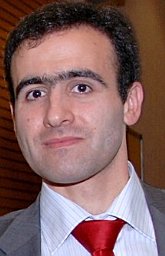 André Vasconcelos合作论文数Department of Information Systems and Computer Science;Instituto Superior Técnico;Technical University of Lisbon;Instituto Superior Técnico, Technical University of Lisbon29
 Marielba Silva De Zacarias合作论文数Centro de Investigação em Turismo, Sustentabilidade e Bem-Estar, Faculdade de Ciências e Tecnologia, Universidade do Algarve27
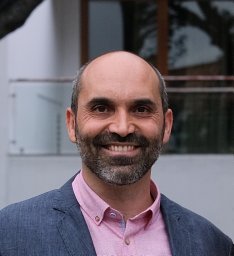 David Aveiro合作论文数Organizational Engineering Center22
 João Pombinho合作论文数Department of Information Systems and Computer Science;Technical University of Lisbon;Organizational Engineering Center;Organizational Engineering Center, Technical University of Lisbon16
 António Rito-Silva合作论文数t Department of Computer Science and Engineering of Instituto Superior Tecnico15
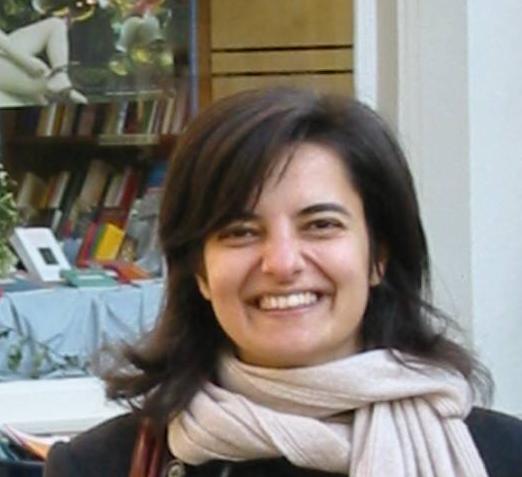 H. Sofia Pinto合作论文数the Technical University of Lisbon
nstituto Superior Tecnico IST
Dept. of Computer Science and Informatics13
H. Sofia Pinto合作论文数the Technical University of Lisbon
nstituto Superior Tecnico IST
Dept. of Computer Science and Informatics13 Pedro Miguel Lopes Sousa合作论文数12
 Nuno Castela合作论文数Instituto Politécnico de Castelo Branco12
 Luis Borges De Almeida合作论文数Instituto de Telecomunicacoes11
 Pedro Sinogas合作论文数Instituto de Engenharia de Sistemas e Computadores;Organizational Engineering Center;Software Engineering Group10
 Sergio Guerreiro合作论文数10
 Ricardo Mendes合作论文数9ana telha合作论文数8
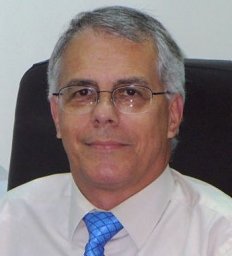 Rodrigo Magalhaes合作论文数Instituto, Technical University of Lisbon;Organizational Engineering Center,;Instituto, Technical University of Lisbon8
 Isabel Trancoso合作论文数Instituto Superior Tecnico, University of Lisbon7João Neves合作论文数5
 José Borbinha合作论文数Department of Computer Science and Engineering, Instituto Superior Técnico, Universidade de Lisboa;INESC-ID5Carla Marques Ferreira合作论文数Departamento de Inform醫ica, Faculdade de Ci阯cias e Tecnologia, Universidade Nova de Lisboa.5Ronald E. Crochiere合作论文数5
 Pedro Sousa合作论文数4Paulo Dias合作论文数UNISEB4
 Robert Winter合作论文数Institut fur Wirtschaftsinformatik, Universitat St.Gallen4
 Jorge S. Marques合作论文数Institute for Systems and Robotics4
 Alan Oppenheim合作论文数Department of Electrical Engineering and Computer Science, College of Computing, Massachusetts Institute of Technology4Carla Marques Pereira合作论文数EST-IPCB4Helena Sofia Pinto合作论文数nstituto Superior Tecnico IST, Dept. of Computer Science and Informatics, the Technical University of Lisbon4Arminda Guerra合作论文数3
 Carlos Santos合作论文数3
 Lawrence R. Rabiner合作论文数Center for Advanced Information Processing, Rutgers, The State University of New Jersey;Department of Electrical & Computer Engineering, School of Engineering, Rutgers, The State University of New Jersey;Department of Electrical and Computer Engineering, University of California at Santa Barbara3
 Miguel Mira Da Silva合作论文数INESC, Instituto Superior Técnico3Tribolet João Neves合作论文数3
 Artur Silva合作论文数3
 Manuel Duarte Ortigueira合作论文数Faculdade de Ciências e Tecnologia, Universidade Nova de Lisboa3
 Carlos Mendes合作论文数Instituto de Engenharia de Sistemas e Computador3Ronald E Crochiere合作论文数3José Manuel Nunes合作论文数2Salvador Tribolet合作论文数2Pedro Leal合作论文数2António Alves合作论文数2marco moreira合作论文数2sergio abud da silva合作论文数2
 Claudia Ribeiro合作论文数2nelson ferreira合作论文数2jose gorgulho合作论文数2
 Nuno Miguel Silva合作论文数INOV Inesc Inovacao2
 Patrícia Macedo合作论文数Ctr Technol & Syst CTS, Uninova Inst2Assis, A.合作论文数2




