Nonintrusive load monitoring (NILM) can monitor the consumption of household appliances by analyzing the power input into the home. With the rapid increase in the number and types of household appliances, traditional NILM systems are gradually unable to cope with the challenges of appliance detection and recognition. In this work, we propose a novel load signature for NILM systems to realize new appliance detection as well as high-accuracy appliance recognition. Two tangent correlation methods, including tangent-difference correlation and tangent-summation correlation, are integrated to construct the load signature. Experimental results on public NILM datasets confirm that the proposed method outperforms existing methods based on the voltage-current trajectory, recurrence graph, and Gramian angular field.
Offloading computationally intensive tasks to edge nodes reduces latency and improves user experience. Unmanned aerial vehicle (UAV)-assisted multiaccess edge computing (MEC) can effectively address the limitations of the fixed deployment of traditional edge nodes, but the dynamic nature of UAVs brings challenges to the optimization of computation offloading. Methods based on deep reinforcement learning (DRL) can efficiently learn edge network dynamics to optimize computation offloading in UAV-assisted systems. In the system model, different edge nodes, such as UAVs, roadside units, and user equipment (UE), are treated as agents in the reinforcement learning network, so that the optimization of the edge computation offloading strategy can be transformed into a multiagent optimization problem. In addition, meta-reinforcement learning is introduced into the multiagent deep deterministic policy gradient (MADDPG) algorithm to cope with the dynamics and uncertainty of the UAV-assisted edge computing network environment. Simulation results show that the computation offloading strategy based on meta-reinforcement learning can not only quickly adapt to the dynamic changes of the network environment but also outperform other benchmark algorithms in terms of network energy efficiency.
To address the limitations of existing methods in dynamic spatial learning, joint time-frequency analysis, and drift attack detection for UAV sensor security, this paper proposes the graph time-frequency mixed anomaly detection (GTF-MAD) model. Its core innovations include an adaptive clustering mask graph attention network (ACM-GAT) for dynamic sensor correlation learning, a time-frequency dual-stream cross-processing path (TFDSCPP) for deep multi-domain feature fusion, and the TSM-EWMA trend detection method for rapid identification of drift attacks. Experiments on a quadrotor platform confirm GTF-MAD's superior performance, achieving a peak F1-score of 99.71% for bias attacks and reducing drift attack detection latency by 67.2% (from 119 to 39 steps) compared to traditional methods. The model offers a reliable and high-precision solution for real-time UAV sensor security.
Multi-robot systems can greatly enhance efficiency through coordination and collaboration, yet in practice, full-time communication is rarely available and interactions are constrained to close-range exchanges. Existing methods either maintain all-time connectivity, rely on fixed schedules, or adopt pairwise protocols, but none adapt effectively to dynamic spatio-temporal task distributions under limited communication, resulting in suboptimal coordination. To address this gap, we propose CoCoPlan, a unified framework that co-optimizes collaborative task planning and team- wise intermittent communication. Our approach integrates a branch-and-bound architecture that jointly encodes task assignments and communication events, an adaptive objective function that balances task efficiency against communication latency, and a communication event optimization module that strategically determines when, where and how the global connectivity should be re-established. Extensive experiments demonstrate that it outperforms state-of-the-art methods by achieving a 22.4% higher task completion rate, reducing communication overhead by 58.6%, and improving the scalability by supporting up to 100 robots in dynamic environments. Hardware experiments include the complex 2D office environment and large-scale 3D disaster-response scenario.
Efficient workflow scheduling is critical in cloud computing, particularly under budget constraints. However, as workflows become increasingly diverse and large-scale, determining task priorities for optimal resource allocation becomes more challenging. This paper aims to address this issue by proposing a budget-constrained workflow scheduling algorithm, termed LPWS. The proposed method integrates a neural network-based priority determiner with an adaptive amplitude perturbation strategy. The priority determiner leverages two static features extracted from the workflow structure and three dynamic features derived from ongoing search experience to predict task priorities via a neural network. When the priority model fails to yield improved solutions, the perturbation mechanism adaptively modifies task priorities to escape local optima. Experiments on five real-world scientific workflows demonstrate that LPWS consistently outperforms state-of-the-art algorithms in terms of scheduling quality. Ablation studies further validate the effectiveness of the proposed feature extractor, priority determiner, and perturbation strategy. These results confirm that LPWS is a scalable and effective solution for budget-constrained workflow scheduling in cloud environments.
This paper proposes a density-guided ant colony optimization (DG-ACO) algorithm to address dynamic vehicle routing problems (DVRPs) involving real-time traffic fluctuations and dynamic customer demands. The algorithm integrates a grid-based spatiotemporal traffic density matrix to guide path exploration, along with a hybrid population initialization algorithm that combines uniform sampling and density-prioritized seeding to enhance convergence speed and solution diversity. To further improve adaptability, we introduce an adaptive large neighborhood search for dynamic request handling and a dynamic pheromone update mechanism that adjusts to real-time traffic conditions. Extensive experiments on 9 benchmark DVRP instances demonstrate that DG-ACO outperforms baseline algorithms, achieving up to 26.7% reduction in optimal path length and an average of 18.2% improvement in computational efficiency. The results validate the effectiveness of density-guided optimization and highlight the algorithm’s potential for real-time logistics and intelligent transportation systems.
Cell image segmentation and counting are widely used in medical research. Segmenting adherent cell images is a challenging problem. This paper proposes a two-stage cell segmentation algorithm based on morphology and convex hull defect detection. UNet++ is firstly used to segment the cell image. Then, for the cell image that still has adhesion after segmentation, the method based on morphology or convex hull defect detection, a technique that identifies concave regions in the cell image, is used to segment the cell image more finely to eliminate the adhesion between cells and provide a more accurate basis for cell image counting. The experimental results show that cell counting accuracy after using the two-stage methods reaches 91.66
This article studies the Multi-model predictive control (Multi-MPC) of a solid oxide fuel cell (SOFC) system. SOFCs have numerous advantages, such as clean operation, all-solid-state structure, high efficiency, and high reliability, making them an ideal candidate for renewable energy systems. However, designing an effective controller for a SOFC system is challenging due to its strong nonlinearity and complexity. In this work, we analyze the dynamic and static characteristics of a SOFC system in detail and find it with the special Hammerstein-Wiener model structure. Therefore, we employ the included angle (IA) to measure the system's nonlinearity and propose an auto-balanced multi-model decomposition (MMD) method based on IA to decompose the system into linear sub-models effectively. Based on the balanced MMD result, linear MPCs are designed, and further combined into a Multi-MPC via IA-based weighting functions (IAWFs). Closed-loop simulations demonstrate that the proposed Multi-MPC, based on the IA-based auto-balanced MMD and IAWFs, outperforms other controllers in terms of stability, accuracy, and robustness.
Single image super-resolution (SISR) system based on convolutional neural networks achieves major progress. Under normal circumstances, the depth of the network feature learning module will be proportional to its performance. However, deep models have significant limitations in terms of inference time and memory consumption. We discovered that each image has its own unique high-performance inference depth. Based on this idea, we propose a new acceleration framework, LightningSR, which predicts the depth of the information network and skips the subsequent inference as much as possible after sufficient feature learning, directly performing upsampling. In addition, we introduce a new loss-cascade loss to optimize the convolutional structure of multi-scale networks layer by layer. Finally, we developed a special training method for the entire framework, including a similarity tolerance strategy for the depth information network to help it find a reasonable depth for feature learning layers required by different inputs, and a multi-stage training to integrate the entire framework. Experiments on multiple datasets show that our framework can accelerate most SISR methods, especially for large input sizes and deep models.
Multiple time series (MTS) have complex temporal and spatial correlations and are widely used in industry, finance, and other fields. Some current MTS prediction algorithms only extract a single time or space feature and ignore the rich features contained in the periodicity of the time series. Aiming at time series multi-feature fusion of time, space, and period, we propose a combined time series prediction model MTSD based on multi-feature analysis. We propose a time feature extraction module to extract the time features of MTS. Long Short-Term Memory (LSTM) with an attention mechanism is used to extract the time dependence of sequence data. The paper also proposes to embed dynamic periodic graphs to extract the periodicity of time series data. We propose a spatial feature extraction module to extract the spatial features of MTS. We transform multiple one-dimensional sequences into two-dimensional graphic structures through data structure transformation and extract spatial relationships from time series data using a convolutional neural network (CNN). Then, the weighted average method is used to fuse the models to obtain the final prediction results. Finally, to evaluate the proposed method’s performance, we conducted many experiments on four real benchmark datasets. The experimental results show that the performance of this method is better than that of several baseline methods, and it is suitable for multivariate time series data with multivariate solid correlation.
The PI control technique is mature and classical. And most of the actual industry control systems employ the PI controllers. However, for the strong nonlinear systems with wide operating ranges or big disturbances, such as the continuous stirred tank reactor (CSTR) system, a single PI controller is unable to satisfy the control requirements. In order to make full use of the merits of the classical PI algorithm, this paper proposes an integrated multi-PI control method based on gap metric for a nonlinear CSTR system. In the proposed method, the multi-model decomposition of the CSTR and local PI controller design is integrated into a combination by the gap metric. Thus, the local models are reduced, dependence on experience is relieved, computational load is decreased, and the closed-loop control performance is improved.
The fuel cell systems have been the popular new energy generation techniques. A MMPC method is proposed for the fuel cell systems to guarantee them in a stable and secure condition. First of all, the considered fuel cell system is decomposed into a set of local linear models, and then a set of linear MPCs are designed for them, and finally the linear MPCs are integrated into a MMPC to control and optimize the nonlinear fuel cell systems. Simulation demonstrates the proposed method is effective and useful.
This paper studies the multi-MPC control of a typical solid oxide fuel cell (SOFC) system. As a potential generation technology, the SOFC system has a series of merits, such as clear and pollution-free, all solid state structure, quiet operation, high reliability, and so on. However, it is not easy to design a controller for the SOFC system, as it is nonlinear and complex. This paper analyzes its model characteristics in details and finds that the SOFC can be turned into a Hammerstein-Wiener system. Thus, the included angle can be applied to measure its nonlinearity and a balanced multi-model decomposition method is proposed for the SOFC system, and then the multi-MPC is employed to design a control for it. Simulations illustrate that the proposed decomposition method and the multi-MPC can obtain better closed-loop performance than other methods.
Deep learning models, such as recurrent neural network (RNN) models, are suitable for modeling and forecasting non-stationary time series but are not interpretable. A prediction model with interpretability and high accuracy can improve decision makers’ trust in the model and provide a basis for decision making. This paper proposes a double decomposition strategy based on wavelet decomposition (WD) and empirical mode decomposition (EMD). We construct a prediction model of high-order fuzzy cognitive maps (HFCM), called the WE-HFCM model, which considers interpretability and strong reasoning ability. Specifically, we use the WD and EDM algorithms to decompose the time sequence signal and realize the depth extraction of the signal’s high-frequency, low-frequency, time-domain, and frequency domain features. Then, the ridge regression algorithm is used to learn the HFCM weight vector to achieve modeling prediction. Finally, we apply the proposed WE-HFCM model to stationary and non-stationary datasets in simulation experiments. We compare the predicted results with the autoregressive integrated moving average (ARIMA) and long short-term memory (LSTM) models.For stationary time series, the prediction accuracy of the WE-HFCM model is about 45% higher than that of the ARIMA, about 35% higher than that of the SARIMA model, and about 16% higher than that of the LSTM model. For non-stationary time series, the prediction accuracy of the WE-HFCM model is 69% higher than that of the ARIMA and SARIMA models.
Deep learning-based approaches have demonstrated impressive performance in single-image super-resolution (SISR). Efficient super-resolution compromises the reconstructed image’s quality to have fewer parameters and Flops. Ensured efficiency in image reconstruction and improved reconstruction quality of the model are significant challenges. This paper proposes a trio branch module (TBM) based on structural reparameterization. TBM achieves equivalence transformation through structural reparameterization operations, which use a complex network structure in the training phase and convert it to a more lightweight structure in the inference, achieving efficient inference while maintaining accuracy. Based on the TBM, we further design a lightweight version of the enhanced spatial attention mini (ESA-mini) and the residual trio feature block (RTFB). Moreover, the multiple RTFBs are combined to construct the residual trio network (RTFN). Finally, we introduce a localized contrast loss for better applicability to the super-resolution task, which enhances the reconstruction quality of the super-resolution model. Experiments show that the RTFN framework proposed in this paper outperforms other state-of-the-art efficient super-resolution methods in terms of inference speed and reconstruction quality.
Model compression technology, a crucial aspect of neural network models, offers a range of benefits. It reduces the number of parameters and computational load, thereby shrinking the model size, enhancing inference speed, decreasing memory usage, and saving power. This article delves into the research of model compression technology for neural network models, focusing on channel pruning algorithms and model compression methods based on the Batch Normalization (BN) layer. The goal is to reduce the number of model parameters and computational load, leading to a smaller model size, faster inference speed, reduced memory usage, and saved power. The article applies sparse regularization to the scaling factors of the BN layer, serving as the basis for determining channel importance and reducing model complexity. It then presents experimental comparisons on VGGNet-16, ResNet-164, and DenseNet-40 neural network models, including standard training, sparse regularization, and pruning fine-tuning training results. This underscores the crucial role of research and advancements in model compression technology in achieving optimized neural network models that strike a balance between efficiency and performance.
Although machine learning has been the hotpoint in the computer-aided Traditional Chinese Medicine (TCM) tongue diagnosis, it has some inherent disadvantages. For example, tongue image data are always insufficient as a result of no two identical tongues; the images have to be labeled manually, which involve subjectivity and randomness. Therefore, it is still necessary to improve the tongue diagnosis methods based on image processing technology and others. This paper propose a novel and simple tongue body segmentation method based on the RGB model, and then an automatic tongue color classification method is presented on basis of the segmented tongue image. The experimental results show that the tongue segmentation, tongue body & fur separation, and color recognition algorithms proposed in this paper are easy to operate, strong in practicability and high in accuracy.
The traveling thief problem (TTP) is a typical combinatorial optimization problem that integrates the computational complexity of the traveling salesman problem (TSP) and the knapsack problem (KP). The interdependent and mutually restrictive relationship between these two sub-problems brings new challenges to the heuristic optimization algorithm for solving the TTP problem. This paper first analyzes the performance of three sub-component combined iterative algorithms: Memetic Algorithm with the Two-stage Local Search (MATLS), S5, and CS2SA algorithms, which all employ the Chained Lin-ighan (CLK) algorithm to generate the circumnavigation path. To investigate the influence of different traveling routes on the performance of TTP solving algorithms, we propose a combinatorial iterative TTP solving algorithm based on the Ant Colony Optimization (ACO) and MAX-MIN Ant System (MMAS). Finally, the experimental investigations suggest that the traveling route generation method dramatically impacts the performance of TTP solving algorithms. The sub-component combined iterative algorithms based on the MMAS algorithm to generate the circumnavigation path has the best practical effect.
The measurement model of binocular vision is inaccurate when the measurement distance is much different from the calibration distance, which affects its practicality. To tackle this challenge, we proposed what we believe to be a novel LiDAR-assisted accuracy improvement strategy for binocular visual measurement. First, the 3D points cloud and 2D images were aligned by the Perspective-n-Point (PNP) algorithm to realize calibration between LiDAR and binocular camera. Then, we established a nonlinear optimization function and proposed a depth-optimization strategy to lessen the error of binocular depth. Finally, the size measurement model of binocular vision based on the optimized depth is built to verify the effectiveness of our strategy. The experimental results show that our strategy can improve the depth accuracy compared to three stereo matching methods. The mean error of binocular visual measurement decreased from 33.46% to 1.70% at different distances. This paper provides an effective strategy for improving the measurement accuracy of binocular vision at different distances.
The HSV colour space model is an intuitive cone colour model. Because the tongue is much redder than the whole face, and the lips are also much redder than other parts of the face, this paper adopts the HSV space model, and use the H component to separate the lips and tongue from the rest. Furthermore, since there is saliva on the surface of the tongue, it is easy to reflect when it is exposed to light, so the brightness of the tongue area is higher than that of the lips without saliva, and the tongue and lips can be separated by using the V component. The two are combined to obtain a relatively complete tongue image. Thus the HSV model is employed to propose a novel and effective tongue shape recognition method for the three shapes. The proposed method is also simple and easy to implement. Experimental results show that the propose method can improve the diagnosis efficiency, and the accuracy rate is higher than 92%.
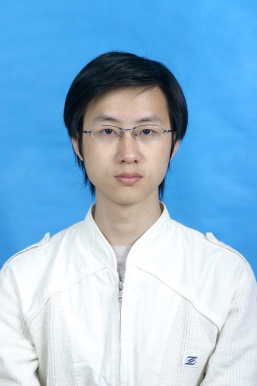 Xingsi Xue (薛醒思)合作论文数福建工程学院信息科学与工程学院24
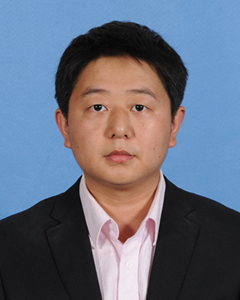 Shi Cheng (程适)合作论文数School of Computer Science, Shaanxi Normal University17
 Jingjing Du (杜静静)合作论文数College of Artificial Intelligence and Automation, Hohai University17
 Mingang Hua (华民刚)合作论文数College of Artificial Intelligence and Automation, Hohai University14
 Yingjuan Xie (谢迎娟)合作论文数College of Information Science and Engineering, Hohai University12
 Yuhui Shi (史玉回)合作论文数Department of Computer Science and Engineering, College of Engineering, Southern University of Science and Technology11
 Xue Wang (王雪)合作论文数Institute of Instrument Science and Technology, Department of Precision Instrument, Tsinghua University11
 Weihang Zhang合作论文数Tsinghua Univ, Dept Precis Instrument, State Key Lab Precis Measurement Technol & Instru, Beijing 100084, Peoples R China10
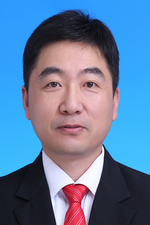 Qiwen Yang (杨启文)合作论文数College of Artificial Intelligence and Automation, Hohai University8
 Jian Li (李健)合作论文数College of Information Science and Engineering, Hohai University8
 Xinnan Fan (范新南)合作论文数College of Information Science and Engineering, Hohai University8
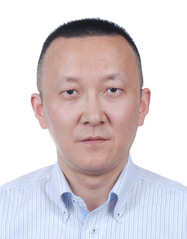 Juntao Fei (费峻涛)合作论文数College of Artificial Intelligence and Automation, Hohai University8
 Jianjun Ni (倪建军)合作论文数College of Artificial Intelligence and Automation, Hohai University7Lei Zhang (张雷)合作论文数School of Internet of Things, Nanjing University of Posts and Telecommunications6
 Zhang Pengbo合作论文数School of Medicine, Stanford University;zhangpb@stanford.edu.;Institute for Stem Cell Biology and Regenerative Medicine, Stanford University School of Medicine6
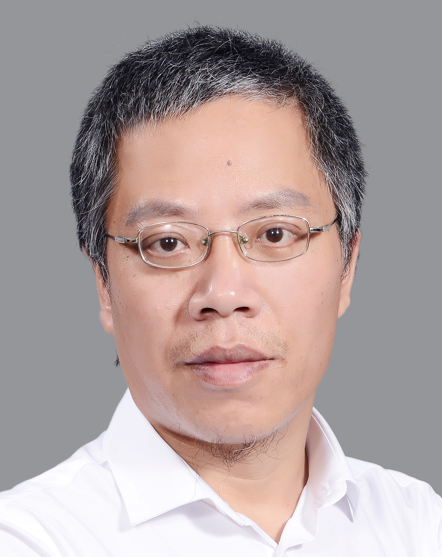 Ziwu Ren (任子武)合作论文数School of Mechanical and Electrical Engineering, Soochow University6Samson Hansen Sackey合作论文数4Altangerel Ayush合作论文数4
 Wei You (尤為)合作论文数Department of Industrial Engineering and Decision Analytics, School of Engineering, The Hong Kong University of Science and Technology4
 Xiujuan Lei (雷秀娟)合作论文数School of Computer Science, Shaanxi Normal University4
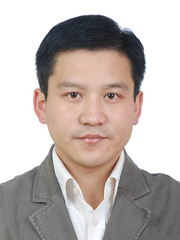 Hua Chen (陈华)合作论文数School of Mathematics, Hohai University4
 Tin Lun Lam (林天麟)合作论文数School of Science and Engineering, The Chinese University of Hong Kong, Shenzhen;National-local Joint Engineering Laboratory of Robotics and Intelligent Manufacturing;Center for Intelligent Robots, Shenzhen Institute of Artificial Intelligence and Robotics for Society4
 Quande Qin (秦全德)合作论文数Department of Management Science, College of Management, Shenzhen University4Cunkang Bian合作论文数3Yang Hu合作论文数3
 Xuewu Zhang (张学武)合作论文数College of Information Science and Engineering, Hohai University3
 Pei Cheng (程培)合作论文数School of Mathematical Sciences, Anhui University3
 Jianyong Zhang (张建勇)合作论文数College of Sciences, Hohai University3Yuncan Xue (薛云灿)合作论文数College of Internet of Things Engineering, Hohai University3
 Xin Yao (姚新)合作论文数Department of Computer Science and Engineering, Southern University of Science and Technology;Centre of Excellence for Research in Computational Intelligence and Applications, University of Birmingham;School of Computer Science, University of Birmingham;School of Artificial Intelligence, Xidian University3Chaofan Feng合作论文数2Fangmin Wu合作论文数2Wei Peng合作论文数2Wensheng Wang合作论文数2Chengwen Lei合作论文数2Tongsheng Shu合作论文数2Changshuan Wang合作论文数2Mingjian Liang合作论文数2Jingyu Wang合作论文数2
 Jiawei Lu合作论文数2Dongxu Chen合作论文数2Xiaojing Wu合作论文数Fujian Univ Technol, Coll Informat Sci & Engn, Fuzhou, Fujian, Peoples R China2Chang Liu合作论文数2
 Hua Feng合作论文数Wuyi Univ, Sch Intelligent Mfg, Jiangmen 529020, Peoples R China2Yifeng Wang合作论文数China Three Gorges Project Corporation(China Three Gorges Project Corporation,China Three Gorges Corporation),,China2James Adu Ansere合作论文数Sunyani Technical University2Qiang Gao合作论文数2Lin Liu合作论文数2Kai Li合作论文数2




