Semantic communication (SemCom) has emerged as a promising paradigm for achieving unprecedented communication efficiency in sixth-generation (6G) networks. However, deploying SemCom over digital systems introduces new challenges in maintaining robustness against packet losses that distort critical content. To address this issue, this paper proposes a novel framework, termed generative feature imputing, which comprises three key techniques. First, we introduce a spatial-error-concentration packetization strategy that spatially concentrates feature distortions by encoding feature elements based on their channel mappings. Second, building on this strategy, we propose a generative feature imputing method that utilizes a diffusion model to efficiently reconstruct missing features caused by packet losses. Finally, we develop a semantic-aware power allocation scheme that enables unequal error protection by allocating transmission power according to the semantic importance of each packet. Experimental results demonstrate that the proposed framework outperforms conventional approaches, such as Deep Joint Source-Channel Coding (DJSCC) and JPEG2000, under block fading conditions, achieving higher semantic accuracy and lower Learned Perceptual Image Patch Similarity (LPIPS) scores.
The growing demand for low-latency computing in 6G is driving the use of UAV-based low-altitude mobile edge computing (MEC) systems. However, limited spectrum often leads to severe uplink interference among ground terminals (GTs). In this paper, we investigate a rate-splitting multiple access (RSMA)-enabled low-altitude MEC system, where a UAV-based edge server assists multiple GTs in concurrently offloading their tasks over a shared uplink. We formulate a joint optimization problem involving the UAV 3D trajectory, RSMA decoding order, task offloading decisions, and resource allocation, aiming to mitigate multi-user interference and maximize energy efficiency. Given the high dimensionality, non-convex nature, and dynamic characteristics of this optimization problem, we propose a generative AI-enhanced deep reinforcement learning (DRL) framework to solve it efficiently. Specifically, we embed a diffusion model into the actor network to generate high-quality action samples, improving exploration in hybrid action spaces and avoiding local optima. In addition, a priority-based RSMA decoding strategy is designed to facilitate efficient successive interference cancellation with low complexity. Simulation results demonstrate that the proposed method for low-altitude MEC systems outperforms baseline methods, and that integrating GDM with RSMA can achieve significantly improved energy efficiency performance.
Uncrewed aerial vehicle (UAV)-assisted 360 VR video streaming is a promising solution for scene monitoring in challenging environments like disaster zones. However, the fundamental challenge of ensuring quality of experience (QoE) and managing high throughput in dynamic UAV-assisted wireless networks remains significantly under-investigated. In this paper, we consider a system setup where each UAV, equipped with a 360 camera, is responsible for capturing and encoding multi-quality tiled 360 VR video intended for ground users (GUs) with diverse fields of view (FoVs). Non-orthogonal multiple access (NOMA) and scalable video coding (SVC) are employed to enhance the 360 VR video streaming efficiency, where video quality level and transmission control jointly determine the GUs' QoE. To maximize overall QoE, we first develop a FoV-aware deep reinforcement learning (DRL) framework that jointly schedules the content delivery to GUs and selects their video quality levels based on heterogeneous FoV requests and channel conditions. To further improve performance stability when the number of GUs varies and the underlying UAV-GU topology changes, we develop a dynamic graph-oriented continual DRL (DGC-DRL) approach that explicitly accommodates dynamically joining and leaving GUs by modeling the evolving UAV-GU network as a dynamic heterogeneous graph, thereby alleviating catastrophic forgetting and maintaining stable QoE under time-varying GU configurations. Simulation results demonstrate that, compared with benchmark methods, our proposed approach significantly enhances the system's QoE and transmission reliability.
Sensing and edge artificial intelligence (AI) are envisioned as two essential and interconnected functions in sixth-generation (6G) mobile networks. On the one hand, sensing-empowered applications rely on powerful AI models to extract features and understand semantics from ubiquitous wireless sensors. On the other hand, the massive amount of sensory data serves as the fuel to continuously refine edge AI models. This deep integration of sensing and edge AI has given rise to a new task-oriented paradigm known as integrated sensing and edge AI (ISEA), which features a holistic design approach to communication, AI computation, and sensing for optimal sensing-task performance. In this article, we present a comprehensive survey for ISEA. We first provide technical preliminaries for sensing, edge AI, and new communication paradigms in ISEA. Then, we study several use cases of ISEA to demonstrate its practical relevance and introduce current standardization and industrial progress. Next, the design principles, metrics, tradeoffs, and architectures of ISEA are established, followed by a thorough overview of ISEA techniques, including digital air interface, over-the-air computation, and advanced signal processing. Its interplay with various 6G advancements, e.g., new physical-layer and networking techniques, are presented. Finally, we present future research opportunities in ISEA, including the integration of foundation models, convergence of ISEA and integrated sensing and communications (ISAC), ultra-low-latency ISEA, and practicality issues.
Leveraging continuous solar energy harvesting at high efficiency, space data centers are envisioned as a promising platform for executing energy-intensive large language models (LLMs). Recognizing this advantage, space and AI conglomerates (e.g., SpaceX, Google) are actively investing in this vision. One key challenge, however, is the efficient distributed deployment of a large-scale LLM in a satellite network due to the limited onboard computing and communication resources. This gives rise to a placement problem that involves partitioning and mapping model components to satellites such that the fundamentally different model architecture and network topology can be reconciled to ensure low-latency token generation. To address this problem, we present the Space Network of Mixture-of-Experts (SpaceMoE) framework targeting the distributed execution of a popular mixture-of-experts (MoE) model in space. The proposed placement strategies are two-level: (1) layer placement, which assigns MoE layers to satellite subnets; and (2) intra-layer expert placement, which assigns individual experts to satellites associated with the same layer/subnet. For layer placement, we exploit the ring-like communication pattern of autoregressive inference to partition the satellite constellation along the orbiting direction into subnets arranged on a ring, each hosting one MoE layer. Based on this architecture, we formulate and solve an optimization problem for intra-layer expert placement to map experts with heterogeneous activation probabilities onto satellites. The derived strategy reveals an intuitive principle: a frequently activated expert should be mapped to a satellite on a routing path with low expected latency. Experiments over a thousand-satellite constellation show that SpaceMoE achieves at least a threefold latency reduction compared with conventional random and ablation-based placement strategies.
A distinctive function of sixth-generation (6G) networks is the integration of distributed sensing and edge artificial intelligence (AI) to enable intelligent perception of the physical world. This resultant platform, termed integrated sensing and edge AI (ISEA), is envisioned to enable a broad spectrum of Internet-of-Things (IoT) applications, including remote surgery, autonomous driving, and holographic telepresence. Recently, the communication bottleneck confronting the implementation of an ISEA system is overcome by the development of over-the-air computing (AirComp) techniques, which facilitate simultaneous access through over-the-air data feature fusion. Despite its advantages, AirComp with uncoded transmission remains vulnerable to interference. To tackle this challenge, we propose AirBreath sensing, a spectrum-efficient framework that cascades feature compression and spread spectrum to mitigate interference without bandwidth expansion. This work reveals a fundamental tradeoff between these two operations under a fixed bandwidth constraint: increasing the compression ratio may reduce sensing accuracy but allows for more aggressive interference suppression via spread spectrum, and vice versa. This tradeoff is regulated by a key variable called breathing depth, defined as the feature subspace dimension that matches the processing gain in spread spectrum. To optimally control the breathing depth, we mathematically characterize and optimize this aforementioned tradeoff by designing a tractable surrogate for sensing accuracy, measured by classification discriminant gain (DG). Experimental results on real datasets demonstrate that AirBreath sensing effectively mitigates interference in ISEA systems, and the proposed control algorithm achieves near-optimal performance as benchmarked with a brute-force search.
Speculative inference (SPIN) was originally developed as an efficient architecture to accelerate Large Language Models (LLMs). In this work, we propose its distributed deployment to enable cooperative token generation in a multiuser edge system; its advantage is to effectively balance computational loads between resource-constrained devices and servers. The resulting architecture, termed Multi-access SPIN (Multi-SPIN), utilizes on-device small language models to generate and upload candidate token drafts, while an edge server operates the LLM to verify them in parallel batches. Given the severe heterogeneity in users' computation and communication capabilities, the draft length emerges as a critical control variable that influences node-level computation loads and multi-access latency, thereby governing the sum token goodput. Consequently, considering frequency-division multiple access, we investigate the problem of multi-access draft control, a joint optimization of draft-length control and bandwidth allocation to maximize sum token goodput. We examine two cases: (1) homogeneous draft lengths across users to facilitate server-side batching, and (2) heterogeneous draft lengths to introduce a new dimension for goodput enhancement. By developing decomposition methods, we reduce these complex optimizations into tractable sub-problems, which allow efficient draft control algorithms to be derived in closed form. Our analysis shows that the optimal bandwidth allocation compensates users with weaker computation-and-communication capabilities in the homogeneous case due to the batching synchronization requirements, whereas its heterogeneous-case counterpart rewards users with higher acceptance rates by relaxing such requirements. Experiments using Llama-2 and Qwen3.5 model pairs across diverse tasks demonstrate that Multi-SPIN improves goodput by up to 88
This paper presents the Quantum-Power pROfile Based Estimation (PROBE) framework, a Rydberg Atomic Receiver (RARE)-based multi-user angle-of-arrival (AoA) estimation approach equipped with a radio-frequency (RF) lens front end. We establish a physics-consistent analytical model showing that magnitude-only RARE measurements, processed via the beam-propagation method (BPM) and snapshot-wise power accumulation, can be rigorously characterized as a nonnegative superposition of AoA-dependent, lens-induced spatial power profiles. This formulation reveals a structured and interpretable power-domain dictionary that enables multi-user AoA recovery without explicit phase reconstruction. Building on this foundation, we develop two complementary recovery strategies: (i) a principled non-negative least absolute shrinkage and selection operator (NN-LASSO)-based solver that estimates a sparse nonnegative angular representation via an accelerated proximal-gradient method followed by cluster-based AoA decoding, and (ii) a low-complexity successive interference cancellation (SIC) algorithm that iteratively identifies and removes dominant power-profile components through cosine-similarity matching. Simulation results demonstrate that the proposed Quantum-PROBE framework consistently outperforms representative RARE- and RF-based benchmarks across diverse system configurations, while offering a clear accuracy-complexity tradeoff between the NN-LASSO and SIC variants for practical quantum sensing deployments.
Beamforming is conventionally understood as a collective property of many discrete antenna elements in both communication and radar fields, which links angular selectivity to array size, element spacing, and band-specific hardware. Here we uncover a fundamentally different beamforming mechanism achieved by a Rydberg atomic receiver: a Rydberg-atom vapor cell dressed by a local-oscillator field constitutes a continuous quantum aperture. In this regime, spatially-varying quantum coherence across the aperture provides continuous amplitude-phase control, allowing a directional beam pattern to emerge from one sensing volume rather than from an engineered array. We establish the theory of continuous quantum aperture and show that tailoring the local-oscillator field can directly program the aperture response. This enables reconfigurable single-peak, multipeak, and multiband beamforming within a single vapor cell. Experiments on a Rydberg atomic receiver prototype verify that practical beam patterns agree with theoretical predictions across aperture sizes, frequency bands, and local-oscillator configurations. Leveraging this new beamforming mechanism, we further demonstrate interference mitigation, multiuser access, and multiband multiuser access with the single-vapor-cell platform. Our results identify the continuous quantum aperture as a new operating principle of Rydberg atomic receivers and establish single-vapor-cell beamforming as an integrated and reconfigurable platform for spatially selective electromagnetic reception.
The rapid development of agentic artificial intelligence (AI) is driving future wireless networks to evolve from passive data pipes into intelligent collaborative ecosystems under the emerging paradigm of integrated learning and communication (ILAC). However, realizing efficient agentic collaboration faces challenges not only in handling semantic redundancy but also in the lack of an integrated mechanism for communication, computation, and control. To address this, we propose a wireless agent network (WAN) framework that orchestrates a progressive knowledge aggregation mechanism. Specifically, we formulate the aggregation process as a joint energy minimization problem where the agents perform semantic compression to eliminate redundancy, optimize transmission power to deliver semantic payloads, and adjust physical trajectories to proactively enhance channel qualities. To solve this problem, we develop a hierarchical algorithm that integrates inner-level resource optimization with outer-level topology evolution. Theoretically, we reveal that incorporating a potential field into the topology evolution effectively overcomes the short-sightedness of greedy matching, providing a mathematically rigorous heuristic for long-term energy minimization. Simulation results demonstrate that the proposed framework achieves superior energy efficiency and scalability compared to conventional benchmarks, validating the efficacy of semantic-aware collaboration in dynamic environments.
Mixture-of-experts (MoE) architectures enable efficient large language model (LLM) inference at the wireless edge by reducing per-token computation through sparse expert activation. The wireless distributed MoE (WIDE) architecture addresses edge-device resource constraints by distributing computation-intensive experts across devices coordinated by an edge server. However, repeated uploads of high-dimensional expert outputs over orthogonal multiple access create a severe uplink bottleneck. To overcome this limitation, we propose AirMoE, a novel framework leveraging over-the-air computing (AirComp) to realize simultaneous expert-output aggregation via wireless waveform superposition. Integrating AirComp into MoE inference, however, introduces three unique challenges: fast-varying aggregation weights, layer-dependent error sensitivity, and channel-aware expert placement. To address these challenges, we first construct an inference-aware AirMoE error metric to quantify the effect of physical-layer aggregation distortion on end-to-end (E2E) inference accuracy via perturbation-based layer-sensitivity calibration. We then formulate a joint optimization problem to minimize this E2E error and decompose it, without loss of optimality, into a two-timescale framework. At the fast timescale, we derive a globally optimal threshold-based power-control policy that partitions devices into two groups: those achieving exact aggregation-weight alignment, and the remainder transmitting at maximum power. At the slow timescale, we develop an activation- and channel-aware expert placement strategy that assigns more important experts to devices with lower channel-power cost. Extensive experiments using the OLMoE-1B-7B-0924 model on the ARC-Easy benchmark demonstrate that AirMoE significantly outperforms representative baselines in E2E inference accuracy, particularly under strong device heterogeneity.
Integrated communication and computation (IC^2) has emerged as a new paradigm for enabling efficient edge inference in sixth-generation (6G) networks. However, the design of IC^2 technologies is hindered by the lack of a tractable theoretical framework for characterizing end-to-end (E2E) inference performance. The metric is highly complicated as it needs to account for both channel distortion and artificial intelligence (AI) model architecture and computational complexity. In this work, we address this challenge by developing a tractable analytical model for E2E inference accuracy and leveraging it to design a channel-adaptive AI algorithm that maximizes inference throughput, referred to as the edge processing rate (EPR), under latency and accuracy constraints. Specifically, we consider an edge inference system in which a server deploys a backbone model with early exit, which enables flexible computational complexity, to perform inference on data features transmitted by a mobile device. The proposed accuracy model characterizes high-dimensional feature distributions in the angular domain using a Mixture of von Mises (MvM) distribution. This leads to a desired closed-form expression for inference accuracy as a function of quantization bit-width and model traversal depth, which represents channel distortion and computational complexity, respectively. Building upon this accuracy model, we formulate and solve the EPR maximization problem under joint latency and accuracy constraints, leading to a channel-adaptive AI algorithm that achieves full IC^2 integration. The proposed algorithm jointly adapts transmit-side feature compression and receive-side model complexity according to channel conditions to maximize overall efficiency and inference throughput. Experimental results demonstrate its superior performance as compared with fixed-complexity counterparts.
Token Communications (TokenCom) has recently emerged as a new paradigm in which tokens serve as unified units for communication and computation, enabling efficient multimodal semantic and goal-oriented transmission. In this paper, we develop Ada-TokenCom, a rate-adaptive TokenCom framework based on large autoregressive models, which integrates next-token prediction with arithmetic coding to achieve ultra-low bitrate semantic communication at the token level. We propose a mixed reconstruction/generation scheme, where the transmitter encodes and transmits the highly informative tokens at the beginning of the token sequence leveraging a pre-trained autoregressive large model, while the receiver uses an identical model to predict the rest. Moreover, we design a Lyapunov-based algorithm to dynamically optimize both the source compression rate and the modulation and coding scheme, adapting to time-varying network conditions. Simulation results demonstrate that our proposed Ada-TokenCom framework outperforms both digital and deep joint source-channel coding-based semantic communication baselines.
 Guangxu Zhu (朱光旭)合作论文数Network and Machine Intelligence Research Center, Shenzhen Research Institute of Big Data53
 Changsheng You (游昌盛)合作论文数Department of Electronic and Electrical Engineering, College of Engineering, Southern University of Science and Technology32
 Yi Gong (贡毅)合作论文数Department of Electronic and Electrical Engineering, College of Engineering, Southern University of Science and Technology32
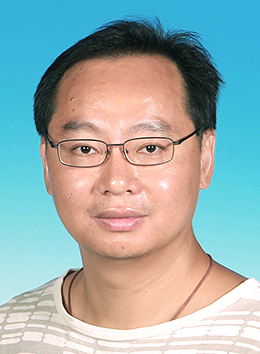 Vincent Lau (劉堅能)合作论文数Department of Electronic and Computer Engineering, School of Engineering, Hong Kong University of Science and Technology27
 Jeff Andrews合作论文数Department of Electrical and Computer Engineering, The University of Texas at Austin;Andrews Broadband Communications, LLC24
 Hongyang Du (杜泓阳)合作论文数Department of Electrical and Electronic Engineering, The University of Hong Kong21
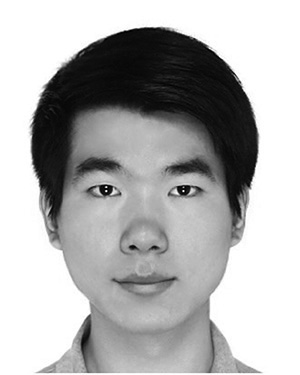 Qunsong Zeng合作论文数The University of Hong Kong, Hong Kong21
 Mingyao Cui合作论文数Department of Electronic Engineering, Tsinghua University19
 Xianhao Chen合作论文数Southwest Jiaotong Univ, Key Lab Informat Coding & Transmiss, Chengdu 610031, Sichuan, Peoples R China19
 Dusit (Tao) Niyato合作论文数College of Computing and Data Science, Nanyang Technological University;School of Physical and Mathematical Sciences, Nanyang Technological University;School of Computer Science and Engineering, Nanyang Technological University19
 Robert W. Heath Jr.合作论文数Jacobs School of Engineering, University of California, San Diego;MIMO Wireless Inc.19
 Rui Wang (王锐)合作论文数Department of Electronic and Electrical Engineering, College of Engineering, Southern University of Science and Technology18
 Hyukjin Chae合作论文数Apple Inc.18
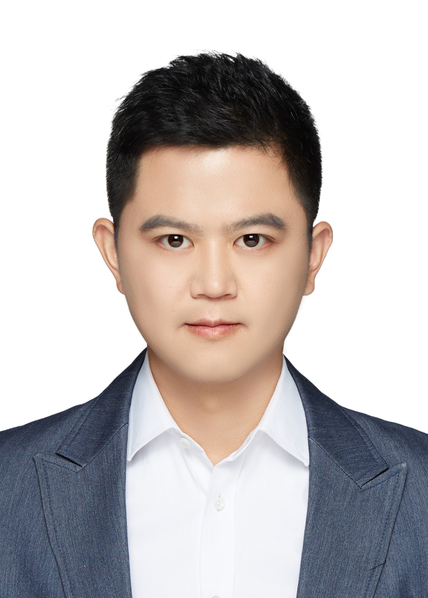 Dingzhu Wen (文鼎柱)合作论文数School of Information Science and Technology, ShanghaiTech University16
 Seungwoo Ko合作论文数16
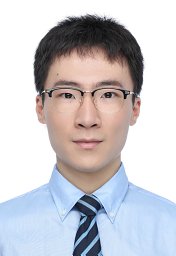 Kaifeng Han (韩凯峰)合作论文数China Academy of Information and Communications Technology15
 Petar Popovski合作论文数Department of Electronic Systems, The Technical Faculty of IT and Design, Aalborg University15
 Zhaohui Yang (杨照辉)合作论文数College of Information Science and Electronic Engineering, Zhejiang University;Zhejiang Key Lab of Information Processing Communication and Networking, Zhejiang University;Zhejiang Lab14
 Dongku Kim合作论文数School of Electrical and Electronic Engineering, Yonsei University;Mobile Communication Lab, Yonsei University;IITP;Korea Navigation Institute;The Korean Institute of Communications and Information Sciences14
 Qiao Lan合作论文数13
 Yuqing Du合作论文数12
 Yuanwei Liu合作论文数Department of Electrical and Computer Engineering, The University of Hong Kong12Byoung Hoon Kim合作论文数LG Electronics12
) Zhaoyang Zhang (张朝阳)合作论文数College of Information Science & Electronic Engineering, Zhejiang University11
Zhaoyang Zhang (张朝阳)合作论文数College of Information Science & Electronic Engineering, Zhejiang University11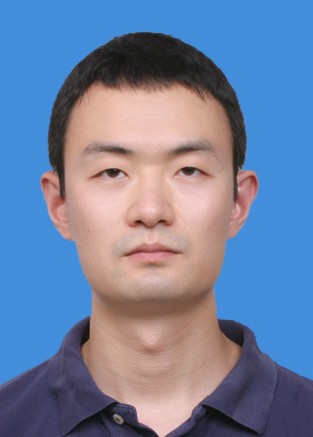 Jie Xu (许杰)合作论文数School of Science and Engineering, The Chinese University of Hong Kong, Shenzhen10
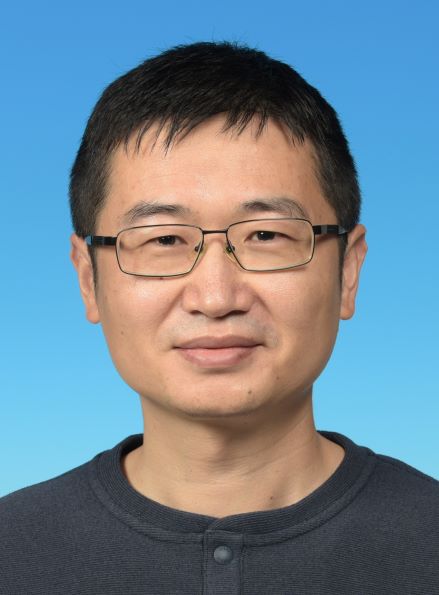 Jun Zhang (張軍)合作论文数Department of Electronic & Computer Engineering, School of Engineering, The Hong Kong University of Science and Technology10
 Sungyoon Cho合作论文数10Hai Wu合作论文数9
 Zezhong Zhang合作论文数Department of Electrical and Electronic Engineering, Southern University of Science and Technology, Shenzhen, China9
 Dongzhu Liu合作论文数Univ Hong Kong, Dept Elect & Elect Engn, Hong Kong, Hong Kong, Peoples R China9
 Bo Gu (古博)合作论文数School of Intelligent Systems Engineering, Sun Yat-Sen University9
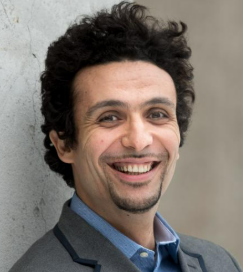 Mehdi Bennis合作论文数Centre for Wireless Communications, Faculty of Information Technology and Electrical Engineering, University of Oulu9
 Min Sheng (盛敏)合作论文数School of Telecommunications Engineering, Xidian University9
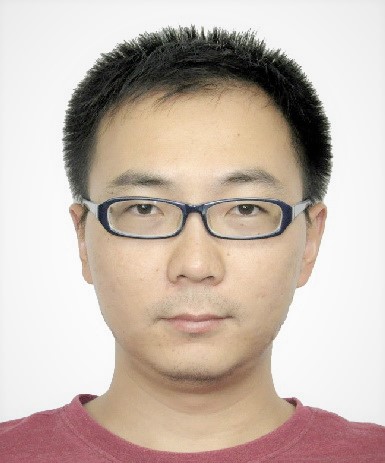 Shimin Gong (龚世民)合作论文数School of Intelligent Systems Engineering, Sun Yat-Sen University9
 Anders E. Kalør合作论文数Aalborg Univ, Dept Elect Syst, Aalborg, Denmark8
 Khaled B. Letaief (李德富)合作论文数Department of Electronic and Computer Engineering, The Hong Kong University of Science and Technology8
 Rui Zhang (张瑞)合作论文数School of Science and Engineering, The Chinese University of Hong Kong, Shenzhen8
 Zhiyan Liu合作论文数Tsinghua University, Tsinghua University7
 Xiangyun (Sean) Zhou合作论文数School of Engineering, ANU College of Engineering, Computing and Cybernetics, Australian National University7
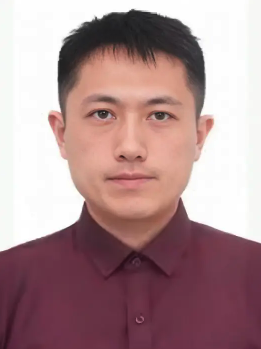 Wei Xu (许威)合作论文数National Mobile Communications Research Laboratory, School of Information Science and Engineering, Southeast University7
 Shuai Wang (王帅)合作论文数Shenzhen Institutes of Advanced Technology, Chinese Academy of Science;School of Artificial Intelligence, University of Chinese Academy of Sciences7
 Hanbyul Seo合作论文数6
 Zheng Lin合作论文数Department of Electrical and Electronic Engineering, the University of Hong Kong6
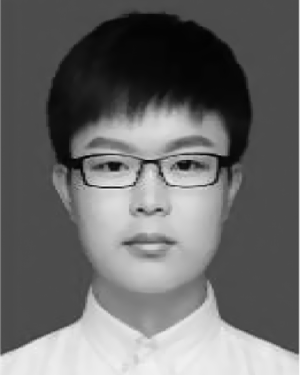 Xu Chen合作论文数6
 Xiaowen Cao (曹晓雯)合作论文数College of Electronics and Information Engineering, Shenzhen University6
 Shuguang Cui (崔曙光)合作论文数School of Science and Engineering, The Chinese University of Hong Kong (Shenzhen)6
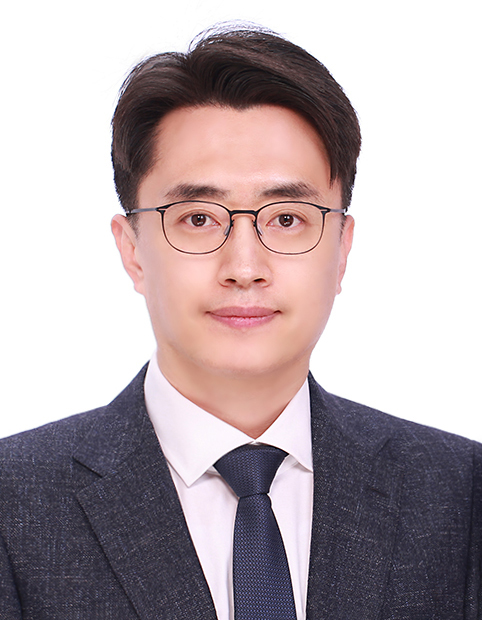 Chan-Byoung Chae合作论文数Intelligence Networking Lab. School of Integrated Technology, College of Computing, Yonsei University6
 Wen Lea Pearn合作论文数Department of Industrial Engineering and Management, National Chiao Tung University6
 Deniz Gunduz合作论文数Department of Electrical and Electronic Engineering, Faculty of Engineering, Imperial College London;Information Processing and Communications Lab, Imperial College London6