In the last few decades, a number of clustering methods for vectorial data have matured. Occasionally, researchers are interested in making them workable for data of other types, such as an object's shape. current difficulty in applying them to shape clustering is that clustering must be invariant to several similarity transformations of shapes. Therefore, we use the ordinary Procrustes sum of squares (OSS) in Procrustes analysis, which refers to analysis that is invariant to the similarity transformations between shapes. Thus, in this study, we aim to make mature methods workable in shape clustering. To achieve this, the essential points that we need to address are to rewrite the optimization problem associated with each method and present a feasible method for computing the solution to the problem. As a result, we base the method the OSS, its derivative, or a symmetric matrix concerning the OSS. Another aim of this study is to identify specific applications of shape clustering. We demonstrate the applications through experiments using datasets that contain skewed line drawings, American football formations, and baseball pitch trajectories. We examine the OSS-based methods by considering shape classification and determining the best method for implementing the OSS. As a result, regardless of the dataset, we demonstrate that the OSS in every method is more effective than other shape distances and that the convex clustering method incorporating the OSS is best performed several ways.
The fundamental challenge in visual motion processing is how the brain extracts velocity vectors unambiguously. While the traditional energy models rely on symmetric nonlinear operations to preserve signal energy, they face inherent mathematical constraints in maintaining the independence of velocity information. We present an innovative mathematical framework that uses Wiener kernel expansion and spatiotemporal Jacobians to illustrate how neural networks separately address different velocities and achieve reliable velocity perception. It is shown that our proposed asymmetric network model—characterized by odd/even-order nonlinearities and phase shift in the nonlinear pathway in which spatiotemporal physical velocity is effectively transformed into the phase shifts in the time domain. Our proposals suggest that the biological nuisance of neural variability and structural asymmetry is, in fact, a fundamental computational resource required to resolve mathematical singularities and achieve unambiguous three-dimensional motion perception.
AIT-Rescue is the champion team in the RoboCup 2024 Rescue Simulation League that succeeded in proposing a rescue strategy focused on distributed control. RoboCupRescue Simulation is a competition that aims to develop rescue strategies to save more civilians in disaster rescue simulations. AIT-Rescue employs autonomous distributed decision-making and has a flexible rescue strategy that can be adopted for complex disaster situations. This paper explains the rescue strategy of AIT-Rescue and the implemented module design. The critical features in this system are the methods for determining priority roads and selecting sanctuaries. The processes that these methods consider for civilian rescue in disaster conditions are explained. The research results on multiagent systems are presented in relation to AIT-Rescue’s development. This research contributes to developing effective strategies for real-world disaster rescue by exploring multiagent systems and applying them to complex disaster scenarios. In the future, these results will be integrated into agents to obtain better strategies.
Machine learning, deep learning and neural networks are extensively developed in many fields, with neural networks playing an important role in a wide variety of applications. However, a sufficient explanation of the structure and functionality of complex and deep neural networks is still needed. In this paper, it is shown that bio-inspired networks are useful for the explanation of network functions. First, the asymmetric network is created based on the biological retinal networks. Second, the classification performance of the asymmetric network is compared to that of the symmetric networks. The directional vectors in the asymmetric networks are generated on the adjacent neurons caused by movement stimulus, which create independent subspaces. Vectors for the movement stimulus are reported experimentally to be generated in the layered cortex in the brain. In this paper, it is shown computationally that many directional movement vectors are generated in the layered asymmetric networks, which create also independent subspaces. Further, when the correlational activities of the adjacent cells are represented in the directed vectors, they create independent subspaces than the direct inputs in the networks. These asymmetric subnetworks will facilitate the transmission of sensory information to higher-level processes such as efficient feature extraction, classification, and learning in the layered networks.
Remote communication is challenging compared with face-to-face communication because of the limited social cues. Computer systems built to address this problem could enable individuals to share facial expressions, which are available in face-to-face communication, or biosignals such as heart rate. Currently, many people are unfamiliar with the advantages of sharing such signals online, and clarification of the associated benefits is necessary. To compare the effects of heart rate and facial expression data on the ease of communication, we exposed 20 pairs of participants to a remote work simulation. In this experiment, one participant made contact with their remote partner on the basis of heart rate or facial expression data. Although participants evaluated the heart rate and facial expression data as being similarly useful on average, we found the following differences. Recipients of the contact evaluated the heart rate data as more effective, likely because the recipient's status was more accurately discriminated by the sender. Senders evaluated the facial expression data as more effective, likely because the many parameters were easily interpreted and quickly updated. Thus, heart rate and facial expression data may increase the ease of remote communication, particularly for the recipient and the sender, respectively.
Recent developments in measurement tools have made it easier to obtain shape data, a collection of point coordinates in vector space that are meaningful when some of them are gathered together. As a result, clustering of shape data becomes increasingly important. However, few studies still perform applicable clustering in various cases because some studies rely on their specific shape representations. Thus, we apply a simple and widely recognized representation and generative model to shape. A configuration matrix of the point coordinates is used for the representation, and it is the simplest and most well-accepted representation in conventional shape analysis. As a generative model, we consider the mixture density function, a well-known model in statistics for expressing a population density function, which is a linear combination of subpopulation density functions. The aim of this paper is to present a mixture density-based model that will be useful for clustering shape data. The clustering of shapes involves estimating the parameters of the model, and this estimation is derived using an EM algorithm based on the model. As examples of promising shape-data applications, the computational analyses of ape skulls, American football formations, and baseball pitches were performed. In addition, we evaluated the performance of the EM algorithm by comparing it with other typical clustering methods. The theoretical results not only contribute to statistical estimation for shape data but also extend the clustering of non-vector shape data. The experimental results show that the derived EM algorithm performs well in shape clustering.
Machine learning, deep learning and neural networks are extensively applied for the development of many fields. Though their technologies are improved greatly, they are often said to be opaque in terms of explainability. Their explainable neural functions will be essential to realization in the networks. In this paper, it is shown that the bio-inspired networks are useful for the explanation of tracking and classification of features. First, the asymmetric network with nonlinear functions is created based on the bio-inspired retinal network. They have orthogonal properties useful for the tracking of features compared with the conventional symmetric networks, which is also proposed on the biological functions.Next, the analysis for the independence of the subspaces between the Fourier bases and the asymmetric network bases is performed. It was that the asymmetric networks have better performances in the classification compared with the symmetric ones. Further, the layered asymmetric networks generate the higher dimensional orthogonal bases that improve the classification accuracies by the replacements of bases. Finally, we classified Reuters collections data applying the explainable processing steps, which consist of the linear discriminations and the sparse coding with nearest neighbor relation for classification.
Machine learning, deep learning and neural networks are extensively developed in many fields, in which neural network architectures have shown a variety of applications. However, there is a need for explainable fundamentals in complex neural networks. It is important to know how the sensory information in neural networks develops to the higher-level processing for classification and learning. In this paper, it is shown that bio-inspired networks are useful for the explanation of network functions. First, the asymmetric network is created based on the biological retinal network with nonlinear functions. Second, the classification performance of the asymmetric network is compared to the conventional symmetric network. Prominent characteristic in the biological networks is sensitive to the motion intensity changes in their visual environments. Here, it is shown that the adjacent neurons create sensory directional information in the movements. Further, directional vectors are generated on the activities of the adjacent neurons caused by the intensity changes of the input. These vectors are useful for the generation of independent subspaces, which connect from the sensory information to the higher-level functions in networks.
Traffic safety measures are essential for addressing traffic accident clusters, which denote specific locations and times at which traffic accidents are prone. This study introduces a novel approach for identifying these clusters through hypothesis testing of the spatiotemporal network of previous traffic accidents. The experimental results across various regions in Aichi Prefecture are more accurate than those of a previous method for detecting these clusters.
Realizing urban-scale traffic simulations and utilizing the results of traffic analysis provide valuable insights for society. This study focused on cities in Aichi Prefecture, which has relatively high rates of traffic accident fatalities compared to other prefectures in Japan and aimed to achieve an urban-scale vehicle traffic simulation for traffic analysis. We used Simulation of Urban MObility (SUMO) as the simulator and got appropriate results for the entire area of Aichi Prefecture. This paper also details the simulation results and discusses how these results can be applied to analyze and reduce the number of traffic accidents.
Because of the increasing density of meteorological observation networks and technological advances in data processing, weather forecast accuracy has improved in the past decades and is projected to increase further, requiring measurements at the local scale. This paper introduces a weather observation system designed exclusively with low-cost commercial products. The combined cost of the fabricated device was approximately 100,000 yen, considerably cheaper than ultrasensitive cameras specifically designed for atmospheric airglow observations, which nominally cost ten million yen. An algorithm was also established to estimate night-time weather from the number of visible stars in all-sky images, by assuming that more visible stars implies fewer clouds and clearer weather. The resulting weather estimation accuracy was 83 percent. Thus, using an affordable system, the designed algorithm yielded satisfactory accuracy for weather forecasting.
Recent developments of deep learning, machine learning, and artificial intelligence have a great influence on the wide areas of technologies. Classification is a core technology in their processing. This paper aims to make clear the classification performance for the bio-inspired asymmetric and symmetric networks. First, the bio-inspired asymmetric network is shown to have superior performance for tracing features compared to the symmetric one. Second, the classification characteristics of the asymmetric and symmetric networks are derived based on the independence of their outputs. Further, it is shown that generation of extended bases in the bio-inspired layered networks improves classification performance. Finally, the higher-dimensional mapping code generated as the extended bases are applied to the modified XOR problem.
Machine learning, deep learning and neural networks are extensively developed in many fields, in which neural network architectures have shown a variety of applications. However, there is a need for explainable fundamentals in complex neural networks. In this paper, it is shown that bio-inspired networks are useful for the explanation of network functions. First, the asymmetric network is created based on the bio-inspired retinal network. They have orthogonal bases which correspond to the Fourier bases. Second, the classification performance of the asymmetric network is compared to the conventional symmetric network. Further, the asymmetric network is extended to the layered networks, which generate higher dimensional orthogonal bases. Their replacement operation is shown to be useful in the classification. These higher dimensional bases preserve the independence of patterns in their layered networks. Finally, it is shown that the sparse codes made of the higher dimensional bases are applied to the classification of real-world data.
Various methods have been proposed for analyzing traffic accident hotspots. One of these methods is to detect traffic accident hotspots on the road network using a hypothesis testing method. However, this method does not consider the time of occurrence of a traffic accident. In other words, this method provides information on high-risk locations for traffic accidents but not on the corresponding time. This paper proposes a new method for detecting traffic accident hotspots considering not only location but also time. We therefore extended the previous hypothesis testing method to consider the time of occurrence of a traffic accident. First, we check for changes in spatial properties over time in the target area using local indicators of spatial autocorrelation (LISA) cluster maps. Next, we estimate the probability density function of traffic accidents in the spatio-temporal network using the spatio-temporal network kernel density estimation (STNKDE) method. Finally, we detect clusters where the probability density of traffic accidents is significantly higher through hypothesis testing based on the estimation results. We detect clusters under four conditions while testing different hypotheses and parameters. The results show that the proposed method can detect traffic accident clusters. Therefore, when considering traffic safety measures, the method can be adopted to detect the location and time that require attention and allocate the necessary resources.
The RoboCupRescue Simulation (RRS) is a project that uses multi-agent systems to address real-world problems. RRS needs to perform an optimal task assignment for various disaster relief teams (agents) to minimize the damage caused by disasters. In previous studies, the RRS task assignment problem was modeled as a distributed constraint optimization problem (DCOP) and its effectiveness was confirmed. The DCOP can handle cooperative actions by one type of agent, but it cannot handle cooperative actions by multiple types of agents. To achieve this cooperative behavior, task assignment must take into account the order constraints of multiple types of tasks. It is also difficult for the DCOP to consider the dynamic environment. RRS should consider the dynamic environment because disaster conditions change over time. To consider the dynamic environment, task assignment must take into account the time window constraints of the task. Therefore, the objective of this study is to realize a disaster relief agent that performs task assignment considering the task order and time window constraints for RRS. First, the task assignment problem of RRS was modeled as a layered DCOP (L-DCOP) and L-DCOP was applied to RRS. Next, the rescue abilities and behavior of the L-DCOP agent applying the L-DCOP were compared with those of the DCOP agent applying the DCOP. The results confirmed the effectiveness of the L-DCOP agent and its ability to perform given the constraints of the task.
Machine learning, deep learning and neural networks are extensively developed in many fields, in which neural network architectures have shown a variety of applications. However, there is a need for explainable fundamentals in complex neural networks. In this paper, it is shown that bio-inspired networks are useful for the explanation of network functions. First, the asymmetric network is created based on the bio-inspired retinal network. They have orthogonal bases which correspond to the Fourier bases. Second, the classification performance of the asymmetric network is compared to the conventional symmetric network, which is developed as a biological model for the sensory processing. Further, the higher dimensional orthogonal bases are generated and their replacement operations are shown to be useful for the classification. It is shown that the generation of higher dimensional independence is realized in the layered networks using Shur complement.
Machine learning, deep learning and neural networks are extensively developed in many fields. As the function of cortical neural model, a sparse coding has been studied which is based on the bases functions of input stimulus. In this paper, it is shown that the bio-inspired networks are useful for the explanation of network functions. First, the asymmetric network with nonlinear functions is created based on the bio-inspired retinal network. They have orthogonal properties useful for features classification and processing. Second, it is shown that the asymmetric network is superior to the conventional symmetric network in the classification performance. Further, the asymmetric network is extended to the layered networks, which are also generated on the bio-inspired model of brain cortex. In the extended asymmetric layered networks, the higher dimensional orthogonal bases are created. To improve the classification performance, the bases replacements are performed in the layered networks. It is shown the bases replacements in the layered networks improve classification performance in both asymmetric and symmetric networks.
 Naohiro Ishii (石井 直宏)合作论文数Advanced Institute of Industrial Technology62
 Nobuhiro Ito合作论文数Dept . of Computer Science and Engineering;Graduate School of Engineering;Nagoya Institute of Technology;Graduate School of Engineering, Nagoya Institute of Technology54
 Toyoshiro Nakashima合作论文数30
 Yoshiyuki Anan合作论文数22
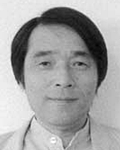 Akira Hayashi合作论文数16Takeshi Uchitane合作论文数16
 Nobuo Suematsu合作论文数13Kazuya Odagiri合作论文数12
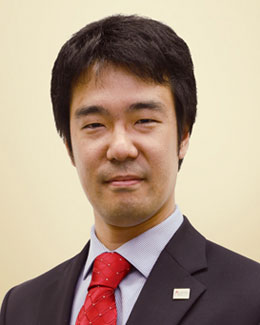 Tokuro Matsuo (松尾徳朗)合作论文数Graduate School of Industrial Technology, Advanced Institute of Industrial Technology11Naoto Mukai合作论文数9Shunki Takami合作论文数7
 Kazushi Ikeda (池田和司)合作论文数Mathematical Informatics Lab, Nara Institute of Science and Technology;Division of Information Science, Graduate School of Science and Technology, Nara Institute of Science and Technology7Ippei Torii合作论文数7
 Kazushi Mimura合作论文数7Keisuke Ando合作论文数5Taishun Kusaka合作论文数4Shivashish Jaishy合作论文数4Yuki Miyamoto合作论文数4Kazuo Takayanagi合作论文数3Yoshiyuki Kozuka合作论文数3Yoshiki Fukushige合作论文数3
 Xiaoyong Du (杜小勇)合作论文数School of Information, Renmin University of China;Key Laboratory of Data Engineering and Knowledge Engineering, Renmin University of China3
 Yoshinobu Kawabe合作论文数3
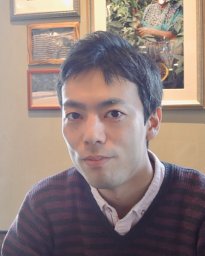 Yohsuke Murase合作论文数School of Engineering, The University of Tokyo3takuma kawakami合作论文数2Hiroya Suzuki合作论文数2Kazuya Ose合作论文数2
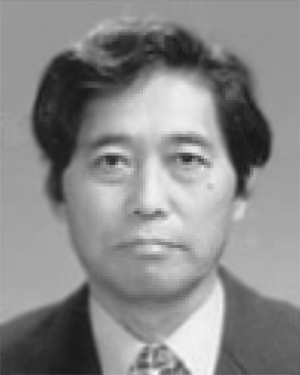 Toshio Nakagawa合作论文数Department of Business Administration, Aichi Institute of Technology2
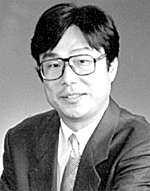 Koichi Wada合作论文数nagoya institute of technology2
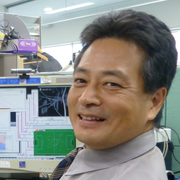 Itsuki Noda合作论文数Faculty of Information Science and Technology, Hokkaido University2
 Hideaki Sakai合作论文数Department of Systems Science
Graduate School of Informatics, Kyoto University2Youhei Kaneda合作论文数2Kosei Kurisu合作论文数2
Hideaki Sakai合作论文数Department of Systems Science
Graduate School of Informatics, Kyoto University2Youhei Kaneda合作论文数2Kosei Kurisu合作论文数2 Hiroki Yamamoto合作论文数Department of Anesthesiology, Sapporo Medical University School of Medicine2Katsutoshi Ueaoki合作论文数2Mitsuharu Emoto合作论文数2
 Masaki Onishi合作论文数National Institute of Advanced Industrial Science and Technology2Mayumi Miyazaki合作论文数2toshiaki ito合作论文数1Shoma Kato合作论文数1Masahiro Yamamoto合作论文数1Yuji Iwahori合作论文数1kyoichi kisanuki合作论文数1Haruaki Ueda合作论文数1Sayori Maeji合作论文数1Hidekazu Iwamoto合作论文数1
 Xufeng Zhao (赵旭峰)合作论文数College of Economics and Management, Nanjing University of Aeronautics and Astronautics1Mingchih Chen合作论文数輔仁大學商學研究所1Natsume, K.合作论文数1




