Task-oriented dialog systems are often trained on human/human dialogs, such as collected from Wizard-of-Oz interfaces. However, human/human corpora are frequently too small for supervised training to be effective. This paper investigates two approaches to training agent-bots and user-bots through self-play, in which they autonomously explore an API environment, discovering communication strategies that enable them to solve the task. We give empirical results for both reinforcement learning and game-theoretic equilibrium finding.
We propose a novel approach, MUSE, to automatically generate portrait paintings guided by textual attributes. MUSE takes a set of attributes written in text, in addition to facial features extracted from a photo of the subject as input. We propose 11 attribute types to represent inspirations from a subject's profile, emotion, story, and environment. Then we design a novel stacked neural network architecture by extending an image-to-image generative model to accept textual attributes. Experiments show that our approach significantly outperforms several state-of-the-art methods without using textual attributes, with Inception Score score increased by 6% and Frechet Inception Distance (FID) score decreased by 11%, respectively. We also propose a new attribute reconstruction metric to evaluate whether the generated portraits preserve the subject's attributes. Experiments show that our approach can accurately illustrate 78% textual attributes, which also help MUSE capture the subject in a more creative and expressive way. 1
As Abstract Meaning Representation (AMR) 001 implicitly involves compound semantic anno-002 tations, we hypothesize auxiliary tasks which 003 are semantically or formally related can bet-004 ter enhance AMR parsing. With carefully 005 designed control experiments, we find that 006 1) Semantic role labeling (SRL) and depen-007 dency parsing (DP), would bring much more 008 significant performance gain than unrelated 009 tasks in the text-to-AMR transition. 2) To 010 make a better fit for AMR, data from auxil-011 iary tasks should be properly “AMRized” to 012 PseudoAMR before training. 3) Intermediate-013 task training paradigm outperforms multitask 014 learning when introducing auxiliary tasks to 015 AMR parsing. From an empirical perspective, 016 we propose a principled method to choose, re-017 form, and train auxiliary tasks to boost AMR 018 parsing. Extensive experiments show that our 019 method achieves new state-of-the-art perfor-020 mance on in-distribution, out-of-distribution, 021 and few-shots benchmarks of AMR parsing. 022
We present MeetDot, a videoconferencing system with live translation captions overlaid on screen. The system aims to facilitate conversation between people who speak different languages, thereby reducing communication barriers between multilingual participants. Currently, our system supports speech and captions in 4 languages and combines automatic speech recognition (ASR) and machine translation (MT) in a cascade. We use the re-translation strategy to translate the streamed speech, resulting in caption flicker. Additionally, our system has very strict latency requirements to have acceptable call quality. We implement several features to enhance user experience and reduce their cognitive load, such as smooth scrolling captions and reducing caption flicker. The modular architecture allows us to integrate different ASR and MT services in our backend. Our system provides an integrated evaluation suite to optimize key intrinsic evaluation metrics such as accuracy, latency and erasure. Finally, we present an innovative cross-lingual word-guessing game as an extrinsic evaluation metric to measure end-to-end system performance. We plan to make our system open-source for research purposes.
Word alignment is a critical procedure within statistical machine translation (SMT). Brown et al. (1993) have provided the most popular word alignment algorithm to date, one that has been implemented in the GIZA (Al-Onaizan et al. 1999) and GIZA++ (Och and Ney 2003) software and adopted by nearly every SMT project. In this article, we investigate whether this algorithm makes search errors when it computes Viterbi alignments, that is, whether it returns alignments that are sub-optimal according to a trained model.
This paper presents the results of the newstranslation task, the multilingual low-resourcetranslation for Indo-European languages, thetriangular translation task, and the automaticpost-editing task organised as part of the Con-ference on Machine Translation (WMT) 2021.In the news task, participants were asked tobuild machine translation systems for any of10 language pairs, to be evaluated on test setsconsisting mainly of news stories. The taskwas also opened up to additional test suites toprobe specific aspects of translation.
This paper describes our submission for the End-to-end Multi-domain Task Completion Dialog shared task at the 9th Dialog System Technology Challenge (DSTC-9). Participants in the shared task build an end-to-end task completion dialog system which is evaluated by human evaluation and a user simulator based automatic evaluation. Different from traditional pipelined approaches where modules are optimized individually and suffer from cascading failure, we propose an end-to-end dialog system that 1) uses Generative Pretraining 2 (GPT-2) as the backbone to jointly solve Natural Language Understanding, Dialog State Tracking, and Natural Language Generation tasks, 2) adopts Domain and Task Adaptive Pretraining to tailor GPT-2 to the dialog domain before finetuning, 3) utilizes heuristic pre/post-processing rules that greatly simplify the prediction tasks and improve generalizability, and 4) equips a fault tolerance module to correct errors and inappropriate responses. Our proposed method significantly outperforms baselines and ties for first place in the official evaluation. We make our source code publicly available.
Embedding words in high-dimensional vector spaces has proven valuable in many natural language applications. In this work, we investigate whether similarly-trained embeddings of integers can capture concepts that are useful for mathematical applications. We probe the integer embeddings for mathematical knowledge, apply them to a set of numerical reasoning tasks, and show that by learning the representations from mathematical sequence data, we can substantially improve over number embeddings learned from English text corpora.
This paper describes our submission for the End-to-end Multi-domain Task Completion Dialog shared task at the 9th Dialog System Technology Challenge (DSTC-9). Participants in the shared task build an end-to-end task completion dialog system which is evaluated by human evaluation and a user simulator based automatic evaluation. Different from traditional pipelined approaches where modules are optimized individually and suffer from cascading failure, we propose an end-to-end dialog system that 1) uses Generative Pretraining 2 (GPT-2) as the backbone to jointly solve Natural Language Understanding, Dialog State Tracking, and Natural Language Generation tasks, 2) adopts Domain and Task Adaptive Pretraining to tailor GPT-2 to the dialog domain before finetuning, 3) utilizes heuristic pre/post-processing rules that greatly simplify the prediction tasks and improve generalizability, and 4) equips a fault tolerance module to correct errors and inappropriate responses. Our proposed method significantly outperforms baselines and ties for first place in the official evaluation. We make our source code publicly available.
We investigate why neural machine translation (NMT) systems assign high probability to empty translations. We find two explanations. First, label smoothing makes correct-length translations less confident, making it easier for the empty translation to finally outscore them. Second, NMT systems use the same, high-frequency EoS word to end all target sentences, regardless of length. This creates an implicit smoothing that increases zero-length translations. Using different EoS types in target sentences of different lengths exposes and eliminates this implicit smoothing.
We propose a novel approach, MUSE, to illustrate textual attributes visually via portrait generation. MUSE takes a set of attributes written in text, in addition to facial features extracted from a photo of the subject as input. We propose 11 attribute types to represent inspirations from a subject's profile, emotion, story, and environment. We propose a novel stacked neural network architecture by extending an image-to-image generative model to accept textual attributes. Experiments show that our approach significantly outperforms several state-of-the-art methods without using textual attributes, with Inception Score score increased by 6% and Frechet Inception Distance (FID) score decreased by 11%, respectively. We also propose a new attribute reconstruction metric to evaluate whether the generated portraits preserve the subject's attributes. Experiments show that our approach can accurately illustrate 78% textual attributes, which also help MUSE capture the subject in a more creative and expressive way.
Web-crawled data provides a good source of parallel corpora for training machine translation models. It is automatically obtained, but extremely noisy, and recent work shows that neural machine translation systems are more sensitive to noise than traditional statistical machine translation methods. In this paper, we propose a novel approach to filter out noisy sentence pairs from web-crawled corpora via pre-trained language models. We measure sentence parallelism by leveraging the multilingual capability of BERT and use the Generative Pre-training (GPT) language model as a domain filter to balance data domains. We evaluate the proposed method on the WMT 2018 Parallel Corpus Filtering shared task, and on our own web-crawled Japanese-Chinese parallel corpus. Our method significantly outperforms baselines and achieves a new state-of-the-art. In an unsupervised setting, our method achieves comparable performance to the top-1 supervised method. We also evaluate on a web-crawled Japanese-Chinese parallel corpus that we make publicly available.
We create a new task-oriented dialog platform (MEEP) where agents are given considerable freedom in terms of utterances and API calls, but are constrained to work within a push-button environment. We include facilities for collecting human-human dialog corpora, and for training automatic agents in an end-to-end fashion. We demonstrate MEEP with a dialog assistant that lets users specify trip destinations.
This paper describes DiDi AI Labs' submission to the WMT2020 news translation shared task. We participate in the translation direction of Chinese->English. In this direction, we use the Transformer as our baseline model, and integrate several techniques for model enhancement, including data filtering, data selection, back-translation, fine-tuning, model ensembling, and re-ranking. As a result, our submission achieves a BLEU score of 36.6 in Chinese->English.
We investigate why neural machine translation (NMT) systems assign high probability to empty translations. We find two explanations. First, label smoothing makes correct-length translations less confident, making it easier for the empty translation to finally outscore them. Second, NMT systems use the same, high-frequency EoS word to end all target sentences, regardless of length. This creates an implicit smoothing that increases zero-length translations. Using different EoS types in target sentences of different lengths exposes and eliminates this implicit smoothing.
The evaluation campaign of the International Conference on Spoken Language Translation (IWSLT 2020) featured this year six challenge tracks: (i) Simultaneous speech translation, (ii) Video speech translation, (iii) Offline speech translation, (iv) Conversational speech translation, (v) Open domain translation, and (vi) Non-native speech translation. A total of 30 teams participated in at least one of the tracks. This paper introduces each track's goal, data and evaluation metrics, and reports the results of the received submissions.
We demonstrate a program that learns to pronounce Chinese text in Mandarin, without a pronunciation dictionary. From non-parallel streams of Chinese characters and Chinese pinyin syllables, it establishes a many-to-many mapping between characters and pronunciations. Using unsupervised methods, the program effectively deciphers writing into speech. Its token-level character-to-syllable accuracy is 89%, which significantly exceeds the 22% accuracy of prior work.
Systems and methods for facilitating editing of a confidential document by a non-privileged person by stripping away content and meaning from the document without human intervention such that only structural and/or grammatical information of the document are conveyed to the non-privileged person are disclosed. Exemplary implementations may: receive an electronic document including text conveying one or more confidential concepts; provide a content-stripped version of the electronic document to a human editor; receive an edited content-stripped version of the electronic document; and provide an edited electronic document based on the edited content-stripped version such that human-editor-provided changes were effectuated without the human editor ever being exposed to the content and meaning contained in the electronic document.
We solve difficult word-based substitution codes by constructing a decoding lattice and searching that lattice with a neural language model. We apply our method to a set of enciphered letters exchanged between US Army General James Wilkinson and agents of the Spanish Crown in the late 1700s and early 1800s, obtained from the US Library of Congress. We are able to decipher 75.1% of the cipher-word tokens correctly.
 Daniel Marcu合作论文数Amazon61
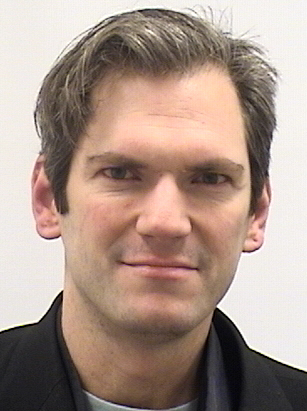 Philipp Koehn合作论文数Department of Computer Science, Johns Hopkins University;Omniscien Technologies28
 Jonathan May合作论文数Thomas Lord Department of Computer Science, Viterbi School of Engineering, University of Southern California;Amazon24
 Heng Ji (季姮)合作论文数Siebel School of Computing and Data Science, The Grainger College of Engineering, University of Illinois at Urbana-Champaign22
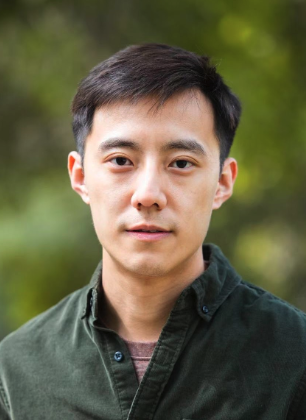 Boliang Zhang (张伯良)合作论文数Appel AI18
 Ulf Hermjakob合作论文数University of Southern California, Marina del Rey, CA18
 Kenji Yamada合作论文数HRL Laboratories, LLC17
 Sujith Ravi合作论文数SliceX AI16
 D. Dwayne Simpson合作论文数Institute of Behavioral Research, Texas Christian University16
 Xing Shi (史兴)合作论文数Didi Research America LLC;University of Southern California13
 Yaser Alonaizan合作论文数SDAIA13
 David Chiang (蔣偉)合作论文数Department of Computer Science and Engineering, University of Notre Dame12Wei Wang合作论文数11
 Grace A Rowan-Szal合作论文数Psychology Department, Rutgers University10Wayne E. K. Lehman合作论文数10
 Nima Pourdamghani合作论文数AICTC Research Center, Sharif University of Technology10
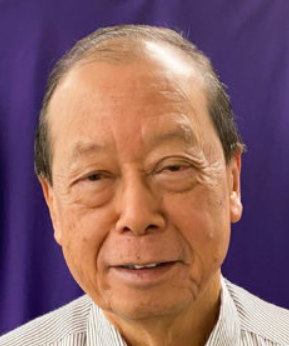 George W. Joe合作论文数Institute of Behavioral Research, Texas Christian University9
 Eduard Hovy合作论文数School of Computing and Information Systems, The University of Melbourne9
 Steve Deneefe合作论文数RWS Language Weaver9
 Jonathan Graehl合作论文数SDL Research9
 Marjan Ghazvininejad合作论文数Meta;Information Sciences Institute9
 Michael Pust合作论文数8
 Xiaoman Pan (潘小满)合作论文数Tencent AI Lab8
 Richard Sproat (史伯樂)合作论文数Sakana AI7
 Brian Roark合作论文数Google, Inc.7
 Radu Soricut合作论文数Google DeepMind7Dragos Stefan Munteanu合作论文数University of Southern California7
 Matthew L Hiller合作论文数Institute of Behavioral Research, Texas Christian University7
 Ashish Vaswani合作论文数Essential AI7
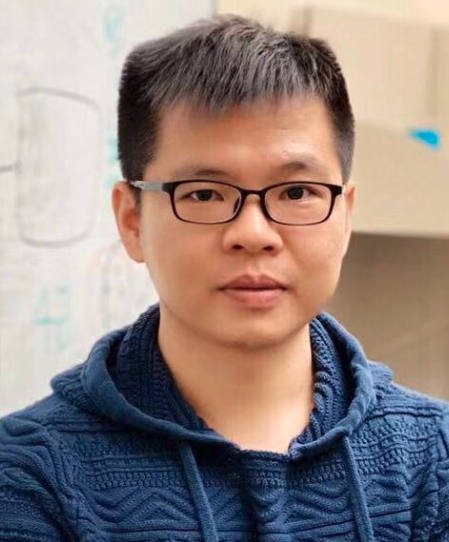 Lifu Huang合作论文数Department of Computer Science, College of Engineering, University of California, Davis7Ying Lin合作论文数Apple6
 Mirella Lapata合作论文数Institute for Language, Cognition and Computation, School of Informatics, The University of Edinburgh6
 Di Lu (卢迪)合作论文数Dataminr Inc.6
 Philip Resnik合作论文数Department of Linguistics, College of Arts & Humanities, University of Maryland;Department of Computer Science, University of Maryland;Institute for Advanced Computer Studies, University of Maryland6
 Martha Palmer合作论文数Department of Linguistics, College of Arts and Sciences, University of Colorado Boulder;Department of Computer Science, College of Arts and Sciences, University of Colorado Boulder6
 Michael Strube合作论文数Natural Language Processing Group, Heidelberg Institute for Theoretical Studies;Computational Linguistics Department, University of Heidelberg6
 Ajay Nagesh合作论文数Center for Data Science, University of Massachusetts Amherst6
 Liang Huang合作论文数College of Engineering, Oregon State University5Mark Johnson合作论文数5
 Qingyun Wang合作论文数Computer Science Department, University of Illinois at Urbana-Champaign;Amazon5
 Massimo Poesio合作论文数School of Electronic Engineering and Computer Science, Queen Mary University of London5
 Shrikanth (Shri) S. Narayanan合作论文数Signal Analysis and Interpretation Laboratory, Ming Hsieh Department of Electrical and Computer Engineering, Viterbi School of Engineering, University of Southern California;Google;Behavioral Signal Technologies, Inc.5Ignacio Thayer合作论文数5
 Amanda Stent合作论文数Bloomberg5Thorsten Brants合作论文数Google5
 Michael Collins合作论文数Google Research;Department of Computer Science, Columbia University5
 Jill Burstein合作论文数Educational Testing Service5
 Irene Langkilde合作论文数Aktify, Inc5