Europa and Enceladus conceal global liquid-water oceans beneath ice shells several kilometers thick, and Mars holds thick polar ice deposits that may cover localized layers of liquid water or brine. These subsurface environments are primary targets in the search for past or present life in the solar system. The Search for Life Using Submersible Heated drill (SLUSH) probe is a hybrid, thermo-mechanical probe capable of penetrating through the ice to reach the subsurface liquid water. To improve efficiency and drilling speed, SLUSH combines the two existing methods for traveling through ice: thermal (melting) and mechanical (cutting). “Slushing” uses rotary-percussive drilling to break the ice into chips (the fragmented ice cuttings produced by the drill) and heat to partially melt these chips into a slush, enabling efficient transport behind the probe. A scaled prototype of the SLUSH probe has been developed to compare the three drilling methods (thermal, mechanical, and thermo-mechanical or slushing). Testing was conducted in relevant ambient pressure and vacuum environments using “warm” (260 K) and “cryogenic” (130 K) ice. An analytical thermal model is applied to estimate the idealized performance of a conventional melt probe as an upper-bound baseline, and a conceptual power-balance framework is introduced that decomposes the slushing power requirement into mechanical and thermal contributions relative to this baseline. Initial testing demonstrated the feasibility of the slushing approach across all three environments and identifies key design drivers for future optimization.
Seismology is crucial for the geologic and interior exploration of planetary bodies. High signal-to-noise (SNR) instruments are required to record low amplitude seismic events such as deep moonquakes. Here we describe the Broadband Seismic Characterization using Optics for Planetary Exploration (“BroadSCOPE”) sensor, a broadband planetary seismometer built by Silicon Audio and the Lunar and Planetary Laboratory at the University of Arizona. Our laser interferometer design offers high sensitivity and a high tilt tolerance, while maintaining low power and mass. Our self-noise floor is targeted at 10^-9 m s^-2/√(Hz) at frequencies of about 1 Hz. We have performed environmental testing to reach a Technology Readiness Level of 6 for lunar conditions. This instrument was specifically developed for the Moon under NASA’s Development and Advancement of Lunar Instrumentation (DALI) program and matured by the Artemis Deployed Instruments opportunity. While designed for the Moon, the sensor could be used to explore other airless bodies such as binary asteroids.
Investigating Mars via Penetration and Analysis with Coiled Tubing (IMPACT) is a next-generation subsurface access and analysis payload designed for landers and rovers to investigate the Martian subsurface down to $\mathbf{1 5}$ meters. For deep subsurface access, IMPACT integrates coiled tubing and injector, pneumatic cuttings removal, and a bottom-hole assembly (BHA) equipped with a rotary-percussive drill and a suite of downhole science instruments for real-time subsurface compositional analysis. Leveraging core technologies advanced by Honeybee Robotics, including the LISTER lunar heat flow probe (TRL 9), RedWater Mars drill (TRL 6), and SMART lunar drill for downhole in situ analysis (TRL 6), IMPACT builds on proven technology heritage to deliver a robust solution. The system is designed to provide direct access to analyze stratigraphic layers, volatiles, and potential materials for in-situ resource utilization (ISRU), overcoming the shallow penetration depths of previous missions. Its instrumentation suite enables in situ data collection on mineralogy, ice, and resource distributions at unprecedented depths, supporting critical investigations into Mars' geologic history, habitability, and resource potential. Initial development and early test results highlight IMPACT's ability to advance both scientific discovery and future mission architectures, including long-duration operations and human exploration.
The Lunar Capillary Absorption Spectrometer (LuCAS) is a sample handling and analysis tool that can make sensitive isotopic and abundance measurements of H2O and CO2 present in lunar volatiles. The development of this tool has been funded by NASA SBIR and DALI programs, which has matured it to a present Technology Readiness Level (TRL) of 5. In this paper, we describe results from end-to-end testing of the TRL 5 LuCAS system. These end-to-end tests include the use of Honeybee Robotics' Planetary Volatiles Extractor (PVEx) drill to extract water from relatively dry regolith simulant (LSP-1) for delivery to LuCAS.
Planetary Volatiles Extractor (PVEx) is an end-toend instrument that combines mining and extraction into a single step for collecting resources on the moon and other planetary bodies. Once collected, water and other resources are delivered to a wide range of end applications from processing plants to science instruments, including LuCAS. In this phase of development, PVEx work focused on characterizing auger diameters against core retention in the auger and comparing drill parameters to collection efficiency for low volatile-abundant simulant. These developments enable PVEx for flight missions with the expressed intent of delivering volatile samples to LuCAS. Prototype results indicate that a 0.75 “ ID shows poor core retention rates across all drill parameters while larger ID sizes such as a 1.5 “ and 2.0 ” ID show drastically increased coring efficiency with decreased speed and feed rates. The expected mechanical drilling power was found to be between $20-30 ~\mathrm{W}$ while heating was around 30 W during collection.
The Polar Resources Ice Mining Experiment-1 (PRIME-1) payload was designed to aid in NASA’s Lunar In-Situ Resource Utilization (ISRU) technology development program. It was proposed for resource reconnaissance, identifying and quantifying volatiles up to 1 m below the surface in the lunar south pole region, which would provide vital data for future ISRU missions. PRIME-1 consisted of two instruments: The Regolith and Ice Drill for Exploring New Terrain (TRIDENT), a rotary percussive drill, and the Mass Spectrometer observing lunar operations (MSolo), a modified commercial-off-the-shelf mass spectrometer. The intent was to drill into the lunar subsurface incrementally, retrieving and depositing regolith in a pile on the surface, with MSolo measuring any volatiles released during drilling or tailings pile creation. During the lunar landing attempt, the lander came to rest on its side within a small crater approximately 500 m away from the intended landing site. The horizontal landing orientation and location within the crater prevented positive power generation, and the mission ended approximately 12 hr after touchdown. In that time, the payload suite was unable to fulfill its primary mission objectives because TRIDENT could not interact with the lunar surface to perform proper excavation operations due to the lander orientation. Despite this, PRIME-1 was able to perform limited operations and demonstrate instrument functionality of both TRIDENT and MSolo in transit and in the lunar environment. Details of PRIME-1 operations are outlined, offering valuable insight for future lunar exploration efforts.
The utilization of analytical instruments for the detection and quantification of volatiles on the Moon is crucial for the development of in situ resource utilization technology. A test campaign under cryogenic conditions aimed to simulate the cold lunar environment of permanently shadowed regions (PSRs). The test campaign was performed in a Thermal Vacuum Chamber (TVAC) equipped with a bin of regolith simulant doped at three increasing water concentrations delineated at specific depths (Dry, 2.5, and 5 wt%, respectively). The average operating pressure of the chamber was 1.6 & times; 10-6 Torr with an average regolith temperature of-178 degrees C. Four holes were drilled into the regolith simulant bin using The Regolith and Ice Drill for Exploring New Terrain (TRIDENT) drill. The resulting cuttings-piles and their volatile activity were monitored via the Mass Spectrometer observing lunar operations (MSolo) instrument to determine the extent to which a mass spectrometer can monitor the release of volatiles during drilling activities in lunar-like environments. The results of this campaign helped to plan for the operation and subsequent data interpretation of the Polar Resources Ice Mining Experiment-1 (PRIME-1) mission on the Moon. Published by Elsevier B.V. on behalf of COSPAR. This is an open access article under the CC BY-NC-ND license (http://creativecommons.org/ licenses/by-nc-nd/4.0/).
The surface and subsurface of worlds beyond Mars remain largely unexplored. Yet these worlds hold keys to fundamental questions in planetary science - from potentially habitable subsurface oceans on icy moons to ancient records preserved in Kuiper Belt objects. NASA's success in Mars exploration was achieved through incrementalism: 22 progressively sophisticated missions over decades. This paradigm, which we call Planetary Exploration 2.0 (PE 2.0), is untenable for the outer Solar System, where cruise times of a decade or more make iterative missions infeasible. We propose Planetary Exploration 3.0 (PE 3.0): a paradigm in which unvisited worlds are explored by a single or a few missions with radically adaptive space systems. A PE 3.0 mission conducts both initial exploratory science and follow-on hypothesis-driven science based on its own in situ data returns, evolving spacecraft capabilities to work resiliently in previously unseen environments. The key enabler of PE 3.0 is software-defined space systems (SDSSs) - systems that can adapt their functions at all levels through software updates. This paper presents findings from a Keck Institute for Space Studies (KISS) workshop on PE 3.0, covering: (1) PE 3.0 systems engineering including science definition, architecture, design methods, and verification validation; (2) software-defined space system technologies including reconfigurable hardware, multi-functionality, and modularity; (3) onboard intelligence including autonomous science, navigation, controls, and embodied AI; and (4) three PE 3.0 mission concepts: a Neptune/Triton smart flyby, an ocean world explorer, and an Oort cloud reconnaissance mission.
Mining water ice on Mars is a vital, near-term step to enable in-situ resource utilization (ISRU) and sustainable human exploration. Large quantities of water are required for propellant production and life support systems. Recent analysis of orbital data points to vast buried ice deposits in the Martian mid-latitudes. The RedWater system is a deep drilling and water-well system engineered to access and extract water from these ice deposits. RedWater accesses the buried ice by drilling through the overburden and using compressed gas to pneumatically clear the drill cuttings, or chips, out of the resulting borehole. Unlike terrestrial drilling, where heavy water-based slurries remove cuttings, Martian operations demand low-mass, gas-driven solutions robust to the planet’s low temperatures and atmospheric pressures. This paper presents a pneumatic chip clearing model for deep drilling operations on Mars, quantifying the minimum gas mass flow rates necessary to efficiently transport drill cuttings. The model applies terrestrial, pneumatic vertical conveying correlations and tests them against a range of Mars-relevant conditions. Experimental validation includes a dedicated test setup in vacuum, and two tests with the end-to-end RedWater system. The model shows reasonable agreement with experimental results in predicting gas flow requirements, providing useful guidance for mission architectures utilizing pneumatic drilling and mining on Mars
The geology of a potential Artemis landing site on Mons Malapert is examined using remote sensing techniques and lessons learned from Apollo missions to the lunar surface. Orthomosaics, digital terrain models, illumination models, thermal conditions, crater size‐frequency distribution analyses, geomorphological mapping, spectral and compositional analyses, lunar surface physical property analyses, and image processing to reveal the lunar surface within permanently shadowed regions (PSRs) were integrated with anticipated crew capabilities to develop three notional extravehicular activity (EVA) traverses lasting 3, 3, and 6 hr each. The traverse plans recover 43 samples, with a mass of 44 kg, secured in 54 kg of sample containers, including those NASA requires for samples collected in and around PSRs, which is within the 100 kg limit NASA allows for a landed mission. The geologic plan for the EVAs addresses seven Artemis III science objectives, 25 science goals within those objectives, and 90 specific investigations of varying priority in the Artemis III Science Definition Team Report (43 high‐, 40 medium‐, 2 medium‐high‐, and 5 low‐priority investigations); for example, test and reveal new details about the lunar magma ocean hypothesis, the basin‐forming epoch and implications for Solar System architecture, sources and distribution of volatiles, and regolith physical properties relevant to human and robotic exploration.
Martian subterranean glacier ice is a valuable resource that could provide the water required for in situ life support and rocket fuel production. Rodriguez Well technology has been proposed as a means to access and extract this glacial ice. To investigate the energy requirements and efficiency of a thermal drill for Martian Rodriguez Well borehole creation, a scaled-down, simplified version of a Rodriguez Well melting drill bit was developed and tested in Martian atmospheric conditions. The small thermal probe was drilled into clear ice with two different actuation methods: gravity-driven actuation and motor-driven actuation. Thermal energy analysis of the resulting data shows that the average minimum specific energy for effective thermal drilling is 0.48 +/- 0.09 Wh/cm3 in Martian conditions, which is over an order of magnitude greater than mechanical drilling energy expenditure in similar conditions. However, maintaining a borehole pressure above Martian atmospheric pressure (>9 torr) halves the energy expenditure of the thermal drilling process, which could be used to improve the performance and energy efficiency of thermal drilling on Mars.
Understanding the preserved regolith stratigraphy and undisturbed grains on planetary surfaces is crucial for deciphering formation processes and characterizing water content. These tasks are vital to both planetary science and future commercial activities on the Moon and Mars. Currentgeneration regolith-oriented coring drills often disrupt unconsolidated regolith stratigraphy during core extraction, and water ice quickly sublimates and hydrated minerals can transform once brought to the surface. There is a critical need for technology that can analyze undisturbed samples in situ, preserving the delicate stratigraphy and volatiles such as water ice. The OptiDrill technology development effort addresses this gap by providing an instrumented drill capable of performing in situ multispectral microscopic imaging. This requires integrating advanced optical instruments into a compact auger system, making it suitable for a variety of planetary exploration missions, including those to the Moon, Mars, asteroids, and icy worlds. This approach brings the instruments directly to the sample, allowing for the collection of spatially-correlated data sets that are otherwise unattainable. Under NASA PICASSO funding, OptiDrill is being matured from TRL 2 to TRL 4. We are currently working towards an end-to-end prototype of the instrumented drill to conduct extensive testing using a range of planetary analogs to validate the instrument's performance. The development of OptiDrill will significantly enhance the capabilities of subsurface investigations by providing highresolution, spatially-correlated mineralogical data and water content measurements. The in situ analysis preserves the stratigraphy and minimizes the loss of volatiles, offering a more accurate understanding of planetary subsurface regimes.
The Regolith and Ice Drill for Exploration of New Terrains (TRIDENT) is a 1 m class drill developed for capturing regolith and ice during the Volatiles Investigating Polar Exploration Rover (VIPER) and the Polar Resources Ice Mining Experiment (PRIME-1) lander missions to the south pole of the Moon. The drill employs decoupled rotation and percussion mechanisms to allow for three modes: rotation, percussion, and rotation–percussion, depending on operational goals and the material strength. TRIDENT can be operated in such a way that it can characterize subsurface material and deliver cuttings to the surface for characterization by other instruments. TRIDENT includes a drill-bit-integrated temperature sensor and an auger-integrated heater with a colocated temperature sensor 35 cm above the bit for thermal conductivity measurement. The heater can also be used in cases of ice adherence (freezing in) and to enhance the sublimation of ice from the cuttings pile. TRIDENT collects and delivers subsurface regolith onto the surface using a “bite” sampling approach: cuttings are captured in the auger flutes, the auger is retracted after drilling a 10 cm bite, and then 10 cm worth of cuttings are deposited onto the surface, forming a cuttings cone. This regolith cone is then analyzed by instruments Mass Spectrometer Observing Lunar Operations (MSOLO) and NIRVSS on the VIPER and MSOLO on the PRIME-1 missions. The drilling activity creates a seismic signal that can be detected on any associated inertial measurement unit that is turned on during the activity, which enables seismic science. TRIDENT represents two decades of technology development for planetary applications and could be deployed on any future missions to other solar system bodies. TRIDENT on the PRIME-1 mission has been successfully deployed in horizontal orientation (this orientation was due to the lander being in an off nominal landing orientation). All actuators, sensors, and heaters worked as designed. Even though the drill did not penetrate regolith, it was covered in regolith that fell onto the drill during the landing operation. VIPER is scheduled to launch to the Moon at the end of 2027 on Blue Origin’s Mk1 lander.
Subsurface water-ice discovered in the mid-latitudes of Mars represents a compelling in situ resource for enabling propellant manufacturing and life support for a sustained human presence on Mars. Efforts to analyze remote sensing data and map subsurface ice layers have revealed the potential for widespread, large scale ice deposits, but technological barriers to accessing the ice and bringing it to the surface remain significant, given the potential depth to reach the ice, the unpredictable overburden layer, and overall extreme conditions on Mars. To address these challenges, Honeybee Robotics has developed the RedWater system-an integrated, flight-forward technology designed specifically for Mars subsurface water mining. RedWater uniquely integrates coiled tube drilling, a method widely used in oil and gas operations on Earth, with the Rodriguez Well (Rodwell) approach, also commonly used on Earth to establish a subsurface water reservoir by melting the surrounding ice. This paper presents the latest advancements on RedWater, including the progression to TRL6 and results from end-to-end testing in simulated Mars conditions. Testing was conducted within Honeybee's 5-meter tall thermal vacuum chamber (TVAC), maintaining -60C ice temperature and 5 torr ambient pressure, as well end-to-end freezer testing of the TRL6 system. Key engineering challenges addressed includes integration of all required subsystems that will be compatible with expected near-term constraints on a mission to Mars (mass, volume, complexity), and development of a flight-forward, robust drilling system capable of penetrating both the overburden layer as well as the ice utilizing pneumatic excavation of cuttings and assuming a total penetration depth up to 25 meters, while also packaging all of the elements required to produce the Rodwell and extract water. The successful outcome of this development effort showcases the technology's capability in the extreme conditions on Mars. Results and performance data obtained from the various testing efforts offers valuable insights into system's capabilities for future missions to Mars, and serves as a crucial step in developing integrated solutions for mission architectures that will increasingly depend on ISRU.
The REBELS (Rapidly Excavated Borehole for Exploring Lunar Subsurface) system presents an advanced end to -end technology for accessing, analyzing, and collecting deep regolith deposits on the moon. REBELS leverages a suite of existing, high-TRL (4-7) technologies to accomplish this, including coiled-tube deployment with pneumatic excavation and rotary-percussive drilling. At the surface, the system can harvest the excavated regolith with a pneumatic collection head situated at the top of the borehole. If applicable, REBELS is also capable of melting and extracting water. In addition to ISRU capabilities, REBELS' Bottom-Hole Assembly (BHA) is equipped with multiple downhole instruments for nondestructive, in situ measurements of the subsurface. The notional instrument suite consists of a microscopic camera and multispectral camera to characterize the borehole wall's texture, granularity, stratigraphy, and mineralogical composition. The instrument suite also includes downhole dielectric spectroscopy probes with integrated temperature sensing for measuring and constraining regolith electrical properties, particularly capacitance and conductivity and assessing water ice content of the subsurface. By enabling exploration beyond the current depth limitations, REBELS will provide invaluable insights into the Moon's geological history, while also providing a promising means of lunar resource utilization, laying the groundwork for future human exploration and habitation of the moon.
PlumeCAS is an all-in-one sample capture, volatile metering, and Capillary Absorption Spectrometer (CAS) system that can make sensitive isotopic and abundance measurements of H2O, CO2, CH4, and C2H6 in Enceladus’ plume to aid in the search for life. The instrument accumulates gaseous and icy phases during plume flythroughs in an aerogel and indium collector that preserves the integrity of small organics. The flight system would leverage a heritage hermetic sealing design to contain that sample, and a volatile metering system delivers aliquots to the CAS for analysis. There, hydrogen and carbon isotopic ratios of H2O and CO2 are measured to generate a baseline against which to compare isotopic ratios in CH4. PlumeCAS will also determine the abundances of CH4 and C2H6 to generate a CH4/C2H6 abundance ratio. These isotopic and abundance indicators are among the best-understood biosignatures available for measurement in Enceladus plume material. This analysis is nondestructive, and therefore the system has the potential to have additional gas analysis instruments added in series with the CAS. In this paper we describe the scientific motivation for the instrument, the breadboard hardware development and test campaign that validated this concept to TRL 4, and future work that may be done to better prepare the system for flight.
Nearly all seismometers deployed on Earth are buried below the ground to achieve stable instrument temperature and greater seismic coupling. A robotically deployed science instrument PERSEUS, Pneumatic Equipment for Regolith Seismic Exploration and Underground Surveying, has been developed to address this need for lunar seismology. It is designed to bury a sonde with a seismic sensor payload into the surface of the Moon. Instrument burial reduces the scattering attenuation of seismic waves caused by the uppermost layer of and minimizes large instrument thermal fluctuations through a lunar day and night. The pneumatic burial system deploys the sonde with a threshold burial depth requirement of 0.6 meter and can drill up to 1.1 meters (with 0.9 clearance from tip-to-surface) into the lunar regolith. PERSEUS was tested in a vacuum chamber with lunar regolith analog BP-1 to successfully demonstrate the end-to-end operations.
 Gale Paulsen合作论文数69
 Phil Chu合作论文数49
 G. Paulsen合作论文数45
 Brian Glass合作论文数NASA Ames Research Center32
 Jack Craft合作论文数31
 Chris McKay合作论文数NASA Ames Research Center30
 Magnus Hedlund合作论文数28
 robert p mueller合作论文数Natl Aeronaut & Res Adm, KSC24
 Kiel Davis合作论文数21
 B. Mellerowicz合作论文数18J. Craft合作论文数18
 Yoseph Bar Cohen合作论文数Advanced Technologies Group, Jet Propulsion Laboratory, California Institute of Technology;Nondestructive Evaluation and Advanced Actuators Technologies Lab, Jet Propulsion Laboratory, California Institute of Technology18
 justin spring合作论文数17
 Mircea Badescu合作论文数Jet Propulsion Laboratory;California Institute of Technology;Jet Propulsion Laboratory, California Institute of Technology17
 William B Brinckerhoff合作论文数NASA Goddard Space Flight Center17
 Alfonso F Davila合作论文数Department of Earth and Environmental Science, Ludwig-Maximilians-University16Seiichi Nagihara合作论文数15Erik Mumm合作论文数15
 D. Bergman合作论文数University of Southern California, University of Southern California14
 Fredrik Rehnmark合作论文数13john e wilson合作论文数13J. Kleinhenz合作论文数12
 Sherrit Stewart合作论文数NASA Jet Propulsion Laboratory12
 David F. Blake合作论文数NASA, Ames Res Ctr12
 Philip Metzger合作论文数Applied Physics Laboratory;John F. Kennedy Space Center;Kennedy Space Center;John F. Kennedy Space Center, Kennedy Space Center12
 Patrick Timothy Taylor合作论文数U.S. Naval Oceanographic Office12Stephen Indyk合作论文数11m szczesiak合作论文数11
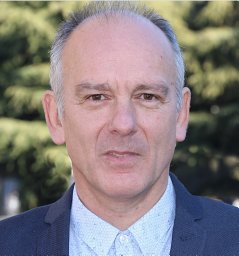 Philippe C. Sarrazin合作论文数Université Joseph Fourier11
 Paul van Susante合作论文数Division of Engineering, Colorado School of Mines11
 Nathalie Cabrol合作论文数Carl Sagan Center for Research, SETI Institute11
 Terrence Fong合作论文数NASA Ames Research Center10Carol R. Stoker合作论文数NASA Ames Research Center10
 John R. Skok合作论文数10
 Xiaoqi Bao (鲍小琪)合作论文数jet propulsion laboratory10
 Wayne H. Pollard合作论文数Department of Geography, McGill University10
 Luther W. Beegle合作论文数Jet Propulsion Laboratory, California Institute of Technology10A. Dave合作论文数9
 Bernice Yen合作论文数9
 David Wettergreen合作论文数Mechanical Engineering Department, College of Engineering, Carnegie Mellon University;The Robotics Institute, School of Computer Science, Carnegie Mellon University;Mesh Robotics LLC9Margarita Marinova合作论文数9
 Nathaniel Putzig合作论文数Southwest Research Institute9M. Hedlund合作论文数8Kathryn Bywaters合作论文数8B. Yaggi合作论文数8j schwendeman合作论文数8chris santoro合作论文数8
 Greg S. Mungas合作论文数8Thomas F. Bristow合作论文数NASA, Ames Res Ctr8




