We assess the impact of former President Joe Biden's unprecedented decision to exit the 2024 Presidential race 2 months before election day by analyzing a naturally-occurring experiment surrounding the incumbent President's decision to exit the 2024 race, a period in which we fielded the second wave (NWave 2 = 831) of a nationally-representative panel study (NWave 1 = 1400), with random invitation assignment (from the original response pool) throughout Wave 2. Pre-registered difference-in-difference (DID) analyses reveal no evidence of significant turnout or down-ballot effects across either the US adult population or partisan subgroups. However, post hoc tests reveal substantial gains in excitement about the 2024 campaign across both the general population and (especially) among self-identified Democrats after President Biden's decision to drop out. Elevated excitement coincided with (a) increased belief in core democratic principles and (b) increased donation to Democrats up and down the ballot.
Scholars have long associated rural residency with gun ownership and conservative gun-related attitudes in the United States. However, less is known about the roots and long-term stability of this relationship. Are individuals who are raised in more rural communities more likely to own firearms even when they move away? Do individuals socialized in rural communities maintain a long-term cultural attachment to guns and distinctive firearms policy attitudes? Scholars disagree about whether current rural residency and childhood rural cultural socialization are independently related to rural gun politics. This article explores for the first time the relative roles of rural childhood socialization, contemporary rural residency, and rural cultural attachments in patterns of gun ownership and firearms policy attitudes. The authors use original survey data as well as the American National Elections Study to explore these questions. They find that individuals socialized in rural communities maintain their attachment to firearms and hold relatively more conservative firearms policy attitudes over their lifespan, even after moving away from rural areas. Rural cultural childhood socialization has an independent influence on the long-run politics of guns.
Context: Attention to the potential impact of highly pathogenic avian influenza (H5N1, or “bird flu”) on human health increased following documentation of mammalian transmission in Spring 2024, and the prevalence of H5N1 in the commercial dairy supply. We aim to quantify (a) the prevalence and (b) socio-political correlates of public concern about H5N1, as well as support for policy action aimed at reducing its potential health risks. Methods: In a nationally representative survey of N = 831 US adults, we asked respondents to answer questions about their levels of concern about H5N1 transmission, beliefs about the safety of consuming unpasteurized milk products, and support for policy interventions. Results: Few Americans express high levels of concern about the H5N1 health risks. People who express lower levels of concern about H5N1 and those who hold inaccurate or uncertain views toward raw milk safety are in turn less supportive of policies aimed at mitigating the spread of H5N1; as is both anti-intellectual attitude endorsement and partisan identification with the Republican Party. Conclusions: Moderate levels of concern about H5N1 risks could undermine pandemic preparedness. Lacking strong signals from the public, policymakers may be reluctant to pursue policies that reduce avian influenza's pandemic potential.
Recent surveys suggest that Americans' trust in institutions has decreased, including trust in science and government. Such trends could have significant effects on the health of democracy, scientific advancement, information consumption, and more. However, trust can stem from different considerations. In some cases, a lack of trust arises from ill will or suspicion over integrity, that is, concerns about immorality or wrong doing. It can also arise from pessimism about competence. These different causes elicit distinct reactions, which could motivate varied reactions toward groups that are not trusted. Using multiple original surveys of US adults (total N = 3,894), including an original experiment, we find that seeing scientists and politicians as morally bad - but not as incompetent - leads to lower trust in these individuals. This suggests that perceptions of moral wrongdoing are stronger drivers of lower political and scientific trust in recent years, compared to perceived incompetence. These results hold in correlational analysis, although the effects vary somewhat by partisanship. Together, these results have important implications for understanding the driver of major ills that threaten the functioning of society and government.
Science is integral to society because it can inform individual, government, corporate, and civil society decision-making on issues such as public health, new technologies or climate change. Yet, public distrust and populist sentiment challenge the relationship between science and society. To help researchers analyse the science-society nexus across different geographical and cultural contexts, we undertook a cross-sectional population survey resulting in a dataset of 71,922 participants in 68 countries. The data were collected between November 2022 and August 2023 as part of the global Many Labs study “Trust in Science and Science-Related Populism” (TISP). The questionnaire contained comprehensive measures for individuals’ trust in scientists, science-related populist attitudes, perceptions of the role of science in society, science media use and communication behaviour, attitudes to climate change and support for environmental policies, personality traits, political and religious views and demographic characteristics. Here, we describe the dataset, survey materials and psychometric properties of key variables. We encourage researchers to use this unique dataset for global comparative analyses on public perceptions of science and its role in society and policy-making.
Democracies require militaries that protect citizen well-being without threatening to overthrow the government or otherwise jeopardize public safety. The military should therefore be firmly under the command of civilian elected leaders, playing a minimal role in the political process. Previous research examines whether the public thinks such boundaries of civil-military relations should exist, and finds that people can see the military as a check to democratically elected administrations in the opposing party. Here, we ask a parallel question: Does place of residence influence attitudes about the boundaries of civil-military relations? We expect rural individuals and those higher in rural resentment to similarly see the military as a check to a civilian government as previous research suggests that rural residents are resentful towards government and centers of power. Using original survey data, we find that people high in such rural resentment are sometimes more willing to defer to the military. Finally, we successfully replicate findings from Krebs et al. (2023) under a Democratic administration. These results have implications for democratic governance and public support, particularly among facets of the public that have lower trust in government.
Scientists provide important information to the public. Whether that information influences decision-making depends on trust. In the USA, gaps in trust in scientists have been stable for 50 years: women, Black people, rural residents, religious people, less educated people and people with lower economic status express less trust than their counterparts (who are more represented among scientists). Here we probe the factors that influence trust. We find that members of the less trusting groups exhibit greater trust in scientists who share their characteristics (for example, women trust women scientists more than men scientists). They view such scientists as having more benevolence and, in most cases, more integrity. In contrast, those from high-trusting groups appear mostly indifferent about scientists' characteristics. Our results highlight how increasing the presence of underrepresented groups among scientists can increase trust. This means expanding representation across several divides-not just gender and race/ethnicity but also rurality and economic status.
This 68-country survey (n = 71,922) examines science information diets and communication behavior, identifies cross-country differences, and tests how such differences are associated with sociopolitical and economic conditions. We find that social media are the most used sources of science information in most countries, except those with democratic-corporatist media systems where news media tend to be used more widely. People in collectivist societies are less outspoken about science in daily life, whereas lower education is associated with higher outspokenness. Limited access to digital media is correlated with participation in public protests on science matters. We discuss implications for future research, policy, and practice.
Science is crucial for evidence-based decision-making. Public trust in scientists can help decision makers act on the basis of the best available evidence, especially during crises. However, in recent years the epistemic authority of science has been challenged, causing concerns about low public trust in scientists. We interrogated these concerns with a preregistered 68-country survey of 71,922 respondents and found that in most countries, most people trust scientists and agree that scientists should engage more in society and policymaking. We found variations between and within countries, which we explain with individual- and country-level variables, including political orientation. While there is no widespread lack of trust in scientists, we cannot discount the concern that lack of trust in scientists by even a small minority may affect considerations of scientific evidence in policymaking. These findings have implications for scientists and policymakers seeking to maintain and increase trust in scientists.
Differences in values theoretically underlie urban-rural political division. However, it is unclear whether this division is real or perceived. This distinction matters because politically discordant groups can more easily reconcile if they share common goals and values, whereas highly divergent value systems can make compromise more difficult. Using data from original surveys of US adults, we examine whether urban versus rural residents vary in how important they rate seven core political values. We find no consistent differences between metropolitan and rural/small-town residents, suggesting urban-rural value differences may be more perceived. However, we do find distinct and substantial political value differences for rural identity versus urban identity for freedom, individualism, social order, and morality. These results suggest that Americans largely share political values across the urban-rural spectrum, which provides an avenue for common ground in this split. However, place-based identities may have somewhat disparate value systems that could impact the durability of their political division.
Americans' trust in scientists has been stable and high, relative to other political and social institutions, for the last half century (Krause, Brossard, and Scheufele 2019). Yet, underlying this stability lies a dramatic change such that a partisan gap has emerged, with Democrats exhibiting substantially more trust than Republicans. Fifty years ago, Republicans in fact exhibited more relative trust in scientists. This article explains this continuity and change. First, we demonstrate that the demographic correlates of trust in scientists have been remarkably stable for more than a half century: women, Black, rural, religious, non-college educated, and lower/working-class individuals exhibit less trust than their counterparts. Second, we show that the partisan relationship with trust in scientists has flipped (over that same time period) as low-trusting demographic strata shifted partisan allegiances. This is particularly the case when it comes to education and religiosity. Concomitant with the emergent partisan gap is a massive perceptual gap among Democrats, who perceive a partisan divide more than double its actual size. Democrats vastly underestimate Republicans' trust in scientists. The enduring demographic basis of trust in scientists provides an opportunity to bridge partisan divides by addressing demographic inequities in the practice and application of science.
Background. A highly pathogenic strain of avian influenza (H5N1, or “bird flu”) began circulating across poultry farms worldwide in 2020. While the virus has been transmitted to mammals and humans in the past, media attention to the potential impact of H5N1 on human health following the documentation of unprecedented transmission between mammals in Spring 2024; including the prevalence of H5N1 in the commercial dairy supply.Objective. To quantify (a) the prevalence and (b) socio-political correlates (e.g., partisan identity, attitudes toward scientific expertise) of public concern about H5N1, as well as support for policy action aimed at reducing its potential risks to human health.Method. In a nationally representative longitudinal survey of N = 831 US adults, we asked respondents to answer a series of questions about the levels of concern about H5N1 transmission to humans, beliefs about the safety of consuming unpasteurized milk products, and support for government interventions aimed at reducing the public health risks posed by avian influenza outbreaks. Results. We find that a small minority of Americans express concern about the public health risks of H5N1, or reject misinformation about the safety of raw milk consumption. Low levels of concern and raw milk misinformation are in turn associated with opposition to policies aimed at reducing the public health risks borne by H5N1, as is both anti-intellectual attitude endorsement and partisan identification with the Republican Party. Conclusions. Public apathy about the public health risks borne by avian flu – and corresponding indifferences toward mitigating policy action – could undermine US pandemic preparedness. Lacking clear signals from the public to take action to address this important issue, policymakers may be reluctant to pursue policies that reduce avian influenza’s pandemic potential.
Americans' distrust in government and science are declining with potentially deleterious effects on democracy and society. Understanding sources of declining trust is therefore imperative. Theoretically, distrust either arises from concerns about immorality or wrongdoing, or from pessimism about competence. These two causes motivate different reactions relating to the distrusted groups. Using multiple surveys of US adults (total N = 7,385), including two waves of an original experiment, I find that seeing scientists and politicians as immoral leads to lower trust in those individuals, while competence has little to no effect; distrust is more strongly driven by perceived moral wrongdoing. Further, perceived morality varies in its relationship to federal spending support, populist attitudes, and science policy attitudes compared to perceived competence. Accordingly, researchers should understand that people may see trusting entities to ``do what is right" glosses over potentially different definitions that significantly vary in their relationship to various political attitudes.
Abstract. President Joe Biden’s unprecedented decision to exit the 2024 Presidential race three and a half months before election day – following a disastrous debate performance – may suggest that he came to view his would-be nomination as detrimental for general-election turnout, as well as the success of Democratic candidates down-ballot. Yet, previous public opinion research casts doubt on whether presidential debates influence voters’ electoral attitudes and behavior. We contribute to this literature by analyzing a naturally occurring experiment surrounding the incumbent President’s decision to exit the 2024 race; a period in which we fielded the second wave (NWave 2 = 831) of a nationally-representative panel study (NWave 1 = 1,400), with random invitation assignment (from the original response pool) throughout Wave 2. Pre-registered difference-in-difference (DID) analyses reveal no evidence of significant turnout or down-ballot effects across either the US adult population or partisan subgroups. However, post hoc tests reveal substantial gains in excitement about the 2024 campaign across both the general population and (especially) among self-identified Democrats after President Biden’s decision to drop out. Elevated excitement coincided with (a) increased belief in core democratic principles, and (b) increased donation to Democrats up and down the ballot; both of which, we argue, have important normative democratic implications.
Even amid the unprecedented public health challenges attributable to the COVID-19 pandemic, opposition to vaccinating against the novel coronavirus has been both prevalent and politically contentious in American public life. In this paper, we theorize that attitudes toward COVID-19 vaccination might "spill over" to shape attitudes toward “post-pandemic” vaccination programs and policy mandates for years to come. We find this to be the case using evidence from a large, original panel study, as well as two observational surveys, conducted on American adults during the pandemic. Specifically, we observe evidence of COVID-19 vaccine spillover onto general vaccine skepticism, flu shot intention, and attitudes toward hypothetical vaccines (i.e., vaccines in development), which do not have pre-existing attitudinal connotations. Further, these spillover effects vary by partisanship and COVID-19 vaccination status, with the political left and those who received two or more COVID-19 vaccine doses becoming more pro-vaccine, while the political right and the unvaccinated became more anti-vaccine. Taken together, these results point to the salience and politicization of the COVID-19 vaccine impacting non-COVID vaccine attitudes. We end by discussing the implications of this study for effective health messaging.
Critical Race Theory (CRT) has become a flashpoint of elite political discord, yet how Americans actually perceive CRT is unclear. We theorize that Republican elites utilized a strong framing strategy to re-define CRT as an "empty signifier" representing broader racial and cultural grievances. Using a survey and a pre-registered experiment among U.S. adults (N = 19,060), we find that this strategy worked. Republicans exhibit more familiarity with CRT and hold more negatively valenced (and wide ranging) sentiments toward CRT, relative to Democrats. Moreover, compared to teaching the legacy of racism in schools, Republicans are significantly more opposed to teaching CRT while Democrats express greater uncertainty. Our findings suggest that by framing CRT as a broad term that envelopes many grievances (including those beyond the scope of CRT), Republican elites have shaped a subset of Americans' understanding of and attitudes toward CRT.
Context: To address the considerable burden of mental health need in the United States, Congress passed the National Suicide Hotline Designation Act in 2020. The act rebranded the national suicide prevention lifeline as 988, a three-digit number akin to 911 for individuals to call in the case of a mental health emergency. Surprisingly little is known about American attitudes toward this new lifeline. Methods: The authors use a demographically representative survey of 5,482 US adults conducted lune 24-28, 2022, to examine the influence of mental health status, partisan identification, and demographic characteristics on public awareness of the new 988 lifeline, public support for the lifeline, and intention to use it. Findings: The authors find that while only a quarter of Americans are aware of the lifeline, support for the 988 lifeline is widespread, with more than 75% of Americans indicating they would be likely to use the new number if needed. The authors identify key disparities in awareness, support, and intended use, with Republicans, individuals with low socioeconomic status, and Blacks less supportive of the 988 lifeline and in some cases less likely to use it. Conclusions: The results point to the need for additional interventions that increase public awareness of 988 and reduce disparities in program knowledge, support, and intention to use.
Previous work suggests rural identity often stems from direct experience living in a rural area, and that categorical group membership occurs before social identification. Puzzlingly, however, some U.S. survey takers not living in a rural area indicate that being rural is part of their identity. Using ANES data from 2020 (N = 8280) and 2019 (N = 3165), as well as original survey data from YouGov (N = 2615), I find that these non-rural rural identifiers are similar to rural identifiers in rural areas in terms of group-based affect and values, and are more right-leaning and populist than people who do not identify as rural (regardless of their location). Few consistent demographic differences between rural and non-rural rural identifiers exist. I conclude that: (1) rural identification has similar political, attitudinal, and demographic tendencies regardless of respondent location, and (2) non-rural rural identifiers have either been socialized in a rural area but moved away, or they personally affiliate with values and norms of rural areas despite not categorically being part of the group. This study has implications for the study of urban–rural political behavior, and for our understanding of identity and politics more broadly.
This 68-country survey (n = 71,922) examines how people encounter information about science and communicate about it with others, identifies cross-country differences, and tests the extent to which economic and sociopolitical conditions predict such differences. We find that social media are the most used sources of science information in most countries, except those with democratic-corporatist media systems where news media tend to be used more widely. People in collectivist societies are less outspoken about science in daily life, whereas low education is associated with higher outspokenness. Limited access to digital media is correlated with participation in public protests on science matters.
 Alauna Safarpour合作论文数Harvard University47
 David Lazer合作论文数College of Social Sciences and Humanities, Northeastern University;Khoury College of Computer Science, Northeastern University;Department of Political Science, Northeastern University;Institute for Quantitative Social Science Associate, Harvard University47
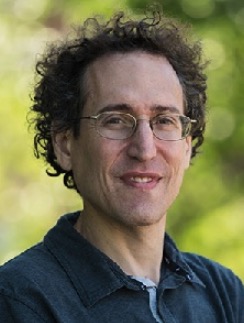 Jamie Druckman合作论文数Department of Political Science, School of Arts & Sciences, University of Rochester;Aarhus University46
 Katherine Ognyanova合作论文数46
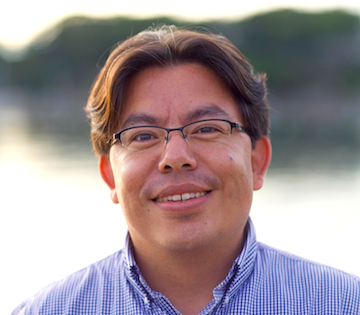 Mauricio Santillana合作论文数Harvard T.H. Chan School of Public Health, Harvard University44
 Jon Green合作论文数Northeastern Univ43
 Matthew Baum合作论文数Department of Government, Faculty of Arts and Sciences, Harvard University;John F. Kennedy School of Government, Harvard University43
 Alexi Quintana Mathé合作论文数42Ata Uslu合作论文数40
 Roy Perlis合作论文数Center for Quantitative Health, Massachusetts General Hospital;Center for Genomic Medicine, Mass General Research Institute;Harvard Medical School40Hong Qu合作论文数35Caroline H Pippert合作论文数26
 Jennifer Lin合作论文数Dept Polit Sci, Northwestern Univ26
 Anjuli Shere合作论文数Department of Computer Science, University of Oxford21
 Matthew Motta合作论文数Department of Political Science, Oklahoma State University17
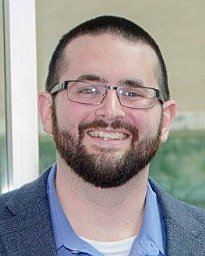 Timothy Callaghan合作论文数16Jonathan Schulman合作论文数11Samantha Cadenasso合作论文数10
 Matthew Simonson合作论文数Northeastern Univ7
 Steven Sylvester合作论文数Political Science, The University of Kansas5John R. Kerr合作论文数4Mikihito Tanaka合作论文数4Marcel Weber合作论文数4
 Balazs Aczel合作论文数4
 Kimberly C Doell合作论文数4
 Theofilos Gkinopoulos合作论文数4
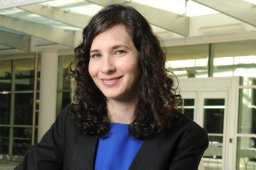 Dana Harari合作论文数Technion Israel Institute of Technology;Technion Israel Institute of Technology4Marinus Ferreira合作论文数Macquarie Univ4Alaa Aldoh合作论文数Sch Psychol, Univ Sussex4
 Amélie Bret合作论文数Nantes Université, Univ Angers4
 Ziqian Xia合作论文数School of Economics and Management, Tongji University4
 Izabela Warwas Kołodziejczyk-Olczak合作论文数Univ Lodz4
 Nevin Solak合作论文数TED University4
 Lina Koppel合作论文数Center for Medical Image Science and Visualization (CMIV),, Linköping University Hospital4Sebastian Jungkunz合作论文数Chair Polit Sociol, Univ Bamberg4Ondrej Buchel合作论文数Minist Labor Family & Social Affairs Slovak Repub, Social Policy Inst4
 Daniel Toribio-Flórez合作论文数Tech Univ Munich4
 Myrto Pantazi合作论文数Center for Social and Cultural Psychology, Université libre de Bruxelles4
 Mariana Kitsa合作论文数Dept Journalism & Mass Commun, Natl Univ Lviv Polytech4Leonhard Späth合作论文数ETH Zurich4
 Jochem van Noord合作论文数Univ Groningen4
 Ramit Debnath合作论文数Cambridge Zero, University of Cambridge4Christoph Feldhaus合作论文数4
 Barnabas Szaszi合作论文数Eotvos Lorand Univ, Inst Psychol, Budapest, Hungary4
 Mairead Hurley合作论文数Trinity College Dublin4Nigel Mantou Lou合作论文数4Małgorzata Dzimińska合作论文数4
 Christian T. Elbæk合作论文数Department of Management, Aarhus University4
 Ekaterina Pronizius合作论文数Faculty of Psychology, University of Vienna4




