The purpose of this research is to support and nurture tacit knowledge whilst simultaneously leading to the development of machine-based intelligent systems which incorporate machine readable knowledge for the benefit of society. This paper starts with an introduction to the persistent power struggle between human and technology and shines a light on Professor Michael Cooley’s involvement with the Lucas Plan in the 1970s and his PhD work which focused on the transition from manual draftsmanship to Computer Aided Design in engineering. A research lab is identified as a ‘complex adaptive system’ and forms the basis of a longitudinal case study on the Human Centered bottom-up approach to digitisation of cultural heritage. Components required to support and nurture the growth of a Participation Action Research lab are identified. The novel ‘ENRICHER’ method embodies human centeredness and is operationalized, tested, evaluated and findings discussed. Examples of emergence are also discussed. A metric of the ENRICHER method initially identified where the lab did not fully meet all the methods 8 points. Subsequent actions adjusted the holonic lens focus to metadata and the ongoing work on the creation of a cataloging tool for the librarians. The use of XML technologies integrates the work into a larger model of intelligence. It positions the work on the semantic web technology stack and opens up the pathway to ontology generation and development and management of large language models. The ENRICHER method is a way of developing human–machine symbiotics that also incorporate AI e.g. transcription, metadata generation.
This paper uses the INSYTE-Cooley Research Lab (I-CRL) as a case study. The view of the I-CRL as a Complex Adaptive System is expressed. Preliminary results from the analyzed data present the ‘themes’ and underlying ‘codes’ from a subset of transcripts. The research methodology uses a meta-methodology of Participation Action Research (PAR) and within the PAR framework the research method is qualitative. Reflective Thematic Analysis (RTA) is used on the transcripts. The transcripts come from regular fortnightly meetings of the I-CRL and some informal meetings. These ‘themes’, ‘codes’ and what they identify are discussed. The study is a longitudinal study. The key outcomes are the creation of a Human-Centered Systems approach to the curation and digitization of cultural heritage both tangible and intangible. The knowledge gained shows a framework within which a new method called the ENRICHER method is being operationalized, tested and evaluated. Some of the findings, so far, show tension points between human centric and techno centric world views and the importance of understanding the curation processes as a forerunner to the formation of a human-machine symbiosis.
In an era of rapid advancements in highly intelligent digital systems, blockchain, and other transformative technologies, the role of control and automation in shaping human civilization is of paramount, even critical, importance. This paper examines the strategic significance of IFAC's Social Systems Coordinating Committee (CC), a unique multidisciplinary global community of researchers and practitioners comprising leading universities, research centers, industry partners and international agencies at the forefront of integrating technological and societal progress.This paper reports the results of a strategic "milestone" review, including an extensive meta-analysis of the Social Systems CC's five Technical Committees (TCs) and their activities. It uncovers key themes emphasizing this CC's contributions to models, systems, infrastructures, and operations. Using content analysis and word clouds, 272 keywords were refined to elucidate the main themes of the CC, revealing significant current and future collaborations with other IFAC communities and external organizations. The paper identifies high-potential new cooperation opportunities between this CC and the other IFAC CCs and their TCs, suggesting ways to achieve these collaborations. The findings highlight the Social Systems CC's unique position at the heart of the global automation and control community, where it offers practical applications in planning, management, and sustainability as well as fostering cross-sector cooperation crucial for human progress and effective humanitarian and environmental responses. This paper underscores the Social Systems CC's role in advancing control science and automation systems engineering to tackle pressing societal challenges, advocating for a future where technology and human systems synergize for the global well-being of all living systems.
The influence of digital technologies on the Cultural Heritage sector has grown as the use of Artificial Intelligence (AI), the Internet of Things (IOT), Virtual Reality (VR) and Augmented Reality (AR) has become more dominant in society. The digitisation of Cultural Heritage content can be seen across many areas of the world such as in the European Union (EU) within projects like meSch and Emotive that were funded under the Horizon 2020 research and innovation funding programme to support personalisation and education. Machine learning techniques have also been utilised in culturally significant work across Asia and Africa in sectors such as education, healthcare, agriculture, and Cultural Heritage with the goal of improving the life and wellbeing of people in these regions. This paper aims to deduce key machine learning techniques that are applicable for smart Cultural Heritage spaces and determine their adherence with the Human-Centred philosophy in selected projects within Africa, Asia, and Europe. The techniques chosen were Collaborative Filtering and Unsupervised Learning and whilst the results indicated that human-centredness was evident there were areas which could be improved to ensure a broad adherence with this philosophical approach. Copyright (c) 2024 The Authors.
Cyber-Physical-Social Systems bridge the gap between social resource organization and distribution, and give birth to Society 5.0, which represents a transformative vision aimed at realizing the human-centric paradigm for more efficient and effective sustainable development. In this paper, we discuss the decentralized paradigm in fostering human needs-driven smart services, in line with Maslow's hierarchy of needs theory. Societies 5.0 is committed to optimizing the use of natural, artificial, and social resources by enhancing democratic participation and ensuring that decision-making processes are more transparent, reliable, and aligned with the needs of the populace in sustainable ways. Moreover, our discussion extends to how Society 5.0's principles correlate with the United Nations Sustainable Development Goals (SDGs), providing a framework that supports health, education, and poverty reduction, among other targets. This approach also aligns with the Human Development Index (HDI), reinforcing the notion that technological progress in Society 5.0 does not overshadow but rather complements and enhances human values, paving a synergistic path towards sustainable development that is both advanced and fundamentally human-centric.
This paper examines the imperative of LGBTQ+ equity, diversity and inclusion within organizations like IFAC. It highlights IFAC’s commitment to integrating D&I principles into its activities and decision making. This paper explores the intersection of LGBTQ+ experiences with automation and control systems, emphasizing ongoing challenges faced by LGBTQ+ individuals. Methodological considerations for D&I research in LGBTQ+ communities are discussed, advocating for direct engagement and participative qualitative approaches. The paper addresses the marginalization of LGBTQ+ digital culture and the role of AI in perpetuating biases. With this in mind it underscores the need to expand D&I efforts to encompass equity, fostering a sense of belonging for all individuals within organizations and communities. Through these insights, the paper contributes to the ongoing discourse on promoting inclusivity and equity in professional and academic spheres. It also offers methodological guidelines for those conducting scholarly studies including the LGBTQ+ community in an automated world.
Unstable, non-viable and unsustainable systems, whether they are environmental, political, technological, social or economic systems, create serious challenges and place even humanity itself at risk. At IFAC we believe that scientists and technologists, especially control and automation systems researchers and practitioners, can contribute to making the world a more stable place for everyone. Technological proliferation contributes significantly to these systemic and structural effects. The application of global systems of information, finance, energy and other resources has both negative and positive consequences. The diversity of TC 9-5 makes it a unique Science and Engineering community within which to explore the role of UN SDGs. This paper sets out the historical development of TC9-5 in light of the UN SDGs, and demonstrates some key aspects of the current alignment of TC9-5 with United Nations Sustainable Development Goals (UN SDGs).
Unstable, non-viable and unsustainable systems, whether they are environmental, political, technological, social or economic systems, create serious challenges and place even humanity itself at risk. At IFAC we believe that scientists and technologists, especially control and automation systems researchers and practitioners, can contribute to making the world a more stable place for everyone. Technological proliferation contributes significantly to these systemic and structural effects. The application of global systems of information, finance, energy and other resources has both negative and positive consequences. The diversity of TC 9-5 makes it a unique Science and Engineering community within which to explore the role of UN SDGs. This paper sets out the historical development of TC9-5 in light of the UN SDGs, and demonstrates some key aspects of the current alignment of TC9-5 with United Nations Sustainable Development Goals (UN SDGs). Copyright (C) 2024 The Authors.
Extensible Markup Language or XML was created with the aim of making information self-describing. In contrast to Hypertext Markup Language (HTML), XML is not seen as a markup language but rather as a toolkit for creating mark-up languages. Immersive technologies provide Cultural Heritage spaces with the opportunity to implement a smart digital immersive user journey, but an inclusive design should be prioritised as it is a fundamental right for all individuals to participate in cultural life as stated by the United Nations Educational Scientific and Cultural Organisation (UNESCO). A well-formed XML schema can allow museum curators to implement a smart digital immersive system and strategically position technological devices to optimise interactivity in the user journey. An objective of this paper is to review the theoretical background of XML and determine its suitability to model smart digital Cultural Heritage spaces. Design Science Research (DSR) will also be analysed and applied to the design of an initial XML schema to provide a hierarchical structure for a smart digital immersive user journey. The schema will be applied to an artificial Cultural Heritage setting which is manually designed in this paper to illustrate an example of a smart digital immersive environment and does not represent a real location. The results indicate that XML can support Cultural Heritage professionals to digitise their user experience in a way that is human-centred and harnesses the beneficial aspects of digital technologies.
This paper describes and reviews the activities of the IFAC Technical Committee on Control Education and their relationship with the United Nations Sustainable Development Goals (UN SDGs). In particular, Goal 4 – Quality Education – is addressed, and we discuss how the TC activities ensures inclusive and equitable quality education and promotes lifelong learning opportunities for all. Sustainable Development Goal 4 (SDG4) of the United Nations focuses on accessible, inclusive, and high-quality education. By promoting lifelong learning opportunities, gender equality, skills enhancement for employment, and sustainable development education, TC9.4 initiatives set out in this paper address key targets of SDG4. The paper outlines various resources and strategies, including online control resources, interactive tools, virtual laboratories, and benchmark problems, aimed at enhancing control education globally. Emphasizing the importance of shared resources in reducing education costs and promoting inclusivity, the report underscores the role of education in societal advancement and the significance of control systems in addressing contemporary challenges for sustainable development.
This paper presents the experience of a class of third level students in the South East Technological University, Waterford of using assets from digital cultural heritage research to aid software engineering in the classroom. Seven students are involved in this research study. The assets are from research being carried out by the lecturer, a PhD student, in the digital cultural heritage area. The value of the assets used to illustrate metadata standards and how these standards are used, is evaluated by means of an analysis of ‘Reflective Sheets’ completed by the students as co-researchers. A single Participation Action Research (PAR) spiral is implemented. NVIVO is then used by the lecturer to enable the generation of ‘codes’ and ‘themes’ from the contents of the students reflective sheets. An analysis of these ‘codes’ and ‘themes’ is then performed.
This article explores the concept of human–autonomous organizations (HAOs) based on decentralized autonomous organizations (DAOs) and operations as well as human, artificial, natural, and organizational intelligence and their roles in shaping smart societies in the context of Industry 5.0 and Society 5.0. It discusses the potential of AI-generated content and prompt engineering in specific goal-guided manufacture and governance. Additionally, the article introduces the concept of the HAO as a framework for integrating human intelligence to achieve fair, transparent, and accountable decision making within DAOs. The proposed HAO reduces the risk of instability and unreliability in "human-in-the-loop" copilot systems and human–machine hybrid systems, leading to more reliable, secure, and flexible systems. It provides insights into the future management of smart societies and the symbiotic relationship between human ingenuity and the suite of emerging new AI technologies.
The cultural heritage sector offers an opportunity to gain an insight into the customs and traditions of previous generations and acquire an understanding of the progression of society. This discipline is important for an individual to maintain a sense of identity in the world and attain knowledge of important historical events. Cultural heritage items that are reflective of a group within society can be presented in the form of artefacts or works of art in a setting such as a museum or art gallery. Innovation is key when implementing technological solutions to continuously look towards new methods that will efficiently showcase all items as desired and preserve this content for future generations. A museum for example generally exhibits tangible and intangible heritage with the difference being the ability to physically interact with the items. Emergent digital technologies offer an opportunity to progress from the traditional user experience to an immersive and personalised control system. This opportunity has not yet been fully explored within the cultural heritage sector where Artificial Intelligence (AI) and the Internet of Things (IOT) can be utilised in tandem to achieve this objective. The Business Model Canvas (BMC) was created to mitigate uncertainty regarding the operation of commercial ideas through enhanced visualisation. This paper presents a populated BMC for smart digital immersion in cultural heritage spaces and addresses the significance of an alignment with the human-centred philosophy when incorporating immersive technologies in the user journey.
Control and automation technologies are playing a critical role in the trajectory of human civilisation and its impact upon living systems. Interactions between advances in automation and control and society in it's broadest sense are addressed by IFAC's 'Social Systems' Coordinating Committee (CC9) and its five Technical Committees (TCs). CC9 is at the crossroads of several disciplines including business and commerce, pedagogy, international development, urban planning, digital culture amongst many others. This paper reports the results of an envisioning of CC9 and its TCs. It begins with an overview of CC9 and it's TCs. Following a strategic review of CC9 TCs, a qualitative analysis of TC reports is outlined. The findings offer a basis for a strategic agenda for social systems (CC9) in its relationship to other technical areas of IFAC. The analysis highlights potential for cooperation between CC9 communities and thirteen non-CC9 TCs, suggesting ways this might be accomplished.
The digitization of banking has brought about significant advancements in the financial sector. However, as with any technology, digitized banking systems are not without risks. This paper examines the role of social systems failure risks and control in the digitization of banking using a case study of a banking failure in Ireland. Drawing on interviews and testimonials from a national parliamentary inquiry and analysis of relevant documents, the study identifies the social systems failure risks and control mechanisms that were in place prior and during the banking failure. The findings reveal that social systems failure risks, such as a lack of communications, insufficient training, and inadequate risk management, played a significant role in the banking failure. Moreover, the study highlights the importance of effective control mechanisms, such as robust risk assessment procedures and strong governance structures, in mitigating these risks.
Building on earlier research in engineering ethics, this study explores the extent to which automation in digital public spaces, contribute to the marginalization of certain citizen subgroups. This paper focuses on the experiences of the LGBTQ community in both offline and online LGBTQ spaces. We present empirical data gathered from the Irish LGBTQ community. We contend that this country case study, is instructive to the experiences of digital marginalization forces, in other countries and contexts. Ireland is seen as a world leader in LGBTQ rights since the legalization of same-sex marriage by public vote in 2015. In spite of these new freedoms, enshrined also in EU civil liberties, we present evidence that the LGBTQ online space lacks, a safe space for a diversity of genders and sexualities. We conclude that digital public spaces continue to marginalize these communities and we make recommendations for IFAC research and digital public policy.
The article reflects on where AI is headed and the world along with it, considering trust, ethics and safety. Implicit in artificial thinking and doomsday appraisals is the engineered divorce from reality of sublime human embodiment. Jeffrey White, Dietrich Brandt, Jan Soeffner, and Larry Stapleton, four scholars associated with AI & Society, address these issues, and more, in the following exchange.
Emergent digital technologies provide cultural heritage spaces with the opportunity to reassess their current user journey. An immersive user experience can be developed that is innovative, dynamic, and customised for each attendee. Museums have already begun to move towards interactive exhibitions utilising Artificial Intelligence (AI) and the Internet of Things (IOT), and more recently, the use of Virtual Reality (VR) and Augmented Reality (AR) has become more common in cultural heritage spaces to present items of historical significance. VR concentrates on the provision of full immersion within a digitised environment utilising a headset, whilst AR focuses on the inclusion of digitised content within the existing physical environment that can be accessed through a medium such as a mobile phone application. Machine learning techniques such as a recommender system can support an immersive user journey by issuing personalised recommendations regarding a user’s preferred future content based on their previous activity. An ethical approach is necessary to take the precautions required to protect the welfare of human participants and eliminate any aspect of stereotyping or biased behaviour. This paper sets out a human-centred manifesto intended to provide guidance when inducing smart digital immersion in cultural heritage spaces. A review of existing digital cultural heritage projects was conducted to determine their adherence to the manifesto with the findings indicating that Education was a primary focus across all projects and that Personalisation, Respect and Empathy, and Support were also highly valued. Additionally, the findings indicated that there were areas with room for improvement such as Fairness to ensure that a well-balanced human-centred system is implemented.
This paper looks at artificial intelligence (AI) and society and posits the idea of AI on the World Wide Web as a brain comparing it to the human brain. It frames the WWW as 'friend' to all and follows this disturbing train of thought. It speaks to tacit knowledge and tools and compares the work, skill knowledge of the librarians/curators to that of the artisan crafts person. It positions the work of the INSYTE-Cooley Research lab at the heart of this situation. Furthermore, it speaks of an 'altered reality' where a dangerous disconnection is occurring, where people are becoming observers of reality because of the abstraction that the screen provides. This spectator view is desensitizing people to what is happening in front of them and will be further fueled by the creation of the 'metaverse' in the future. It speaks of the danger of AI going from judgement to calculation without employing human reason and of the danger of humans becoming a passive audience. In this techno centric world it speaks of the amplified importance of tacit knowledge and the development of Human Centered Systems (HCS). It echoes Michael Cooleys thoughts on technology and the place of humanity within a techno-centric world. It speaks of the ethical and moral obligations to society and the danger of disregarding them.
 Peter Carew合作论文数ISOL Research Centre Ireland, Waterford Institute of Technology24
 Brenda O'Neill合作论文数18
 Peter Kopacek合作论文数Institute of Robotics, Vienna University of Technology18
 Edmond Hajrizi合作论文数15John Organ合作论文数9Anita Kealy合作论文数8
 Mary Doyle Kent合作论文数Dept Engn Technol, Waterford Inst Technol7
 Cian Murphy合作论文数INSYTE Ctr Informat Syst & Technoculture, South East Technol Univ6N. Donnelly合作论文数INSYTE, SETU6
 Ylber Limani合作论文数Department for Information Systems, UBT College6
 Marion A. Hersh合作论文数5
 Nicolae Bulz合作论文数Romanian Academy, National Institute for Economical Research5Sinead Somers合作论文数5Amanda Freeman合作论文数4
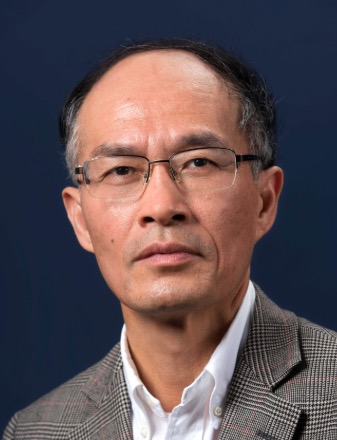 Feiyue Wang (王飞跃)合作论文数The State Key Laboratory for Management and Control of Complex Systems, Institute of Automation, Chinese Academy of Sciences;University of Chinese Academy of Sciences4Fiona M. Murphy合作论文数4
 Jozef B. Lewoc合作论文数4Gabriel J. Byrne合作论文数4Tejan Thakar合作论文数3Dawton Marques合作论文数3
 Ines Bula合作论文数UBT-Higher Education Institution3
 Amy Stapleton合作论文数Mitrajectoires, F-59655 Villeneuve Dascq, France3
 Antonio Visioli合作论文数Department of Mechanical and Industrial Engineering, University of Brescia3
 Peter P. Groumpos合作论文数Department of Electrical and Computer Engineering, School of Engineering, University of Patras3
 Antoni Izworski合作论文数3Janko Cernetic合作论文数3Dietrich Brandt合作论文数University of London3
 Mariana Netto合作论文数Laboratoire Central des Ponts et Chaussées, Institut National de Recherche sur les Transports et Leur Sécurité3kieran cronin合作论文数2
 Zhe Wan合作论文数2David Smith合作论文数2L. Guerra合作论文数2Breda Walsh Shanahan合作论文数2Patrick McInerney合作论文数2Orlagh Costello合作论文数2
 Valmir Hoxha合作论文数IHRT, TU Wien2
 Bahadur Ibrahimov合作论文数2D. MacLean合作论文数2
 Robert MacIntosh合作论文数Sch Business, Univ Glasgow2
 Xiao Wang (王晓)合作论文数School of Artificial Intelligence, Anhui University2
 Georgi M. Dimirovski合作论文数Faculty of Electrical Engineering and Information Techologies, Ss. Cyril and Methodius University in Skopje2
 Qingshan Jia (贾庆山)合作论文数Department of Automation, Tsinghua University2
 Päivi Ovaska合作论文数South Carelia Polytechnic2Brenda Mullally合作论文数2Ceccharelli M.合作论文数2Christine O'Dowd Smyth合作论文数2
 Bozenna Pasik-Duncan合作论文数Department of Mathematics, College of Liberal Arts and Sciences, University of Kansas2
 Murat Retkoceri合作论文数1




