We were all lucky to know Karen in different ways and to work with her in various capacities at different times of her life. We all lost Karen too soon – she had so much to share and give to her friends and family, to her community, and to the sharing of ideas and insights in general. She had already accomplished so much in her 51 years, but in many ways she was still budding in her knowledge and approach and in the audiences she reached. Karen Bakker’s legacy goes far beyond her conceptual contributions to the discipline of geography and the associated fields of political ecology and water governance, although these are what she will certainly also be remembered for. As such, it is fitting that we share a tribute to her in an academic journal, notably one focused on water governance. We each responded to a few questions regarding Karen’s impact on our work and our lives. What follows are the responses we each gave. They are shaped by the various relationships we had with her over the years as student, colleague, supervisor and mentor. We each thought about what inspired us most about Karen’s approach to scholarship and to life in general and about her conceptual contributions, to which we have found ourselves returning over the course of our own lives and careers. We explain how and when her work and presence in our lives has been significant, what it catalysed for us personally, professionally, and in broader societal activities in which we were jointly involved with Karen. We conclude with some joint reflections on Karen’s broader impact within academia and in the world and on her ongoing legacy in both realms.
Water system centralization and decentralization have variously been promoted as key to achieving household water security and Sustainable Development Goal 6.1. We argue that the lack of specificity with which scholars and practitioners use the terms centralization and decentralization limits our understanding of different water system configurations and their impacts. In this Primer, we provide a framework for thinking about levels of (de)centralization across three linked system dimensions: infrastructure, governance, and operations and maintenance. We encourage those analyzing water systems to characterize (de)centralization with respect to these multiple dimensions, as well as the system's broader political-economic and hydro-climatic contexts. Emphasizing the importance of delineating the scale of analysis, we highlight distinct system configurations and the prevalence of hybridity. Increased specificity about dimensions and scale can clarify how the character of, or changes to, a given system impact users, which is critical to assessing their implications for water security, sustainability, and equity. We conclude with recommendations for future research to analyze the opportunities and challenges associated with different water system configurations. This article is categorized under: Human Water > Water Governance.
This paper develops the methodological concept of river co-learning arenas (RCAs) and explores their potential to strengthen innovative grassroots river initiatives, enliven river commons, regenerate river ecologies, and foster greater socio-ecological justice. The integrity of river systems has been threatened in profound ways over the last century. Pollution, damming, canalisation, and water grabbing are some examples of pressures threatening the entwined lifeworlds of human and non-human communities that depend on riverine systems. Finding ways to reverse the trends of environmental degradation demands complex spatial-temporal, political, and institutional articulations across different levels of governance (from local to global) and among a plurality of actors who operate from diverse spheres of knowledge and systems of practice, and who have distinct capacities to affect decision-making. In this context, grassroots river initiatives worldwide use new multi-actor and multi-level dialogue arenas to develop proposals for river regeneration and promote social-ecological justice in opposition to dominant technocratic-hydraulic development strategies. This paper conceptualises these spaces of dialogue and action as RCAs and critically reflects on ways of organising and supporting RCAs while facilitating their cross-fertilisation in transdisciplinary practice. By integrating studies, debates, and theories from diverse disciplines, we generate multi-faceted insights and present cornerstones for the engagement with and/or enaction of RCAs. This encompasses five main themes central to RCAs: (1) River knowledge encounters and truth regimes, (2) transgressive co-learning, (3) confrontation and collaboration dynamics, (4) ongoing reflexivity, (5) transcultural knowledge assemblages and translocal bridging of rooted knowledge.
Aside from operational sustainability and efficiency goals, water tariffs also need to address the requirements of affordability and equity, in most instances, by providing subsidies to poor households. Yet, poor households are unable to enjoy the benefits of such cross-subsidization and linked conveniences as they are unable to get water service connections. Even with a well-designed water tariff, the inability of poor households to get piped connections results in the payment of premiums for water that is difficult to access and, at times, of questionable quality. In this paper, we assess the pro-poor projects of three Philippine municipal water systems and suggest that providing water service connections to poor households allows these households to avoid paying the water poverty premium, as well as experience the related public health and quality of life benefits accruing from such connections. We argue that designing the best tariff for existing socio-economic, political, and environmental realities must go hand in hand with programs that provide water service connections to poor households as this will ensure not only operational viability but also equitable water provision.
Informed by decades of literature, water interventions increasingly deploy "gender-sensitive" or even "gender transformative" approaches that seek to redress the disproportionate harms women face from water insecurity. These efforts recognize the role of gendered social norms and unequal power relations but often focus narrowly on the differences and dynamics between cisgender (cis) men and women. This approach renders less visible the ways that living with water insecurity can differentially affect all individuals through the dynamics of gender, sexuality, and linked intersecting identities. Here, we first share a conceptual toolkit that explains gender as fluid, negotiated, and diverse beyond the cis-binary. Using this as a starting point, we then review what is known and can be theorized from current literature, identifying limited observations from water-insecure communities to identify examples of contexts where gendered mechanisms (such as social norms) differentiate experiences of water insecurity, such as elevating risks of social stigma, physical harm, or psychological distress. We then apply this approach to consider expanded ways to include transgender, non-binary, and gender and sexual diversity to deepen, nuance and expand key thematics and approaches for water insecurity research. Reconceptualizing gender in these ways widens theoretical possibilities, changes how we collect data, and imagines new possibilities for effective and just water interventions. This article is categorized under: Human Water > Value of Water Engineering Water > Water, Health, and Sanitation Human Water > Water as Imagined and Represented Human Water > Methods
An increasing number of studies find that water sharing—the non-market transfer of privately held water between households—is a ubiquitous informal practice around the world and a primary way that households respond to water insecurity. Yet, a key question about household water sharing remains: is water sharing a viable path that can help advance household water security? Or should water sharing be understood as a symptom of water in security in wait for more formalized solutions? Here, we address this question by applying Sen’s entitlement framework in an integrative review of empirical scholarship on household water sharing. Our review shows that when interhousehold water sharing is governed by established and well-functioning norms it can serve as a reliable transfer entitlement that bolsters household water security. However, when water sharing occurs outside of established norms (triggered by broader entitlement failures) it is often associated with significant emotional distress that may exacerbate conditions of water in security. These findings suggest that stable, norm-based water sharing arrangements may offer a viable, adaptive solution to households facing water insecurity. Nevertheless, more scholarship is needed to better understand when and how norm-based water transfer entitlements fail, the capacity of water sharing practices to evolve into lasting normative entitlements, and the impact of interhousehold water sharing on intrahousehold water security.
Green gentrification implicates urban greening as a driver of neighbourhood 'upgrading' and subsequent displacement. However, it is unclear whether the concept resonates with, or supports the work of, those responsible for much of the greening occurring in cities - urban green planners/practitioners. We interviewed 33 planners/practitioners in Canada to refine our understanding of the relationships between urban greening and gentrification. We found that greening is closely tied to development, with funding/space for greening often provided through development requirements/incentives. Thus, rather than greening causing gentrification (as described in current literature), here greening is often a requirement and direct outcome of new development - contributing to what we describe as a broader greening of the gentrification process that is facilitated by various political-economic factors. Many interviewees stated that their current work focuses on addressing existing inequities rather than strategizing to limit future gentrification. However, they had mixed opinions about whether knowledge of green gentrification as a concept can help them promote equitable urban greening due to their lack of power over where/how urban greening occurs, along with the finding that greening is not causing gentrification. The uneven power dynamics between urban green practitioners/planners, developers, and elected officials also influenced views on whether gentrification is an intended outcome of greening. We conclude that relying on new development to provide urban greening is antithetical to addressing existing green inequities and is likely to exacerbate inequities through associating greening with gentrification. Recent measures to improve housing affordability (i.e. the removal of developer greening requirements) will disrupt the current development-greening relationship but are unlikely to address the issue of inequitable greening. Increased and ongoing collaboration between those working in urban greening, housing, and planning is paramount and should focus on affordability and equity across urban systems - attending to the interplay between greening, housing, affordability, and sustainability.
Download This Paper Open PDF in Browser Add Paper to My Library Share: Permalink Using these links will ensure access to this page indefinitely Copy URL Copy DOI
Cases of climate maladaptation are increasingly documented. Its identification and redressal has become a priority for researchers and policymakers concerned with climate vulnerability reduction. The ability to address climate maladaptation hinges on being open to its diverse causes, manifestations, and impacts. This study argues that climate maladaptation analyses are dominated by an “interactional ontology”—the understanding that it can be explained as an observable outcome from how separate social, economic, and political systems interact in moments of time. Consequently, efforts to curb climate maladaptation often target the institutional contexts (e.g., rules, regulations) understood as enabling adaptation practices to aggravate climate risks. But this only captures a partial aspect of climate maladaptation, neglecting underlying causes and processes. We argue a “relational ontology” can complement the “why and how” of maladaptation. A relational ontology understands climate maladaptation as an evolving process constituted through dynamic material and discursive relations, versus an observable outcome from separately interacting systems. By analyzing how adaptation initiatives are related to, framed, and politicized, assembly processes are rendered visible. To demonstrate this, we study the Government of Maharashtra’s (India) Jalyukt Shivar Abhiyan, a program aimed at increasing water conservation to “free” 20,000 villages from drought impacts. From our theorization and empirical case, we discuss how a relational ontology contributes to debates in the climate maladaptation literature and invites approaches for mitigating this phenomenon.
Access to safe water is vital for community health, especially during disaster and recovery periods when standard solutions may be slow or politically stalled. Water sharing, an informal and self-guided coping mechanism, becomes critical during disasters when standard water infrastructure is damaged or destroyed. Drawing on diverse literature, we highlight the prevalence and importance of household water sharing in disaster contexts, emphasizing its potential benefits and trade-offs. We explain why these systems-while often invisible-are important and relevant to disaster recovery. Our review identifies five key observations and implications for disaster intervention, emphasizing the need for tailored support for economically marginalized groups and the integration of water sharing practices as a short-term coping mechanism into disaster response and recovery agendas. We advocate for further research to evaluate the long-term impacts of water sharing and inform policy and intervention strategies while recognizing that such community-level coping mechanisms alongside formal water services may effectively address water insecurity and bolster resilience in disaster-affected communities.
In 2017 and 2018, Cape Town faced historically unprecedented water shortages. With the imminent possibility of running out of water, the city’s leadership prioritized reducing water demand and expanding new water sources, while also reinvigorating the goal of seeking to build system-level water resilience for the longer term. Beyond the context of Cape Town, the crisis captured global attention, highlighting ongoing and future water security challenges, the realities of climate change, and the critical need to foster transitions towards more resilient water futures. Given that much of the discourse and implementation around water resilience remains squarely focused on the biophysical and engineering aspects of water supply and distribution systems, despite repeated calls for the need for greater attention to issues of equity and power, there remains little understanding of the ways that persistent inequities might serve or inhibit possibilities for urban socio-hydrological (or water) resilience. This paper draws on examples from Cape Town to argue that patterns and legacies of inequality, marginalization, and exclusion erode and inhibit possibilities for water resilience. Providing needed empirical evidence on the nature of these linkages, we theorize that deeply rooted inequities and related dynamics act as “counter-currents”—trends that undermine and present persistent challenges to efforts to enhance socio-hydrological resilience. Documenting examples of disconnections between the state and civil society as well as disconnected socio-ecological systems, we argue that these persistent inequities mean that efforts to achieve socio-hydrological resilience are likely to remain elusive. It is only by foregrounding these processes that it will be possible to make cities more resilient in the face of ongoing and future water-related risks, uncertainties, and climatic and environmental change.
The role of women in mining economies is increasingly recognized in management and policy fora. Nonetheless, mining remains a male-dominated industry. In this paper, we examine how women's participation in the mining industry is commonly articulated through what we refer to as a 'business case' approach, and find that this approach is frequently adopted by both mining companies and gender-based interest groups. While the 'business case' approach facilitates the engagement with women's concerns regarding their participation in the workforce; we argue that it potentially sidesteps important social and political factors and thereby overlooks broader considerations for advancing gender equity in mining. The analysis draws on data collected in 2019 through a survey, as well as semi-structured interviews and workshops with representatives of mining companies and gender-focused groups across selected APEC countries. In our analysis, we found three overriding insights regarding the 'business case' approach, as articulated by key representatives. Specifically, it: 1) supports gender equity policies to validate women's place in the industry; 2) promotes a gender equality-friendly image, and; 3) considers only particular intersectional identities. Ultimately, these findings reveal the need for future research on how corporate initiatives and government policies could adopt a more inclusive gender-transformative approach that encourages the promotion of women, LGBTQ+, and other underrepresented groups in the mining industry, including consideration of men and masculinity as part of efforts to promote gender inclusion in mining, while also supporting individuals with other intersectional identities (e.g., racialized and disability). We also consider other issues important from a gender lens beyond the 'business case' approach, including interactions with communities.
The mining sector remains economically significant across the globe. With a number of growing sustainability concerns (from environmental waste and pollution to social and ethical considerations), most major mining companies have highlighted sustainability concerns and social license to operate as corporate priorities. A number of case studies have also identified serious gender concerns, including disproportionate negative effects for women (especially for Indigenous, racialized, or women working in artisanal mining sectors). Here, we analyze gender dimensions of sustainability reporting to understand how large mining companies monitor and report on these concerns. This provides an understanding of what gender concerns are acknowledged and reported on by industry, as well as those that are not included. We selected a subset of large-scale mining companies that are considered likely to foreground commitments to these issues (members of the International Council on Mining and Metals, ICMM), and analyzed their recent sustainability reports to understand how gender and related intersectional issues are acknowledged, framed, and addressed in voluntary reporting by companies. Among other findings, we highlight that while some company reports highlight gender issues with respect to female employees, or maintaining community relations—this is often narrowly focused on women, rather than a broader gender or intersectional perspective. As well, we are able to identify a range of issues where specific effects for women are addressed, as well as a suite of concerns for which a broader gender and intersectional perspective is needed.
Compounding systems of marginalization differentiate and shape water-related risks. Yet, quantitative water security scholarship rarely assesses such risks through intersectionality, a paradigm that conceptualizes and examines racial, gendered, class, and other oppressions as interdependent. Using an intersectionality approach, we analyze the relationships between household head gender and self-reported socio-economic status, and water affordability (proportion of monthly income spent on water) and water insecurity (a composite measure of 11 self-reported experiences) for over 4000 households across 18 low- and middle-income countries in Central and South America, Africa, and Asia. Interaction terms and composite categorical variables were included in regression models, adjusting for putative confounders. Among households with a high socio-economic status, the proportion of monthly income spent on water differed by household head gender. In contrast, greater household water insecurity was associated with lower socio-economic status and did not meaningfully vary by the gender of the household head. We contextualize and interpret these experiences through larger systems of power and privilege. Overall, our results provide evidence of broad intersectional patterns from diverse sites, while indicating that their nature and magnitude depend on local contexts. Through a critical reflection on the study’s value and limitations, including the operationalization of social contexts across different sites, we propose methodological approaches to advance multi-sited and quantitative intersectional research on water affordability and water insecurity. These approaches include developing scale-appropriate models, analyzing complementarities and differences between site-specific and multi-sited data, collecting data on gendered power relations, and measuring the impacts of household water insecurity.
As cities attempt to ameliorate urban green inequities, a potential challenge has emerged in the form of green gentrification. Although practitioners are central to urban greening and associated gentrification, there has yet to be an exploration of practitioner perspectives on the phenomenon. We fill this gap with an online survey of 51 urban greening practitioners in Metro Vancouver and the Greater Toronto Area. Most respondents defined green gentrification as the displacement of vulnerable residents due to the installation or improvement of green space that attracts wealthy in-movers and increases property values. They were most likely to identify greening as driving green gentrification, with a minority identifying other systemic drivers with greening in a secondary role. Although 39 of 51 participants had some familiarity with green gentrification, most reported low confidence in their understanding of the concept, little evidence of using the concept in their work, and moderate concern that their work is implicated in green gentrification. The gentrification issues most encountered by practitioners were changes to neighbourhood character and uneven investment in public infrastructure, and those working in domains linked to planning, equity, and engagement were most likely to encounter gentrification issues. Practitioners experienced multiple barriers to addressing green gentrification, including limited institutional capacity, limited access to data and relevant information, policy/mandate restriction, and lack of engagement tools. Results indicate that practitioners have a moderate understanding of green gentrification but do not often use the concept in their work, despite their potential to contribute to or exacerbate it. This suggests some resistance to critiques of urban greening practice, a failure of scholarly critiques of urban greening to influence policy change, and the need for stronger research theory and research co-creation involving practitioners and academia.
Mega-damming, pollution and depletion endanger rivers worldwide. Meanwhile, modernist imaginaries of ordering 'unruly waters and humans' have become cornerstones of hydraulic-bureaucratic and capitalist development. They separate hydro/social worlds, sideline river-commons cultures, and deepen socio-environmental injustices. But myriad new water justice movements (NWJMs) proliferate: rooted, disruptive, transdisciplinary, multi-scalar coalitions that deploy alternative river-society ontologies, bridge South-North divides, and translate river-enlivening practices from local to global and vice-versa. This paper's framework conceptualizes 'riverhood' to engage with NWJMs and river commoning initiatives. We suggest four interrelated ontologies, situating river socionatures as arenas of material, social and symbolic co-production: 'river-as-ecosociety', 'river-as-territory', 'river-as-subject', and 'river-as-movement'.
 Sameer Shah合作论文数Inst Resources Environm & Sustainabil, Univ British Columbia15
 Amber Wutich合作论文数School of Human Evolution and Social Change, Arizona State University;Center for Global Health, Arizona State University;Institute for Social Science Research, Arizona State University15
 Amber L Pearson合作论文数Dept Geog Environm & Spatial Sci, Michigan State Univ10
 Ellis Adjei Adams合作论文数9
 Lucy Rodina合作论文数Inst Resources Environm & Sustainabil, Univ British Columbia9
 Justin Stoler合作论文数9
 Wendy Jepson合作论文数Department of Geography, College of Arts & Sciences, Texas A&M University9
 Nicole J. Wilson合作论文数University of Manitoba8
 Karen Bakker合作论文数Department of Geography, Faculty of Arts, The University of British Columbia;Institute for Resources, Environment and Sustainability, The University of British Columbia;Radcliffe Institute for Advanced Study, Harvard University8
 Sera Young合作论文数Population Medicine and Diagnostic Sciences, College of Veterinary Medicine, Cornell University8
 Alexandra Brewis合作论文数School of Human Evolution and Social Change, Arizona State University;Center for Global Health, Arizona State University8
 Jacqueline Goldin合作论文数Western Cape CoLab for eInclusion and Social Innovation, University of the Western Cape7
 Rutgerd Boelens合作论文数UNIVERSITY OF BRADFORD;funded Seminar Series, ESRC-;UNIVERSITY OF BRADFORD7
 Chad Staddon合作论文数University of the West of England6Cassandra L. Workman合作论文数6
 Asher Rosinger合作论文数Department of Anthropology, University of Georgia6Morinville Cynthia合作论文数6
 Gert Jan Veldwisch合作论文数Department of Political and Cultural Change, Centre for Development Research (ZEF)6
 Jessica Budds合作论文数Engineering and Development Centre;Loughborough University;Engineering and Development Centre, Loughborough University6
 Chris Sneddon合作论文数Department of Geography;Environmental Studies Program;Dartmouth College;Department of Geography, Dartmouth College6
 Gemma Dunn合作论文数5
 Danika Lynn Kleiber合作论文数5
 Joshua Miller合作论文数4
 Gina Ziervogel合作论文数Department of Environmental & Geographical Science, Faculty of Science, University of Cape Town4
 Lena Hommes合作论文数Dept Environm Sci, Wageningen Univ4
 Joseph M Szewczak合作论文数4Helen Hazen合作论文数4Scott D Osborn合作论文数3Nadia Joe合作论文数3
 Megan Peloso合作论文数3
 Melissa Beresford合作论文数Dept Anthropol, San Jose State Univ3
 Amanda Vincent合作论文数Institute for Resources, Environment and Sustainability, Faculty of Science, The University of British Columbia3
 Nadja Kunz合作论文数Institute for Resources, Environment and Sustainability, Faculty of Science, The University of British Columbia;School of Public Policy and Global Affairs, The University of British Columbia3
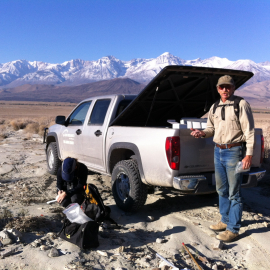 Michael L. Morrison合作论文数Department of Wildlife and Fisheries Sciences, Texas A&M University3
 Jeroen Vos合作论文数3
 Michelle Kooy合作论文数Department of Geography, University of British Columbia3K. J. Joy合作论文数2Yanna Lambrinidou合作论文数2Daniel L. Sax合作论文数2robert j patrick合作论文数2Dhawa G. Lama合作论文数2Rosie Simms合作论文数2Jeltsje Sanne Kemerink-Seyoum合作论文数2Margaret Morales合作论文数2
 Juan Pablo Hidalgo Bastidas合作论文数CEDLA Centre for Latin American Research and Documentation, University of Amsterdam2
 Daniele Tubino Pante de Souza合作论文数2
 Cecilia Campero合作论文数and Institute for Resources, Environment and Sustainability, University of British Columbia2
 tennille larzelere marley合作论文数Amer Indian Studies, Arizona State Univ2Jamie E. Shinn合作论文数2




