We design a fully connected neural network (FNN)-based scheme for joint channel equalization and symbol es-timation tasks in Single-Carrier Frequency Division Multiple Access (SC-FDMA) transmission over a dispersive block-fading channel. It is demonstrated that the proposed scheme is a reliable estimator in terms of soft estimation quality and it can be seamlessly combined with channel decoders that take a posteriori probability (APP) as input. The proposed scheme is evaluated against linear minimum mean-squared error (MMSE) equalization and demonstrates superior performance for BPSK, QAM16, and QAM64 modulations in terms of bit error rate (BER) and block error rate (BLER) for the 5G Clustered Delay Line (CDL) channel model.
This paper proposes a novel machine learning-based source-matched channel coding approach for transmission of short speech frames. We use a state-of-the-art speech codec to compare conventional channel coded transmission, uncoded transmission, and the proposed scheme. Our results demonstrate that our separate source and channel coding approach for short frames achieves superior performance compared to a state-of-the-art joint source and channel coding (JSCC) approach. By keeping separated source and channel coding, we take a step towards addressing network-related aspects, and we allow for independent training of the source codec and thus reduce the training complexity of the overall transmission system. Additionally, we present results on peak-to-average power ratio (PAPR) constrained transmission to facilitate the implementation of the proposed approach in real-world applications.
We design neural network (NN)-based schemes for channel estimation and equalization tasks in Single-Carrier Frequency Division Multiple Access (SC-FDMA) transmission over a dispersive block-fading channel. It is demonstrated that the proposed schemes outperform their traditional counterparts for the 5G Clustered Delay Line (CDL) channel model. A significant gain is achieved compared to linear minimum mean-squared error (MMSE) equalization and Bahl-Cocke-Jelinek-Raviv (BCJR) equalizer using a pre-filter in the case of perfect channel state information (CSI) available at the receiver. The proposed NN-based channel estimator can be combined with conventional and NN-based equalizers, as well as the proposed NN-based channel equalizer can be combined with conventional channel estimators. When the proposed NN-based channel estimator and equalizer are combined, it is possible to optimize them separately or jointly. Additionally, we derive a Cramer-Rao Bound (CRB) for unbiased channel estimation error in our proposed pilot insertion regime.
How small can we make the energy consumed by an artificial intelligence (AI) algorithm plus associated neuromorphic computing hardware for a given task? That was the theme of a German national competition on AI hardware-acceleration, which aimed to foster disruptive innovation. Twenty-seven academic teams, each made up of one or two partners from universities and research institutes, applied to enter the competition. Two of the eleven teams that were selected to enter were Fraunhofer IIS: ADELIA and Lo3-ML (the latter together with Friedrich- Alexander-University Erlangen-Nurnberg - FAU) [L1]. Finally Lo3-ML was one of the four national winners awarded by the German research minister Anja Karliczek for best energy efficiency.
In embedded applications that use neural networks (NNs) for classification tasks, it is important to not only minimize the power consumption of the NN calculation, but of the whole system. Optimization approaches for individual parts exist, such as quantization of the NN or analog calculation of arithmetic operations. However, there is no holistic approach for a complete embedded system design that is generic enough in the design process to be used for different applications, but specific in the hardware implementation to waste no energy for a given application. Therefore, we present a novel framework that allows an end-to-end ASIC implementation of a low-power hardware for time series classification using NNs. This includes a neural architecture search (NAS), which optimizes the NN configuration for accuracy and energy efficiency at the same time. This optimization targets a custom designed hardware architecture that is derived from the key properties of time series classification tasks. Additionally, a hardware generation tool is used that creates a complete system from the definition of the NN. This system uses local multi-level RRAM memory as weight and bias storage to avoid external memory access. Exploiting the non-volatility of these devices, such a system can use a power-down mode to save significant energy during the data acquisition process. Detection of atrial fibrillation (AFib) in electrocardiogram (ECG) data is used as an example for evaluation of the framework. It is shown that a reduction of more than 95% of the energy consumption compared to state-of-the-art solutions is achieved.
Pattern recognition as a computing task is very well suited for machine learning algorithms utilizing artificial neural networks (ANNs). Computing systems using ANNs usually require some sort of data storage to store the weights and bias values for the processing elements of the individual neurons. This paper introduces a memory block using resistive memory cells (RRAM) to realize this weight and bias storage in an embedded and distributed way while also offering programming and multi-level ability. By implementing power gating, overall power consumption is decreased significantly without data loss by taking advantage of the non-volatility of the RRAM technology. Due to the versatility of the peripheral circuitry, the presented memory concept can be adapted to different applications and RRAM technologies.
Un componente de antena distribuida del lado del equipo de usuario compartido (30) SUDAC, que comprende: un transceptor final (85), un transceptor frontal (90), y un generador de senal de evaluacion (95); en el que el transceptor final (85) esta configurado para recibir una senal de entrada (105) desde al menos una estacion base (70) usando frecuencias ultra altas y para emitir la senal de entrada a frecuencias intermedias; en el que el generador de senal de evaluacion (95) esta configurado para crear una porcion de control frontal (40) que comprende una senal de evaluacion frontal (45); en el que el transceptor frontal (90) esta configurado para generar una senal de salida (110) usando frecuencias extremadamente altas que comprenden la senal de entrada (105) usando un ancho de banda de retransmision (185) y que ademas comprende la porcion de control frontal y transmitir la senal de salida (110) que comprende la parte de control frontal a un equipo de usuario (10) caracterizado porque el SUDAC esta configurado para organizar la porcion de control frontal por debajo del ancho de banda de retransmision, mientras que el SUDAC esta configurado para organizar otra porcion de control frontal por encima del ancho de banda de retransmision.
With the emergence of DNN accelerators the main focus of such systems usually lies on utilizing local memories and reducing the size of the processed data, since delay and energy consumption are dominated by data transfer. Utilizig emerging memory technologies, such as ReRAMs, these goals might be attained much easier, due to advantageous non-functional and functional properties. One of the key drawbacks of such systems are reliability and variability of devices of such technologies. To certain degree, DNNs are resilient to soft and hard errors in their memory cells, so these issues might be surmountable depending on the device properties, but eludes trivial analyses known from the digital domain. Here the dynamic behavior of the devices comes into play and must be simulated in order to get a decent degree of confidence on the reliability of the hardware and therefore also yield. In order to tackle this issue we present an accelerator architecture and matching analysis pipeline that allows the user to specify and train a net topology and then test the design against some input activations with different randomized device properties. Using this approach we can estimate the inference results and other system and algorithm level properties in presence of different device level properties which might for example be extracted from real world measurements. Such a system can help the user in the design of their net or give them hints on the required device properties for a given net or aid them in evaluating existing designs.
Traditionally, Recurrent Neural Networks (RNNs) are used for time-series prediction. However, recent results have shown that Temporal Convolutional Networks (TCNs) outperform RNNs in terms of accuracy and training time. By using dilated convolutions TCNs are able to capture long term temporal dependencies from time series. The use of existing Convolutional Neural Networks (CNNs) inference accelerators for the computation of dilated convolutions significantly decreases the throughput and causes computation overhead. In order to take into account the one-dimensionality of the convolutions and presence of dilation, this paper proposes a dedicated hardware inference accelerator for TCNs. We use this accelerator to run an adaptation of WaveNet for anomaly detection in an ECG time series dataset. Our results show that it can achieve 6.3 · 10−4 DRAM access/MAC, 0.043 on-chip SRAM access/MAC and 8 ms/inference. This lower number of on-chip and off-chip memory accesses significantly decreases the overall power consumption and increases the throughput.
Shared UE-side Distributed Antenna System (SUDAS) is a very promising technique in order to deliver an improved coverage and high throughput beyond 10 Gbit/s to the users in the indoor and intra-vehicular scenarios for 5G applications. This paper presents an implementation perspective and comparison analysis of different candidate hardware architectures suitable for the Shared UE-side Distributed Antenna Component (SUDAC), which is the main building block of the SUDAS and acts as a relay and performs massive spatial-to-frequency domain translation and vice versa. Based on the defined comparison criteria and scoring of different architectures, it has been established that Analog SUDAC with Slight Frequency Shifting (SFS), Analog SUDAC with Digital Control, Digital SUDAC with 802.11ad and Digital SUDAC with Frequency Domain Equalization (FDE) are the top candidates for hardware implementation and future deployment.
In this paper, we present a Vehicular version of the Shared UE-side Distributed Antenna System (SUDAS) i.e. Vehicular SUDAS which enables high throughput wireless communication in high mobility Vehicle-to-X (V2X) scenarios. Vehicular SUDAS uses shared virtual antennas, termed UE-side Radio Units (URUs), which utilize both licensed sub-6 GHz band and unlicensed millimetre wave band, to achieve a virtual MIMO gain in in-vehicle UEs. A simulation study is performed to evaluate and analyze an upper bound of the maximum achievable sum rate in the downlink of the proposed system, assuming perfect Doppler spread compensation. The proposed Vehicular SUDAS shows excellent performance, positioning itself as a strong contender for next V2X communication services.
In this paper, we consider resource allocation for an outdoor-to-indoor shared user-equipment (UE)- side distributed antenna system (SUDAS) employing multiple independently operating compress-and- forward (CF) relays which utilize both licensed and unlicensed frequency bands to enhance indoor data throughput. First, a non-convex matrix-valued resource allocation problem for maximization of the weighted sum rate is formulated. Next, the non-convex problem is simplified to obtain a low- complexity suboptimal resource allocation algorithm based on sequential quadratic programming (SQP). The proposed algorithm is shown to provide excellent performance in practical scenarios. Furthermore, the algorithm has a low channel state information (CSI) feedback requirement and can accommodate arbitrary communication bands and technologies for indoor relaying. Therefore, the proposed CF-SUDAS scheme can help achieve high outdoor-to-indoor data throughput at low complexity, a crucial requirement for next generation wireless communication systems.
In this paper, we present the Vehicular Shared User-Equipment (UE)-side Distributed Antenna System (Vehicular SUDAS) which enables high throughput wireless communication in high mobility scenarios. Vehicular SUDAS uses shared virtual antennas, termed UE-side Radio Units (URUs), which utilize both licensed band and unlicensed millimetre wave band to achieve a virtual MIMO gain in the in-vehicle UEs. A simulation study is performed to evaluate and analyze an upper bound of the maximum achievable sum rate of the proposed system, assuming perfect Doppler spread compensation, in high mobility scenarios. The proposed Vehicular SUDAS shows excellent performance, positioning itself as a strong contender for next generation Vehicle-to-X (V2X) communication services.
This paper proposes an analytical framework for the prediction of decoding error probabilities in heterogeneous wireless environments, where transmissions from various radio nodes with distinct Poisson-arrival rates and packet lengths populate the channel. Random channel access without feedback is assumed, where partial packet collisions can lead to the loss of packets. The analysis is based on the modeling of the collision length distribution between competing nodes. With recent results from information theory in the finite block length regime, we provide bounds on achievable decoding error probabilities for a given interference scenario. The new framework enables jointly considering inter- and intra-system interference, which is an important aspect in unlicensed radio bands. The framework's applicability to optimize system designs is demonstrated for a typical low-power wide area network scenario. We study the tradeoff between reliability and code rate for a point-to-point link and present achievable throughput regions. The analysis reveals the superior performance of coded time-hopping spread spectrum systems. They reach very low error probability even under strong interference for wide ranges of practically relevant load regions.
In this paper, we study the design of the user selection, the time allocation to uplink and downlink, and the transceiver processing matrix for uplink and downlink multicarrier transmission employing a shared user equipment (UE)-side distributed antenna system (SUDAS). The proposed SUDAS simultaneously utilizes licensed frequency bands and unlicensed frequency bands with large available bandwidths (e.g. the millimeter wave bands) to enable a spatial multiplexing gain for single-antenna UEs to improve the energy efficiency and throughput of 5th generation (5G) outdoor-to-indoor communication. The resource allocation algorithm design is formulated as a nonconvex optimization problem for the maximization of the end-to-end system energy efficiency (bits/Joule). The nonconvex matrix optimization problem is converted to an equivalent nonconvex scalar optimization problem for multiple parallel channels, which is solved by an asymptotically globally optimal iterative algorithm. Besides, we propose a suboptimal algorithm, which finds a locally optimal solution of the nonconvex optimization problem. Simulation results illustrate that the proposed resource allocation algorithms for SUDAS achieve a significant performance gain in terms of system energy efficiency and spectral efficiency compared to conventional baseline systems by offering multiple parallel data streams for single-antenna UEs.
In this chapter, we have proposed a novel SUDAS with the objective of achieving the 10 Gbit/s data rate goal set by 5G for indoor UEs. The proposed SUDAS exploits the benefits of the licensed and unlicensed frequency bands simultaneously. In particular, it translates the spatial multiplexing in the licensed bands into frequency multiplexing in the unlicensed bands for boosting the end-to-end data rate via VMIMO. It is expected that the proposed SUDAS can further enhance the system performance when advanced resource allocation technique is employed. Besides, we have also discussed some potential application scenarios where deployment of SUDAS appears to be beneficial. Also, we have investigated different potential realizations of SUDAS and the corresponding implementation challenges. It is expected that the proposed SUDAS is able to bridge the gap between the current technology and the high data rate requirement of the next generation communication systems.
In this paper, we study the resource allocation algorithm design for downlink multicarrier transmission with a shared user equipment (UE)-side distributed antenna system (SUDAS) which utilizes both licensed and unlicensed frequency bands for improving the system throughput. The joint UE selection and transceiver processing matrix design is formulated as a non-convex optimization problem for the maximization of the end-to-end system throughput (bits/s). In order to obtain a tractable resource allocation algorithm, we first show that the optimal transmitter precoding and receiver post-processing matrices jointly diagonalize the end-to-end communication channel. Subsequently, the optimization problem is converted to a scalar optimization problem for multiple parallel channels, which is solved by using an asymptotically optimal iterative algorithm. Simulation results illustrate that the proposed resource allocation algorithm for the SUDAS achieves an excellent system performance and provides a spatial multiplexing gain for single-antenna UEs.
This paper analyzes the reliability and throughput of the telegram-splitting concept in the presence of inter-system and intra-system interference. Using telegram splitting, the data of one telegram is split into multiple sub-packets, which are then transmitted with temporal spacing. As a result, collisions with other telegrams destroy only some sub-packets that can be recovered using forward error correction. Consequently, the reliability of the data transmission in case of inter- and intra-system interference - a significant problem in license-exempt bands - is highly improved. In this paper, probabilities for the resulting telegram error rate of random media access systems using telegram splitting are derived. Furthermore, the achievable throughput is analyzed. The theoretical considerations in addition to simulation results prove the significant gain of the telegram-splitting concept for telemetry systems.
 Ernst Eberlein合作论文数Department of Mathematical Stochastics;Center for Data Analysis;University of Freiburg;Center for Data Analysis, University of Freiburg21
 Johannes Huber合作论文数Department Elektrotechnik-Elektronik-Informationstechnik, Technische Fakultät, Friedrich-Alexander-Universität12
 Wolfgang H. Gerstacker合作论文数Institute for Digital Communications
Friedrich-Alexander University Erlangen-Nurnberg (FAU)
Cauerstr. 7, Erlangen, D-91058, Germany10
Wolfgang H. Gerstacker合作论文数Institute for Digital Communications
Friedrich-Alexander University Erlangen-Nurnberg (FAU)
Cauerstr. 7, Erlangen, D-91058, Germany10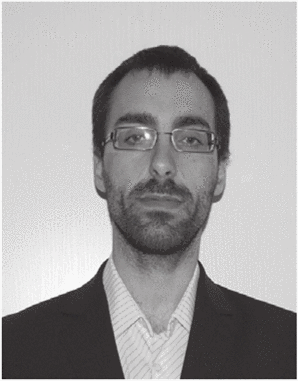 Vargas, Aharon合作论文数9
 Albert Heuberger合作论文数8
 Holger Stadali合作论文数8
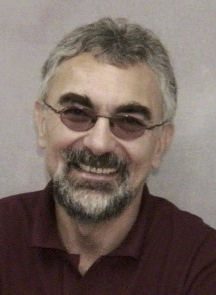 Lajos Hanzo合作论文数University of Southampton7
 Alexander Lampe合作论文数7joerg pickel合作论文数6stefan kraegeloh合作论文数6
 Reinhard Zitzmann合作论文数6bert greevenbosch合作论文数6
 F. Burkhardt合作论文数Fraunhofer Inst Integrated Circuits, Broadband & Broadcast Dept, Erlangen, Germany6
 Robert Schober合作论文数Department of Electrical-Electronic-Communication Engineering, Institute for Digital Communications, Friedrich-Alexander-University Erlangen-Nuremberg6Tobias Bliem合作论文数6Stefan Wabnik合作论文数6
 Juliane Borsum合作论文数6
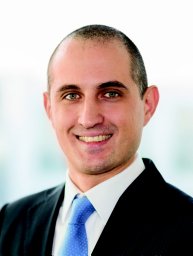 Giovanni Del Galdo合作论文数Institute for Information Technology Ilmenau, Technische Universität Ilmenau6bernhard grill合作论文数5
 Marc Reichenbach合作论文数Department of Computer Science 3, Friedrich Alexander University Erlangen-Nürnberg5guenter hofmann合作论文数4stefan koehler合作论文数4carmen wagner合作论文数3retkowski reiner合作论文数3Maen Mallah合作论文数3Rohde Christian合作论文数3sylvia couronne合作论文数3Daniel Reiser合作论文数3Gay, M.合作论文数3
 Derrick Wing Kwan Ng合作论文数School of Electrical Engineering & Telecommunications, The University of New South Wales3
 Joerg Robert合作论文数Institut fuer Nachrichtentechnik;Technische Universitaet Braunschweig;Institut fuer Nachrichtentechnik, Technische Universitaet Braunschweig3Marcus Bliesze合作论文数3Dietmar Fey合作论文数Institut fur Informatik3
 Aravindh Krishnamoorthy合作论文数3
 Stefan Lipp合作论文数2Goekhan Guel合作论文数2
 Gerd Kilian合作论文数2
 Stefan Pechmann合作论文数Univ Bayreuth, Chair Commun Elect, D-95447 Bayreuth, Germany2
 Amelie Hagelauer合作论文数School of Computation, Information and Technology, Technical University of Munich;Fraunhofer Institute for Electronic Microsystems and Solid State Technologies EMFT2
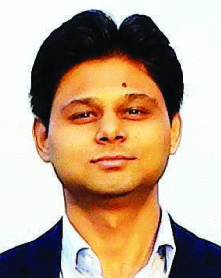 Rudraksh Shrivastava合作论文数2Peter Reichel合作论文数2
 Bee Leong Yeap合作论文数School . of ECS;University of Southampton;School . of ECS, University of Southampton2Thomas Von Der Grün合作论文数2
 Sandro Scalise合作论文数German Aerospace Center (DLR), P.O. Box 1116, 82234 Wessling, Germany. E-mail: {christian.kissling, cristina.parraga, nuria.riera, sandro.scalise}@dlr.de2
 Hendrik Lieske合作论文数2A. Knickenberg合作论文数2Cedric Keip合作论文数2S Peeters合作论文数2
 Christian Rohde合作论文数2




