Bottled water consumption has sharply increased worldwide. However, systematic international knowledge about different water consumption habits and underlying factors is limited. We describe drinking water habits and tap water perception in Barcelona (Spain), various cities in Cyprus and Ireland and evaluate the association with socio-demographics and lifestyle markers to identify key determinants of water consumption choice. A cross-sectional study (N = 1944) was conducted in 2023-2024 to ascertain data on socio-demographics, lifestyle markers, type of water consumed (tap, bottled, filtered, other), and tap water perception in a representative sample. We used multivariate logistic regression to estimate the association between the type of water consumed at home adjusting for socio-demographics, lifestyle markers, and tap water perception. Median age of participants ranged from 38/39 (Cyprus/Ireland) to 45 years (Barcelona), with 50-53 % women. Bottled water was consumed to drink at home (and outside home) among 56 % participants (80 %) in Barcelona, 41 % (85 %) in Cyprus and 35 % (66 %) in Ireland. The most frequent water to cook was unfiltered tap water in Barcelona (57 %) and Ireland (50 %), and filtered tap water in Cyprus (43 %). Tap water perception differed between study areas, with Cyprus showing the worst perception in most of the dimensions. Drinking water consumed at home was consistently associated with tap water perception in all study areas. Age, education, ethnicity, or household size were associated in some instances, with no consistent pattern across countries. Water consumption habits are influenced by a complex interplay of subjective factors and context-specific factors that should be considered in future actions to effectively influence consumer's behavior given the environmental costs of bottled water use.
Understanding the drivers of COVID-19 vaccination intentions remains relevant as public health systems prepare for future pandemics. This study examined how emotional and social-cognitive factors influence COVID-19 vaccination intentions during two key phases of the COVID-19 pandemic: before (April-June 2020) and after (January-February 2021) vaccination rollout. A total of 586 adults completed an online survey assessing beliefs about COVID-19, self-efficacy to adhere to protective behaviours, perceived stress, affect, psychological flexibility, and prosociality. Self-efficacy, prosociality, psychological flexibility and positive affect significantly declined after vaccination rollout. Higher self-efficacy and perceived severity of the disease consistently predicted stronger vaccination intentions across time points. Perceived susceptibility was negatively associated with vaccination intention before, but not after rollout. The psychological variables were not significant predictors of intentions. These findings underscore the importance of social-cognitive factors, especially self-efficacy and perceived severity, in shaping vaccination-related decisions, with implications for designing effective communication strategies in future health emergencies.
BACKGROUND:There is no published evidence to support the efficacy of any digital vaping cessation program for young adults (YAs) at differing levels of readiness to quit. In this pilot randomized controlled trial, we evaluated the preliminary acceptability and efficacy of a program for vaping cessation based on acceptance and commitment therapy (ACT on Vaping), delivered via a smartphone app and text messaging. METHODS:YAs aged 18-30 (n = 61) were randomized 1:1 to ACT on Vaping (n = 31) or incentivized text message control (n = 30). Outcome data were collected at 3 months post-randomization. Results were compared against a priori benchmarks for acceptability (satisfaction of ≥3.5 on 5-point scale) and efficacy relative to control (meeting at least one of three): ≥1-point difference in Contemplation Ladder change scores; ≥5 percentage difference in 24-hour quit attempts, ≥5 percentage difference in cotinine-confirmed 30-day point prevalence abstinence (PPA) from all non-therapeutic nicotine/tobacco. RESULTS:Satisfaction with ACT on Vaping averaged 3.8, exceeding the acceptability benchmark. A higher proportion of participants in the ACT on Vaping arm reported a 24-hour quit attempt (87.5% vs. 75.9%), exceeding the efficacy benchmark. Both changes in quit readiness (+0.96 in ACT on Vaping vs. +0.72 in control) and cotinine-confirmed 30-day PPA (4.2% in ACT on Vaping vs. 0% in control) were descriptively higher for ACT on Vaping but did not reach the benchmark level for efficacy. CONCLUSIONS:ACT on Vaping had promising acceptability and preliminary efficacy. A fully powered trial of ACT on Vaping is warranted to evaluate its efficacy. IMPLICATIONS:Digital interventions are a promising yet under-researched approach for reaching and supporting YAs to quit vaping. This proof-of-concept pilot randomized controlled trial evaluated a novel mobile health application and associated text messaging program (ACT on Vaping) for young adult vaping cessation and found preliminary evidence for acceptability and efficacy relative to an incentivized text message control arm, warranting evaluation in a fully powered trial as a next step. TRIAL REGISTRATION:NCT05897242.
INTRODUCTION:Accessible, culturally-tailored interventions are needed to address the high prevalence of cigarette smoking and the challenges to cessation experienced by sexual and gender minority (SGM) young adults. This study evaluated, in a randomized, controlled pilot trial, the acceptability, preliminary cessation-related outcomes, and impact on theory-based change processes of the SGM-tailored, Acceptance and Commitment Therapy (ACT)-based Empowered, Queer, Quitting, and Living (EQQUAL) digital program relative to the National Cancer Institute's Smokefree.gov program. METHODS:Participants were SGM young adults, aged 18-30, who smoked at least weekly. Participants were randomized 1:1 to either EQQUAL or Smokefree.gov, both of which included a web app and text messaging. Outcomes were assessed at 3 months post-randomization, and smoking abstinence was biochemically-verified. RESULTS:The sample included 124 participants (n=63 in EQQUAL, n=61 in Smokefree.gov). On the primary acceptability outcomes, overall satisfaction was descriptively higher in the EQQUAL arm (68.8% vs. 60.0%; OR=1.17, 95% CI=0.50-2.78), and EQQUAL usability ratings exceeded the acceptable benchmark score of 68. The average number of EQQUAL digital sessions completed was 1.4 (of 6). On the primary cessation outcomes, biochemically-verified 7-day point prevalence abstinence was higher in EQQUAL than Smokefree.gov (11.1% vs. 4.9%; OR=1.89, 95% CI=0.45-9.66). Change in readiness to quit and cigarettes per day were similar between arms, as were outcomes of theory-based change processes. CONCLUSIONS:EQQUAL demonstrated potential benefits over Smokefree.gov on acceptability and cessation, albeit with a lack of robust effect on theory-based change processes. Increased engagement with the web-based portion of the program may be needed to improve outcomes.
True to the medical model approach, mental and physical symptoms are clustered together to form distinct diagnostic labels. Multimorbidity and comorbidity are a result of these categorical classifications. Understanding and treating multimorbid and comorbid conditions represents a challenge for health professionals. These conditions rarely follow linear developmental trajectories and involve interacting with often complex biopsychosocial processes. Clinical guidelines and healthcare practices for intervening with diagnoses are traditionally based on standardized treatment protocols for single diagnostic conditions. The present chapter illustrates a shift from the medical model of disease classification toward a process-based and individualized approach to better understand and treat the dynamic nature of physical and mental ill-health. Conceptualizing multimorbidity and comorbidity as an evolving process unique to each individual aids health professionals in adopting coherent and patient/client-centered interventions. Process-based and personalized frameworks may offer a viable solution to the growing burden of multimorbid and comorbid conditions, improve quality of life, and support clinical decision-making and treatment planning to optimize individual outcomes.
Engagement as a concept can explain why Digital Health Interventions (DHIs) produce individual variance in outcomes, and sometimes limited effectiveness, especially in practice. However, previous literature on engagement across different domains (e.g., Psychology, Implementation Science, Human-Computer Interaction) yields disparate conceptualizations, research methods, design strategies, and measurement methods. Therefore, this workshop aims to: bring together a diverse group of researchers within the field of DHIs with an interest in engagement; provide an overview of how engagement has been used, in terms of concept, measures, and strategies; work towards a shared understanding of how engagement, with its diverse measures and strategies, can be leveraged to inform the design, development, and evaluation of meaningful DHIs. We welcome submissions either as a description of a use case that includes: how engagement was defined, measured, designed for by our participants, as well as their lessons learned; or as a short position paper describing their interest in the topic, future plans for measuring/designing for engagement, and current challenges. Our post-workshop plans aim to draw from this transdisciplinary collaboration to document lessons learned on how to employ engagement in DHI development, research and design.
Abstract: In 2018, the European Federation of Psychologists’ Associations (EFPA) published a report summarising the evidence on Internet- and mobile-based psychological interventions (IMIs) for the prevention and treatment of mental health disorders. Given the rapid developments in this field, an updated narrative review was conducted to provide a broad overview of the literature addressing multiple perspectives on the use of IMIs. The review outlines the definition, types, purposes, and current evidence of IMIs; examines the emerging role of AI; and discusses practical considerations, including limitations and challenges (e.g., adverse effects, legal and ethical issues), implementation barriers, inequalities and inclusion, and their current use in routine care. Results across these domains paint a nuanced picture, summarising the potential as well as the pitfalls of IMIs. In the discussion, key conclusions emerge: IMIs that include therapist guidance tend to achieve higher adherence and more reliable clinical outcomes, while matching support to users’ needs is crucial for scalability. Tailoring content and sustaining engagement are critical determinants of success. Effective implementation of IMIs requires careful attention to ethical concerns and thoughtful integration of AI. Practical barriers, such as limited access and the digital divide, must also be addressed to ensure these interventions are adopted fairly and equitably. Overcoming these challenges will require continued cooperation among researchers, clinicians, users, policymakers, and IT stakeholders.
BACKGROUND:The idea of adopting tobacco endgame policies is gaining ground in the tobacco control community. This paper explores European stakeholders' perceptions and appraisal of facilitators and barriers in achieving national endgame policies. METHODS:Semi-structured qualitative interviews with 23 participants from eight countries with different tobacco control contexts were conducted in 18 individual and two focus group interviews from February to December 2023. Participant selection was based on experience and competence in tobacco control. Participants represented government agencies, research institutes and civil society from Cyprus, Finland, Italy, Lithuania, Norway, Serbia, Slovenia and Spain. Thematic analysis was used to generate key themes. RESULTS:Facilitators identified for succeeding in pursuing endgame strategies include having a context of favourable international developments and modelling 'pressure' on global and regional level, active civil society groups and effective coordination of key players, little or no industry in the country and support across political party lines with strong-willed individuals leading the way. Frequently mentioned barriers are lobbying and strong presence of industry, emergence of new products (often promoted in social media), a stagnated denormalisation process of smoking and few or weak non-governmental organisations. CONCLUSION:Structured national network collaboration with a common focus over time, combined with strong engagement from supranational entities, especially the European Union, is needed to proceed with successful implementation and dissemination of tobacco endgame policies in Europe.
BACKGROUND:Post-traumatic growth (PTG) is characterized by emotional, cognitive, and existential change and is associated with higher spiritual well-being and lower distress. Although Acceptance and Commitment Therapy (ACT) effectively reduces anxiety, depression, trauma symptoms, and fear of cancer recurrence in cancer survivors, PTG has rarely been examined in randomized or controlled trials. This pilot non-randomized controlled study evaluated an ACT-based intervention to promote PTG among Greek cancer survivors and explored its effects on psychological and physiological stress outcomes. METHODOLOGY:A pilot pre-post non-randomised controlled clinical trial design was conducted with 65 participants diagnosed with breast, colorectal, or head and neck cancer, recruited from two hospital oncology clinics. Participants were allocated to either an Intervention Group (IG), receiving a six-week ACT group program, or a Control Group (CG). Measures of PTG, anxiety, depression, traumatic stress, and salivary cortisol were collected at baseline (T1) and post-intervention (T2). RESULTS:At baseline, groups were comparable across demographic and clinical variables. Following the intervention, the IG showed significant increases in overall PTG and in the Personal Strength factor. Anxiety and cortisol levels significantly decreased in the IG compared with the CG, whereas reductions in depression and traumatic stress did not reach significance after adjusting for baseline scores. Conclusion: Findings suggest that a brief ACT-based intervention can meaningfully enhance key dimensions of PTG and reduce anxiety among cancer survivors. As a pilot non-randomised controlled study, effect sizes and feasibility outcomes support the development of larger, fully powered trials incorporating long-term follow-up and biological stress markers.
Acceptance and Commitment Therapy (ACT) is a third wave cognitive-behavioral approach with demonstrated effectiveness in treating substance use disorders (SUDs). ACT aims to improve psychological flexibility via 6 core processes: acceptance, cognitive defusion, present-moment awareness, self-as-context, values, and committed action. Through these processes, ACT encourages adaptive and values-congruent behaving rather than substance use as a coping strategy. ACT offers a holistic framework for long-term behavior change and overall well-being, fostering psychological resilience and self-awareness to individuals struggling with SUDs.
Background: Anxiety disorders have traditionally been related to low heart rate variability (HRV), whereas high HRV has been related to mental health and effective emotion regulation. This study examined if HRV indices of parasympathetic control of the heart are related to emotional responses of anxious individuals to anxiety imagery scenes, in a community sample. Methods: A total of 101 participants from the Cyprus Republic community, with a mean age of 28.3 years (18.8% males), were included in the study. Of these participants, those who did not meet screening criteria for anxiety disorders, based on self-report measures, were assigned to the control group ( n = 55), while those meeting anxiety disorder criteria were assigned to the anxiety group ( n = 30). All participants completed a task involving a 5-min baseline recording of HRV, followed by an emotional imagery task, during which their heart rate, skin conductance, and corrugator muscle responses were measured. Subjective ratings of emotional responses to imagery were also recorded. Results: No statistically significant differences in HRV were found between the anxiety and control groups. However, within the anxiety group, lower HRV was correlated with higher anxiety. Multivariate analysis of variance supported the hypothesis that greater physiological responses of anxious individuals to anxiety imagery, especially in the case of corrugator responses to generalized anxiety scenes, and skin conductance during relaxing intervals, were modified by baseline HRV levels. Compared to controls, anxious participants showed lower corrugator responses to specific anxiety scenes when their HRV was high. Subjective responses to imagery were also affected by HRV. Conclusions: The findings are consistent with prior literature and suggest that, even in community samples with high anxiety, high HRV is related to better emotion regulation and helps normalize anxious responses to threatening situations.
INTRODUCTION:Cancer affects not only physical health but also leads to considerable psychological difficulties for patients. A subset of survivors' experiences post-traumatic growth (PTG), reflecting positive psychological changes following trauma. Despite increasing interest, the mechanisms and interventions that enhance PTG are not well understood. This randomized controlled trial (RCT) aims to evaluate the efficacy of an Acceptance and Commitment Therapy (ACT)-based group intervention in fostering PTG in cancer patients diagnosed with breast, head and neck, or colorectal cancer across major oncology centers in northern Greece. METHODOLOGY:In addition to PTG, the trial assesses related psychological and physiological factors, including anxiety, depression, illness perception, spiritual well-being, and stress-related biomarkers, to explore the potential mechanisms and broader outcomes of ACT. The study will utilize a parallel-group design, comparing the ACT intervention with standard care. Participants, that is, patients who have completed their oncological therapy, will be randomized and engaged in six weeks of group sessions, with outcomes assessed through standardized questionnaires (Post-traumatic Growth Inventory (PTGI), Functional Assessment of Chronic Illness Therapy-Spiritual Well-being (FACIT-Sp), Impact of Event Scale-Revised (IES-R), Hospital Anxiety and Depression Scale (HADS)), measuring post-traumatic growth, clinical symptoms, spirituality, and biomarkers. The protocol was developed in accordance with the SPIRIT (Standard Protocol Items: Recommendations for Interventional Trials) 2025 guidelines. DISCUSSION:By examining the impact of the ACT-based intervention, this study seeks to elucidate the therapeutic approaches that can foster PTG, ultimately enhancing empowerment in cancer survivors. The findings will contribute to the growing body of literature on PTG, informing clinical practice and the development of evidence-based interventions.
Background In 2022, 22,182 individuals applied for asylum in Cyprus, of whom 941 were Unaccompanied Minors (UM). Objectives A cluster randomized controlled trial (RCT) examining Acceptance and Commitment Therapy with UM was carried out in shelters in Cyprus. The purpose of this paper is to present struggles and solutions from the RCT and to provide recommendations to clinicians and researchers working with UM. Method Obstacles faced in setting up the study and throughout research with UM were recorded systematically and resolved in team meetings. The Consolidated Framework for Implementation Research (CFIR) was applied to present the struggles and solutions. Results Akin to established literature, the authors faced several challenges including: UM hesitancy regarding written consent, language and cultural barriers, interpreter bias, difficulties engaging social workers, demanding circumstances in shelters and methodological issues concerning collection of quantitative self-report measures. Solutions included: replacing written consent with child assent, cultural and language adaptation required with material provided in booklets, providing psychoeducation to interpreters prior to an intervention, training social workers in the treatment protocol, building rapport with shelter staff, using tablets for data collection and shorter battery of questionnaires. Conclusions It is evident that carrying out research in refugee settings requires flexibility and adaptability. Findings from this study inform future intervention efforts and provide both researchers and clinicians with a framework to guide and support their work.
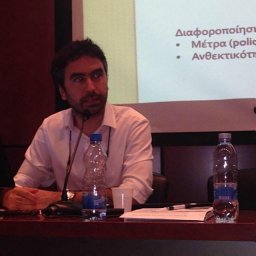 Angelos P. Kassianos合作论文数Department of Public Health and Primary Care, University of Cambridge;Department of Public Health and Primary Care, University of Cambridge41
 Andrew Gloster合作论文数Faculty of Behavioural Sciences and Psychology, University of Lucerne39
 Marios Constantinou合作论文数Center for Cognitive Behavioral Psychology37
 Georgia Panayiotou合作论文数University of Cyprus27
 Vasilis Vasiliou合作论文数Department of Ophthalmology and Visual Science, Yale School of Medicine, Yale University25
 Pinelopi Konstantinou合作论文数18
 Louise Mchugh合作论文数Department of Psychology, Swansea University17
 Michalis Michaelides合作论文数16
 David Dias Neto合作论文数Faculdade de Psicologia, Universidade de Lisboa;The School of Health and Related Research, University of Sheffield15
 Savvas S. Papacostas合作论文数Epilepsy and Behavioral Neurology Clinic, The Cyprus Institute of Neurology & Genetics;Medical School, University of Nicosia;Cyprus School of Molecular Medicine15
 Orestis Kasinopoulos合作论文数14
 Rhonda M Merwin合作论文数Department of Psychiatry & Behavioral Sciences, School of Medicine, Duke University14
 Christiana Th. Nicolaou合作论文数14
 Margarita Kapsou合作论文数13
 Stefan Hofer合作论文数Royal College of Surgeons in Ireland, University of Innsbruck11
 Ana Nunes da Silva合作论文数10
 Karademas Evangelos C合作论文数Dept Psychol, Univ Crete10
 Javier Alvarez-Galvez合作论文数Department of Social Policy, Universidad Loyola Andalucía10
 Giovambattista Presti合作论文数10
 Megan Kelly合作论文数Warren Alpert Medical School, Brown University10Maria Koushiou合作论文数Univ Nicosia9Jelena Lubenko合作论文数9
 Demetris Lamnisos合作论文数1 Cyprus International Institute for Environmental &Public Health in association with Harvard School of Public Health, Cyprus University of Technology;1 Cyprus International Institute for Environmental & Public Health, Cyprus University of Technology9
 Francisco J Ruiz合作论文数9
 Sonsoles Valdivia-Salas合作论文数9
 Adriana Baban合作论文数9
 Jean-Louis Monestes合作论文数9
 Francisco Montesinos合作论文数Asociación Española9Marisa Paez Blarrina合作论文数8
 Marianna Zacharia合作论文数8Bartosz Kleszcz合作论文数8
 Christiana Karashiali合作论文数8
 David Gosar合作论文数8
 A. Christodoulou合作论文数Corresponding author.8
 Dorottya Ori合作论文数Vadaskert Child & Adolescent Psychiat Hosp8
 Lappalainen Raimo合作论文数University of Jyväskylä8
 Tom Van Daele合作论文数University of Leuven8
 Wai Tong Chien (錢惠堂)合作论文数Asia-Pacific Genomic and Genetic Nursing Centre, The Nethersole School of Nursing, Faculty of Medicine, The Chinese University of Hong Kong8
 Ho Yu Cheng合作论文数8m stavrinaki合作论文数7Victoria J. Block合作论文数7
 Christina Loizou合作论文数7
 Jeanette Villanueva合作论文数7
 Charles Benoy合作论文数7
 Gokcen Aydın合作论文数Hasan Kalyoncu Univ7
 Yuen Yu Chong合作论文数Nethersole Sch Nursing, Chinese Univ Hong Kong7
 Valeria Squatrito合作论文数Kore Univ Enna, Kore Univ7
 Czamanski-Cohen Johanna合作论文数Center for Women's Health Studies and Promotion, Ben Gurion University of the Negev7
 Costas S. Constantinou合作论文数7




