One of today's most pressing societal challenges is building AI systems whose behaviour, or the behaviour it enables within communities of interacting human and artificial agents, aligns with relevant human values. To address this challenge, we propose a formal computational framework for representing human values that provides the foundational structures required for value-aware reasoning in multi-agent systems. To our knowledge, this has not been attempted as yet, which is surprising given the growing volume of research integrating human values into AI systems. Taking as our starting point the wealth of research in human values from the field of social psychology, we set out to provide a formal model which captures value relations, value importance, and computational semantics in order to support the evaluation of behaviour with respect to values and the development of value-aware decision-making mechanisms in agent-based systems. We demonstrate how the model supports the evaluation of behaviour in terms of value alignment across a real-world scenario, establishing a bridge between abstract human values and concrete agent behaviour. We illustrate how our model captures key concepts from social psychology research and outline a roadmap for incorporating values as first-class constructs in multi-agent systems.
In the diverse array of work investigating the nature of human values from psychology, philosophy and social sciences, there is a clear consensus that values guide behaviour. More recently, a recognition that values provide a means to engineer ethical AI has emerged. Indeed, Stuart Russell proposed shifting AI's focus away from simply ``intelligence'' towards intelligence ``provably aligned with human values''. This challenge -- the value alignment problem -- with others including an AI's learning of human values, aggregating individual values to groups, and designing computational mechanisms to reason over values, has energised a sustained research effort. Despite this, no formal, computational definition of values has yet been proposed. We address this through a formal conceptual framework rooted in the social sciences, that provides a foundation for the systematic, integrated and interdisciplinary investigation into how human values can support designing ethical AI.
Multiuser museum interactives are computer systems installed in museums or galleries that allow several visitors to interact together with digital representations of artefacts and information from the museum’s collection. WeCurate is such a system, that allows users to collaboratively create a virtual exhibition from a cultural image archive. It provides a synchronised image browser across multiple devices to enable a group of users to work together to curate a collection of images. WeCurate uses electronic institutions to coordinate and synchronise the interactions between individuals, and it relies on agreement technologies (such as argumentation and computational social choice) for collective decision making. This paper provides an overview of the WeCurate application, describes its underlying electronic institution, and presents a brief introduction to its collective decision making mechanism.
The rapid evolution in technology has found its way to introducing novelty in today’s live music performances. In this context, the development of Digital Musical Instruments (DMIs) has obtained increasing attention in recent years. In this paper, we present the development of a DMI called Handmonizer, an interactive artist-oriented harmonizer for musical performance adapted to the needs of a specific singer. A key component of our work is the combination of hand motion recognition and audio signal processing to obtain a smoother interaction. We describe the development methodology, but we also focus on our collaboration with the artist to conceptualize and then refine this tool until the development of the final product. At the end of this paper, we define an evaluation strategy, collecting feedback with a questionnaire addressed to the singer. Our aim in presenting this evaluation strategy is to help other engineers keen to develop cutting-edge technologies by working in partnership with artists. While results are not definitive, we believe that the chosen methodology could be of interest to other DMI researchers. Moreover, the modular nature of the Handmonizer makes it easily adaptable to further developments concerning the Internet of Sounds (IoS) and Networked Music Performances (NMP).
One of the major challenges we face with ethical AI today is developing computational systems whose reasoning and behaviour are provably aligned with human values. Human values, however, are notorious for being ambiguous, contradictory and ever-changing. In order to bridge this gap, and get us closer to the situation where we can formally reason about implementing values into AI, this paper presents a formal representation of values, grounded in the social sciences. We use this formal representation to articulate the key challenges for achieving value-aligned behaviour in multiagent systems (MAS) and a research roadmap for addressing them.
As artificial intelligence systems permeate society, it becomes clear that aligning the behaviour of these systems with the values of those involved and affected by them is needed. The value alignment problem is widely recognised yet needs addressing in a principled way. This paper investigates how such a principled approach regarding online institutions—a class of multiagent systems—can provide key insights on how the value alignment problem can be addressed in general.
This article describes and evaluates a new online AI-creativity course. The course is based around three near-state-of-the-art AI models combined into a pop song generating system. A fine-tuned GPT-2 model writes lyrics, Music-VAE composes musical scores and instrumentation and Diffsinger synthesises a singing voice. We explain the decisions made in designing the course which is based on Piagetian, constructivist 'learning-by-doing'. We present details of the five-week course design with learning objectives, technical concepts, and creative and technical activities. We explain how we overcame technical challenges to build a complete pop song generator system, consisting of Python scripts, pre-trained models, and Javascript code that runs in a dockerised Linux container via a web-based IDE. A quantitative analysis of student activity provides evidence on engagement and a benchmark for future improvements. A qualitative analysis of a workshop with experts validated the overall course design, it suggested the need for a stronger creative brief and ethical and legal content.
Human collaboration with systems within the Computational Creativity (CC) field is often restricted to shallow interactions, where the creative processes, of systems and humans alike, are carried out in isolation, without any (or little) intervention from the user, and without any discussion about how the unfolding decisions are taking place. Fruitful co-creation requires a sustained ongoing interaction that can include discussions of ideas, comparisons to previous/other works, incremental improvements and revisions, etc. For these interactions, communication is an intrinsic factor. This means giving a voice to CC systems and enabling two-way communication channels between them and their users so that they can: explain their processes and decisions, support their ideas so that these are given serious consideration by their creative collaborators, and learn from these discussions to further improve their creative processes. For this, we propose a set of design principles for CC systems that aim at supporting greater cocreation and collaboration with their human collaborators.
A major challenge in AI is designing autonomous systems that capture the values of stakeholders, and do so in such away that one can assess the extent to which that system’s behaviour is aligned to those values. In this paper we discuss our response to this challenge that is both practical and built on clear principles. Specifically, we propose eleven heuristics to organise the process of making values operational in the design of particular class of AI systems called online institutions. These are governed systems of interacting communities of human and autonomous artificial agents.
There is increasing interplay between humans and artificial intelligent (AI) entities in online environments. With the growing autonomy and sophistication of these AI systems, the hybrid communities which are formed start to behave like the more-familiar, human-only social systems. This sets up the challenge to find systematic ways to ensure reliable governance for these interactions just as we do in human communities. This article proposes a novel approach to build governance for hybrid communities using what we call Conscientious Design (CD). There are two key aspects to CD: 1) the introduction of value categories that guides the identification of relevant stakeholder values, coupled with 2) a tripartite model for online institutions that serves to describe the interactions of hybrid communities of humans and artificial entities in a way that is consistent with the values of all stakeholders.
Designing in the 21st century often necessitates high-level knowledge or use of computational systems. In contemporary art and design practice these computational systems are frequently embedded in products that have a physical presence in the real world. The cluster was specifically interested in two types of computational systems known as Cellular Automata Systems and Multi-Agent Systems and how they could be used in design. Through the activities of the cluster a team of experts from a range of different disciplines, who had not worked together before, came together in order to design and specify a series of artefacts based around the use of computational simulation. The main aim of the cluster project was to form a new research community focused on simulation and digital art and design. Many members of the cluster gave their time freely to argue and consider the best way to build the Net Work prototype.
Creative computing is an approach to computing education which emphasises the creation of interactive audiovisual software and an art-school influenced pedagogy. Given this emphasis on Dewey's "learning by doing", we set out to investigate the processes students use to develop their programs. We refer to these processes as the students' 'coding behaviour', and we expect that understanding it will provide us with valuable information about how students learn in our creative computing classes. As existing metrics were not sufficient, we introduce a new set of quantitative metrics to describe coding behaviours. The metrics consider factors such as students' vocabulary use and development, how fast and how much they alter the functionality of code over time and how they iterate on their code through text insert and delete operations. Many of our lessons involve providing students with demonstrator code which they use as a base for the development of their programs, so we use demo code as an entry point to our dataset. We look at programs students have written through developing the demo code in a dataset of over 16,000 programs. We clustered the demo code using the set of descriptive metrics. This lead to a set of clusters containing programs which are associated with distinct coding behaviours. Four was the ideal number of clusters for cluster density and separation. We found that the clusters had distinct behaviour patterns, that they were associated with different instructors and that they contained demo programs with different lengths.
Machines incorporating techniques from artificial intelligence and machine learning can work with human users on a moment-to-moment, real-time basis to generate creative outcomes, performances and artefacts. We define such systems collaborative, creative AI systems, and in this article, consider the theoretical and practical considerations needed for their design so as to support improvisation, performance and co-creation through real-time, sustained, moment-to-moment interaction. We begin by providing an overview of creative AI systems, examining strengths, opportunities and criticisms in order to draw out the key considerations when designing AI for human creative collaboration. We argue that the artistic goals and creative process should be first and foremost in any design. We then draw from a range of research that looks at human collaboration and teamwork, to examine features that support trust, cooperation, shared awareness and a shared information space. We highlight the importance of understanding the scope and perception of two-way communication between human and machine agents in order to support reflection on conflict, error, evaluation and flow. We conclude with a summary of the range of design challenges for building such systems in provoking, challenging and enhancing human creative activity through their creative agency.
This chapter provides a historical perspective on the concept of creativity and its relationship to the development of education theory during the fi rst half of the twentieth century.In the early twentieth century, creativity had a very specifi c meaning, which expanded in the mid-to late twentieth century into a more general, and in our view less useful, meaning.These two perspectives are linked to two confl icting educational theories, represented by Edward Lee Thorndike and John Dewey.Dewey described learning as a natural part of being an inquiring human being in a social and physical world, whereas Thorndike's view was more reductionist, based on stimulus-response connections.The Thorndike's theory gained prominence and still dominates today, over the Deweyan theory, due in part to the ease with which it can be experimentally tested.Ideas are developed into a two-part manifesto to inform teaching practice and the development of education technology.The fi rst part delineates the conditions for creative feedback in social learning and encapsulates a Deweyan educational approach.The second part describes the characteristics of education technology that can be used to experiment with creative feedback and social learning, and establishes how we can begin to validate experimentally the Deweyan theory of education.Interactive task learning considers the challenge of interactively training bots to carry out a task.This chapter is most relevant to medium-term and future tasks for bots within a social context involving humans and bots, and may offer subjective or dynamic evaluation criteria.Bot instructors working with these types of tasks may benefi t from considering the complexity and nuances of creative feedback.
Collaboration is built on trust, and establishing trust with a creative Artificial Intelligence is difficult when the decision process or internal state driving its behaviour isn't exposed. When human musicians improvise together, a number of extra-musical cues are used to augment musical communication and expose mental or emotional states which affect musical decisions and the effectiveness of the collaboration. We developed a collaborative improvising AI drummer that communicates its confidence through an emoticon-based visualisation. The AI was trained on musical performance data, as well as real-time skin conductance, of musicians improvising with professional drummers, exposing both musical and extra-musical cues to inform its generative process. Uni- and bi-directional extra-musical communication with real and false values were tested by experienced improvising musicians. Each condition was evaluated using the FSS-2 questionnaire, as a proxy for musical engagement. The results show a positive correlation between extra-musical communication of machine internal state and human musical engagement.
This chapter provides a historical perspective on the concept of creativity and its relationship to the development of education theory during the fi rst half of the twentieth century. In the early twentieth century, creativity had a very specifi c meaning, which expanded in the midto late twentieth century into a more general, and in our view less useful, meaning. These two perspectives are linked to two confl icting educational theories, represented by Edward Lee Thorndike and John Dewey. Dewey described learning as a natural part of being an inquiring human being in a social and physical world, whereas Thorndike’s view was more reductionist, based on stimulus–response connections. The Thorndike’s theory gained prominence and still dominates today, over the Deweyan theory, due in part to the ease with which it can be experimentally tested. Ideas are developed into a two-part manifesto to inform teaching practice and the development of education technology. The fi rst part delineates the conditions for creative feedback in social learning and encapsulates a Deweyan educational approach. The second part describes the characteristics of education technology that can be used to experiment with creative feedback and social learning, and establishes how we can begin to validate experimentally the Deweyan theory of education. Interactive task learning considers the challenge of interactively training bots to carry out a task. This chapter is most relevant to medium-term and future tasks for bots within a social context involving humans and bots, and may offer subjective or dynamic evaluation criteria. Bot instructors working with these types of tasks may benefi t from considering the complexity and nuances of creative feedback. History of Creativity and the Education Wars Dewey introduced the concept of “creative intelligence” (Dewey et al. 1917) early in the twentieth century. His use of “creative” in this expression dates
In this paper, we present an analysis of feedback as it occurs in classroom-based and technology supported music instrument learning. Feedback is key to learning in music education, and we have developed technology based on ideas from social media and audio annotation which aims to make feedback more effective. The analysis here aims to enhance our understanding of technology-mediated feedback. The result of this analysis is three ontologies describing feedback and feedback systems. First, we developed the \emph{teacher's ontology} using a qualitative, observational approach to describe the types of feedback that music instrument tutors give to their students. We used this ontology to inform the design of an online music annotation platform for music students. Second, we developed the \emph{grounded ontology} using a grounded theory approach, based on 2,000 annotations made by students and tutors using the annotation platform. We compare the grounded and teacher's ontologies by examining structural, semantic and expressive features. Through this comparison, we find that the grounded ontology includes elements of the teacher's ontology as well as elements relating to practical and social aspects of the annotation platform, while the teacher's ontology contains more domain knowledge. The third ontology is a formalisation of the transactional capabilities of the platform, and we refer to it as the \emph{platform ontology}. We present it using the OWL language, and we show how this allows us to develop several practical use cases, including the use of semantic web capabilities in music education contexts.
To speak comfortably of the machine artist (as outlined in the call for papers for this Special Issue) makes key assumptions about what it is to be an artist. It assumes, for instance, that the experience of living as an artist, which includes the socialisation, hard work, single-mindedness, and focused energy of creative activity, is incidental rather than essential since these aspects are not comfortably applicable to machines. Instead, it supposes that what is essential is the artistic product, and it is the similarity of human and machine products that makes it possible to speak of machine artists. This definition of art in terms of products is supported by modern psychological theories of creativity, defined as the generation of novel ideas which give rise to valuable products. These ideas take place in the mind or brain, regarded as a closed system within whose workings the secret of creativity will eventually be revealed. This is the framework of what is widely referred to as “cognitivism”. This definition in terms of novel ideas and valuable products has been widely assumed by artificial intelligence (AI) and computational creativity (CC), and this has been backed up through a particular version of the Turing Test. In this, a machine can be said to be a creative artist if its products cannot be distinguished from human art. However, there is another psychological view of creativity, that of John Dewey, in which a lived experience of inquiry and focus is essential to being creative. In this theory, creativity is a function of the whole person interacting with the world, rather than originating in the brain. This makes creativity a Process rather than a Cognitivist framework. Of course, the brain is crucial in a Process theory, but as part of an open system which includes both body and environment. Developments in “machine art” have been seen as spectacular and are widely publicised. But there may be a danger that these will distract from what we take to be the most exciting prospect of all. This is the contribution of computer technology to stimulate, challenge, and provoke artistic practice of all forms.
 Michael Luck合作论文数University of Sussex71
 Pablo Noriega B.V.合作论文数Consejo Superior de Investigaciones Científicas, Intitut d'Investigació en Intel·ligència Artificial18
 Carles Sierra合作论文数Artificial Intelligence Research Institute, Spanish National Research Council;Western Sydney University15
 Matthew Yee-King合作论文数Goldsmiths College13
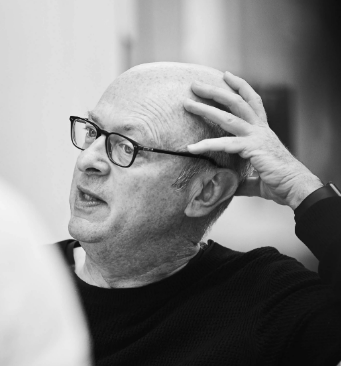 Jon McCormack合作论文数Department of Human-Centred Computing, Faculty of Information Technology, Monash University12
 Nardine Osman合作论文数Artificial Intelligence Research Institute (IIIA-CSIC), Barcelona, Catalonia, Spain12
 Jane Prophet合作论文数Slade School of Art12
 Harko Verhagen合作论文数DSV12Paul Howells合作论文数11
 Julian Padget合作论文数Department of Computer Science, University of Bath10
 Roberto Confalonieri合作论文数Joint Research Centre of the European Commission;AGRIFISH Unit;AGRIFISH Unit, Joint Research Centre of the European Commission8
 Christophe Rhodes合作论文数Department of Computing;Goldsmiths, University of London;Department of Computing|Goldsmiths, University of London8Katina Hazelden合作论文数8
 Dave De Jonge合作论文数IIIA-CSIC7
 Leila Amgoud合作论文数Centre National de la Recherche Scientifique6
 Henri Prade合作论文数CNRS6Arthur Still合作论文数6
 Ronald Ashri合作论文数OpenDialog AI6
 Maria Teresa Llano合作论文数School of Mathematical and Computer Science, Heriot-Watt University5Neil D. Theise合作论文数Department of Pathology, Grossman School of Medicine, New York University4
 Juan A. Rodríguez-Aguilar合作论文数Department of Multiagent Systems, Artificial Intelligence Research Institute, Spanish National Research Council4Fabiola López Y López合作论文数Computer Science Faculty at the Benemérita Universidad Autónoma de Puebla4Steve Munroe合作论文数IBM UK4
 Toby Gifford合作论文数3Andreu Grimalt-Reynes合作论文数3
 Harry Brenton合作论文数3
 Chris Preist合作论文数University of Bristol3Mick Grierson合作论文数Goldsmiths, University of London3
 Mark Sandler合作论文数School of Electronic Engineering and Computer Science, Queen Mary University of London3
 David Kinny合作论文数Intelligent Agent Laboratory
Department of Computer Science
The University of Melbourne3
David Kinny合作论文数Intelligent Agent Laboratory
Department of Computer Science
The University of Melbourne3 Jon Bird合作论文数Dept. of Computing
The Open University3
Jon Bird合作论文数Dept. of Computing
The Open University3 Rob Saunders合作论文数Leiden Institute for Advanced Computer Science, Leiden University3
 Marco Gillies合作论文数Department of Computing, Goldsmiths, University of London;Teaching and Learning Innovation Centre, Goldsmiths, University of London3
 John Eacott合作论文数3
 F. Ghedini合作论文数Sony Comp Sci Lab, 6 Rue Amyot, F-75005 Paris, France2Patrick Hutchings合作论文数Monash Univ, SensiLab, Fac Informat Technol, Caulfield, Australia2
 Michael A. Casey合作论文数Department of Music, Dartmouth College/Department of Cognitive Science, Dartmouth College/Department of Computer Science, Dartmouth College2
 Nathan Griffiths合作论文数Department of Computer Science, Faculty of Science, Engineering and Medicine, The University of Warwick2
 Andrew R. Brown合作论文数Synopsys Inc.2
 Michael Schroeder合作论文数Biotechnology Center of the TU Dresden (BIOTEC)2Ingo Roeder合作论文数Goldsmiths, University of London2
 Michael Fisher合作论文数Department of Computer Science, The University of Manchester;University of Liverpool2
 Sara Montagna合作论文数Alma Mater Studiorum---, Università di Bologna2
 Ben Fields合作论文数Musicmetric (Semetric Ltd.),2
 Mohammad Majid Al-Rifaie合作论文数Dept Comp, Goldsmiths Univ London2Tim Crawford合作论文数Centre for Cognition, Computation and Culture
Goldsmiths College
University of London2
Mohammad Majid Al-Rifaie合作论文数Dept Comp, Goldsmiths Univ London2Tim Crawford合作论文数Centre for Cognition, Computation and Culture
Goldsmiths College
University of London2 Michael Wooldridge合作论文数Department of Computer Science, University of Oxford;Hertford College, University of Oxford2




