A heated debate exists on whether traumatic memories can be dissociated or repressed. One way in which researchers have attempted to prove the existence of dissociative amnesia or repressed memory is to examine whether claims of amnesia for traumatic events are associated with specific neural markers. Here, we will argue that such neuroscientific examinations do not tell us whether traumatic memories can be unconsciously repressed or dissociated from consciousness, respectively. We discuss neuroscientific studies on dissociative amnesia and repressed memory and show that there are no reliable biological markers for dissociative amnesia and that the alleged involved brain areas are heterogenous among studies. Furthermore, we will demonstrate that it is unclear whether these studies truly involved patients with dissociative amnesia and that alternative explanations of dissociative amnesia were often not ruled out (e.g. malingering, organic amnesia). Moreover, we will make the case that the discussed patients in the studies do not meet the DSM‐5 criteria for dissociative amnesia. Taken together, neuroscientific research into dissociative amnesia does not present a convincing case for a biological basis of the purported memory loss.
Objective: The present study set out to investigate whether false memories for pictures exhibit priming effects in older adult controls (OACs) and people with early onset Alzheimer's disease (AD). We conducted two studies to examine whether false memories for pictures had a priming effect on a perceptual closure task (PCT). Method: In Experiment 1, OACs and people with early onset AD were presented with pictorial versions of the Deese/Rodiger-McDermott lists and took part in a recognition task. This followed with a PCT, where both groups were shown degraded pictures that became clearer over time and participants had to identify the picture as quickly as possible. In Experiment 2, we manipulated the modality-verbal versus pictorial in both the study phase and PCT phase. Results: Experiment 1 results indicated false memories for pictures did not serve as effective primes in the PCT. Experiment 2 results revealed pictorial false memories primed the PCT significantly slower than pictorial true memories in the visual PCT task, but the reverse finding was shown for the verbal PCT task. Finally, verbal false memories primed the verbal PCT reliably faster than true memories. Conclusions: Our findings show when solving pictorial problems, for both older adults and people with AD false memories may not activate the appropriate representation in memory for solving a pictorial problems whereas actually presented items do.
When memories of past rewarding experiences are distorted, are relevant decision-making preferences impacted? Although recent research has demonstrated the important role of episodic memory in value-based decision making, very few have examined the role of false memory in guiding novel decision making. The current study combined the pictorial Deese/Roediger-McDermott false memory paradigm with a reward learning task, where participants learned that items from some related lists gained reward and items from other lists led to no reward. Later, participants' memories and decision-making preferences were tested. With three experiments conducted in three countries, we successfully created false memories of rewarding experiences in which participants falsely remembered seeing a nonpresented lure picture bring them reward thereby confirming our constructive association hypothesis. Such false memories led participants to prefer the lure pictures and respond faster in a follow-up decision-making task, and the more false memories they formed, the higher preferences for the lure items they displayed (Experiment 2). Finally, results were replicated with or without a memory test before the decision-making task, showing that the impact of false memory on decision making was not cued by a memory test (Experiment 3). Our data suggest that the reconstructive nature of memory enables individuals to create new memory episodes to guide decision making in novel situations. (PsycInfo Database Record (c) 2024 APA, all rights reserved).
Ross argued that false memory researchers misunderstand the concepts of repression and dissociation, as well as the writings of Freud. In this commentary, we show that Ross is wrong. He oversimplifies and misrepresents the literature on repressed and false memory. We rebut Ross by showing the fallacies underlying his arguments. For example, we adduce evidence showing that the notions of dissociation or repression are unnecessary to explain how people may forget and then remember childhood sexual abuse, stressing that abuse survivors may reinterpret childhood events later in life. Also, Ross overlooks previous critiques concerning dissociation. Finally, we will demonstrate that Ross misrepresents work by Freud and Loftus in the area of repressed and false memory. His article confuses, not clarifies, an already heated debate on the existence of repressed memory.
Abstract Unlike the traditional view of memory development that dominated researchers' agendas throughout the 20th century, the current chapter is focused on research that has defined theoretical advances in the early 21st century. The chapter begins with a brief review of the earlier 20th‐century views about memory development and then turns to three additional issues that have enjoyed a renewed interest early in the 21st century. The first issue changes the theoretical focus from questions about the structure of memory and its development to one about the (adaptive) function of memory. What the research shows is that at least some of the functional attributes of memory include the extraction of meaning, binding information into regular patterns, and using these patterns to predict future outcomes. The second issue addressed in this chapter concerns how these adaptive memory systems develop. To answer this question, I review recent research that has examined correlated changes in neurobiological and cognitive functioning. The final issue concerns whether we share these adaptive memory developments with other animals. The answer to this is found by reviewing the comparative memory development literature. Overall, this adaptive view of memory suggests that it develops not simply to remember one's past, but to understand the present, and anticipate the future.
In legal cases, testimonies can become contaminated because of an amalgam of external and internal influences on memory. It is well-established that external influences (e.g., suggestive interviews) can hurt memory. However, less focus has been placed on the impact of internal influences (e.g., lying) on memory. In the current review, we show that the available evidence suggests that both external and internal influences exert similar effects on memory. That is, we review studies showing that suggesting non-occurrences and suggesting non-experiences can lead to omission errors and false memories, respectively. Likewise, these memory effects are also observed when focusing on internal influences. That is, false denials, feigning amnesia and fabrication have been shown to affect memory in terms of forgetting (i.e., omissions) and false memories (i.e., commissions). Also, we show that both external and internal influences can lead to changes in the belief that an event occurred. We argue that in legal cases, triers of fact should concentrate on whether both types of influences might have affected testimonial accuracy in witnesses, victims, and suspects.
Psychologists are sometimes asked to provide their expert opinion in court on whether memories of victims, witnesses, or suspects are reliable or not. In this article, we will discuss what expert witnesses can reliably say about memory in the legal arena. We argue that before research on memory can be discussed in legal cases, this research should ideally meet the following three conditions: replicability, generalizability, and practical relevance. Using a fictitious false memory case, we offer a guide to how psychologists should critically examine whether a particular segment of memory research is in line with these three conditions. We show that the area of false memory broadly fits these conditions but that for areas such as eyewitness identification and false confessions, there is limited discussion on which effect sizes are of interest in legal cases. We propose several recommendations that expert witnesses can use when they evaluate the validity of statements such as working with scenarios (e.g., statements are valid or not). Being transparent about the limits and strengths of memory research will assist triers of fact in their decision-making process.
The current experiment examined the effect of forewarning on children's (11 to 12 years of age) and adults' spontaneous false memory creation by presenting participants with semantically related word lists that are often used to elicit false memories (i.e., Deese-Roediger-McDermott (DRM) paradigm). The forewarning consisted of an explanation of the false memory effect and a demonstration of a DRM word list and an associated recognition task. It was hypothesized that children would have fewer false memories than adults using the DRM paradigm and that forewarning would reduce the number of critical lures remembered by children and adults. We found a developmental reversal effect in that children had lower false memory levels than adults and that forewarning reduced, but did not eliminate, false memory propensity in both children and adults. Our findings further indicated that forewarning was more effective in reducing false memory levels in 11- to 12-year-old children than in adults. Finally, analyses revealed that participants were more accurate when they received a forewarning as compared to when they did not.
Processing information according to its survival value improves memory retention. We used mass-testing across three experiments to examine whether the survival processing advantage could be extended to crime-related contexts when adopting both offender’s (Experiment 1 and 2) and victim’s (Experiment 3) perspectives. Interestingly, crime-related scenarios produced the lowest memory retention in Experiments 2 and 3, indicating no mnemonic benefit resulting from crime-related processing. Furthermore, in Experiments 1 and 2, we failed to replicate the standard survival processing effect, while in Experiment 3 the superior survival memory retention emerged in comparison with the standard control conditions (i.e., moving and pleasantness). Overall, our experiments showed that crime-related contexts did not lead to superior memory retention. Moreover, although we detected some failures to replicate the survival processing effect, this evidence is not sufficiently compelling to argue that there was a general absence of the survival processing advantage.
As long-standing Editors of Memory occasionally there are areas, usually controversial ones, to which, in our judgement, the journal should be making a contribution. After some consideration we usually back off and let the excellent contributions to Memory speak for themselves. Recently, however, a view has been presented to the community of memory researchers and to those who rely on an understanding of memory in their professional activities, that there exists (1) a basic agreement about the nature of memory and (2) this agreement’s central tenet is that memory is “essentially reliable” (e.g., Brewin et al., 2020; Diamond et al., 2020). In passing, we note that this view is based on a very highly selective sampling of research findings and theory in the science of memory. Nonetheless, there is some truth to the first of these propositions, although agreement is highly nuanced (as the papers to follow show). The second proposition represents, as we shall see, an oversimplification of what is a highly complex mental process. This is something that not only memory researchers have long been aware of but so too have writers, artists, philosophers, and many other groups, for literally hundreds of years. This view is neatly summed up by the Nobel laureate Alexievich in her outstanding book on the memories, many deeply traumatic, of Russian women soldiers from the Great War (2nd World War): “...memories are neither history nor literature...” (Alexievich, 1985/2017, p. 19). As we shall see, they are mental or psychological representations with their own peculiar properties to which simple binary notions of “true” or “false” do not apply. In order to provide a scientifically informed counterpoint, we invited a range of the world’s leading memory researchers to give us their view, in summary form, of the nature of human memory. Their views are presented in the papers that follow. Yet, it should be noted that not all the leading memory researchers we invited contributed, so there may well be some researchers who have other theories about the nature of human memory but who are not represented here. We also wish readers to note that the invited contributions to On the Nature of Human Memory were subject to peer review by us the Editors-in-Chief of the journal. For complete transparency, this was explained to the authors prior to submission. We are positively disposed to consider any views researchers feel have not been represented. However, many of the leading theorists did contribute, and in our view as the Editors of Memory, they provide a broad and comprehensive view of the nature of human memory.
Abstract In this chapter we explore the development of adaptive memory during childhood. The survival processing advantage is said to enhance learning and memory because evolution has led to the prioritization of the retention of fitness-relevant information. However, various studies have demonstrated that survival processing involves elaborate, distinctive, relational, and self-referential encoding, which can predict the memorial advantage of survival processing and other adaptive memory benefits. Furthermore, research suggests that these effects are consistent across development, indicating that fitness-relevant survival processing is observable even very early in children’s memory. Throughout the chapter we examine how fitness-relevant information processing engages multiple cognitive processes simultaneously, leading to mnemonic advantages. These processes begin to develop early in childhood and can be observed in various contexts. We review the position that although our current memory system is the result of evolutionary pressures, it is not essential for an evolutionary hypothesis of memory to consider the survival processing advantage as a distinct component of adaptive memory that remains invariant across development. We conclude by emphasizing the need for further scientific investigation to understand the functional properties of memory, including both the role of proximate mechanisms in adaptive memory in general and survival processing specifically. Although research in this area has started, there is still much to be discovered about the development of these mechanisms and their relevance to changes in our adaptive memory systems.
 Henry Otgaar合作论文数Faculty of Psychology and Neuroscience, Maastricht University75
 Lauren Knott合作论文数Department of Psychology, Lancaster University25
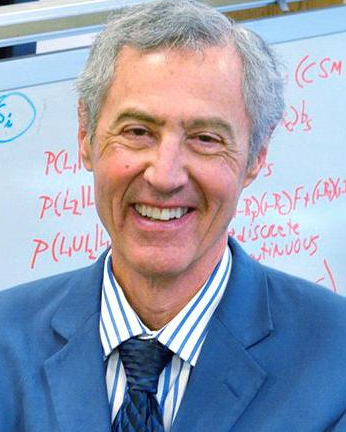 Charles Brainerd合作论文数College of Human Ecology, Cornell University;University of Kent;University of Leicester;University of North Florida25
 Jianqin Wang (王俭勤)合作论文数Department of Psychology, School of Social Development and Public Policy, Fudan University20
 Mary L Courage合作论文数Memorial University St. John’s20
 Martin A Conway合作论文数Institute of Psychological Sciences, University of Leeds20
 Sarah R Garner合作论文数14
 Tom Smeets合作论文数Department of Experimental Psychology, Maastricht University14Lynn Steven Jay合作论文数12
 Harald Merckelbach合作论文数Faculty of Psychology and Neuroscience, Maastricht University12
 Valerie Reyna合作论文数College of Human Ecology, Cornell University;Center for Behavioral Economics and Decision Research, Cornell University;Human Neuroscience Institute, Cornell University12
 Olivier Dodier合作论文数APSY-v Laboratory, Université de Nîmes10
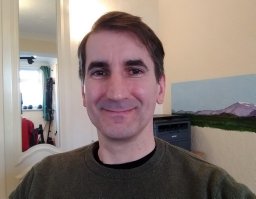 Lawrence Patihis合作论文数Department of Psychology and Social Behavior,10
 Marina Wimmer合作论文数Center for Research in Human Development, Lancaster University10
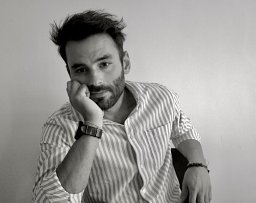 Ivan Mangiulli合作论文数Katholieke Univ Leuven, Leuven Inst Criminol, Leuven, Belgium9Samantha Wilkinson合作论文数8Stephen Dewhurst合作论文数8
 Linden Ball合作论文数Faculty of Science and Technology, The University of Central Lancashire;UCLan Research Centre for Brain and Behaviour, School of Psychology and Computer Science, The University of Central Lancashire8
 Emma Threadgold合作论文数7Johannes Kingma合作论文数7
 Elizabeth F. Loftus合作论文数Department of Criminology, Law, and Society, School of Social Ecology, University of California, Irvine;School of Law, University of California, Irvine7
 Dante Cicchetti合作论文数Institute of Child Development, College of Education and Human Development, University of Minnesota;Institute of Translational Research for Children’s Mental Health, University of Minnesota;Department of Psychiatry, University of Minnesota;Department of Psychology, University of Minnesota7
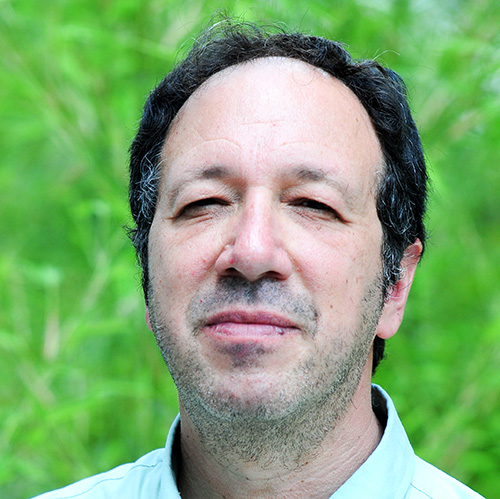 Scott O. Lilienfeld合作论文数Department of Psychology, College of Arts and Sciences, Emory University6
 Peter Muris合作论文数Department of Clinical Psychological Science, Maastricht University6
 Nathalie Brackmann合作论文数Univ Zurich, Univ Hosp Zurich5
 Sheree L Toth合作论文数Hope Family Center;University of Rochester;Hope Family Center, University of Rochester5Marko Jelicic合作论文数5F. M. Rabinowitz合作论文数5
 Shazia Akhtar合作论文数5
 R.J.C. (Rafaele) Huntjens合作论文数Department of Clinical Psychology and Experimental Psychopatholo, Faculty of Behavioural and Social Sciences, University of Groningen;Graduate School Behavioural and Social Sciences, University of Groningen5Elisa Krackow合作论文数5Maria V. Hellenthal合作论文数4
 Maarten J.V. Peters合作论文数4Robert Pasnak合作论文数Department of Psychology, George Mason University4Datin Shah合作论文数3
 Chu Zhou (周楚)合作论文数School of Social Development and Public Policy, Fudan University3Corine De Ruiter合作论文数3
 Alain Desrochers合作论文数3F. Michael Rabinowitz合作论文数3
 Joyce Van Beers合作论文数2
 Mara Georgiana Moldoveanu合作论文数2Katrina Blease合作论文数2
 Charlotte A. Bucken合作论文数Forens Psychol Sect, Maastricht Univ2
 Sanne T. L. Houben合作论文数2Marche Tammy A合作论文数2
 Linsey Raymaekers合作论文数2
 Steffen Moritz合作论文数Zentrum für Psychosoziale Medizin, University Hospital Hamburg-Eppendorf;Klinik und Poliklinik für Psychiatrie und Psychotherapie, University Hospital Hamburg-Eppendorf2
 Gail S Goodman合作论文数Department of Psychology, University of California, Davis2Jill Thijssen合作论文数2




