In the post-Apartheid era South Africa's universities have faced serious questions about the quality of their student learning in the face of near impossible challenges. The University of Cape Town, widely seen as the country's leading higher education institution, has shown remarkable resilience, however, in the range of initiatives it has launched to support and enhance student learning. These initiatives, designed with a common purpose, are of course intended to work together so that their effects might be compounded and realized in enhanced student learning outcomes. Drawing substantially on the power of compounding (which is itself redolent of the claim made by complexity theory that relations and emergence are crucial concepts), complexity theory offers unique insights into how and why things change - and also into how and why things remain largely the same or inexorably grind towards failure. The networked initiatives undertaken by the University of Cape Town constitute a case of learning refurbishment that is also well explained and understood in terms of complexity theory. This paper draws on concepts from complexity theory both to understand how learning might be enhanced in higher education institutions in severely straitened circumstances and to offer insights for education leaders and policy-makers in this domain.
Global flows of international students have diversified in recent years. As a result, the common association of this form of mobility with affluent members of the global middle class increasingly does not hold. This study focuses on one emergent student migration pattern that has been the subject of relatively little empirical research: that of African international students in China. The main aim is to establish how international student migration is experienced differentially by students positioned in their home societies in unequal ways, thereby moving beyond the notion that international student migration is a middle-class activity. Drawing on data from semi-structured interviews with 40 students from 14 African countries, we apply Bourdieu's theory of practice to examine the extent and nature of habitus transformation of students from a variety of social backgrounds. We show that differences in social background in this particular case led to distinct trajectories during the sojourn and in terms of post-study plans. Our study makes a theoretical contribution to the international student migration literature, arguing that the nature of transformation that took place among student migrants as a result of study was shaped by the nature of mobility, both spatial and social.
At almost every election, Americans are inclined to say that this is the most consequential election in American history. 2020 is no exception. However, what is particularly remarkable about the No...
In this intellectually impressive and carefully constructed book, Geroulanos has assembled a persuasively argued and informative series of narratives—or, ‘entangled microhistories’—that are concerned with the development of various critiques of the concept of transparency, and the illusory and oppressive claims/hopes associated with it (e.g. ‘the presumed transparency of the self’, the ‘fantasy’ of ‘epistemological transparency’, the ‘delusion’ of ‘transparency in ethics’, the ‘transparent society’ as ‘synonymous’ with homogenization and totalitarianism), in post-war France. This tracking of multiple attempts to dismantle transparency by a range of thinkers (including, amongst many others, Lacan, Sartre, Canguilhem, Lévi-Strauss, Merleau-Ponty, Lefort, Foucault, Lyotard and Derrida)—roughly, if such periodization is desired, between 1945 and 1985, although Lyotard’s dating of the 1929 international crisis as the earliest critique of the idea of transparency is also discussed—is undertaken with such brilliance and is so dazzlingly wide-ranging (science, anthropology, policing, education, social psychology, public health, ethnography, cinéma-vérité, cybernetics and politics—e.g. May ’68 and François Mitterrand’s presidency—are just some of the areas discussed) that this text should become indispensable reading for all those interested in French thought of the second half of the Twentieth century and its ongoing importance vis-à-vis resistance to—and disruption of—the constraints, coercions and violence(s) of modernity. It should also be read by those with an interest in experimental approaches to historical method/methodology (terms opted for by Geroulanos).
We defend in this paper the importance of redistributing power in the field of education development by enhancing the self-sustainability of education initiatives and minimizing their roots in dependency - these as pre-requisites for improving their sustainable development outcomes. We do this by considering an education development initiative run by the Barefoot College in India, and then developing an explanatory model based in complexity theory (as expounded by Edgar Morin) and in the capability approach (as developed principally by Amartya Sen and Martha Nussbaum). We conclude that such a redistribution of power would help to ensure that education is better connected to its development context, more relevant to the interests and needs of the community it serves, and its quality enhanced. More generally, we reinforce existing arguments - but from the perspective and imperative of sustainability - why it is in the interests of policy-makers to devolve power and to provide resources to such initiatives. Doing so would enhance governments' prospects of realizing their education and social development goals. The arrogation of power and resources towards the centre, an almost natural impulse in policy-making, is, in the end, counter-productive, and threatens sustainable education and social development.
This article critically examines the nature of changing modalities in international development and related research in education. The consequences of contemporary trends and trajectories in these domains are considered with particular reference to their conceptual and ethical implications. Drawing on contemporary social theory, comparative and international research in education, and research ethics, the analysis focuses on North-South research and development partnerships, conceptions of ‘best practice’ in the arenas of education and development, the emergence of large-scale social and educational research modalities, and the potential and limitations of ‘one size fits all’ ethical frameworks in the field.
If postmodernism is dead, what is it that we’re seeing the end of? Its ludic sensibilities, its playful affectations, its ironies? In the face of contemporary realities that have wiped the postmodern grins from our faces, its playfulness must be seen as something of a luxury. Postmodernism came to us because, in an era of modernity when we had available to us the wherewithal to make progress through human efficacy informed by reason and rationality, we still got Hitler, Stalin and Mao. So, we tried to lay the blame for them on Enlightenment rationality—which would inexorably be perverted by instrumentalism and subverted into the service of ethnic cleansing and final solutions. Yet if the horrors of the Holocaust, Stalinism, the Cultural Revolution, lost us our faith in the ‘grand narratives’ of an Enlightenment modernity, a new set of realities has jolted us out of our resignation in irony: climate change, unspeakable disparities in wealth, endless wars in Central Africa and in the Middle East, and waves of refugees whose lives have been destroyed. So, it’s a critical realism that is wanted now. Bhaskar’s (1975) been saying that for a while. One proposed successor to postmodernism is ‘transnationality as the contemporary cultural logic of neoliberal global capitalism’—a nice play on Fredric Jameson, but too caught up in the perspectives of elites—as if ours is a transnational, borderless world consequent on global capitalism. It might be for elites. For climate, economic and war refugees, the pressure to move is a matter of life or death, but the walls have just gone up higher. My own project in this has been in ethics: to stand on the shoulders of Zygmunt Bauman as he argued in Postmodern Ethics (Bauman, 1993) to defend an ‘ethics of integrity’ that would have traction across cultural contexts (Mason, 2005). My project has also been in epistemology—primarily in a defence of critical reason—and in the consequences of these moral and epistemological arguments for education (Mason, 2007). What we need in a renewed critical realism is a discourse of precariousness, of fragility: economic insecurity, a world where the richest 1% have as much wealth as the rest of the world combined, a world where increasing numbers of people are discarded as the ‘outcasts of modernity’ (Bauman, 2003). But perhaps the most significant implications for educational theory of the end of postmodernism lie in a focus on education for resourcefulness in the face of such precariousness. Such an education should, however, be about community resourcefulness even more than it is about the development of resourceful individuals. It needs accordingly also a focus on relationality, both in community, mindful of our connectedness as humans to one another, and in our inextricable connectedness to the natural environment which sustains us. And underneath this should be a renewed focus on a critical realism that might help us to get to a pretty good approximation of what’s true and what matters beyond the fun of postmodern irony. Because things could be far more critical now, in ways we might not yet even know.
Education governance has among its principal responsibilities initiating and sustaining positive change – whether at system, district or school level. The insights offered by complexity theory suggest a radical rethinking of some of the more traditional notions about how this might be achieved. This paper accordingly considers the challenge of sustainable change in education from the perspective of complexity theory. Complexity theory’s concept of emergence implies that, given a significant degree of complexity in a particular environment – whether an education system or a particular school – new properties and behaviours emerge that are not necessarily contained in the essence of the constituent elements, or easily able to be predicted from a knowledge of initial conditions. These concepts of emergent phenomena form a critical mass, associated with notions of lock-in, path dependence, and inertial momentum, contribute to a perspective on continuity and change that indicates what conditions might need to be in place for the emergence of sustainable, positive, system-wide change in education.
European Journal of EducationVolume 51, Issue 4 p. 437-440 Thought Piece Is Thorough Implementation of Policy Change in Education Actually Possible? What Complexity Theory Tells Us About Initiating and Sustaining Change Mark Mason, Corresponding Author Mark Mason mmason@eduhk.hk Mark Mason, The Education University of Hong Kong, Tai Po, New Territories, Hong Kong, mmason@eduhk.hk. Website: www.eduhk.hk/main/about-us/distinguished-members/experts-at-eduhk/?id=7Search for more papers by this author Mark Mason, Corresponding Author Mark Mason mmason@eduhk.hk Mark Mason, The Education University of Hong Kong, Tai Po, New Territories, Hong Kong, mmason@eduhk.hk. Website: www.eduhk.hk/main/about-us/distinguished-members/experts-at-eduhk/?id=7Search for more papers by this author First published: 06 October 2016 https://doi.org/10.1111/ejed.12193Citations: 5Read the full textAboutPDF ToolsRequest permissionExport citationAdd to favoritesTrack citation ShareShare Give accessShare full text accessShare full-text accessPlease review our Terms and Conditions of Use and check box below to share full-text version of article.I have read and accept the Wiley Online Library Terms and Conditions of UseShareable LinkUse the link below to share a full-text version of this article with your friends and colleagues. Learn more.Copy URL Share a linkShare onFacebookTwitterLinkedInRedditWechat Citing Literature Volume51, Issue4December 2016Pages 437-440 RelatedInformation
India is currently undertaking at national level a process of substantial educational reform intended to guarantee the right to education for every child. Ironically, however, in many cases India’s Right to Education Act (2009) may be depriving children of access to education. This chapter considers the response that a nonformal education project in India offers to balance this conflict between global and national interests on one hand and local needs on the other: the Barefoot College’s Solar Night Schools Program. An investigation involving site visits, interviews, and bibliographical research identified the importance for education of drawing on local knowledge and resources, in the context of local conditions, in the pursuit of the act’s goals of universal, equitable, and quality education for all.
This final chapter pulls together some themes from earlier chapters, and in a sense makes a comparison of comparisons. The earlier chapters have addressed a range of foci within a variety of paradigms. Using insights from the book, this final chapter begins with a discussion of models for comparative education research. It then makes some remarks about emphases, before concluding with comments about the insights than can be gained from comparative approaches and methods in educational research.
A great deal of comparative education research has focused on systems of education. Sometimes, however, this focus has been implicit rather than explicit, and the units of analysis have not always been clearly defined. This chapter begins by noting some prominent examples in which scholars have focused – or claimed to have focused – on systems of education. It then discusses methodological issues relating to the use of education systems as a unit of analysis in comparative research. It notes that some countries have multiple systems of education, and thus that research which focuses on systems can be intranational as well as cross-national.
 Bob Adamson合作论文数Department of Curriculum and Instruction, Hong Kong Institute of Education10
 Mark Bray (貝磊)合作论文数Faculty of Education, The University of Hong Kong8
 Ross Prentice合作论文数Public Health Sciences Division, Fred Hutchinson Cancer Center;School of Public Health, University of Washington5
 Dennis J. Encarnation合作论文数3JC GRIFFIN合作论文数2JE SANDERS合作论文数2Emilia Szekely (爱米)合作论文数2K Doney合作论文数2Rp Witherspoon合作论文数2Ra Clift合作论文数2
 Keith Michael Sullivan合作论文数Division of Hematologic Malignancies and Cellular Therapy, Department of Medicine, Duke University School of Medicine;Duke Cancer Institute, Duke University2H Kato合作论文数2
 Rainer Storb合作论文数Clinical Research Division, Fred Hutchinson Cancer Center;Division of Medical Oncology, School of Medicine, University of Washington2
 Frederick R. Appelbaum合作论文数Fred Hutchinson Cancer Research Center2Mary T. Stark合作论文数2
 Crain Soudien合作论文数School of Education, University of Cape Town2
 Don E. Williams合作论文数Texas Developmental Disabilities Program2Bernd K. Altmeyer合作论文数2C.D. Buckner合作论文数2
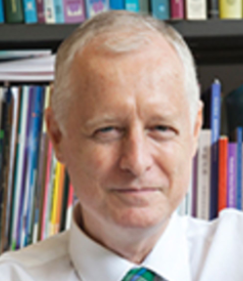 Mark Bray (貝 磊)合作论文数Faculty of Education, The University of Hong Kong2E.D. Thomas合作论文数2J Deeg合作论文数2B J Locke合作论文数1M Banaji合作论文数1tetsuo abo合作论文数1Allan Bird合作论文数1John N. Hawkins合作论文数1Gj Nishioka合作论文数1Masahiko Aoki合作论文数1Jeffy Mukora合作论文数1J A Hansen合作论文数1
 Lynn Mario Menezes de Souza合作论文数1
 Chris Shaw合作论文数1
 Benjamin Mulvey合作论文数Dept Int Educ, Educ Univ Hong Kong1P Stewart合作论文数1Paul Tarc合作论文数Fac Educ, Univ Western Ontario1Je Vansickels合作论文数1Shivali Tukdeo合作论文数1ken martin合作论文数1
 Annette Bamberger合作论文数Hebrew Univ Jerusalem1Colin William Evers合作论文数School of Education, Faculty of Arts, Design & Architecture, The University of New South Wales1
 Mary Dozier合作论文数Department of Psychological & Brain Sciences, University of Delaware;Department of Psychology, University of Delaware1Wang Chengbing合作论文数1
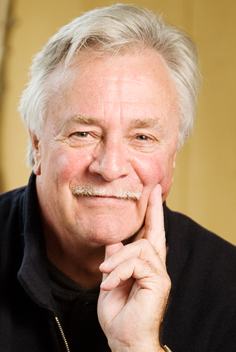 Michael A. Peters合作论文数Beijing Normal University;Faculty of Education, University of Illinois, Urbana-Champaign;University of Auckland1Peterson A V合作论文数1
 Jack W Singer合作论文数Elsomn S Floyd College of Medicine, Washington State University1
 Michael W Crossley合作论文数School of Education, University of Bristol1
 Simon Mcgrath合作论文数University of Nottingham1Tom Humphrey合作论文数1




