The South Eifel region is one of the few areas in Western Germany where Upper Triassic rocks are exposed, yet the palaeontological potential of the region is still poorly known. Here, we describe a new fossiliferous section in the upper part of the Arnstadt Formation (formerly called "Steinmergelkeuper"), dated to the upper Norian to possibly lower Rhaetian, in the district of Bitburg-Pr & uuml;m, Rhineland Palatinate. We identified two distinct bonebeds in a flooding cycle within the section, one at the erosive base of the cycle, informally called phytosaur bonebed, with vertebrate remains mixed with paleosol clasts, and a second bonebed, informally called fish bonebed, in the overlying, finely bedded lacustrine claystones. The phytosaur bonebed yielded chondrichthyan, actinopterygian and sarcopterygian fish remains, teeth and a possible osteoderm of a phytosaur with a tripartite dentition, a rhynchocephalan mandible fragment, and teeth of the pterosaur Eudimorphodon. We assume that the phytosaur bonebed was deposited during a high-energy flooding event, mixing autochthonous and transported faunal elements. The fish bonebed, in contrast, is largely dominated by remains of small actinopterygian fish, and probably documents a short-lived, low-diversity lake community. Our report represents the first systematic account of vertebrate fossils from the Arnstadt Formation of Rhineland-Palatinate, thus filling a major regional gap. Moreover, the pterosaur teeth described in the present paper are the oldest unequivocal remains of this group reported from Germany.
The hitherto oldest known mass mortality of clam shrimp is described from the Early Devonian (Emsian) of Luxembourg. This (almost) monospecific clam shrimp association allows for a much more comprehensive assessment and understanding of preservational and ontogenetic variation in a single taxon, Pseudestheria diensti (Gross, 1934). This suggests that other taxa originally described from the “classical” Willwerath locality, the type locality of P. diensti , are variants of the latter, and thus Pseudestheria subcircularis Raymond, 1946 and Palaeolimnadiopsis ? eifelensis Raymond, 1946 are synonymized here with P. diensti. A further clam shrimp taxon, for which we propose a new species, Palaeolimnadia stevenbeckeri n. sp., is found in the same stratum, but not in the mass mortality layer itself. The clam shrimp mass mortality is interpreted to reflect sudden destruction of the original habitat on a delta plain and subsequent transport and burial in a marginal marine low-energy setting. http://zoobank.org/0cfcb6a1-3fb7-4a1a-a1a4-609f8b1bc536
The Early Devonian plant fossil record provides evidence of large vegetation turnover events in addition to rapid morphological and anatomical changes among vascular plants. The Ardenno-Rhenish Massif has historically yielded a vast number of these plant fossils allowing us to obtain a nearly unparalleled snapshot of Early Devonian vegetation. Nonetheless, the interest for describing or redescribing fossil floras from this region has waned in recent years despite their inherent value to understand Early Devonian plant diversity dynamics. Here, we describe a newly collected macrofossil flora from the middle Emsian Schuttbourg Formation at Consthum Quarry (Luxembourg). Six different plant macrofossil taxa were identified, including Drepanophycus spinaeformis and Psilophyton cf. princeps, in addition to putative macroalgal and fungal remains. The flora also includes other equivocal specimens resembling Sawdonia, Huvenia and Zosterophyllum. The composition of the assemblage is extremely similar, at generic level, to older Pragian-early Emsian and coeval floras from nearby localities, which indicates that there was no major floral turnover until the latter part of the Emsian in this region. Taxonomic descriptions also highlight many of the underlying issues in identifying Early Devonian sterile specimens. Inconsistencies in plant fossil identifications from this region call for a thorough revision of Belgian and German floras that together could provide a high-resolution picture of plant diversity changes in the Early Devonian.
A third specimen of the Silurian sea scorpion Eysyslopterus patteni from the Silurian of Saaremaa/Estonia is briefly described and figured. It mainly comprises a well-preserved carapace and an associated metastoma. The latter was hitherto unknown in this genus. The metastoma of the genus Eysyslopterus is vase-shaped and shows great similarity to that of Parahughmilleria spp., further supporting its attribution to the family Adelophthalmidae.
We examined the gut contents of a fossil giant pelobatid tadpole from the late Oligocene of Enspel, Germany, and discovered that it contains mainly pollen from spruce (Picea) but also pollen from pine (Pinus), beech (Fagus), and elm (Ulmus). Pollen in the gut of the fossil tadpole and other plant fossil records from this locality suggest that the regional vegetation around Enspel was characterised by mixed conifer and broadleaved forests with a prominent deciduous angiosperm component. Palaeoclimatic estimations indicate that the area endured a fully humid warm temperate climate with a hot to warm summer and a distinct temperature difference between seasons. The pollination period of potential modern analogues of the plant taxa discovered in the gut of the fossil tadpole hints that it was feeding on pollen floating on the water surface of the ancient Enspel Lake during late spring or earliest summer. Comparable analyses from the guts of extant pelobatid tadpoles have shown a broad spectrum of food remains, including whole/or parts of algae, protists, protozoans, macrophytes, rotifers, crustaceans, and pollen. It seems that living pelobatid tadpoles are indiscriminate and opportunistic feeders able to adapt and change their feeding behaviour according to the available food source. The time of origin and evolution of pollen feeding in tadpoles is obscure. Our discovery indicates that pelobatid tadpoles were already feeding on pollen in the late Oligocene, and the amount and purity of pollen filling the gut suggests intentional surface feeding.
Three collections of clam shrimp from the Lower Devonian (upper lower Emsian) Klerf Formation of Willwerath and Waxweiler in the western Eifel Mountains are herein studied. Four discernible morphotypes are present in the Willwerath assemblage. These morphotypes correspond to the previously described species from this locality: Pseudestheria diensti (Gross), Pseudestheria subcircularis Raymond, and Palaeolimnadiopsis ? eifelensis Raymond. The fourth morphotype also closely corresponds to Pseudestheria diensti , but is slightly different in outline. Asmussia willweratica (Novozhilov) is an objective synonym of Pseudestheria subcircularis. In the Willwerath clam shrimp sample, it is difficult to disentangle taphonomic/preservational versus ontogenetic/sexual variation. If taphonomic/preservational causes could be confirmed, all the Willwerath specimens may represent just one taxon and Pseudestheria subcircularis and Palaeolimnadiopsis ? eifelensis would be potential subjective synonyms of Pseudestheria diensti . However, we refrain from a formal taxonomic act, which requires a larger number of specimens to be analysed. In addition, we investigated two samples from Waxweiler, which originate from distinct centimetre-thick layers and therefore represent associations. One of these associations comprises two discernible clam shrimp morphotypes. Because of limited preservation of morphological characters, one is here left in open nomenclature as Spinicaudata incertae sedis, whereas the other is recognised as a new species of the family Palaeolimnadiopseidae, Palaeolimnadiopsis frankeorum sp. nov. The second association from Waxweiler comprises at least four, possibly six different clam shrimp taxa. In addition to Pseudestheria diensti , Palaeolimnadiopsis sp., and poorly preserved Asmussia - and Ulugkemia -like specimens, two taxa can be described as new, namely the vertexiid Cornia wasvilrensis sp. nov. and the leaiine Eicheleaia wenndorfi gen. nov. et sp. nov. Altogether, the Klerf Formation at Waxweiler yields a total of at least five (possibly eight) clam shrimp taxa. The palaeoenvironment of these early clam shrimp from the Klerf Formation is interpreted as a non-marine, relatively proximal deltaic setting with no or very minor marine influence, such as a deltaic freshwater pond or lake. The comparatively high diversity of these lower Devonian clam shrimp suggests a considerably earlier origin and cryptic evolution of the group.
Deep-time (=pre-Quaternary) maar lakes and certain other, hydrologically deep volcanogenic lakes, are often excellent Konservat-Lagerstätten representing unique windows into past biota and ecosystems. Many deposits from such lakes contain animal and plant remains in extraordinary preservation, often with soft tissues or fine morphological and anatomical details preserved. Such Lagerstätten have the potential to provide in-depth information on a variety of organisms, which is important for understanding their biology and ecology, their evolution and palaeobiogeography, but also for elucidating entire ecosystems with their numerous biotic and abiotic interactions. The formation of such Lagerstätten is intimately linked to volcanic processes, amongst which phreatomagmatic explosions that formed maar-diatreme volcanoes are probably the most important, but also other volcanic processes can lead to the formation of deep volcanogenic lakes (e.g. in certain calderas). Maar lakes and other volcanogenic Konservat-Lagerstätten occur in a large number of volcanically active regions worldwide, although older deposits are often difficult to access as they are more likely to be eroded or covered by younger deposits. The accessibility of many of the better-known localities is often connected to the mining of natural resources, ranging from diamonds, to volcanic rocks such as basalts to the lacustrine sediments that may have filled volcanic craters, including diatomites and ‘oil-shales’. Most or even all of the maar and other volcanogenic lakes presented here in greater detail, can be considered as important geoheritage sites. Although currently some of these deposits have at least some kind of legal protection as monuments of natural heritage, others remain in danger of being exploited commercially for natural resources and hence, ultimately destroyed. Moreover, many scientific questions related to these ancient lakes and their biota covered here in more detail, as well as those related to lakes only briefly mentioned in passing, have not been posed, let alone answered. This makes maar lakes and other volcanogenic lakes important resources for present-day and future research. The present contribution should be seen as a global call to scientists to find further localities that represent similar volcanogenic lacustrine settings, as they may be the source of vital and surprising new information about the plants, animals, and environments of the past. Examples of pre-Quaternary maar and other volcanogenic lakes that are presented here in greater detail include the following localities: Paleocene: Menat (France); Eocene: Messel, Eckfeld (Germany), Mahenge (Tanzania); Oligocene: Enspel, Rott, Hammerunterwiesenthal, Baruth, Kleinsaubernitz (Germany); Miocene: Foulden Maar, Hindon Maar Complex (New Zealand), Randeck Maar, Hirnkopf-Maar, Höwenegg, Öhningen (Germany); Pliocene: Ruppach-Goldhausen (Germany), Camp dels Ninots (Spain).
Two different morphotypes of fossil spheroidal and subcircular objects from the Pennsylvanian-Permian Remigiusberg Formation of the Saar-Nahe Basin are figured and described. These are interpreted as most likely representing branchiopod crustacean resting eggs and tetrapod egg strings, respectively. The putative presence of an arthropod egg bank indicates a stressed depositional palaeoenvironment near the excavated section and survival strategies of the producers comparable to those of extant branchiopod crustaceans. This highlights the exceptional preservation potential of the Remigiusberg Lagerst & auml;tte, hitherto mainly renowned for the occurrence of a diverse vertebrate fauna including many terrestrial taxa.
Subcircular structures on the carapaces of the giant clam shrimp Palaeolimnadiopsis obenaueri from the Early Permian Meisenheim Formation of the Saar-Nahe Basin are figured and described. These are interpreted as gastropod egg clutches. This is a rare occurrence of Palaeozoic gastropod egg deposition and the first case where this behaviour is reported in connection with clam shrimp carapaces.
New grylloblattidan insect specimens from the early Permian (Asselian to early Sakmarian) Meisenheim Formation of the Saar-Nahe Basin in southwest Germany are described. The most abundant specimens are assigned to Pictoborella germanica (Prokop et al. in Geodiversitas 34: 271–281, 2012) and to Oborella brauckmanni Prokop et al., 2012. Morphological variation in these taxa is documented and discussed. Two new species, Oborella moschelensis sp. nov., and Artinska glanensis sp. nov., represented by one and three specimens, respectively, are proposed. A possible forewing of undetermined Liomopteridae is also recorded. With respect to grylloblattidans, the insects of the Meisenheim Formation reveal a decidedly Permian character.
The diplobathrid camerate crinoid genus Monstrocrinus is morphologically reinterpreted on the basis of new finds from the upper Emsian (Lower Devonian) to lower Eifelian (Middle Devonian) of Germany (Rhenish Slate Mountains, North Rhine-Westphalia, and Rhineland-Palatinate). The most complete, new specimen has a long segment of column projecting outward from the basal concavity, which confirms that the Monstrocrinus crown was attached to a column as an adult. Thus, a free-living life mode of a passively rolling or drifting crinoid is refuted and Monstrocrinus is reinterpreted as an attached, stalked echinoderm. This finding is supported by re-examination of the historical type material. A column attachment with a central pentalobate axial canal was recognized for the first time in the calyx of the holotype of the type species Monstrocrinus securifer . The holotype of Monstrocrinus granosus is far more complete than previously thought. It is a partially disarticulated crown embedded together with an associated longer part of the column. The extraordinary spines on the calyx plates of Monstrocrinus can be divided into eight morphological types and into two superordinate categories: “Category A” is a physical part of the calyx plate, whereas “Category B” is an attachment onto the calyx plate. Taxonomically, M . aliformis from the upper Emsian of Spain is treated herein as a subjective junior synonym of M . securifer .
The rare trace fossil Ctenopholeus kutscheri Seilacher & Hemleben, originally described from the type area of the early Devonian Hunsruck Slate at Gemunden (Germany), refers to initially open horizontal tunnels with vertically to obliquely oriented serial shafts opening to the sediment-water interface. Occurrences of frequent and partly exceptionally large specimens from Bundenbach, tentatively assigned here to C. kutscheri, reveal that these burrows, were constructed in larger numbers in the Hunsruck Slate. This happened when environmental conditions were favorable for the producer(s). Contributing factors presumably include substrate cohesion and stability being suitable for the maintenance of open burrow systems, as well as sustainable food resources during the time interval when the burrows were occupied. The new material confirms that the course of the shafts in C. kutscheri varies from almost straight to slightly bent to circular in cleavage plane view and may overlap with morphologies observed in Heliochone hunsrueckiana Seilacher & Hemleben. Holothurians and, more likely, crustaceans are discussed as possible producers of C. kutscheri from the Hunsruck Slate.
In the Silurian, the suborder Caryocaridina of the phyllocarids was replaced by the suborder Ceratiocaridina as the dominant group. The latter did not achieve a global distribution until the late Silurian. In the early Silurian, ceratiocarids were a little-diversified group and palaeogeographically restricted mainly to Laurussia. Although previous studies have mentioned phyllocarid fossils from the Silurian of the South China plate, these have never been systematically described. This study describes three genera and four species (including one new genus, two new species, and two undetermined species), i.e. Cugocaris future gen. et sp. nov., Gonatocaris wuhanensis sp. nov., Gonatocaris sp. and Warneticaris sp., based on 38 phyllocarid specimens from the Fentou Formation in Wuhan. Cugocaris future gen. et sp. nov. is distinguished by an elliptic carapace ornamented by sinuous and anastomosing longitudinal striae, a styliform telson, and slender furcal rami. Gonatocaris wuhanensis sp. nov. is characterized by anastomosing longitudinal striae on the carapace, greatest carapace width in the centre of the carapace, and three different types of ornamentations on the surface of the abdominal segments. A phylogenetic analysis of 41 Palaeozoic phyllocarids reveals that Gonatocaris, Rolfecaris and Cugocaris gen. nov. form a monophyletic group. Thus, a new family, Gonatocarididae fam. nov., is proposed. This family is characterized by a carapace lacking median dorsal plate, rostral plate, a well-developed anterior carapace horn, and ornamented with prominent raised, wavy, anastomosing longitudinal striae. A palaeoecological analysis suggests that G. wuhanensis was a fairly active swimmer, while C. future was necto-benthic with relatively weak swimming abilities. This study not only extends the known morphological range of phyllocarids, but also has implications for the functional morphology, taxonomy, and evolution of archaeostracans as a whole.http://zoobank.org/urn:lsid:zoobank.org:pub:4B6B60B6-19F1-4A58-AC65-3B1AEE5D0939
Permoridium fresenaci gen. et sp. nov., the oldest putative representative of the bug suborder Coleorrhyncha, is described from the lower Permian of Germany, in the new family Permoridiidae. The main autapomorphies of the new taxon are the separation of M+CuA from R at extreme wing base and the veins CuP and PCu strongly appressed. Its position in the Hemiptera is discussed. Its attribution to the modern Coleorrhyncha is supported by the putative synapomorphies 'a very long and well-defined ScP, ending into RA', 'ScP appressed R +M+CuA at extreme wing base' and 'a strong ScA, distant from costal vein and with a short anterior branch at its extreme base, ending into C, plus posterior branches'. The relationships of the extinct families Hoploridiidae, Karabasiidae and Progonocimicidae with the extant Coleorrhyncha are discussed.
The first phalangiotarbid arachnid from Waxweiler and the first trigonotarbid arachnid from Luxembourg are recorded and described. The fossils could be determined as Devonotarbus cf. hombachensis and Alkenia mirabilis, respectively. This expands the known geographical distribution of these rare Devonian terrestrial arachnids. Furthermore, some previously unknown anatomical details of Devonotarbus are figured and briefly described, namely leg podomeres and their dense cover with hair-like structures.
A large, incomplete fragment of arthropod cuticle with distinctive tuberculate ornamentation from the late Permian Kaloola Member, Baralaba Coal Measures of the Bowen Basin in central Queensland, is assigned to the mycteropoid clade of sea scorpions. It is Changhsingian (254-252 Ma) in age and occurs in a freshwater, possibly fluvial, environment. The cuticle ornamentation consists of round to oval tubercles in two size classes and differs, in detail, from all previously described mycteropoids. We therefore propose a new species, ?Woodwardopterus freemanorum sp. nov., to accomodate this new specimen. It is at least 11 Ma younger than any previously known eurypterid fossil. This significant discovery demonstrates that large sweep-feeding eurypterids persisted until the end-Permian extinction in the southern high latitudes of Gondwana. Ecological factors that may have contributed to the survival of these freshwater eurypterids into the late Palaeozoic are also briefly discussed.
Macro-charcoal from late Eocene–late Oligocene deposits of the Neuwied Basin in W-Germany provides evidence for the occurrence of palaeo-wildfires in three different time-slices in this region. (Par-)Autochthonous macro-charcoal from lignites of the late Eocene Bubenheim Formation of the locality Koblenz-Metternich can best be compared to the genus Doliostroboxylon Dolezych, the wood of the extinct conifer genus Doliostrobus Marion. Small, unidentifiable charcoal fragments from the early Oligocene Maifeld Formation of the locality Kärlich have been discovered in limnic/brackish deposits. Due to the small size of the fragments, as well as their general bad preservation it is not possible to provide any meaningful interpretation of the source vegetation. Macro-charcoal from a lignitic lens within the late Oligocene Kärlich Formation of the locality Koblenz-Schmidtenhöhe can be assigned to taxodioid? Cupressaceae. Like other late Oligocene charcoals assigned to this plant group from the nearby Westerwald region, these remains exhibit marked growth rings, pointing to some kind of seasonality. These findings, together with previous records of charcoal from adjacent areas, demonstrate that wildfires, an important source of disturbance in terrestrial ecosystems since the late Silurian, were part of late Eocene to late Oligocene ecosystems in the Neuwied Basin and/or its direct vicinity.
Glosselytrodeans are enigmatic extinct (Permian-Jurassic) insects classified in their own order. The monophyly of Glosselytrodea is not universally accepted and its large-scale relationships remain problematic, namely because its diversity is largely known from hardened (i.e. tegmenized/'elytrized') forewings of allegedly derived forms. Thus, new data on the group's early diversity and/or complete specimens are critical. Herein we describe the oldest glosselytrodean known, Moscheloptera phantasma gen. et sp. nov. (Permoberothidae), based on a forewing from the Niedermoschel black shale (Germany; early Permian). The holotype of Permoberotha villosa Tillyard (Permoberothidae) (a forewing) and a previously described complete conspecific specimen, both from Elmo (USA; early Permian), are reassessed and photographically figured for the first time. A new, complete P. villosa specimen from Elmo preserves body structures hitherto not reported among glosselytrodeans, including complex pretarsal claws and detailed male genitalia. The holotypes of two further species, Sylvaelytron latipennatum Novokshonov (herein transferred to Permoberothidae) and Archoglossopterum shoricum Martynova (Archoglossopteridae), are also reassessed and figured. An emended diagnosis and an updated catalogue of the Glosselytrodea are provided. Glossopterum Sharov is returned to its own family: Glossopteridae Sharov. Our findings substantially expand the knowledge of the Permoberothidae, which is the earliest glosselytrodean lineage and lacks sclerotization-related forewing specializations. Although the exact phylogenetic position of glosselytrodeans is still unresolved, the female and male terminalia described herein almost certainly support them as early holometabolan insects, possibly closer to the mecopterid rather than the neuropteroid lineage. Shedding light on Glosselytrodea improves our understanding of the early evolution of the Holometabola.
A hangingfly (Mecoptera, Bittacidae) is described from bituminous shales of the late Oligocene crater-lake of Enspel, Germany. It is attributed to a new species, Eremobittacus opeth sp. nov., and constitutes the first post-Eocene record of fossil hangingflies from Germany. The genus Eremobittacus was hitherto exclusively known from Mexico. Its presence in the Oligocene of Germany is a further case of insect dispersion between North America and Europe, via the Beringian, the Thulean, or the De Geer routes during the Paleogene.
 Thomas Schindler合作论文数13André Nel合作论文数13
 Michael Wuttke合作论文数10
 Jason A Dunlop合作论文数Leibniz Institute for Research on Evolution and Biodiversity, Humboldt University9O. Erik Tetlie合作论文数7
 Dieter Uhl合作论文数Institut für Geowissenschaften, Eberhard Karls Universität Tübingen7
 Simon Braddy合作论文数Department of Earth Sciences;University of Bristol5
 Ben Thuy合作论文数4René Hoffmann合作论文数Institut für Geologische Wissenschaften, Freie Universität Berlin3
 Ulrich Jansen合作论文数3
 Torsten Wappler合作论文数Steinmann Institute for Geology, Mineralogy, and Paleontology, University of Bonn3Manfred Raisch合作论文数2Gossmann Rolf合作论文数2
 Tim Astrop合作论文数2
 Alexandra Bergmann合作论文数2
 James C. Lamsdell合作论文数University of Kansas Lawrence, University of Kansas2
 Brigitte Schoenemann合作论文数2Robert Noll合作论文数2
 Victoria McCoy合作论文数University of Leicester2
 Gerald Mayr合作论文数Forschungsinstitut Senckenberg, Sektion Ornithologie,Senckenberganlage 25, 60325 Frankfurt am Main, Germany2
 Olivier Bethoux合作论文数CNRS, SNCI2Sonja Wedmann合作论文数2
 Cyrille Prestianni合作论文数Université de Liège2Lyall I. Anderson合作论文数2
 Thomas Hegna合作论文数2LI Anderson合作论文数1Peter Giesen合作论文数1
 Christian Geier合作论文数1Peter Mueller合作论文数1
 A. A. Legalov合作论文数1Olaf Höltke合作论文数1
 Federica Grandi合作论文数1Eliott Capel合作论文数1Charel Rollinger合作论文数1Ole Mueller合作论文数1
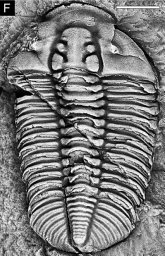 Patrick Mark Smith合作论文数Macquarie Univ1Thomas Brockhaus合作论文数1Ruo-ying Fan合作论文数1Karolin Moraweck合作论文数1
 Alexander Glass合作论文数1
 Yilong Liu合作论文数1
 Fabrizio Fanti合作论文数Via1
 Russell D. C. Bicknell合作论文数Palaeosci Res Ctr, Univ New England1
 Marie K. Hörnig合作论文数Cytol & Evolutionary Biol, Univ Greifswald1Rafael Spiekermann合作论文数Senckenberg Forschungsinstitut und Naturmuseum Frankfurt1Michaela Grein合作论文数1
 Derek Briggs合作论文数Department of Earth and Planetary Sciences, Yale University1
 Ricardo Pérez-de la Fuente合作论文数Museum of Natural History, University of Oxford1
 Krister T. Smith合作论文数Dept Paleoanthropol & Messel Res, Senckenberg Res Inst1




